The global magazine and marketplace for classic car enthusiasts, by enthusiasts.


Filter
Classic Triumph, DeSoto for sale - Triumph, DeSoto cars for sale
-

1928 Triumph Super 7 Faux Cabrio Fabric bodied by Hoyal
1928 Triumph Super 7 Faux Cabrio Fabric bodied by Hoyal Registration Number: VP4380 Nut & bolt restored to as new. This is believed to be the only surviving example of the Triumph Super 7 with a fabric covered faux Cabrio body coachbuilt by Hoyal of Weybridge. The car has been fully rebui..

Triumph
US, 1900 – 1901
Triumph Motor Vehicle Co, Chicago, Ill.
The Triumph car company made an electric Stanhope known as the Ellis, and announced that they would accept orders for petrol or steam Triumph cars, for delivery in 90 days.
US, 1906 – 1909
Triumph Motor Car Co, Chicago, Ill.
These Triumph cars were open cars in four- and five-seater models. The engines of the Triumph cars were 4-cylinder units of 30hp and 45hp. In 1907 this Triumph car used ‘the only self-contained, automatic, self-starting motor in the world’. The starting method of the Triumph car stored exhaust gases in a tank under the seat, at a pressure of 125psi. This gas could be bled back into the cylinders for starting.
GB, 1923 to date
(1) Triumph Cycle Co Ltd, Coventry, Warwickshire, 1923 – 1929
(2) Triumph Motor Co Ltd, Coventry, Warwickshire, 1930 to date
This famous motor-cycle factory Triumph made a tricar in 1903, but 4-wheeler Triumph cars were not offered until 1923, when a 1.4-litre sv 4-cylinder 10/20 Triumph car with a Ricardo-designed engine and 4-speed gearbox was listed at £430; production of Triumph cars was undertaken in the factory formerly occupied by Dawson. This gave way in 1925 to a 1.9-litre 13/30 Triumph car at £495, the first British car to have Lockheed contracting-type hydraulic brakes. Neither this Triumph car nor its 15hp successor made much impression, but in 1928 Triumph car company introduced the 832cc sv Triumph Super 7, with unit gearbox, hydraulic brakes, and worm final drive, which Triumph car sold well both at home and overseas. There was a supercharged sports version Triumph car listed at £250 in 1929-1930, and the manufacture of small family saloon Triumph cars of superior quality was pursued until 1933-1934. Ribbon-type radiators were featured on Triumph cars in 1930, and in 1931 came a 1.2-litre small six Triumph car, the Triumph Scorpion, really a Super 7 Triumph car with 2 extra cylinders, and endowed with very low gearing. Ioe Coventry-Climax power units made their appearance in the Triumph Super 9 of 1932, when Triumph car saloons had pillarless doors, and 4-speed gearboxes were adopted. The bigger 1933 models Triumph cars had electric fuel pumps, and during the season a 1.122cc ioe Triumph Ten joined the Triumph car range at £225.
Though these family models Triumph car were still being made in 1934, there were also the more sporting Triumph Glorias with 1.100cc 4-cylinder and 1½-litre 6-cylinder ioe power units, cruciform-braced frames, and free wheels, which in open form could exceed 70mph: one of these Triumph cars, driven by Donald Healey (responsible for the design of 1936 – 1939 Triumph cars) won the light-car class of the 1934 Monte Carlo Rally. An abortive and very Alfa Romeo-like 2-litre twin-ohc supercharged straight-8 Triumph car was listed at £1.225 in 1935, but that year’s Gloria-Vitesse models were far more successful, especially in 2-litre, 6-cylinder form. Metallic finish was available on Triumph cars, and the saloon models Triumph cars were sold with screenwashers as standard equipment.
In 1936 the Triumph car and motorcycle businesses were divorced, and from 1937 onwards the Triumph cars became heavier; synchromesh was adopted, Triumph-built engines with full overhead valves supplanted the ioe Coventry-Climax units, and Triumph cars ranged from a 1½-litre, 4-cylinder Triumph Gloria saloon at £288 up to the 1.8-litre 4-cylinder and 2-litre 6-cylinder Triumph Dolomites, with ugly fencer’s mask radiator grilles at £348 and £368 respectively.
The Triumph Dolomites were comprehensively equipped, with centralized chassis lubrication and radio as an factory extra, and the handsome if rather American looking roadster coupés Triumph cars of 1938-1940 were regular concours winners.
From the summer of 1938 only Triumph Dolomites were catalogued, the smallest Triumph car model being a compact 1½-litre Triumph car (actually 1.767cc) on a 9ft wheelbase at £313, but during 1939 a conventionally-styled 12hp sports saloon Triumph car appeared at £285. Only 50 Triumph cars were made since Triumph went into receivership just before World War 2, and when the Triumph cars reappeared after VJ Day they were products of Standard, the new 1800 Triumph car having the 65bhp 1.8-litre ohv 4-cylinder unit made for the 1½-litre Jaguar. Other features of these Triumph cars were Girling brakes, and an unusual right-hand column change for the 4-speed gearbox. Both the roadster at £799 and the saloon at £831 were traditionally styled, the latter Triumph car having a razor-edge body of the type favoured by British specialist coachbuilders in the later 1930s.
By 1949, 2.1-litre Standard Vanguard engines and 3-speed gearboxes had been adopted on Triumph cars, and 1950 brought a curious little razor-edged 2-door saloon, the Triumph Mayflower, with a 10hp sv engine, which Triumph car persisted until 1953.
In that year the first of a successful line of sports Triumph cars appeared, descended from an abortive 1950 design with retractable headlamps, fully aerodynamic bodywork with power top, and overdrive gearbox, which had been a casualty of the Korean War. The new Triumph TR2 weighed only 1.888lb, had a 2-litre, 90bhp development of the Vanguard engine, independent coil-and-wishbone front suspension, 2LS Lockheed brakes, hypoid final drive, and the useful combination of over 100mph and 25mpg in regular service. The Triumph car distinguished itself in competition, early successes including an outright win in the 1954 RAC Rally and the team award in the 1956 Alpine Rally, as well as being an outstanding dollar-earner. The Triumph TR3, its successor, acquired front disc brakes in 1956, and this Triumph car was made until 1962. The power unit of Triumph cars was adopted by Morgan (1954), Swallow Doretti (1954), Peerless (1958), and its successor Warwick (1960).
After the discontinuation of the razor-edged 2.1-litre Renown saloon early in 1955, the TR was the staple Triumph car until mid-1959, when the Triumph Herald saloon appeared, using a development of the 948cc Standard 10 engine in a separate chassis. This Triumph car had all-round independent suspension (the first small British family saloon to be so equipped), a collapsible steering wheel, and Michelotti styling. The Triumph car could be bought in 38bhp single carburetor and 50bhp twin-carburettor versions for prices starting at £702. This model Triumph car did not really prosper until Standard-Triumph cars was taken over by Leyland in 1961, when a more powerful 1.147cc development Triumph car with the option of front disc brakes appeared, followed two years later by the 12/50 with disc brakes as standard, and a sunshine roof. A 1.6-litre 6-cylinder Triumph car with four headlamps, the Triumph Vitesse came in 1962, and the Triumph Spitfire sports two-seater was a further Herald derivative announced for 1963. 4-cylinder Triumph car engines are used by Amphicar, Bond, and Fairthorpe.
In 1962 the Triumph TR4 with restyled bodywork, a 2.1-litre engine, rack-and-pinion steering, and all-synchromesh box, was introduced, acquiring independent rear suspension as the Triumph TR4A in 1965, while the Triumph car features were also incorporated in a 90bhp 2-litre 6-cylinder saloon Triumph car, the Triumph 2000, which was a successful introduction in 1964. Triumph’s new car in 1966 was the 1300 Triumph car, still with all-synchromesh gearbox, all-round independent suspension, and front disc brakes, but this Triumph car also featuring front-wheel drive and a 61hp development of the basic Herald engine. 1967 Triumph Vitesses had the 2-litre engine, also used in the new GT6 hardtop coupé, a Spitfire derivative. A Triumph TR5 sports car, with a 2½-litre 6-cylinder fuel injection engine at last replacing the tough old Vanguard unit and a 75bhp TC version of the 1300 saloon, were introduced in 1968. It was also announced that sohc 4-cylinder engines of Triumph cars were being manufactured for SAAB’s new 99 model, though all the new 1969 Triumph cars retained push-rod engines. These included revised versions of the GT6 and Vitesse with wishbone rear suspension, and a more expensive companion for the 2000 Triumph car, the 2.5 PI using a detuned Triumph TR6 fuel-injection unit; this Triumph car was rallied by the works, the Culcheth and Syer car coming 2nd in the 1970 World Cup event. In 1970 Triumph cars introduced the Triumph Stag, a luxury sporting 2+2 powered by a 3-litre dohc V8 engine of their own design developing 145bhp. This Triumph car featured alternator ignition, a choice of synchromesh and overdrive or automatic transmission, all-independent springing, power-assisted rack and pinion steering, and vacuum servo brakes with discs at the front. A big and heavy Triumph car weighing 3.020lb, this Triumph car carried semi-convertible coachwork with built-in rollbar.
In the 1971 range of Triumph cars was a Herald replacement, the Triumph Toledo 2-door saloon. This Triumph car combined the 1300 structure with the 1.296cc Herald 13/60 engine driving the rear wheels. Rear suspension was by live axle and coils, and all-drum brakes were standard, though front disc brakes, four doors and a 1.500cc engine were used on an export-only model. The Triumph 1300 was replaced by a more powerful 1500, and in August 1971 4-door Triumph Toledos in basic form reached the home market. That summer the Herald/ Vitesse range of Triumph cars was finally phased out (apart from Indian production of ‘Standard’ Heralds) and after many delays Triumph cars medium-sized luxury Triumph Dolomite was finally launched at the beginning of 1972. This Triumph car followed Toledo lines with front disc brakes, but the Triumph car was powered by a 91bhp twin-carburettor edition of the 1.854cc ohc engine as supplied to SAAB. Principal 1973 improvements were the standardization of front disc brakes on the Toledo, and of overdrive on manual versions of the 2.5 PI and Stag.
D, 1933
Triumph Werke AG, Nuremberg
This well-known motorcycle manufacturer built a few 3-wheeled coupés Triumph cars powered by 350cc engines driving the single rear wheels.
Source: Georgano, encyclopedia of motorcar; GNG, GMN, MCS
The information is written with the greatest of care. However, if you have any suggested amendments please contact us at office@prewarcar.com
DeSoto
US, 1913 – 1916
DeSoto Motro Car Co, Auburn, Ind.
The DeSoto appears to have succeeded the Zimmerman. This was a large car with a 55hp, 6-cylinder engine, which was furnished with a compressed-air starter. The DeSoto model Six-55 five-seater touring car sold for $2185.
US, 1928 – 1960
Chrysler Motors Corp, Detroit, Mich.
The DeSoto was launched in 1928 as a 3.2-litre side valve six to compete with Oldsmobile, Pontiac and the cheaper Nashes. Styling and general design of the DeSoto were in line with the 1929 Chryslers, and at $885 for a DeSoto sedan 90.000 were sold in the first twelve months. A 3.4-litre straight-8 DeSoto on a 9ft 6in wheelbase was announced for 1930 as the world’s cheapest 8-cylinder car. However, DeSoto suffered badly in the Depression, and in 1932, when flexible rubber engine mountings and free wheels were made available, sales dropped to 26.000 DeSoto cars.
The DeSoto disappeared from the British market about this time, though certain ‘Chrysler’ models listed in England (the Mortlake, Croydon, and some of the Richmonds) were in fact DeSoto cars in all but name. A 6-cylinder version of Chrysler’s advanced unitary-construction Airflow, the SE-type with a 4-litre engine, was brought out in 1934, but was an unsuccessful as its bigger sister. Later DeSotos followed regular Chrysler lines closely though in later years there was a tendency for DeSoto to move into a higher price class than Dodge; by 1952 DeSotos started $300 higher than the companion make.
By 1939 the DeSoto cars for sale were being made with independent front suspension, hypoid back axles and column change. There was a choice at DeSoto of two 6-cylinder engines and three wheelbase lengths, the longest of these being reserved for seven-seater bodywork – DeSoto continued to offer a really roomy family car right up to 1954. A 4-speed semi-automatic Vacumatic transmission became an option in 1941, but DeSoto’s big post-war change of models did not take place until 1952, when the division followed Chrysler’s lead in adopting the oversquare ohv V8; the DeSoto version was of 4½-litre capcity and developed 16-bhp. With the advent of Chrysler’s ‘flight sweep’ styling in 1955, the side-valve sixes were dropped and the standard engine in a DeSoto was now a 4.8-litre eight, giving 185bhp in Firedome guise, and 200bhp in Fireflite form. Though this redesigning saved Chrysler sales generally, the slump in the medium-price class had an adverse effect on DeSoto and in 1959 the DeSoto division was merged with Plymouth. Last of the DeSotos were the 1961 models, unitary-construction cars with a choice of three engines: Plymouth’s 145bhp ohv ‘slant six’ as used in the Valiant, and V8s of 230 and 265bhp, the two former only in Canadian DeSotos. Production of DeSoto cars ceased in November 1960 after only a few had been delivered.
Source: Georgano, encyclopedia of motorcar; MCS
The information is written with the greatest of care. However, if you have any suggested amendments please contact us at office@prewarcar.com


Featured
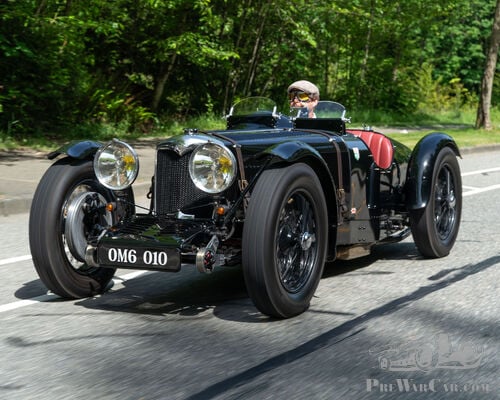
Riley 14/6 Special 1933
The ExperienceStep into the golden age of British motoring. This 1933 Riley 14/6 Special is a masterclass in pre-w..
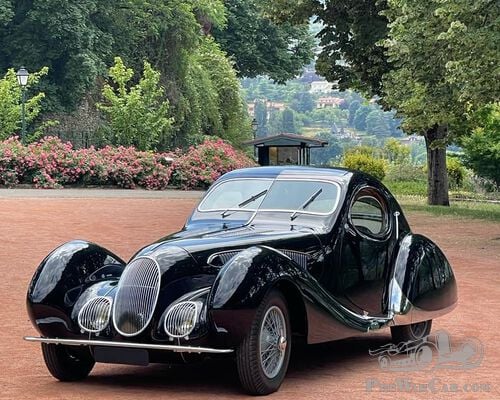
1939 Talbot-Lago T150C “Goutte d’Eau” — Iconic French Coachbuilt Masterpiece
Talbot-Lago T150C ‘Teardrop’ — An Icon of French Automotive Art There are motor cars that define an era. And then there are those tha..
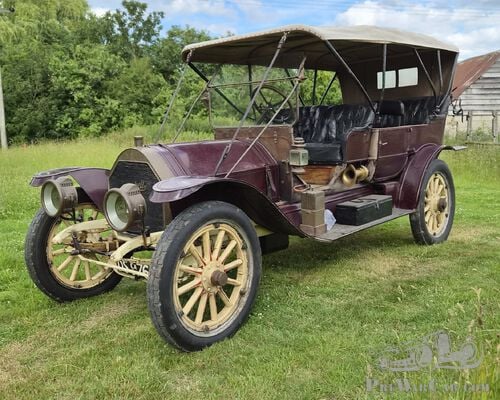
1910 Mitchell Model S - 50HP Six Cylinder
Based in Racine, Wisconsin and being the largest wagon manufacturer in the USA, Mitchell-Lewis produced their first motor car in 1903. Sales grew ..