The global magazine and marketplace for classic car enthusiasts, by enthusiasts.


Filter
Classic Turner for sale - Turner cars for sale
-

Bentley 4½ Litre Blower Continuation 1 of 12 (Chassis No.8)
A final opportunity to acquire a 100% original Blower Bentley, newly crafted by the manufacturer itself.Ninety years after the original Birkin Blowers defined an era, Bentley Mulliner undertook one of the most ambitious heritage projects in the marque’s history: the Blower Continuation Series. Built using original 1920s drawings, period t.. -
Bentley 4½ Litre Blower 1930 - Birkin Spec
Some cars are admired. Others are experienced. This Bentley Blower belongs firmly in the latter category. Shaped in period by the respected H.J.K. Townshend, a craftsman trusted by original Team Bentley owners, this example reflects a deep understanding of what defines a true Blower. Authentic in spirit and purposeful in execution,.. -
1923 Rolls Royce Silver Ghost Alpine Eagle
1923 Rolls Royce Silver Ghost Alpine Eagle. Chassis Number: 44SG Registration Number: Spanish Registered. An extraordinary car with an extraordinary story: This Silver Ghost was bricked up in a Spanish nobleman's mansion in 1936. It slumbered there .. -
Packard single six convertible
Rare 1925 Packard Six Sedan – Unique 7-Seater Project with Belgian PapersA solid, rust-free base for the true vintage enthusiast.We are proud to offer this rare and stately 1925 Packard Six. In the 1920s, Packard was the ultimate symbol of American luxury and engineering. This specific model is a grand 7-seater, complete with the.. -
1930 Standard Avon Alvis 12/50 Supercharged Special
1930 Standard Avon Alvis 12/50 Supercharged Special Chassis Number: 29035 Registration Number: BF9202 The present owner began building the A-A in 1965. He had enjoyed driving his first real car, a 1929 12/50 Alvis Betleback and when he acquired a 1930 Standard Avon, he found tha.. -
1928 Cadillac Model 7980 convertible coupe
Cadillac is one of the pristine cars in American history, here we have a 1928 model 7980 convertible coupewith all options as twin wooden spare wheels, trunk rack, pilot ray lights (who follow the direction of the front wheels) etc.The engine is a V8 with 5588cc on a 3560 wheelbase. At 2200kg it is not a lightweight.We parti.. -
MG NA Magnette (Ex Beryl Markham)
MODEL OVERVIEW: By the early 1930s, MG had joined the fashionable trend of six cylinder sports and racing cars with the K and N Magnette models. MG’s road going overhead camshaft six cylinder cars we’re directly related to the works racing cars used to achieve phenomenal international competition success in period.The N Magnette series of.. -
1924 Bentley 3 4 ½ Litre
•Sold new to Major EG Thomson of Edinburgh, of Ecuire Ecosse fame •Owned for more than 50 years by the Martin family•Upgraded to 4.5 Litre spec using original crankcase•Extensive history file includes factory records and buff logbooks•Fully restored by Paul Grist to his ‘ultimate’ period look and specification .. -
HORCH 930 V
For SaleHorch 930 VManufacturer: HorchModel and Variant: 930 VBody Type: 4-door sedanChassis Number: 931906Color: Dark bluePower: 93 kWEngine Capacity: 3,796 ccFirst Registration: 01/07/1939Engine Type: Petrol, 8-cylinderMileage: 12,125 km -
1921 Rolls Royce 20hp Experimental tourer
1921 Rolls Royce 20hp Experimental tourer. Chassis number: 4G2 Registration Number: CH2892 Sir Henry Royces' personal car used for development of the 20HP chassis. He is pictured in it both at his French house; La Villa Mimosa in Le Canadel & also near his UK home "Elmsted" ..


Turner
US, 1900 – 1901
Turner Automobile Co, Philadelphia, Pa.
The Turner car company made very light voiturettes with bicycle-type tubular frames and rear-mounted engines. 1¼ and 3hp engines were used in the 3-wheeler Turner cars, called Turner Lilliputian and Turner Gadabout, and a 3hp engine in the Runabout 4-wheeler Turner car.
GB, 1906 – 1907, 1911 – 1930
Turner’s Motor Manufacturing Co Ltd, Wolverhampton, Staffs.
One of the more interesting aspects of this Turner car company’s operations is the diversity of machines they produced for other firms. Up to 1906 their staple product had been the Turner-Miesse steam car, but for the 1907 season only they brought out a 20/25hp petrol-Seymour-Turner car, made for Seymours of London. This Turner car was a conventional 4.1-litre, L-head 4-cylinder vehicle with high-tension magneto ignition, 4-speed gearbox, gate change, and shaft drive. Steam then engaged all the efforts of the Turner car company again until 1911, when they introduced the 1.100cc V-twin Turner cyclecar with tubular frame, 2-speed constant-mesh gearbox and worm drive, and cycle-type wings.
A similar gearbox and transmission were used in the Turner Ten of 1912, which Turner car had a 4-cylinder sv engine and this Turner car sold for £200, while there was also a more conventional 2.1-litre bevel-driven Turner Fifteen at £320.
After the demise of the steamers by Turner cars in 1913, the 10hp Turner car came to the fore, now with 3 forward speeds; there was also a 4-speed sporting version Turner car with a V-radiator and the unusual combination of wire wheels and detachable rims, at £250. The sub-variants of this Turner Ten were made for outside companies. The J.B., intended for sale in the Colonies by John Birch and Co, had a raised ground clearance and the sports car’s wire hweels, while the Turner Universal of 1914 (sometimes regarded as a make in its own right) was a standard Turner car chassis fitted with drophead coupé, bodywork and electric lighting as standard, and retailing at £250 (or at £276 5s with a starter). A bigger 12/20hp 2.2-litre Turner car on similar lines (also listed in Universal form) was on the market by the outbrak of World War 1.
Turner cars post-war private car production was on a very modest scale, and did not get under way again until 1922, though in the immediate post-1918 period the Turner car firm built Varley-Woods chassis for H.S. Motors Ltd of London. The Turner cars proper were still worm-drive 4-cylinder machines with sv monobloc engines; 1.8-litre models Turner cars had fixed cylinder heads whereas those on the 2.3-litre Turner cars were detachable, and 4-speed gearboxes were standard on Turner cars. In 1923 the smaller Turner car was fitted with a 1½-litre sv Dorman engine with a 3-bearing crankshaft and detachable head, and at the same time bevel drive was adopted on Turner cars; also bevel-driven was a 2.1-litre Turner Colonial model of 1924 with the ohv Meadows unit, which first supplemented and then supplanted the 14/30hp Turner car.
After 1926 only the 12hp Turner car was made, but though front-wheel brakes were standardized on Turner cars for 1928, this was virtually the end for the Turner car. Even the buyers’ guides ceased to quote the Turner car make after 1930. The Turner car company, however, remained active as manufacturers of components, and as late as 1954 the Turner car company announced a complete front wheel drive unit suitable for mini-buses. This used their own Turner car make of 1.4-litre, 2-cylinder, 2-stroke supercharged diesel engines, developing 37.5bhp.
Source: Georgano, encyclopedia of motorcar; GNG, MCS
The information is written with the greatest of care. However, if you have any suggested amendments please contact us at office@prewarcar.com


Featured
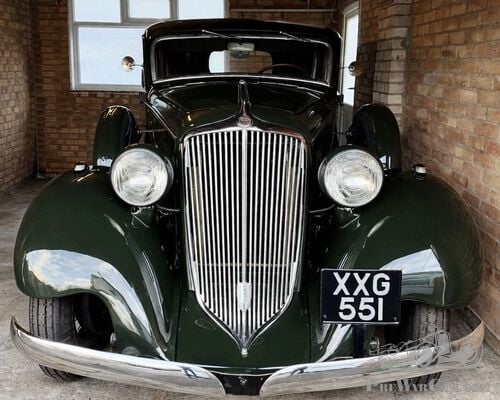
Graham Model 64 Standard Eight 'Blue Streak'
‘The most imitated car on the road’ One of the most significant pre-war American cars ever built. One of 23 known to exist glob..
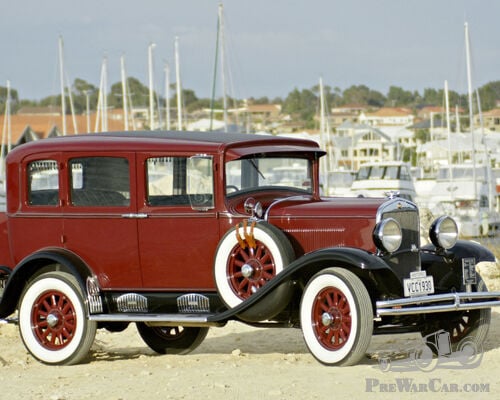
1930 Chrysler 66 Six-Wheel Equipped Royal Sedan
An exceptionally well restored and highly awarded Chrysler 66 Royal Sedan, with only two owners in nearly 97 years.The present owner ..
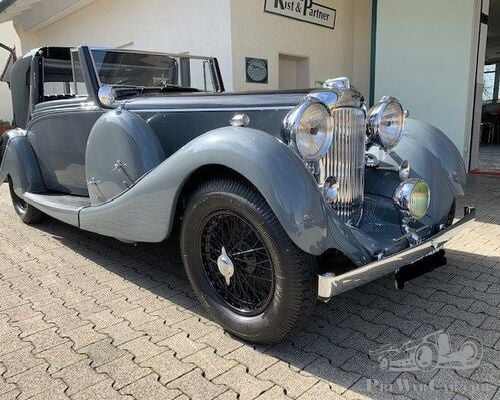
Lagonda LG 45 Coupe de Ville Sedanca by Mayfair
The successor to the M45, the LG45 was built around the same highly capable, competition-proven 4.5-litre Meadows inline-six engine, but featured r..