The global magazine and marketplace for classic car enthusiasts, by enthusiasts.


Filter
Classic Unic for sale - Unic cars for sale
-

Chenard & Walcker Model G
The Chenard & Walcker is a 1905 Model G, equipped with a 5-liter, four-cylinder engine producing 20 horsepower, enabling the car to reach a top speed of approximately 85 km/h | 50 mp/h. The body is a Double Phaeton and was crafted by the renowned coachbuilder Jean-Henri Labouredette. In addition to the radiator b.. -
1939 Rolls Royce Wraith James Young Razor Edge Saloon
1939 Rolls Royce Wraith James Young Razor Edge Saloon Chassis Number: WEC72 Registration Number: 39D25 (Ireland) £200k spent upon the restoration of this car to make it in effect a brand new Rolls Royce Wraith being delivered 86 years late!!! Simply.. -
1936 Bentley Derby 4.25 Sedanca by Thrupp & Maberly
1936 Bentley Derby 4.25 Sedanca by Thrupp & Maberly Chassis number: B-36-GA Registration Number: CXE213 A stunningly beautiful car which wows onlookers wherever it is seen, this 4.25 Litre Derby Bentley Sedanca Coupe has fabulous and possibly unique aluminium Sedanca coachwork by Thrupp and Maberly... -
Cadillac V16 - Series 452 - 1930 - Imperial Sedan 4330
Offers invited a round € 200.000 - This ONE of 4 Survivors of Serie 4330 body style - book C.W. Cummings - 2014) ***excellent driving car, the V16 gives you a special experience, no other car has***https://www.prewarcar.com/a-stately-cadillac-v16-in-the-netherlandsBuilt; no 9 of 50 - Engine no. 700163Lengt.. -
1925 Lancia Lambda 5th Series Torpedo
With a monocoque body, four-wheel brakes, independent front suspension and V4 overhead camshaft engine, many enthusiasts view the Lancia Lambda as one of the great and innovative automobiles of all time. The Lambda was also successful in competition with privately entered cars finishing fourth and fifth behind the works OMs in the first Mille Mi.. -
1930 Bentley Speed Six
1930 Bentley Speed Six Chassis Number: SB2774 Engine Number: SB2772 Reistration Number: GH8974 New to market & freshly restored to perfection. This car has over the past two years been fully rebuilt & built up as a LeMans style tourer by noted Rolls Royce &.. -
Renault NN Torpedo Commerciale (1926)
Highlights Complete, coherent, unmodified exampleExcellent base for a full restorationAttractive 1920s torpedo body styleVery accessible entry priceIdeal for workshops or enthusiasts looking for a rewarding project Restoration project – Complete car – Solid base but major work r.. -
Société des Automobiles Pilain
The 1911 Pilain is the Type 4.0, equipped with a four-cylinder engine and a single Zenith carburetor. This car has undergone a comprehensive restoration over the past few years. Since the original body was too deteriorated to restore, it was decided to install an alternative body. The current elegant body is sourced from a Bianchi, which perfect.. -
Lane Model 15 | Steam car
This unique steam car is a completely original 1909 Lane Model 15, offering a highly distinctive design that sets it apart from most other steam vehicles. It is the only surviving Lane Model 15 in existence. Experts consider the Lane to be one of the finest steam cars of the early automotive era, produced between 1900 and 1910. Lan.. -
1934 Railton -Hudson Original Alpine Trials Racer
By 1933, Railton built a variety of the larger versions which were powered by Hudson. The Hudson engine and chassis were built in the US and exported to England for Railton. This 1934 Railton is one of the two original Alpine Trials cars sponsored by Railton and driven by Habmit Davids. Both cars not only completed the trials but also..


Unic
France, 1904 – 1939
(1) Sté des Ancien ets Georges Richard, Puteaux, Seine, 1904 – 1914
(2) SA des Automobiles Unic, Puteaux, Seine, 1914 – 1939
When in 1905 Georged Richard left the firm he had founded, he embarked on his second motor manufacturing career with what was intended to be a single-model policy – hence the name of his new car. However, his 10/12hp 2-cylinder UNIC car was joined within a year by two additional fours. After this the UNIC car make remained undistinguished. The most famous of the small fours UNIC cars was not a passenger UNIC car at all, but a taxi. The monobloc 12/14hp UNIC car of 1908 was made for 20 years, and served on London streets for longer still. In 1909 there was a 4.1-litre 6-cylinder model UNIC car. By 1914, three 4-cylinder UNIC cars were listed, of which the 10/12hp UNIC car was best known.
The basic UNIC car of the 1920s was the 10CV Type L, a worthy, long-lived but uninteresting car with an 1.847cc sv engine and the modern feature of unit construction of engine and gearbox. This UNIC car had front-wheel brakes from 1923. The Type L313 Sport UNIC car, an 11CV, with a bigger bore and 2-litres, was added in that year. The UNIC car had overhead valves, and was a good-looking 70mph fast tourer in the French tradition. The UNIC car must have been one of the first cars anywhere to have horizontal bonnet louvres. In 1926, the 11CV UNIC car was also listed in sv touring form; only cars of this rating were made, the UNIC car company having temporarily reverted to tehri original policy. At this time, the UNIC car company employed women road-testers, a rare but not unique practice.
UNIC cars penchant for unusual rear suspension – the 10CV UNIC car had used a combination of cantilevers and quarter-elliptics – was perpetuated on their straight-8 UNIC car of 1928, which had transverse springs located above and below the axle. Engines were push-rod ohv units of 2.494cc or 2.650cc, there were four forward speeds, and brakes of the UNIC cars were servo-assisted; both types persisted until 1934, though the old 11CV UNIC car had gone by 1932, and during the Depression years the UNIC car company concentrated on commercial vehicles. New for 1934 was the U4, a 2-litre sv four with magneto ignition (used on Unic cars almost until the end), articulated-arm independent front suspension and a double reduction back axle. The UNIC car competed with the Berliet 944 and the new small Delage and was joined during the year by the U6, a 3-litre six on similar lines, this UNIC car was available with a 4-speed Cotal electrically selected gearbox. This option was extended to the U4 in 1936, and in 1937, when traditional radiators gave way to fencer’s mask grilles, both 4- and 6-cylinder Unic cars were available in sports cabriolet form with ohv. The U4D of 1938 with 2.150cc ohv engine, and an improved U6 UNIC car survived until the outbreak of World War 2. Private UNIC car production was not resumed in 1946, though Unic are still active in truck manufacture as an associate of Fiat.
Source: Georgano, encyclopedia of motorcar; TRN
The information is written with the greatest of care. However, if you have any suggested amendments please contact us at office@prewarcar.com


Featured
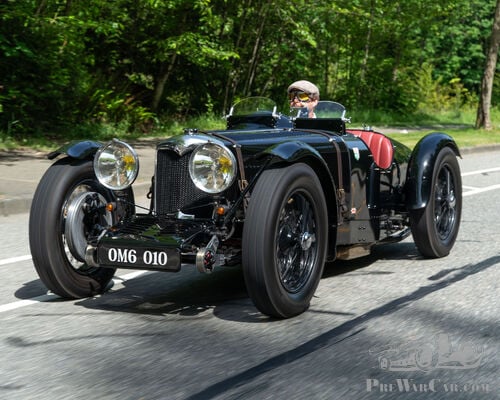
Riley 14/6 Special 1933
The ExperienceStep into the golden age of British motoring. This 1933 Riley 14/6 Special is a masterclass in pre-w..
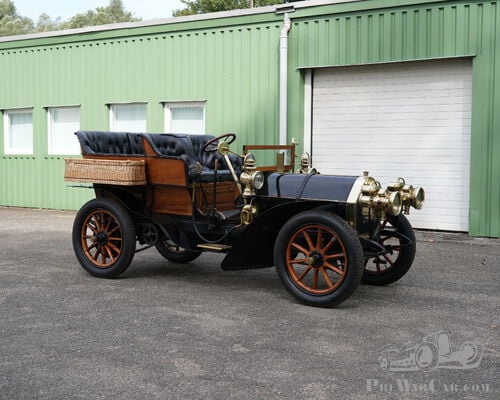
1904 Aster 16/20 HP Four-Cylinder Five-Seat Rear-Entrance Tonneau
Powerful four-cylinder engineFour-speed gearboxChain driveFive seatsMore than €100,000 recently invested
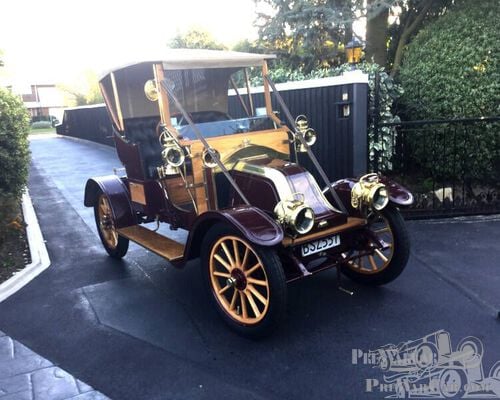
Renault /AX 1913 - named
Purchased fully renovated from New Zealand and imported to the UK. We have owned her for over10 years. Gigi is currently living in France where she..