The global magazine and marketplace for classic car enthusiasts, by enthusiasts.


Filter
Classic Vallée for sale - Vallée cars for sale
-

Willys Overland Whippet 96 Zweitürer, Oldtimer mit H-Gutachten
Willys Overland Whippet 96 Zweitürer Beschreibung folgt. Dieser Overland stammt aus einem Nachlass, die letzte HU galt bis 07.2021. Danach stand der Wagen angemeldet, jedoch ungenutzt in einer Garage. Den Unterlagen liegt ein "Repair Manual" und eine "Part List" bei. Zum Wagen gibt es deuts.. -
1938 Mercedes-Benz 540 K Cabriolet A | RM Sotheby's | The Paris Auction
To Be OFFERED AT AUCTION at RM Sothebys' The Paris Auction event, 3 February 2027. €1,900,000 - €2,200,000 EUR Please check back soon as our dedicated cataloguing team is preparing the description for this lot. To view this car and others currently consigned to this auction, please visit the RM website at rmsothebys.com/auctions/pa27/... -
1939 Jaguar SS100 3.5 Litre
1939 Jaguar SS100 3.5 Litre Chasis Number: 59056 Registration Number: 403XUH Mint fully restored & residing in a private collection for many years. This is a rare example bine just on eof 116 eamples made from new with the larger 3.5 li.. -
1930 Bugatti Type 49 Coupe "The Berlin Bugatti"
1930 Bugatti Type 49 Coupe "The Berlin Bugatti" Chassis Number: 49194 Registration Number: WRD49T Supplied to Bugatti agent Bucar of Zurich on 23rd Dec 1930 and driven there on temporary licence plate 1766-WW5 Owners: Kitty St Clair Abry (nee Holbrook) 31.5 1.. -
1923 Bentley 3 Litre TT Model.
1923 Bentley 3 Litre TT Model. Chasis Number: 296 Registration Number: HB747 Affectionately known as Victoria Plum, this car spent much of its life in the Australian state of Victoria, and is painted a Claret colour as the owners response to British Racing Green Bentleys. -
1937 Bentley 4 ¼ Litre Vanden Plas 'Allweather' Tourer B179JY
An unusual and very interesting, attractive, practical four door open cabriolet configuration make this a particularly desirable Derby Bentley, being easy to access through large doors, and ‘wide-bodied’, giving increased spaciousness and elbow room, and nicely weather resistant, with well-constructed hood, wind up windows, tonneau cover, etc, i.. -
1920 Rolls-Royce 40/50 HP Silver Ghost Alpine Eagle Tourer by Barker
1920 Rolls-Royce 40/50 HP Silver Ghost Alpine Eagle Tourer by Barker Chassis Number: 58UE Registration Number: XF7007 Coming to us from over 46 years of continuous ownership. The build record for chassis number 58UE, specifically notes “chassis to be built for speed”, wit.. -
1934 Rolls Royce 20HP Kellner Brougham
1934 Rolls Royce 20HP Kellner Brougham Chassis Number: GRK3 Registration Number: DS7994 The last owner purchased this car in 1989 & it has resided with him ever since as part of a 50 or so car collection & now comes to market from his estate. .. -
1913/14 Ford Model T runabout
1913/14 Ford Model T runabout. 3/4 restored brass Model T Ford. The following has been done: New chassis, fully overhauled engine no 1095067 and gearbox, rearaxle with driveshaft and brakes. New ex-USA painted mudguards ( 4× ) ,tailend and new wooden bodyframe, all new bodypanels bonnet and hoodbows with hoodmaterial, 4 good condition brass.. -
1927 Cadillac V8 complete and restored rolling chassis
1927 Cadillac V8 complete and restored rolling chassis. With good radiator, beautiful original headlights, bonnet, cowling and dashboard. On restored wooden spoked wheels with the original hubcaps. Ideal car for racing and build your own body on ! We also have most of the dismantled original tourer body and the original fenders (guards) in good con..


Vallée
France, 1895 – 1901
Sté des Automobiles Vallée, Le Mans, Sarthe
Vallée was a bicycle maker, and his first Vallée car made its appearance at the 1895 Salon du Cycle. This Vallée car had a 4hp 2-cylinder horizontal engine, 4-speeds, chain final drive, and front wheels in a modified form of cycle forks. The headlamps of the Vallée car turned in the direction of the steering, surely the first example of this rare practice. By 1898 a range of Vallée cars was being made with 2-cylinder engines of 3, 4½ or 7hp, belt drive to a countershaft, and chain final drive. Bodies on the Vallée car ranged from a two-seater ‘racer’ to a six-seater brake. In 1899 appeared the curious racing Vallée car known as the ‘Slipper’ on account of its body shape. This Vallée car had a 4-cylinder engine, still horizontal, of 110x200mm (7.598cc). No gearbox was provided on the Vallée car, the engine being thought sufficiently powerful and flexible to avoid the need for one. Final drive was by a single wide belt to the rear axle. Driven by Dr. Lehwess, who later tried to drive a Panhard, ‘Le Passe Partout’, around the world, the Vallée car cometed in a number of events in 1899, its best result being 5th in the Paris-St. Malo race. Later Vallée carss used 2- or 4-cylinder horizontal engines, but of smaller size than that of the Slipper.
Source: Georgano, encyclopedia of motorcar; GNG
The information is written with the greatest of care. However, if you have any suggested amendments please contact us at office@prewarcar.com



Featured
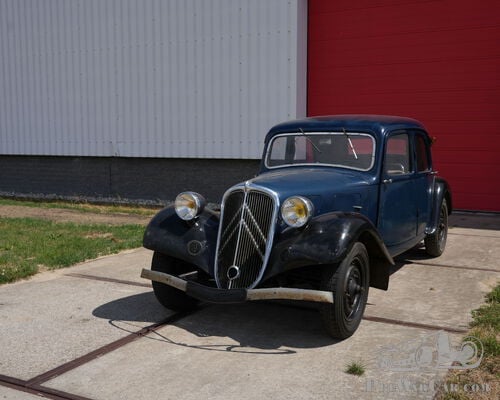
1935 Citroën Traction Avant
Early-production Traction AvantExceptionally original, unrestored conditionRecently part of a major museum collection
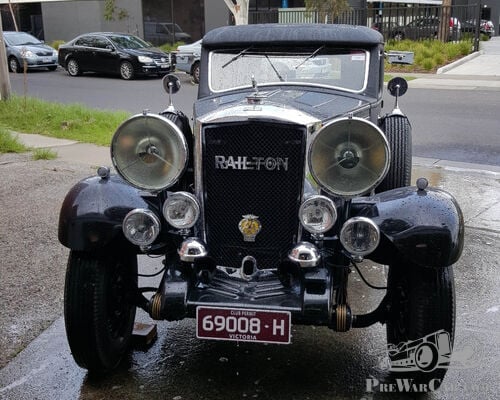
Railton straight 8 sports coupe for rallying REDUCED PRICE run with the bentleys at a fraction of the price
1934 Railton Sports CoupeBuilt for long distance rallyingRebuilt 2017built up at a cost of $160,000AUD, OFFERED FOR SALE AT A ..
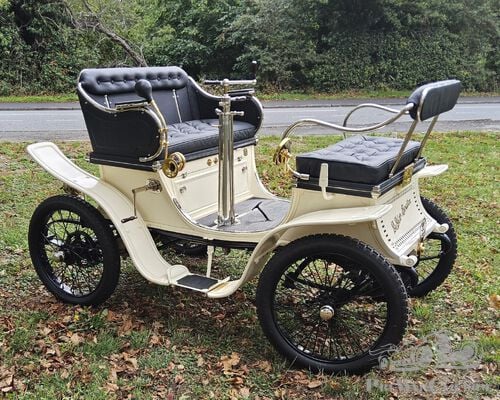
1902 De Dion Bouton Vis-a Vis 4.5 H.P. Reg No. Y123 V.C.C. Cert No. 1649
1902 De Dion Bouton Vis-à-vis 4.5 H.P.Reg. No. Y132 V.C.C. Cert No. 1649Beautifully presented and completely restored following an ex..