The global magazine and marketplace for classic car enthusiasts, by enthusiasts.


Filter
Classic Vauxhall, MG for sale - Vauxhall, MG cars for sale
-

1923 Vauxhall Type OD 23-60 Malvern Tourer.
1923 Vauxhall Type OD 23-60 Malvern Tourer Registration no. SV7736Chassis no. OD720 This Vauxhall 23-60 Malvern tourer was delivered new to Australia and comes with a list of owners in that country dating back to 1932. In May 1998 the car was imported into the UK by Andrew Booth (Orchid Cars), registered as '.. -
1933 MG J2 PROJECT
A project opportunity to build an MG J2 to your own specification, with parts valuing £15,000. Very few projects are left now, most being broken for spares. At this price, with all parts available, it is more than viable and a dream come true for many people. Model Type: MG J2 PROJECTStyle: 2-seat sports.. -
Beautiful MG J2 1933 for sale
I sell a beautiful MG J2 1933 ,completely original, chassis number J3573, original engine fitted 2500AJ, the history of the car is known, with FIVA certification, registered by the Triple-M Register . -
MG PB - 1936 - Mille Miglia Eligible
Beautiful MG PB – Excellent Condition and Rich in HistoryOffered for sale: a special and very fine MG PB, a rare classic that is in lovely condition both technically and cosmetically.This MG is a pleasure to drive and comes with an extensive history file filled with invoices, photographs, and documentation.The car underwent .. -
1925 VAUXHALL 14/40 Princeton Tourer
1925 VAUXHALL 14/40 Princeton Tourer. Chassis Number: LM2614 Registration Number: SV7947 The Vauxhall 14-40 made its debut at the 1921 London Motor Show, with the first deliveries reaching the public the following year. Designed by Clarence King, this new model featured a 2. 3 l.. -
1938 MG VA 4 seat Tourer | The Ernie Warren Collection Auction | 13th June 2026
A 1938 MG VA Four-seat tourer.Reg No. JMC 154.Car No. VA1369.Engine No. TPBG 1632.Red with brown interior.MG’s decision to increase their range of cars to include more sportier versions, led them to develop a trio of 1.5L to 2.5L models. The MG VA was the smallest with a four-cylinder 1548cc engine deri.. -
1930 MG 18/80 SPORTS SIX MK 2
1930 MG 18/80 SPORTS SIX MK 2 Chassis Number: 2/A0331 Registration Number: MG1021 A rare MG car (one of 501 examples made) with the larger 2.5 litre six cylinder engine. This car was the university motors demonstration car in 1930 as assorted original correspondence attests to. .. -
MG TB Tickford
Dieser MG TB ist eine seltene Tickford Variante. Es wurden insgesamt 379 TB gebaut, davon laut Produktionsaufzeichnungen lediglich 48 Stück mit der Tickford-Karosserie. Aktuell sollen weltweit noch ca. 30 Exemplare existent sein. Dieses spezielle Fahrzeug mit der Karosserienummer 0403 wurde als eines der letzten fertiggestellt am 20 Juni 1939 mit d..


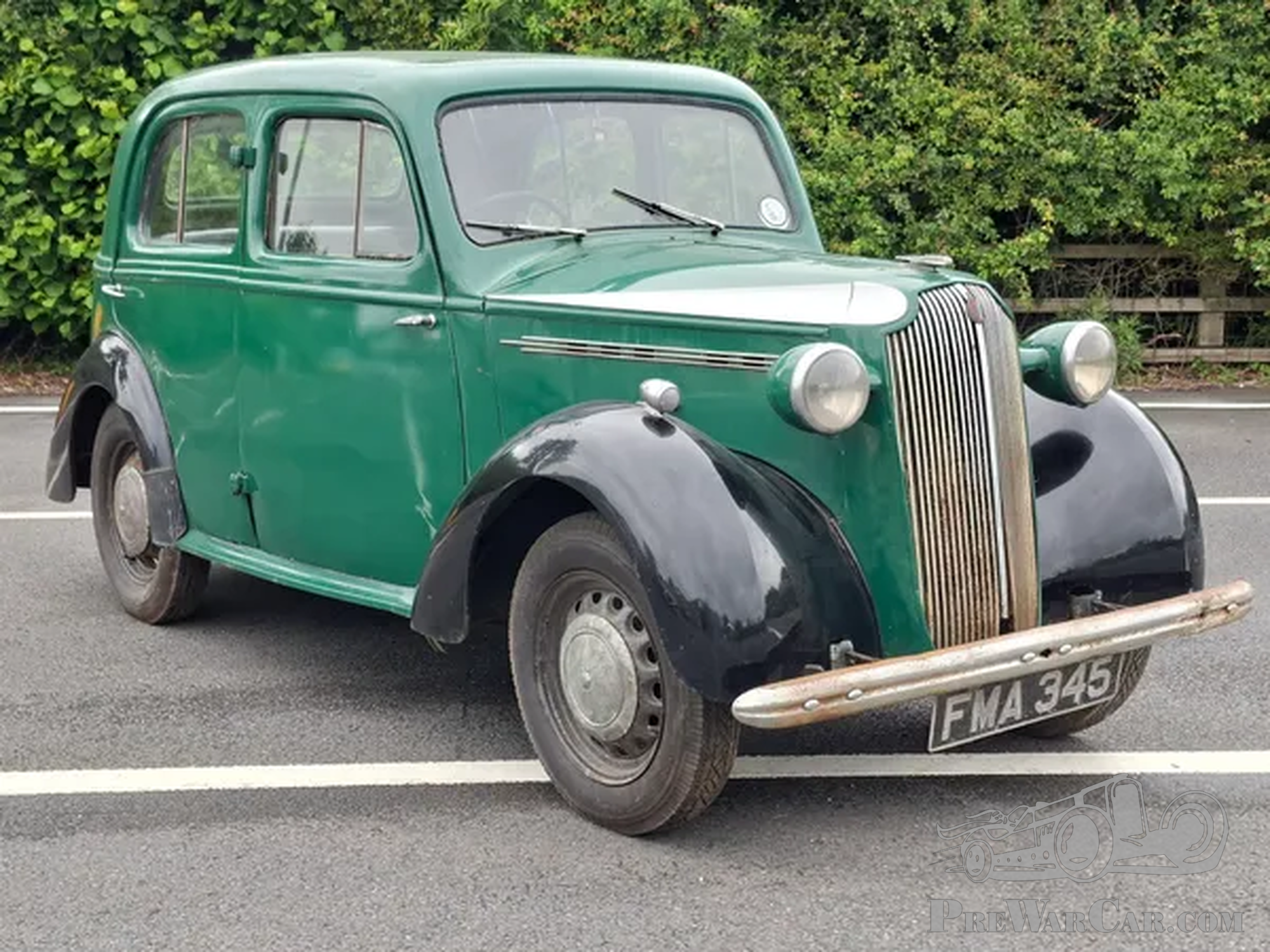
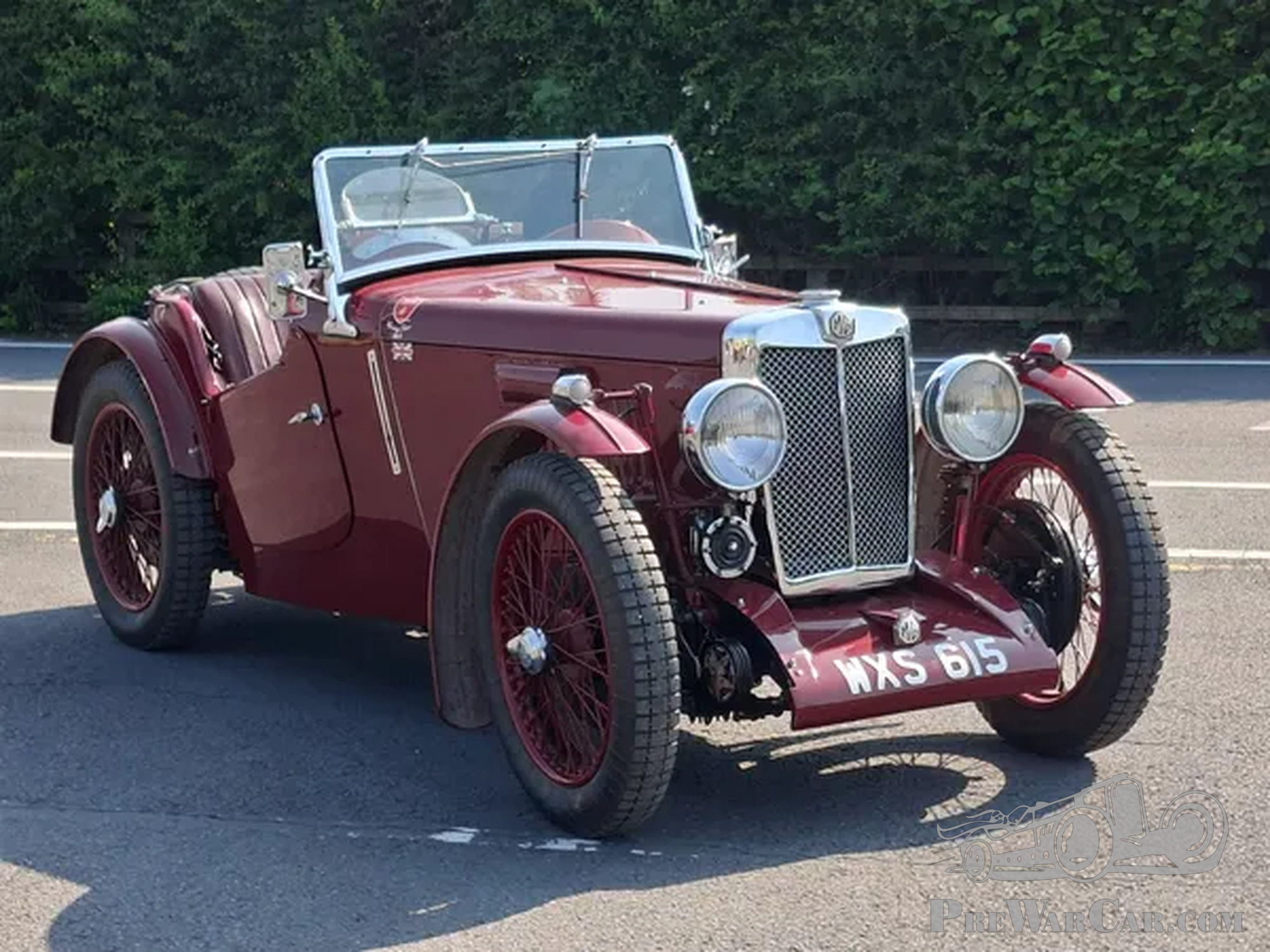


Vauxhall
GB, 1903 to date
(1) Vauxhall Iron Works Ltd, London, 1903 – 1904
(2) Vauxhall Iron Works Ltd, Luton, Beds., 1905 – 1906
(3) Vauxhall and West Hydraulic Engineering Co Ltd, Luton, Beds., 1906 – 1907
(4) Vauxhall Motors Ltd, Luton, Beds., 1907 to date
This marine engineering concern’s first Vauxhall cars were horizontal-engined single-cylinder runabouts in the American idiom with chain drive and tiller steering, rated at 6hp and the first Vauxhall car was selling for £150. In 1904, when 76 Vauxhall cars were sold, wheel steering and a reverse gear featured in the specification, and the singles were joined by 3-cylinder models Vauxhall cars of 1.4- and 2.4-litres’ capacity, with mechanically-operated inlet valves and vestigial flutes on their bonnets. In 1905 the Vauxhall car works were moved to Luton, and the first attempt at competitions was made with the entry in the Tourist Tophy of a 3-cylinder Vauxhall car with overdrive gearbox. The classic Vauxhall radiator with its flutes appeared on a 3.3-litre T-head 4-cylinder Vauxhall car introduced in 1906. This Vauxhall car was followed by a smaller shaft-drive 12/16, still T-headed, and the Pomeroy-designed L-head 20hp, which gave 40bhp and this Vauxhall car won the 2.000 Mile Trial of 1908. Pomeroy’s 4-cylinder Vauxhall cars were among the classic British designs of the next six years, boasting 5-bearing crankshafts and monobloc engines, and, from 1912, Hele-Shaw multi-plate clutches. In 1910 the first of the Prince Henry Vauxhall cars with 3-litre engine won its spurs in the German Trials of that name: these round-nose sporting Vauxhall cars later grew up into 4-litres’ with 70bhp, capable of 75mph and this Vauxhall car was selling for only £615 in 1913. The Vauxhall car company’s bread-and-butter car was the smaller and staider A-type on similar lines, joined in 1913 by a 4-litre D-type Vauxhall car with close affinities to the Prince Henry Vauxhall cars, while the B-type, a 6-cylinder formal Vauxhall carriage with its cylinders cast in threes, was made in small numbers from 1910 onwards. A Linley preselective gearbox was listed as an option on Vauxhall cars in 1911, in which year Vauxhall cars started racing in earnest. Already a 3-litre Vauxhall car with single-seater streamlined bodywork had recorded 100.08mph over the flying kilometer, and Vauxhall cars were entered for the Coupe de l’Auto voiturette races of 1911, 1912 an 1913. These Vauxhall cars were followed by twin-ohc designs in 1914 for the French Grand Prix and the Tourist Trophy. The GP models Vauxhall cars with 4½-litre engines developed 130bhp. The prototype of Vauxhall cars best known sporting model, the Vauxhall 30/98, appeared in 1913. The capacity of the Vauxhall car was 4½-litres and it was listed at £925 in 1915, though only 13 Vauxhall 30/98 cars were made before the outbreak of World War 1.
D-types Vauxhall car were made at the rate of eight a week for the Fighting Services during the war years, and both this model Vauxhall car and the E-type Vauxhall 30/98 were available again in 1919 with full electrical equipment. The latter Vauxhall carwas one of the greatest of all fast tourers, this Vauxhall car was offering superb flexibility and a top speed of over 80mph for £1.600, though brakes were never its strong suit. 1922 saw Vauxhall, like Sunbeam, offering a smaller and cheaper Vauxhall car, the 2.3-litre M-type 14/40 Vauxhall car with detachable head, 3-speed unit gearbox in place of the 4-speed separate type on the big Vauxhall cars, single-plate clutch and all brakes on the rear wheels (supplanting a foot transmission brake), at £750. The last serious competition Vauxhall cars were a team of 3-litre twin ohc machines for the 1922 Tourist Trophy, which Vauxhall cars had 110bhp and air-pressure operated brakes, but could manage no better than a 3rd place. Both the D- and E-types Vauxhall cars acquired overhead valves in the summer of 1922, the later emerging as the 120bhp OE which had 4-wheel brakes of rather dubious efficacy by 1923. Capacity of the engine was now 4.2-litres. Vauxhall sold 1.400 Vauxhall cars in 1924. 1925 Vauxhall 14/40hp models had 4 forward speeds, but finances were uncertain, and the Vauxhall car company was bought by General Motors in December of that year. 1926 Vauxhall cars were still on traditional lines, the Vauxhall 14/40 acquiring front wheel brakes, and being supplemented by a new luxury 6-cylinder Vauxhall car, the S-type with 3.9-litre single-sleeve valve engine and hydraulic brakes at £1.250. The Vauxhall 30/98 survived into 1927, also now with hydraulics: only about 600 of both types Vauxhall cars, the E and OE were made, and three-fifths of these Vauxhall cars were exported to Australia. The Vauxhall 14/40 in its last year could be had with a Wilson preselective gearbox. The first GM Vauxhall car was introduced for 1928: this Vauxhall car was a rather American-looking 20/60hp ohv six with coil-ignition and central change, but the Vauxhall car was still with a 4-speed box, at £475. This R-type Vauxhall car was steadily increased in capacity, ending its production run as the 3.3-litre T80 in 1932. A really inexpensive Vauxhall Six, the 2-litre Cadet at £280, was offered in 1931, in which year a range of Chevrolet-based Bedford trucks helped to boost Vauxhall Motors’ overall sales. The Vauxhall Cadet pioneered synchromesh in Britain in 1932, a few months ahead of Rolls-Royce, but the need for smaller horsepower cars resulted in the introduction of a couple of light sixes Vauxhall cars of 12 and 14hp in the summer of 1933. These Vauxhall cars and their companion 2.4-litre and 3.2-litre Big Sixes of 1934 had Fisher no-draught ventilation, but boasted 4-forward speeds in place of the Cadet’s 3. Prices of the smaller Vauxhall cars started at £195, and in 1935, in which year a record 25.000 Vauxhall cars were sold, they also had General Motors’ ‘knee action’ independent front suspension. In 1937 the Big Six Vauxhall car gave way to a 3.2-litre, 80bhp 25 with independent front-suspension and hydraulic brakes, selling for £298, and also available in long-chassis limousine form. All 1937 Vauxhall cars had stylized grilles in place of radiators, with headlamps attached to the shell, though the flutes survived until 1962. In 1938 came the 1.2-litre Vauxhall Ten with 3-speed gearbox and unitary construction, also made as a coupé with separate chassis, while the 25 Vauxhall car now had a 3-speed box as well. Hydraulic brakes were standard on all Vauxhall cars in 1939, in which year the 12/60 Vauxhall car gave way to a unitary-construction 3-speed 4-cylinder Vauxhall car at £189, and the 14 also went over to unitary construction.
With the discontinuation of the Vauxhall 25 after World War 2, Vauxhall cars with separate chassis were no longer made for the home market, though certain export versions Vauxhall cars were thus made until 1954. Post-war production of Vauxhall cars started with revised editions of the 1940 model Vauxhall Ten, Vauxhall Twelve, and Vauxhall Fourteen, but in 1948 a new model Vauxhall car with bigger boot, a standardized hull, and steering-column change was introduced, with a choice of two long-stroke ohv engines – the Vauxhall Velox had a 54bhp 2.3-litre 6-cylinder unit, and the Wyvern the old 35bhp Twelve Vauxhall car of 1.4-litres’ capacity. Lowered and restyled versions Vauxhall cars with hypoid back axles were introduced for 1952, short-stroke engines replacing the earlier type during the season. These Vauxhall cars were in production until 1957 with relatively little change, though a de luxe 6-cylinder edition, the Vauxhall Cresta, appeared in 1955. A very American 1½-litre Vauxhall car saloon, the Vauxhall Victor, with Chevrolet-like wrap-around windscreen and 3-speed all-synchromesh gearbox, was announced in 1957 at £729, and the 6-cylinder Vauxhall car received similar treatment in 1958. Though the styling of these Vauxhall cars was critically received, this was a record year for the Vauxhall car company, with 114.177 Vauxhall cars sold. Overdrive was an option on the 1959 6-cylinder line Vauxhall cars, followed by automatic in 1960, while the flutes were gone from the 1962 Vauxhall Victor, a better-looking Vauxhall car with a 56bhp engine, and the choice of a 3- or 4-speed box. A faster twin-carburettor 71bhp version, the VX 4/90, had front disc brakes. The Vauxhall Velox and Vauxhall Cresta were restyled on similar lines in 1963, also with discs at the front, and power of the Vauxhall car was increased in 1965, Vauxhall Victors having 1.6-litres and 70bhp, and the 6-cylinder engines being enlarged to 3.3-litres. 1964 produced a new small Vauxhall car, the 1.057cc Vauxhall Viva which was almost identical with the German Opel Kadett. The Vauxhall car sold for £566, but by 1967 had been replaced by the more attractive 1.159cc HB series Vauxhall car, with such options as a 69bhp SL model and automatic transmission. The van-based Beford Beagle estate Vauxhall car, however, retained the original HA shape into 1973. In 1966 there was a prestige version of the Vauxhall Cresta, the Vauxhall Viscount at £1.483, on which automatic transmission, power windows and a vinyl roof were standard.
A new phase in Vauxhall car design was heralded in 1968 by an all-new Vauxhall Victor. The 4-cylinder engines of the Vauxhall car, of 1.599cc and 1.975cc, had 5-bearing crankshafts and belt-driven ohc, and also featured were 4-speed gearboxes, rack-and-pinion steering, and all-coil suspension with rigid axles at the rear. The costliest estate-car version used the 3.3-litre 6-cylinder engine, as did a new sports-compact introduced during the year, the Vauxhall Ventora saloon. Next to appear was a Vauxhall Viva GT, combining a Viva hull with 2-litre Victor mehcanics and, in 1970, an updated version of the sporting VX 4/90. In 1971 came Vauxhall cars answer to the best-selling Ford Capri, the Vauxhall Firenza coupé with front disc brakes and a choice of Viva or Victor engine. The former unit of the Vauxhall car was enlarged to 1.256cc for 1972, and in the spring of that year came new, more elegant Vauxhall Victors and Vauxhall Ventoras, the fours now having 1.8-litre or 2.3-litre engines. Twin-carburettor editions of the latter now developed 122bhp. They were fitted to the Sport SL Firenza Vauxhall car as well as to the VX 4/90, which came with overdrive as standard and to the fiercest of the Viva family, retailing for £1.218 in 2-door saloon form. Top of the range of Vauxhall cars was now the Ventora. The Cresta and Viscount, unchanged since 1966, disappeared in September 1972. Viva mechanical elements were used in the Grumett, a Uruguayan coupé-utility in the Australian-Japanese idiom, and also in a new light truck evolved in 1972 by the parent General Motors for sale in emergent countries. In 1972 Vauxhall car of the Viva/ Firenza range with 2-litre ohc engines were sold under the name Pontiac Firenza by General Motors of Canada.
Source: Georgano, encyclopedia of motorcar; MCS
The information is written with the greatest of care. However, if you have any suggested amendments please contact us at office@prewarcar.com
M.G.
GB, 1924 to date
(1) Morris Garages Ltd, Oxford, 1924 – 1928
(2) MG Car Co Ltd, Abingdon, Berks., 1929 – 1970
(3) Austin-Morris Division, British Leyland Motor Corp Ltd, Abingdon, Berks., 1970 to date
The name MG is synonymous with sports cars, but it has always been borne by more sedate vehicles as well; at first the MG car had no true sporting connotation at all. In the early 1920s Cecil Kimber was in charge of the Morris Garages, the firm from which William Morris’s new empire had sprung and which was the Morris agent in Oxford. It was an extremely common practice for manufacturers of staid, solid touring cars to offer mildly tuned alternatives with more dashing bodywork for the benefit of the man in the street who would pay a little extra for a more sporting vehicle. In 1920 Morris had discontinued his own sporting version of his Cowley, and other Morris dealers had offered their own alternatives independently.
From 1922, Kimber began experimenting with special bodies, and two years later took the new 1.8-litre Oxford and modified it slightly into the MG Super Sports. A lightly-tuned engine, improved handling and handsome aluminium bodies effected the transformation of the MG car. Backed by Morris reliability and service, the MG car was a great success. When Morris went over to a flat radiator in place of the old ‘bullnose’ for 1927, Kimber followed. By this time, he was calling his MG car the 14/40hp, because of the increased power of the MG car compared with the 14/28hp of the standard Oxford. A year later there arrived the 2½-litre Morris Six with overhead camshaft, for which Cecil Kimber designed for his MG car, a completely new cylinder block and head, a light body and a high axle ratio. The resulting 18/80hp MG car was improved in 1930 with a 4-speed gearbox and stiffer chassis. This Mark II 18/80 MG car was a major modification of the Morris recipe. Earlier, when Morris had introduced his new ohc 847cc Morris Minor in 1928, Kimber adopted and adapted it to the MG car style. The Minor chassis and engine were retained, with little alternation other than lowering the suspension and steering on the MG car. The little fabric-bodied, pointed-tail two-seater MG M-type Midget of 1929, with the engine of the MG car tuned to provide 20bhp, 65mph and excellent accerlation, was Britain’s first really cheap and at the same time practical sports car. The sporting cyclecars of former times were too stark and noisy, and the imported French sports cars such as the Amilcan and Salmson were far dearer, and in any case were going out of production. It was true that the M-type MG car retained the Morris Minor’s somewhat uncertain brakes and its wide-ratio 3-speed gearbox, but the performance wanted by a new, wide and undiscriminating market for sports cars was there.
MG cars went in for racing in 1930. The competition MG cars used superchargers, and special wheels, valves and springs, but shared many components with the touring MG cars. This developments on MG cars, began with the MG Double Twelve M-type, so named after works M-types won the team prize in the Brooklands Double Twelve Hour race of 1930, and with the formidable, if short-lived MG 18/100 Tigresse, which was derived from the 18/80 but was a true road-racing MG car, very highly tuned. Much fiercer than the Double Twelve replica MG car was the much better known 746cc MG C-type, which MG car weighed only 1.120lb, but in supercharged form this little MG car was capable of 90mph. The MG car won the 1921 Double Twelve, and the Irish Grand Prix and Ulster Tourist Trophy races of the same year. The MG M-type was developed into the MG J. Like most normal MG cars, from the earliest one onwards, a variety of body styles could be had, but the best known was the MG J2 open two-seater sports of 1932, with its low lines, cutaway doos and slabtank-mounted spare wheel at the rear. The style of this MG car set the fashion for the sports cars of the 1930s. The J-type MG car carried over developments from the racing MG C-type, demonstrating that racing improved the breed – the cylinder head of this race MG car was of a more efficient design, the chassis was stiffer, the brakes were better and there was a 4-speed gearbox available on the MG car. The MG J3 was a supercharged version, while the MG J4 was a fine little blown sports-racing edition of the MG car. The MG J was developed into the slightly more powerful MG P-type, which had a 3-bearing crankshaft.
As far as the general public was concerned, the ultimate development of the little 4-cylinder ohc engine of the MG car was seen in the MG PB sports of 1935, with 939cc, but for out-and-out racing with a MG car there was the supercharged MG Q-type, followed by the very modern 1935 MG R-type. This MG car had wishbone and torsion-bar independent suspension of all four wheels. Apart from being 750cc supercharged instead of 847cc unsupercharged, the basic engine of the MG R-type was almost identical to that of the production MG P-type, and in fact the MG R-type engines carried MG P-type engine serial numbers.
Meanwhile, Kimber had taken the 1930 Wolsely Hornet, a small six (basically a lengthening of the Morris Minor) and turned it into the MG F-type Magna. Again, touring and sports versions of the MG car were offered, with open and closed bodywork. This MG car had a 1.271cc engine. The MG Magna was developed into the supercharged sports-racing MG K3 Magnette, which MG car won its class in the 1933 Mille Miglia race, and triumphed outright in the same year’s Ulster Tourist Trophy race, driven by Tazio Nuvolari. The unsupercharged 1.287cc MG NE Magnette won the next year’s Tourist Trophy. The more ‘touring’ MG Magnettes of the K and N series were designed to take four-seater bodies, though two-seaters were made for the MG car. Larger and heavier, these MG cars were altogether more substantial machines than the Magnas they supplemented. In six competition seasons, the MG cars also won the French d’Or race twice, the Brooklands 500 Miles race twice, the 1.100cc class of the Grand Prix de France twice, and more than two dozen other important first places. Between 1930 and 1959, with and without works support, MG cars also captured many class speed records. In 1931, a special MG car became the first 750cc car to exceed 100mph, and to cover more than 100 miles in the hour. MG cars became Britain’s premier sporting marque.
After 1935, the MG car company officially raced no longer, and no more competition MG cars were made for public sale. MG car-models tended to become bigger, and more comfortable. The 1936 MG Midget’s 4-cylinder, ohc unit gave way to a 1.290cc long-stroke, push-rod ohv engine in the MG TA, which also had hydraulic brakes. This MG car was succeeded by the shorter-stroke, 1¼-litre MG TB in 1939. The 1½-litre MG VA carried roomier bodies. The 6-cylinder MG cars became rather more staid, but the big 2-litre MG SA and 2.6-litre MG WA of the 1936 – 1940 period were handsome, excellent and popular machines, catering for those who wanted an Alvis or a Lagonda but could not afford one. These MG cars were dropped after World War 2 in favour of the MG TC Midget, which was virtually the MG TB with a synchromesh gearbox, and its saloon and touring version, the MG Y-type. The latter was the first touring MG car to have independent front suspension.
The MG TC Midget did more than any other machine to foster and spread the cult of the European sports car in America. The first real modernization in the design of the Midget MG car came in 1949, with the introduction of the MG TD. This MG car had wishbone and coil-spring independent front suspension, a box-section frame and rack-and-pinion steering, but though a little more power had been extracted from the engine, the handling of this MG car was not noticeably improved. The MG TF of 1953 incorporated the MG car firm’s first concessions to aerodynamic principles in a production MG car, but was otherwise a transitional model. A 1½-litre engine became optional in the MG TF, and gave way to an Austin-designed unit of the same capacity in the completely new MGA that succeeded it for 1956. A very rigid chassis greatly improved handling of the MG car, while an efficient aerodynamic shape provided a much higher maximum speed (nearly 100mph) and allowed a higher axle ratio. Both features on the MG car made for fuel economy. A few MGAs were made with twin ohc engines, but in the hands of the average driver, these MG cars were temperamental, and the 1.6-litre, 78bhp push-rod ohv engine that was eventually fitted to all MGAs provided just as much performance with traditional MG dependability. The MGA 1600, like the Twin Cam, had disc brakes on the front wheels. Meanwhile, the boxy Y-type touring MG car contemporary with the MG TC had given way for 1954 to the attractive little 1½-litre MG ZA Magnette; a revival of an old name. This MG car was, however, a 4-cylinder car. Basically, the MG car was a livelier edition of the Wolseley in the BMC range, and the practice of putting an MG car radiator on the Corporation’s smaller family saloons was continued, until now this is done on both the front-wheel-drive 1100 MG car and the 1.6-litre MG Magnette IV.
The MG car company’s basic sports car having developed beyond its MG Midget heredity, a new, true Midget MG car was introduced in 1961 as a cheaper alternative. This MG car was basically the simple little Austin-Healey Sprite. The latest model had unit construction of body and chassis, a 1.275cc, push-rod ohv engine developing 65bhp a 6.000rpm, independent front suspension, and disc front brakes. In 1962 the MGA became the entirely new, unit-construction MGB with 95bhp 1.795cc engine, available as an open two-seater or GT coupé. For 1968 a new 7-main-bearing version of the MG car being called the MGC. An MGC was the first car to be owned by Prince Charles, but the MG car was not a great success, being withdrawn late in 1969 after 9.000 MG cars of this type had been made. Also in 1968 the 1100 gave way to the 1.275cc 1300. However, one of the effects of the British Leyland merger was the elimination of the badge-engineered MG cars. The MG Magnette IV disappeared during 1968, and the last 1300s were built during 1971. The 1970 MGBs had new grilles retaining only a vestige of the traditional shape, but this was the MG car marque’s first 50.000 MG cars year, and the quarter millionth MGB left Abingdon in May 1971. This MG car model and the 1.275cc Midget III were the only MG cars offered in 1972.
Source: Georgano, encyclopedia of motorcar; TRN
The information is written with the greatest of care. However, if you have any suggested amendments please contact us at office@prewarcar.com


Featured

Alfa 6C1750 Spider
Alfa 6C1750 Spider with complete history from delivery in 1930 to first owner in Firenze till today with copy Libretto/license plate all the years

1915 Rolls-Royce Silver Ghost Barker Tourer
⁃ An exceptionally rare original bodied pre-war Silver Ghost⁃ Desirable Barker tourer in exciting barn find condition⁃ ..
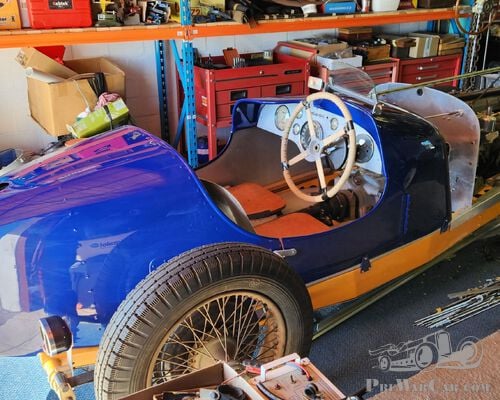
Riley TT Sprite
1935 6-cylinder TT Sprite replica. Chassis # 46A2722. Engine # 6A2722. Original Ulster Imp body. Restoration nearing completion. Engine, G..