The global magazine and marketplace for classic car enthusiasts, by enthusiasts.


Filter
Classic Waverley for sale - Waverley cars for sale
-

Zeer originele Ford Model T runabout
2 zits cabrio, motor is los, niet gerestaureerd, volledig orgineel, ingevoerd uit california in 1998, van de 2e eigenaar (m'n Oom) die hem van zn buurman kocht (1e eigenaar) bewust niet begonnen aan restauratie, dit is een echte originele voor de liefhebber. -
Bugatti 37 / 35B
Beautiful, well-maintained Bugatti Type 37 / 35B1927 Type 37 chassisType 35B engine retrofitted in 1932.All paperwork and registrations available. Road-legal in Switzerland.TÜV documents, DEKRA-Certificate and former registration in Germany.Very well maintained and in good mechanical condition.Just get i.. -
1936 Riley Special
This beautiful 1936 Riley, started life as a 12/ 4 model whilst the running gear is all from the lauded nine, with a desirable preselector box. In super condition throughout and continuously maintained , this might be the ideal European tourer, with its sprightly performance and full weather equipment to include hood and side screens.Runn.. -
1924 Bentley 3 – 4½ Litre Vanden Plas Tourer
Oldtimer Australia is delighted to offer for sale this Australian delivered 1924 Bentley 3.0 – 4½ Litre Vanden Plas Tourer. Elegant, purposeful and undeniably charismatic, the Bentley 3.0 Litre is widely regarded as one of the most desirable sporting cars of the vintage era. This well known and highly regarded car is .. -
1930 Ford Model A Pickup
Reimel Motor Cars is pleased to present this 1930 Ford Model A Closed-Cab Pickup. It is finished in Flax, a cream-yellow, with black fenders, tan-painted wire wheels and a black interior. THE MODEL A PICKUP Ford introduced the Model A in late 1927 as the successor to the Model T. It was a big step forward, with a more powerful four-cyli.. -
Delage DI, 1924, IL DRAGO RUGGENTE, one of few cars with an Aircraft engine and with war history.
A COLLECTOR'S OPPORTUNITY ONE-OFF. HAND-BUILT. UNREPEATABLE.A MACHINE WITH NO COMPARISONThere are special cars, there are racing cars - and then there are machines that simply have no comparison. Il Drago Ruggente - The Roaring Dragon - is one of them. Conceived and hand-built between 2009 and 2012, it was inspired by the heroic ra.. -
1929 Leyland Lioness Charabanc | RM Sotheby's | The London Auction
To Be OFFERED AT AUCTION WITHOUT RESERVE at RM Sothebys' The London Auction event, 31 October 2026. Offered Without Reserve | £30,000 - £40,000 GBP Please check back soon as our dedicated cataloguing team is preparing the description for this lot. To view this car and others currently consigned to this auction, please visit the RM website at -
1936 Leyland Cub London Transport Interstation Bus | RM Sotheby's | The London Auction
To Be OFFERED AT AUCTION WITHOUT RESERVE at RM Sothebys' The London Auction event, 31 October 2026. Offered Without Reserve | £50,000 - £70,000 GBP Please check back soon as our dedicated cataloguing team is preparing the description for this lot. To view this car and others currently consigned to this auction, please visit the RM website at -
Fraser Nash TT Replica
AHX 389 ( chassis no. 2073, engine no. 10367).An important and correct short-chassis TT Replica with known history from new. Ex. H. Porter-Hargreaves, Bunty Richmond & Midge Wilby with extensive period competition history.Purchased at the renowned sale of Midge Wilby's effects in 1986 and subsequently restored by Derek H.. -
1930 Chrysler 66 Six-Wheel Equipped Royal Sedan
An exceptionally well restored and highly awarded Chrysler 66 Royal Sedan, with only two owners in nearly 97 years.The present owner acquired the car as a complete and remarkably original example and subsequently carried out a no-expense-spared restoration over many years. The restoration was a total body-off, nut-and-bolt rebuild ..


Waverley
US, 1898 – 1914
(1) Indiana Bicycle Co, Indianapolis, Ind., 1898 – 1899
(2) American Bicycle Co, Indianapolis, Ind., 1900 – 1901
(3) International Motor Car Co, Indianapolis, Ind., 1901 – 1903
(4) Waverley Dept., Pope Motor Car Co, Indianapolis, Ind., 1903 – 1907
(5) Waverley Co, Indianapolis, Ind., 1908 – 1914
The original electric Waverley car was a two-seater with tiller steering and a single headlamp which sold for $850. During the Pope régime the line of models Waverley cars was expanded to include closed bodies, including a miniature limousine with a wheelbase of only 7ft 6in. After the failure of Pope, a large range of Waverley cars was marketed, with four different shaft-drive models in 1914, and these electric Waverley cars were similar in appearance to petrol cars.
GB, 1901 – 1904
(1) Scottish Motor Co, Edinburgh
(2) New Rossleight Motor & Cycle Co. Ltd., Edinburgh
The Waverley car from Scotland was one of the many British cars of the time that consisted of a De Dion engine in a home-produced chassis. A 9hp single-cylinder unit was used on the Waverley car, in conjunction with a 3-speed gearbox. ‘The Pride of the North’ as the Waverley car was called, cost £280 in 1902.
GB, 1910 – 1931
(1) Light Cars Ltd, Willesden, London N.W., 1910 – 1915
(2) Waverley Cars Ltd, London W.10, 1919 – 1931
The London Waverley car was a name which lasted a long time, but not many Waverley cars were made, and they never achieved any fame. The first Waverley car were light cars with 9hp V-twin JAP engines, and gearboxes in their back axles. Only one rear wheel of the Waverley car was driven, so a differential was unnecessary. Initially, there were only 2 forward speeds; later there were 3. A 10hp 4-cylinder in-line unit supplemented the twin, and a 15hp Waverley car was added. These engines were made by Chapuis-Dornier, and by 1913 were installed in conventional Waverley cars. In the 1920s the Waverley carwas generally a small to medium-sized assembled family car of no distinction, like so many of its contemporaries in Britain.
In 1919 the staple model Waverley car was the Waverley Twelve. From the very beginning Waverley car suspension was praised, but the Waverley Twelve’s engine was rough and noisy. The same applied to the 10hp 1½-litre Waverley car, current from 1922 and renamed the 11hp Waverley car in 1924. Both engines were by Coventry-Simplex. Other units for the Waverley car were made by Tylor. However, the new Waverley Twelve of 1924 was given a 1½-litre, single sleeve-valve engine of Burt-McCollum type, which overcame the main criticism. This Waverley car had front-wheel brakes. A new 16hp Coventry-Simplex-engined six appeared for 1925. It was also an improvement as far as silence and smoothness were concerned. In the same year, an odd ephemeral ‘£100 car’ was shown. This Waverley car was propelled by a rear-mounted flat-twin water-cooled engine of 900cc. Transmission of the Waverley car was by friction disc, which provided 4 forward speeds.
Source: Georgano, encyclopedia of motorcar; GMN, TRN
The information is written with the greatest of care. However, if you have any suggested amendments please contact us at office@prewarcar.com



Featured
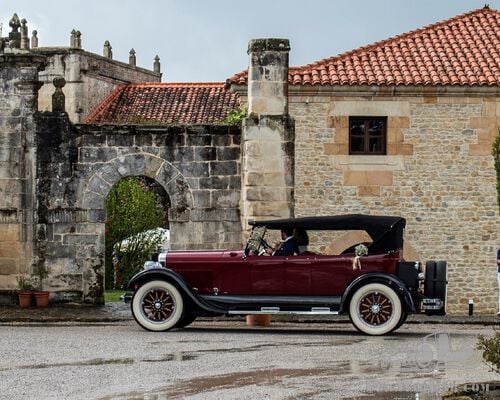
1925 Lincoln Model L Phaeton by Brunn - Excellent provenance
Retaining its original matching-numbers engine and chassis (both numbered 24576), the car benefits from an extensively documented history and..
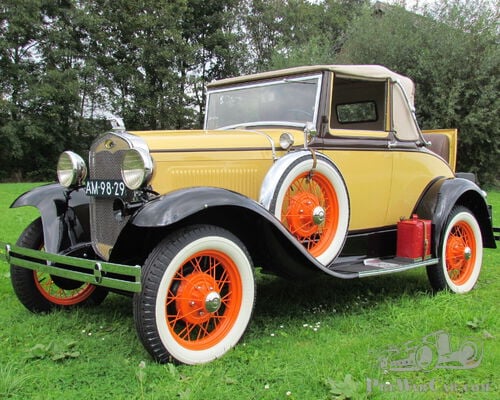
A Ford 68C Cabriolet
A fully restored Ford Model A, finished in its original factory colours and in very good condition. The car recently completed a 2,500-kilometre to..
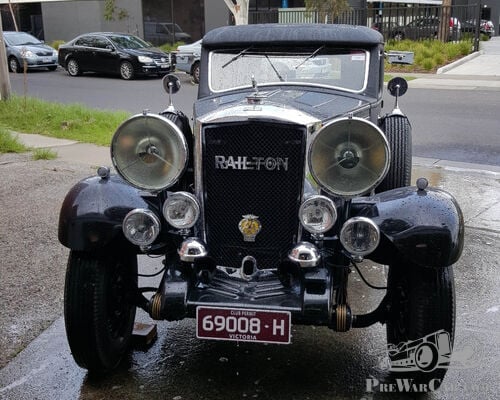
Railton straight 8 sports coupe for rallying REDUCED PRICE run with the bentleys at a fraction of the price
1934 Railton Sports CoupeBuilt for long distance rallyingRebuilt 2017built up at a cost of $160,000AUD, OFFERED FOR SALE AT A ..