The global magazine and marketplace for classic car enthusiasts, by enthusiasts.


Filter
Classic Mors, White for sale - Mors, White cars for sale
-

Bugatti Type 30 short chassis roadster. Fully restored on a replica chassis
This car has had a full restoration and is build from a lot of original parts on a replice chassis built in Germany, It has chassis number BC 189 from the UK Bugatti Owners Club. Car has done only about 500km since restoration but health problems dictate that it must go. Please email for fullest details of the source of all the parts and a vide.. -
1930 Bentley Speed Six
1930 Bentley Speed Six Chassis Number: SB2774 Engine Number: SB2772 Reistration Number: GH8974 New to market & freshly restored to perfection. This car has over the past two years been fully rebuilt & built up as a LeMans style tourer by noted Rolls Royce &.. -
1936 Cadillac Series 60 Convertible Coupe | RM Sotheby's | The Hershey Auction
To Be OFFERED AT AUCTION WITHOUT RESERVE at RM Sothebys' The Hershey Auction event, 7 - 8 October 2026. Offered Without Reserve | $50,000 - $70,000 USD Please check back soon as our dedicated cataloguing team is preparing the description for this lot. To view this car and others currently consigned to this auction, please visit the RM website a.. -
Renault NN Torpedo Commerciale (1926)
Highlights Complete, coherent, unmodified exampleExcellent base for a full restorationAttractive 1920s torpedo body styleVery accessible entry priceIdeal for workshops or enthusiasts looking for a rewarding project Restoration project – Complete car – Solid base but major work r.. -
Renault 12 HP Coupé de Ville Carrosserie Kellner Type CB – 1911
HighlightsExceptional original conditionRare Kellner coachworkComplete, authentic, coherent exampleOriginal paint and interiorMuseum‑grade preservationIdeal for concours preservation class Kellner Coupé de Ville – Exceptional original condition This.. -
De Dion‑Bouton Type D (1899)
HighlightsRare early De Dion‑Bouton, highly collectibleBeautiful presentation and coherent historyEligible for major international veteran eventsA centrepiece for any prestigious collection Vis‑à‑vis “La Petite Voiture” – High‑quality restoration – Veteran car eligible .. -
1940 Buick Super Convertible Coupe | RM Sotheby's | The Hershey Auction
To Be OFFERED AT AUCTION WITHOUT RESERVE at RM Sothebys' The Hershey Auction event, 7 - 8 October 2026. Offered Without Reserve | $50,000 - $60,000 USD Please check back soon as our dedicated cataloguing team is preparing the description for this lot. To view this car and others currently consigned to this auction, please visit the RM website a.. -
1938 Rolls Royce Wraith Gurney Nutting Sedanca Coupe
1938 Rolls Royce Wraith Gurney Nutting Sedanca Coupe Chassis number: WRB2 Registration number: FLH5 This car may be paid for in Bitcoin. Approx 3 BTC Simply the best of the best & a Pebble Beach/Villa D'Este quality car. This wrait.. -
1934 Aston Martin 1.5 Litre Mark 2 Long chassis sports tourer.
1934 Aston Martin 1.5 Litre Mark 2 Long chassis sports tourer. Chassis Number: D-4/417/L Engine Number: D-4/417/L Registration Number: WD7623 Stunning condition and the best one of these we have seen. This car had a full restoration including a massive engine rebui.. -
Citroen AC4 1929
WANTEDSOLEX CARBURETTOR MOVD 6240 PARTS REQUIRED - JET CARRIER / HOLDER - NEEDLE VALVE - JETS3 SPEED MANUAL GEARBOX PARTS REQUIRED -- INPUT SHAFT - 3RD GEAR - LAYSHAFT SPINDLE - LAYSHAFT BUSHES - GASKETS


Mors
France, 1895 – 1925; 1941 – 1943
(1) Société d’Electricité et d’Automobiles Mors, Paris, 1895 – 1907
(2) Société Nouvelle des Automobiles Mors, Paris, 1908 – 1943
Emile Mors was an electrical engineer, which may account for the ingenious ignition system (by low-tension coil and dynamo) found on his first Mors cars with aiv V4 engines, dry-sump lubrication, water-cooled heads and air-cooled barrels. These power units were rear-mounted, and the belt-and-pulley change-speed gear on the Mors car was in the Benz idiom. Production in 1898 was running at 200 Mors cars a year and front-mounted engines made their appearance on the Mors Petit Duc, an 850cc flat-twin with partial water cooling, cone clutch and final drive of the Mors car was by side chains. Steering was by handlebar and the Mors car cost £294 in England in 1900. The Mors car was still listed in 1901, though later examples were wheel-steered.
The Mors racing cars designed by Brasier at first rivalled and then surpassed the hitherto invincible Panhards, winning the Paris-st. Malo and Paris-Bordeaux in 1899, following this with victories of Mors cars in the Paris-Toulouse-Paris and Bordeaux-Périgeux-Bordeaux in 1900, and the Paris-berlin and Paris-Bordeaux in 1901. In 1902 the Mors 60hp 9.2-litre competition machines had shock absorbers and in 1903 capacity of the Mors car had gone up to 11.6-litres, with mechanically-operated overhead inlet valves and streamlined bodywork of the upturned-boat type. Gabriel won the Paris-Madrid race on one of these Mors cars, while the Hon. C.S. Rolls recorded 84,68mph over the kilometer at Welbeck on a similar Mors car. The 1904 racers saw a reversion to T-head power units, but this was the last year in which Mors cars made any impression on the circuits. Though Jenatzy drove a Mors car for the team in the 1908 Grand Prix, he took 9th place, and the 2½-litre Mors cars prepared for the cancelled 1914 Coupe de l’Auto never reappeared.
Though full water cooling was not adopted till 1902 on Mors cars, vertical 4-cylinder engines made their appearance late in 1899, followed in 1900 by low-tension magneto ignition. 1901 Mors cars had what amounted to one carburetter per cylinder, with a huge central float chamber. From 1902 onwards the Mors cars followed conventional lines; 1903 Mors carmodels retained the chain drive, but had mechanically-operated sv in a T-head, pressed-steel frames, Dubrulle lubrications and Mercedes-style honey-comb radiators. Brasier had already departed the Mors car company to work for Georges Richard. In 1904 Charles Schmidt, also of Mors cars, went to design European-style cars for Packard in America – this had no connection with the American Mors cars made from 1906 to 1909. Also new on Mors cars in 1904 was the ‘shouldered’ radiator shell which persisted on the Mors carmarque almost to the end. 4-cylinder Mors cars only were made in 1905; they came in 2.3-litre, 3.2-litre, 4.3-litre, 5.7-litre and 8.1-litre sizes, and the largest Mors car, rated at 40/52hp, had an auxiliary transverse spring at the rear and cost £1.224. In 1906 the aluminium water jacketing introduced on Mors cars in 1903 was abandoned, while cone clutches gave way to the contracting-band type which Mors cars never departed from. Ignition was now by high-tension magneto and options included the Huillier windscreen (patented by a Mors car company’s director) and compressed-air starting. A cab-over-engine petrol brougham was listed on the 17hp Mors car chassis. In 1907 L-head monobloc engines arrived with the small 10hp Mors car and 15hp models, which Mors cars also had shaft drive and pressure lubrication: at the top of the range was an 50hp 6-cylinder Mors car with gate change and low-tension magneto ignition and this Mors car sold at £1.375 in England.
The 1908 depression was a blow from which the Mors car company never really recovered, though the company was reconstructed under André Citroën’s management and in 1909 they made 2.000 Mors cars, sales being aided by bigger shaft-driven 2.5-litre and 3.7-litre models. Chain drive and make-and-break ignition were to persiste on the biggest Mors cars until 1912, though there was a shaft-driven 3.6-litre 6-cylinder Mors car in 1911 and the L-head monobloc 12/15hp with 4-speed gearbox was quite popular in 1913/1914. Poppet and Knight sleeve-valve models in great diversity were offered on Mors cars during the last two pre-World War 1 seasons, the latter coming in 2.1-litre, 3.7-litre, 4.4-litre and 7.2-litre sizes with engines by Minerva. By 1914 only the small Mors cars retained sv power units; Citroën double helical bevels were standard, and an sv sports 17/20hp Mors cars was offered with electric lighting. Only Minerva-built Knight engines were used in Mors cars after 1918, the radiators wearing a triple-S monogram as a riposte to Panhard’s double-S (for sans soupages). Mors cars, however, had fewer resources than their former rivals, and not even good looks and a 70mph performance (plus front wheel brakes in 1921) could save the 3.6-litre Sporting 20 Mors car. A 2-litre Mors car, also Minerva-engined, appeared in 1922, but by 1925 most, if not all the Mors car company’s facilities had been absorbed by Citroën. There was a brief renaissance by Mors cars with electric cars during World War 2, but the last vehicles to bear the name of Mors were the Speed motor scooters made from 1952 to 1956.
Source: Georgano, encyclopedia of motorcar; MCS
The information is written with the greatest of care. However, if you have any suggested amendments please contact us at office@prewarcar.com
White
US, 1900 – 1918
(1) White Sewing Machine Co, Cleveland, Ohio, 1900 – 1906
(2) The White Co, Cleveland, Ohio, 1906 – 1918
Rollin H. White of the Cleveland sewing-machine concern produced their first White steam car in 1900. This White steam car was a light chain-drive Stanhope with tiller steering and a simple 2-cylinder under-floor engine. The White steam car had an underslung frontal condenser, and 193 White steam cars were sold in 1901, the first year of full production. This gave way in 1903 to a White steam car model with a front-mounted compound engine under a bonnet, condenser in the normal ‘radiator’ position, wheel steering, and shaft drive.
These White car and subsequent White steam cars used a semi-flash type of boiler, and could run a hundred miles between fillings of water. Frames of the White steam cars were of armoured wood, and a tonneau White car cost $2.000.
The White steam cars did well in early Glidden Tours, and racing versions, such as Webb Jay’s Whistling Billy with an underslung frame, were also successful; this White steam car covered a mile at 74.07mph. Theordore Roosevelt used a White steam car during his tenure of the White House. 1905 White steam cars had a 2-speed back axle, and also a ‘free engine’ enabling the pumpt to work without manufal assistance when the White car was stationary in traffic. 1906 was the best sales year for the White car company, with 1.534 White cars devlivered, but steam-car production was held at over 1.000 White steam cars a year to the end. By 1908, the White steam car company was offering two models, a 20hp White Model L at $2.500, and the big seven-seater Model K White car with a 10ft 2in wheelbase at $3.700. Joy valve motion replaced the Stephenson link type on 1909 White steam cars, which had both sets of brakes working on the rear wheels of the White car.
White steam cars continued to be listed into 1911, though the 1910 White MM and White OO were the last new White steam cars. For the 1910 season the White car company offered a 3½-litre sv petrol car with a monobloc engine inspired by the Delahaye; the 4-speed gearbox of the White car had a geared-up top. This White car was joined in 1912 by a really big six rated at 60hp, and this White car was selling for $5.000, still with 4 forward speeds. Electric lighting and starting were added on these White cars during the year, and these 4- and 6-cylinder White cars were continued until 1916.
The 1917 models White cars were 16-valve fours of over 6½-litres’ capacity, with magneto ignition, these White cars were selling at $5.000 upwards.
By this time the White car company was firmly established in the truck field, and after 1918 private White cars and White steam cars were made to special order only, and in very small numbers. The last of these ‘special White cars’ was made in 1936.
Rollin White was subsequently responsible for the Rollin car in 1923, while the White car firm also absorbed two truck-makers who had previously built private cars, Autocar and ReO.
US, 1909
George White Buggy Co, Rock Island, Ill.
This White car was a high-wheel buggy, but the mounting of the engine at the front under a bonnet gave the White car more the appearance of an ordinary car than many of its kind. The engine of this White car was a 2-cylinder 12/14hp unit which drove via a 2-speed epicyclic gear and propeller shaft. Two- and four-seater bodies were available on White cars.
US, 1914
White Manufactuing Co, Waterloo, Iowa
The White car was a cyclecar and used a 9hp ohv V-twin engine. This White car had chain final drive.
Source: Georgano, encyclopedia of motorcar; MCS, GNG
The information is written with the greatest of care. However, if you have any suggested amendments please contact us at office@prewarcar.com


Featured

Lagonda LC Tourer 1934
The Lagonda story began in 1901 in Staines, a small town in the UK. The company enjoyed its greatest successes around 1935. During this period, the..
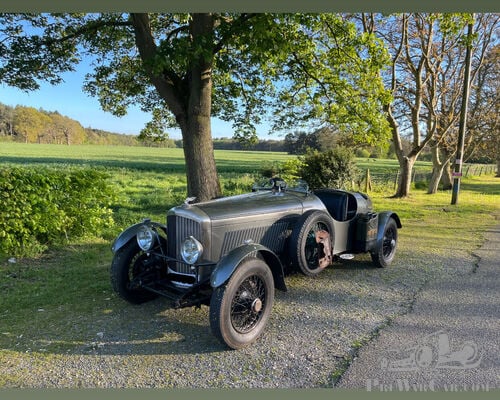
Derby Bentley Special 4-1/4
Sadly i am having to sell on my Bentley special ( Icarus). It is currently a work in progress and still needs finalising/ refining. A great o..
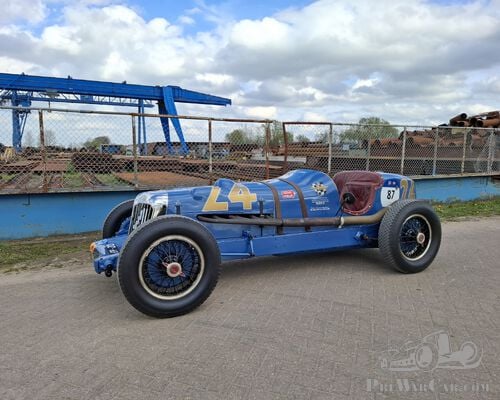
1932 - Graham " Lucenti " Indianapolis
Original participant of the 1932, 1934 and 1935 Indy 500. Best result: finishing 10th overall in the 1934 Indy 500 with driver “Herb” Ardinger...