The global magazine and marketplace for classic car enthusiasts, by enthusiasts.


Filter
Classic Winton for sale - Winton cars for sale
-

1912 Winton Model 17-C Touring
1912 Winton Model 17C TouringSerial Number 11944 This is a great example of a 1912 Winton Model 17C Touring. It is powered by its six-cylinder, 457CID/48 horsepower engine that is powerful, well-balanced and smooth. A very impressive, large car with its 130" wheelbase. It is in excellent, restored condition that was undoubte..

Winton
US, 1897 – 1924
Winton Motor Carriage Co, Cleveland, Ohio
Alexander Winton, a Cleveland bicycle maker, built a 12hp twin-cylinder experimental Winton car in 1897, which recorded 33.7mph over a mile. He produced his first Winton car for commercial sale the following year; this was a two-seater phaeton Winton car with a horizontal single-cylinder engine, 2-speed transmission, and laminated wood frame, listed at $1.000; 25 Winton cars were sold in the first season, early customers including the Packard brothers.
The first of the Gordon Bennett Cup races in 1900 stemmed from a challenge issues by Winton cars to Fernand Charron, and the designer himself took part on a Benz-like Winton car with an enormous single cylinder of 3.8-litres’ capacity, said to produce 14bhp. The Winton car failed to make any impression, but by 1901 Winton cars was producing a large horizontal-twin with its 2-speed gearbox mounted under the floor and alongside the engine. The bonnet of the Winton car was devoted to tankage, wheel steering was provided, and 40bhp was claimed. A Winton car characteristic which persisted for several years was a variable-lift inlet valve actuated by compressed air, a medium to which Alexander Winton was addicted. A 15hp touring Winton car on similar lines, with central chain drive, sold for $2.000 in 1902, increased to $2.500 for a Winton car in 1903, when nominal output went up to 20hp. One of these Winton cars was used for Jackson’s successful trans-Continental run; also in 1903 Winton cars made another bid for international racing laurels with his two Winton Bullets. Both of these Winton cars had in-line engines lying on their sides in the frame, and the inevitable pneumatic governor. Percy Owen’s Gordon Bennett car was an 8½-litre four, but Winton himself drove an 80bhp eight Winton car of 17 litres’ capacity, and with only a single forward speed. Both Winton cars retired, though the Bullets later did fairly well in American sprint events.
Vertical 4-cylinder engines and conventionally-located gearboxes were the order of the day on Winton cars in 1905, and high-tension magneto ignition was also used, but 2 forward speeds were still deemed sufficient. Three types Winton cars were marketed, ratings being 16, 24, and 40hp. The 5.8-litre Winton Model K of 1906 retained the 2-speed box, but sliding-type transmissions were found in both of Winton cars 1907 offerings, the 35hp 4-cylinder Winton Model M, which Winton car had 4-speeds and a geared-up top, and the 7¾-litre Winton Model XVI six, a 3-speed model. Two sixes Winton cars were sold in 1909, the larger of the two Winton cars having a capacity of over 9½-litres and a wheelbase of 10ft 10in. This Winton car cost $4.500, and Winton offered a compressed-air starter; by 1911 this was being used to pump up the tyres as well. Thereafter pair-cast sixes were standard on the Winton car and electric starting was adopted finally in 1915. No major changes occurred after 1920, when the earlier types Winton car gave way to the 5.7-litre Series 25 with a 4-speed gearbox.
Winton elected to abandon Winton car manufacture in 1924 in favour of marine diesel engines, and the Winton car company is still active in this field as a Division of General Motors.
Source: Georgano, encyclopedia of motorcar; MCS
The information is written with the greatest of care. However, if you have any suggested amendments please contact us at office@prewarcar.com


Featured

Daimler Flat six 15 Saloon - Fluid Flywheel / pre-selector
The E20 was manufactured between 1935 and 1939. It offered the choice of a coachbuilt saloon, Sports Saloon, Fixedhead Coupé and Drophead Coupé bod..
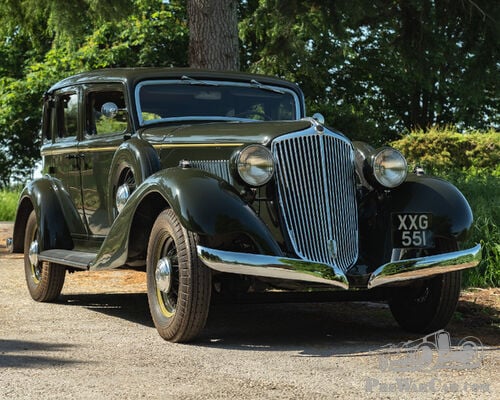
Graham Model 64 Standard Eight 'Blue Streak'
UK Registration No: XXG 551Chassis No: 1801069MOT: ExemptH&H ClassicsKelham Hall | Newark, Nottinghamshire
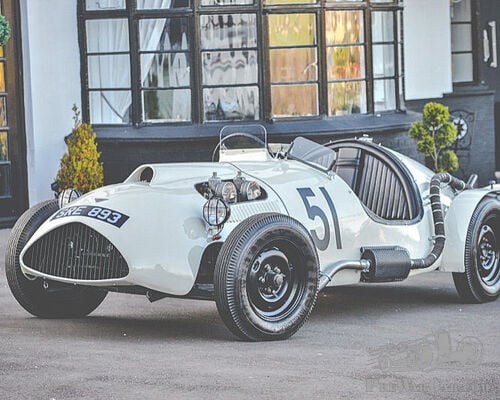
1933 Alvis 3.0 Special - One-Off Alloy Body | Period Competition Car | Featured in “Alvis – A Century of Drivers”
1933 Alvis 3. 0 Special - One-Off Alloy-Body | Period Competition Car | Featured in “Alvis – A Century of Drivers”