The global magazine and marketplace for classic car enthusiasts, by enthusiasts.


Filter
Classic Züst for sale - Züst cars for sale
-

1936 Bentley Derby 4.25 Sedanca by Thrupp & Maberly
1936 Bentley Derby 4.25 Sedanca by Thrupp & Maberly Chassis number: B-36-GA Registration Number: CXE213 A stunningly beautiful car which wows onlookers wherever it is seen, this 4.25 Litre Derby Bentley Sedanca Coupe has fabulous and possibly unique aluminium Sedanca coachwork by Thrupp and Maberly... -
Cadillac V16 - Series 452 - 1930 - Imperial Sedan 4330
Offers invited a round € 200.000 - This ONE of 4 Survivors of Serie 4330 body style - book C.W. Cummings - 2014) ***excellent driving car, the V16 gives you a special experience, no other car has***https://www.prewarcar.com/a-stately-cadillac-v16-in-the-netherlandsBuilt; no 9 of 50 - Engine no. 700163Lengt.. -
1925 Lancia Lambda 5th Series Torpedo
With a monocoque body, four-wheel brakes, independent front suspension and V4 overhead camshaft engine, many enthusiasts view the Lancia Lambda as one of the great and innovative automobiles of all time. The Lambda was also successful in competition with privately entered cars finishing fourth and fifth behind the works OMs in the first Mille Mi.. -
1930 Bentley Speed Six
1930 Bentley Speed Six Chassis Number: SB2774 Engine Number: SB2772 Reistration Number: GH8974 New to market & freshly restored to perfection. This car has over the past two years been fully rebuilt & built up as a LeMans style tourer by noted Rolls Royce &.. -
Renault NN Torpedo Commerciale (1926)
Highlights Complete, coherent, unmodified exampleExcellent base for a full restorationAttractive 1920s torpedo body styleVery accessible entry priceIdeal for workshops or enthusiasts looking for a rewarding project Restoration project – Complete car – Solid base but major work r.. -
Société des Automobiles Pilain
The 1911 Pilain is the Type 4.0, equipped with a four-cylinder engine and a single Zenith carburetor. This car has undergone a comprehensive restoration over the past few years. Since the original body was too deteriorated to restore, it was decided to install an alternative body. The current elegant body is sourced from a Bianchi, which perfect.. -
Lane Model 15 | Steam car
This unique steam car is a completely original 1909 Lane Model 15, offering a highly distinctive design that sets it apart from most other steam vehicles. It is the only surviving Lane Model 15 in existence. Experts consider the Lane to be one of the finest steam cars of the early automotive era, produced between 1900 and 1910. Lan.. -
1934 Railton -Hudson Original Alpine Trials Racer
By 1933, Railton built a variety of the larger versions which were powered by Hudson. The Hudson engine and chassis were built in the US and exported to England for Railton. This 1934 Railton is one of the two original Alpine Trials cars sponsored by Railton and driven by Habmit Davids. Both cars not only completed the trials but also.. -
Renault 12 HP Coupé de Ville Carrosserie Kellner Type CB – 1911
HighlightsExceptional original conditionRare Kellner coachworkComplete, authentic, coherent exampleOriginal paint and interiorMuseum‑grade preservationIdeal for concours preservation class Kellner Coupé de Ville – Exceptional original condition This.. -
De Dion‑Bouton Type D (1899)
HighlightsRare early De Dion‑Bouton, highly collectibleBeautiful presentation and coherent historyEligible for major international veteran eventsA centrepiece for any prestigious collection Vis‑à‑vis “La Petite Voiture” – High‑quality restoration – Veteran car eligible ..


Züst
Italy, 1905 – 1917
(1) Ing. Roberto Züst Fabbrica Italiana di Automobili SA, Milan, 1905 – 1911
(2) Brixia-Züst SA, Brescia, 1906 – 1911
(3) Fabbrica Automobili Züst, Brescia, 1912 – 1917
The Swiss-born engineer Roberto Züst made turbines at Intra on Lake Maggiore and left his company to his sons on his death in 1897. There seem to have been some experiments with Züst cars at the turn of the century, but serious Züst car manufacture did not begin until the establishment of the Milan works in 1905. The first Züst cars were typical Italian interpretations of the Mercedes-theme, with four pair-cast cylinders, low-tension magneto ignition, pressed-steel frame, 4-speed gate-change gearboxes and side-chain drive. There was, however, one big difference: what appeared to be a T-head engine was not, since on Züst cars the second camshaft merely actuated the make-and-break. Two Züst cars were made at first, a 7.4-litre 28/45 Züst carand an 11.3-litre 40/50Züst car; these Züst carwere joined by a smaller 5-litre Züst car in 1908. Züst cars of this type were still being marketed as late as 1913, and a 28/45 Züst car took 3rd place in the 1908 New York-Paris marathon.
In 1906 an associate Züst car company was set up in Brescia (the Latin name for the city was Brixia) to make more economical Züst cars such as the 14/18hp Brixia-Züst car with high-tension magneto ignition and shaft drive. Two years later they made a bid for the economy market with a 1.4-litre three-in-line Brixia-Züst car rated at 10hp. Cylinders were cast monobloc, and this Züst car had a true T-head; 150 Züst cars of a 1½-litre development served as taxicabs in London in 1910. Meanwhile the Milan-built Züst cars continued with little change until 1910 when a shaft-driven L-head 3-litre 16/20 Züst car was marketed, still with pair-cast cylinders. By this time the Brescia operation had been losing money for several years, and even a small 2.3-litre four Brixia-Züst carmade little impression. The two Züst car concerns were therefore merged at the end of 1911, and production concentrated at Brescia, where more developments of the 16/20 theme made their appearance. The Züst cars came in 2.9-litre, 6.2-litre and 7.4-litre sizes, the biggest of the Züst car range having lightweight connecting rods and pistons, frontal and flywheel fans, and the options of Riley wire wheels and dual ignition. Monobloc engines and rear-shaped radiators à la Fiat were seen on the 4.7-litre S305 Züst car of 1913, a 60mph car with all its brakes on the rear wheels. Two years later the 2.9-litre 15/25 Züst car was updated in like fashion, but at the end of 1917 Züst cars sold out to the Officine Meccaniche. This firm continued production of S305s under the OM name.
Source: Georgano, encyclopedia of motorcar; MCS
The information is written with the greatest of care. However, if you have any suggested amendments please contact us at office@prewarcar.com


Featured
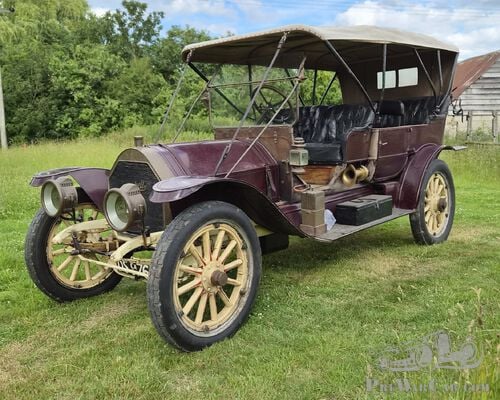
1910 Mitchell Model S - 50HP Six Cylinder
Based in Racine, Wisconsin and being the largest wagon manufacturer in the USA, Mitchell-Lewis produced their first motor car in 1903. Sales grew ..
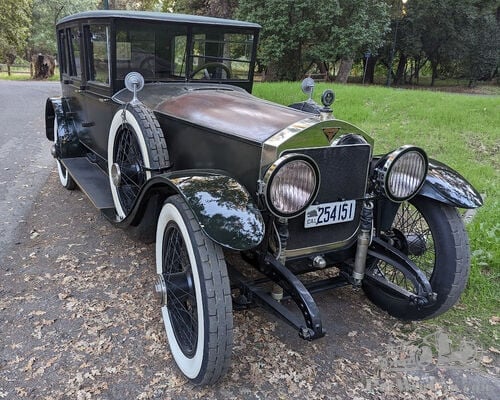
1916 Simplex, Crane model 5
1916 Simplex, Crane MODEL 5CUSTOM MADE HISTORIC PRESERVATION VEHICLE – READY TO TOUR!This Simplex recently completed th..
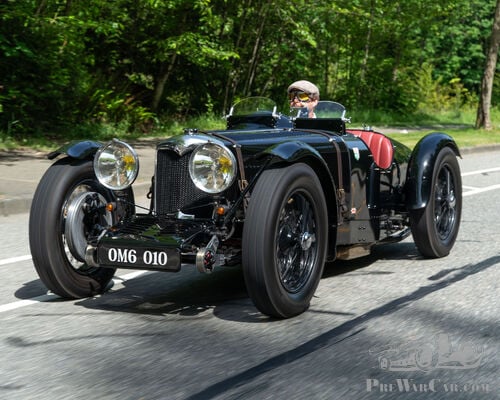
Riley 14/6 Special 1933
The ExperienceStep into the golden age of British motoring. This 1933 Riley 14/6 Special is a masterclass in pre-w..