The global magazine and marketplace for classic car enthusiasts, by enthusiasts.


Filter
Make a choice:
- Cars
-
Make >>
-
Year >>
-
- Bikes
- Parts & more
-
Make of car >>
-
Manufacturer >>
-
Category >>
- Bicycles & more
-
Year >>
-
Countries


Confusion over a Rover
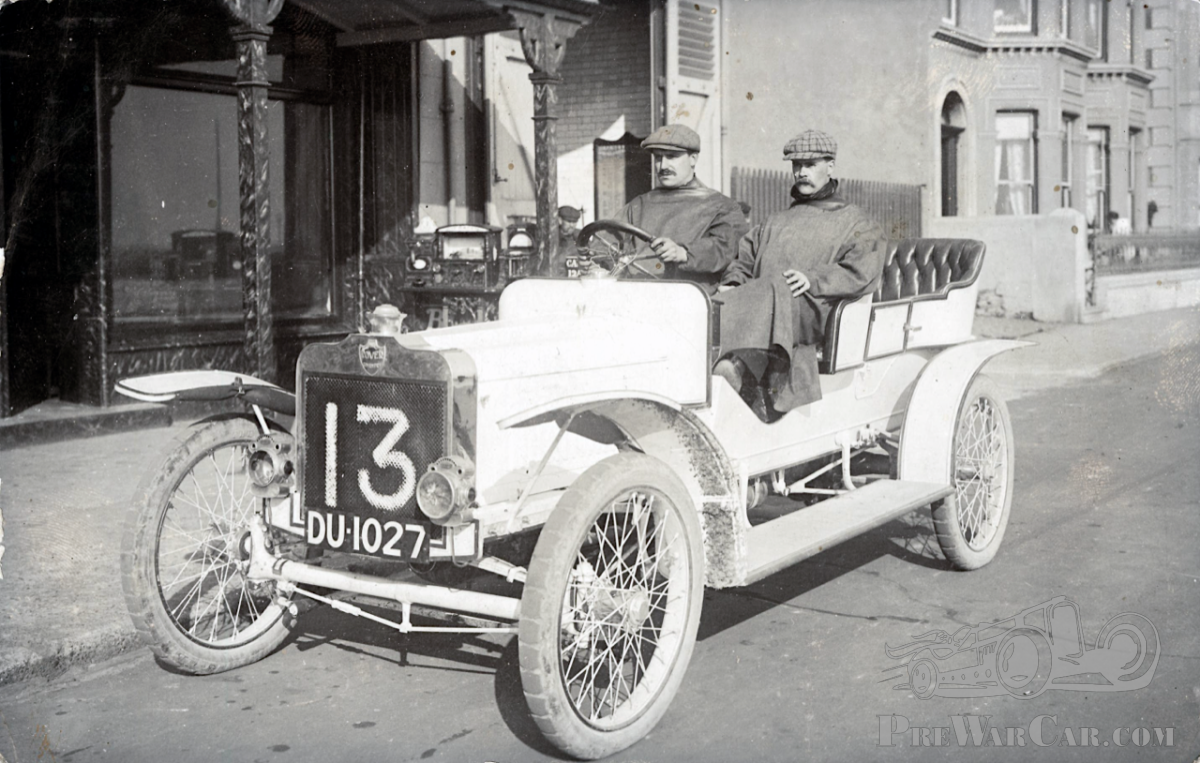
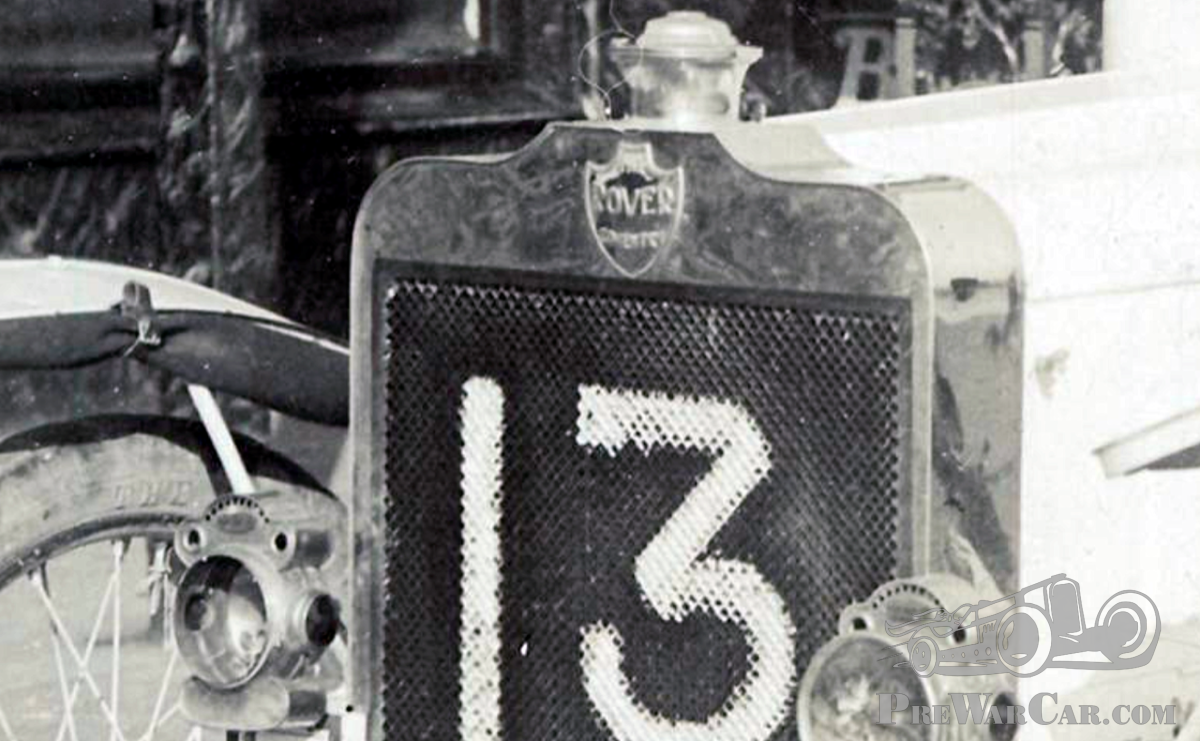


The original caption of this great shot from the Manx National Heritage files refers to: “T.C. Pullinger in a Beeston Humber, 1907 Tourist Trophy motorcar race”. But zoom in on the radiator badge and there’s no doubt that this is not a Humber made in Beeston, but a Rover made in Coventry.
Perhaps the confusion came about because of the driver. T.C. Pullinger must have been Thomas Charles Willis Pullinger, the automobile engineer who worked for both Sunbeam and Humber, before turning to Arrol-Johnston in 1910.
But hang on, there’s more. Could two pictures have simply got mixed up, with this one not showing Pullinger after all but somebody else? A report of the race, held on 30 May 1907, mentions: “The winner was declared to be the 20hp Rover car driven by Mr E. Courtis, and entered by Mr J.K. Starkey. The 16-20hp Beeston-Humber, entered and driven by Mr T. E. Pullinger, was second.”
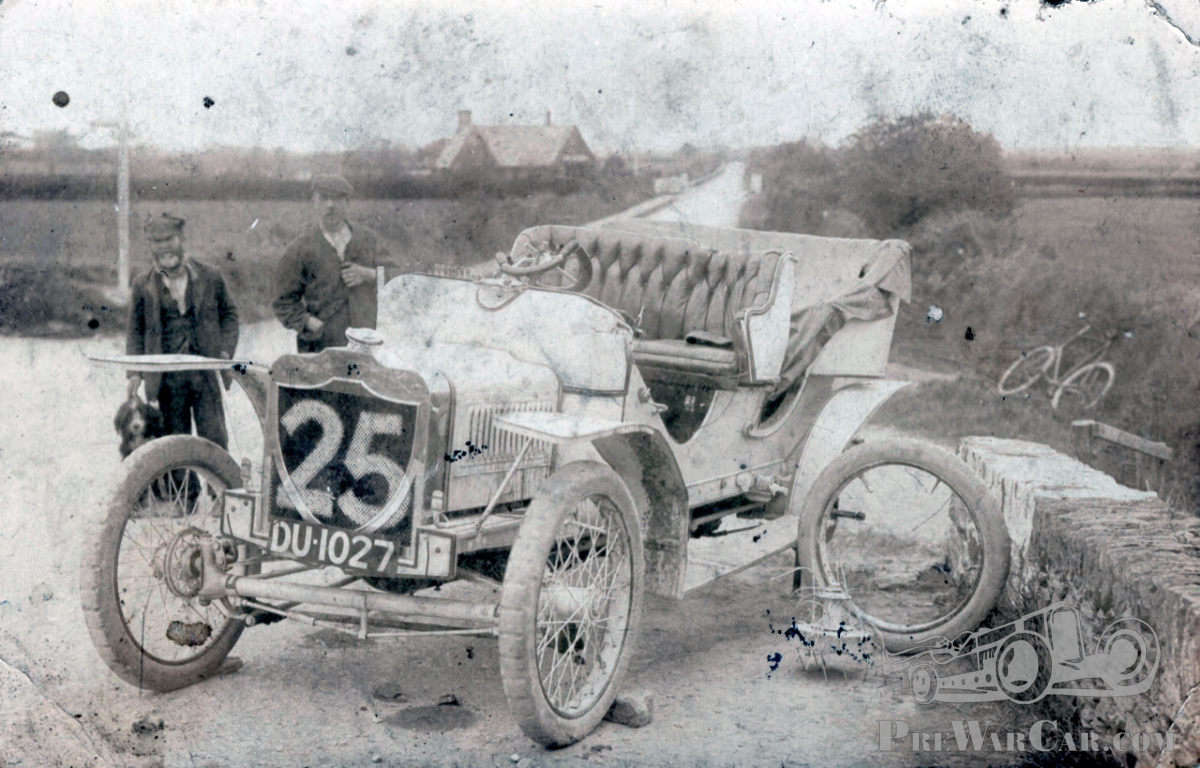
The Rover is a 20hp, or perhaps the prototype of that car as the 20hp is said to be “a road version of the successful Tourist Trophy entry car (1907)”. Another picture, said to be taken in practice for the 1907 TT race, reveals the same car. It’s wearing number 25 rather than 13 and was crashed at Sulby Bridge. Now look closely at the body of each car. Not the same are they? We think it must have been altered after the crash. The radiator is different, too. In the caption coming with that one it is referred to as a ‘Folkers Rover’. Who/what’s that then?
Crikey. More explanation is needed here..png)
Words by Jeroen Booij. Pictures courtesy of the Manx National Heritage.
Published:
Wednesday November 3rd, 2021
Facebook
LinkedIn
Twitter
WhatsApp
Email
Copy
Comments
David Grimstead
05 November 2021, 23:48
Jeroen Booij
12 November 2021, 09:21
That is a very comprehensive answer with much detail. Thank you very much David for taking the time and effort to dit quite a lot deeper into this matter. One question remains, however: are the number 13 and number 25 cars the same ones; is one a development over the other or is it just the registration that was transferred to another Rover?
Read more
Ariejan Bos
03 November 2021, 13:48
The mystery is not that complicated. The Rover with no.13 participated in the 1906 Tourist Trophy. It was a 16hp model driven by Mr. Ernest Courtis and has the 1906 type of radiator. The other Rover with no.25 participated in the 1907 TT. In this 20hp car the driver was Mr. Edgar R. Folker. Courtis, who would drive a similar Rover with no.22, would win the race. These 1907 Rovers have a kind of intermediate type of radiator: the outline of the next generation of Rover radiator shapes is already visible inside the older type.
Read more
In practicing for the race, J. K. Starley (Works Manager and son of Rover’s founder) had a high-speed skid between Snaefell and Douglas, throwing out and seriously injuring his works foreman William Riley. Not really what a works manager should do to his staff and perhaps why in 1907 Courtis drove the Starley-entered No.22 car, after Rover Managing Director Harry Smith, who entered Folker’s 1907 No.25 car, banned “keen amateur driver” Starley from competing in the TT saying; “You have something beyond motors to consider.”
Folker’s Rover No.25, DU1027 definitely broke its wheel in dry weather practice, as 1907 race day reports said: “Weather conditions were as bad as could be imagined. Heavy rain all day and on the mountains a thick fog which, according to the stories of the competitors, made it impossible sometimes to see a foot beyond the end of the car” and although Folker did not finish he had only “a series of slight mechanical troubles, followed by tyre delays, resulting in the expiration of the time limit for starting on the final lap, five having been duly completed.”
After what was already a contentiously organised race with many cars permitted which were arguably not touring cars, it seems some discontent was voiced about 1907’s winning “tortoise” Rover because the T. C. Pullinger-entered, much faster, second-placed Beeston-Humber No.13, driven by J. Reid, was leading on time up to the last lap but had to stop to clear a mud-clogged magneto and lost by just a few minutes after more than eight hours driving. The No.12 Coventry-Humber (entrant Walter Phillips/driver W. G. Tuck) had earlier been leading when it skidded and broke a wheel on lap five. The Rover win “was acclaimed as the termination of a long drawn out agony.”
Agony was short for Pullinger; in the separately car-numbered but concurrently run five-lap Heavy Touring Car Race he had entered two 20-30-H.P. Beeston-Humbers, No.10, driven by C. H. Cooper and No.14, driven by G. P. Mills, which won.