The global magazine and marketplace for classic car enthusiasts, by enthusiasts.


Filter
Make a choice:
- Cars
-
Make >>
-
Year >>
-
- Bikes
-
Location >>
- Parts & more
-
Make of car >>
-
Manufacturer >>
-
Category >>
- Bicycles & more
-
Year >>
-
Countries


Predicting the future in 1929
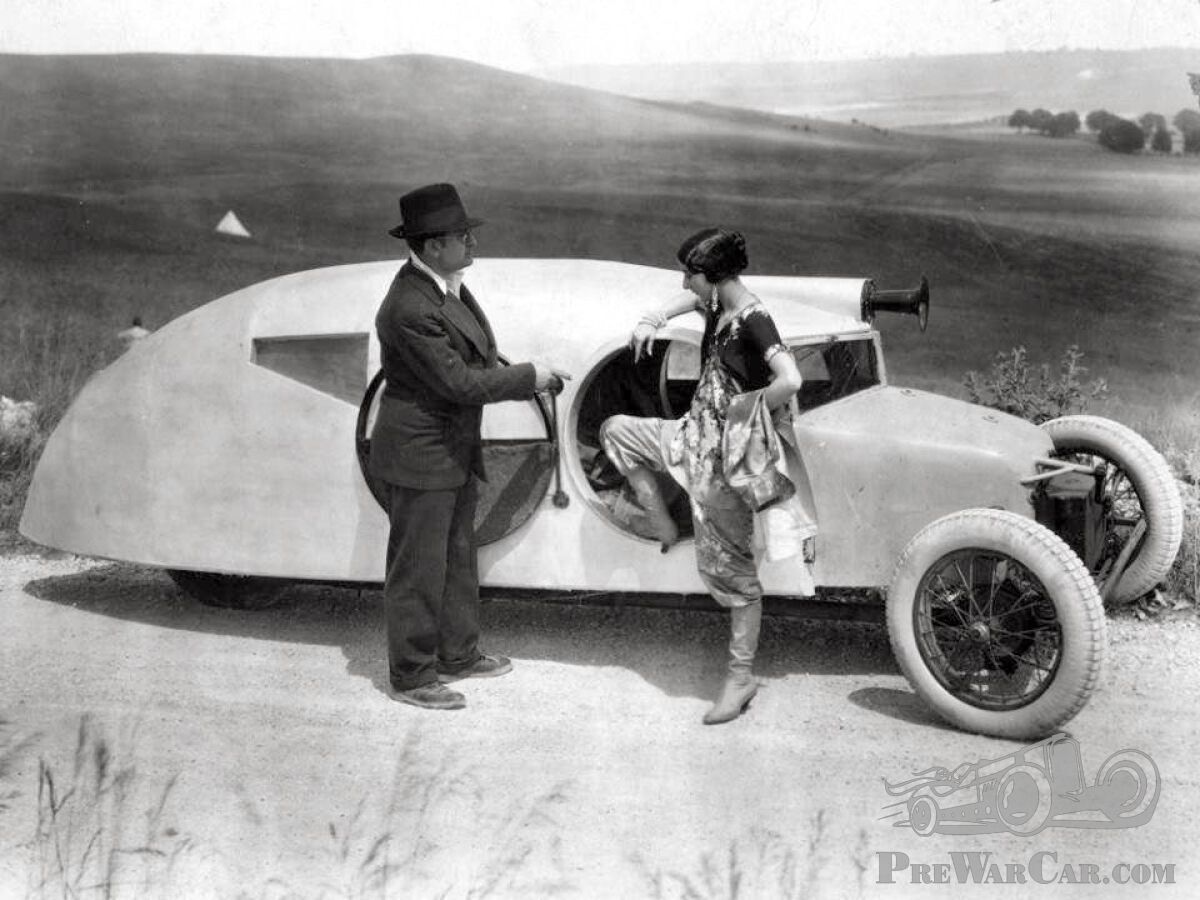
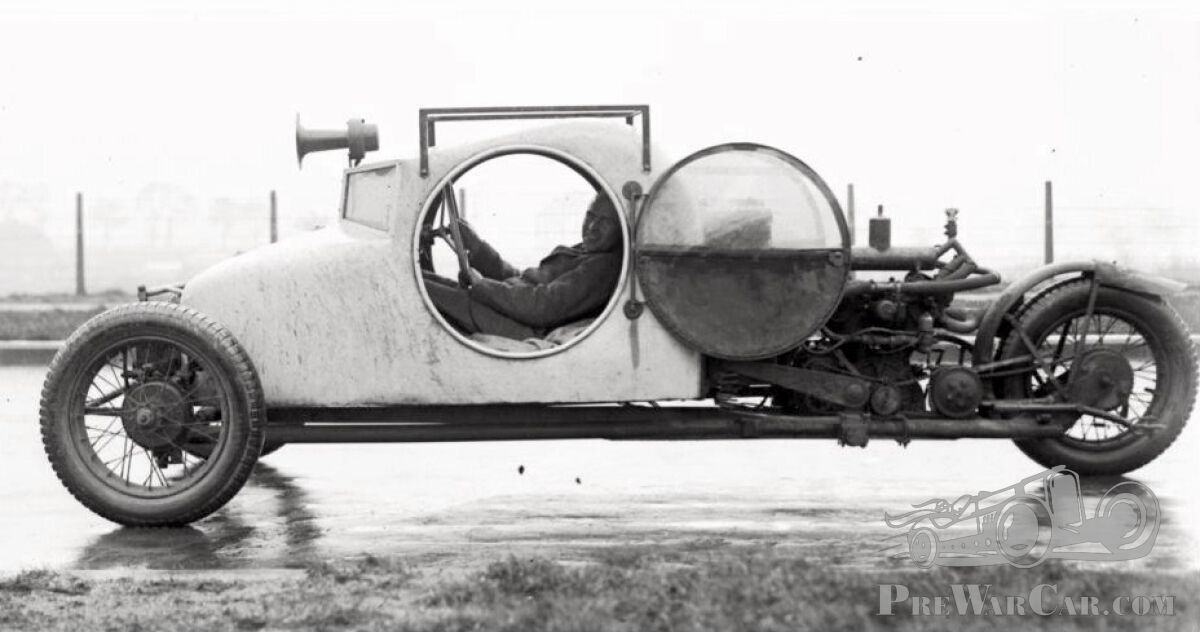


It’s always a joy to see film-makers predict vehicles of times to come when they make a picture that’s set in the future. It’s at least as good fun to look at them again decades later. High Treason is a 1929 British movie directed by Maurice Elvey and set in 1940. Supposedly inspired by the great flick Metropolis of just two years earlier, Elvey promoted his movie as ‘Marvels of science that would tax the ingenuity of a Jules Verne’.
Indeed, his visions of a future New York and London are remarkable, with giant airships everywhere and boats in the Rivers Thames and Hudson of a kind unseen before, but it’s a car we’d like to discuss here. The film starts with a scene of a couple driving a car to the border ‘between Europe and the Atlantic States’, trying to smuggle liquor when a grenade is thrown by guards. This leads to an exchange of gunfire, and the incident itself threatens to incite war between the Atlantic States and the Federated States of Europe.
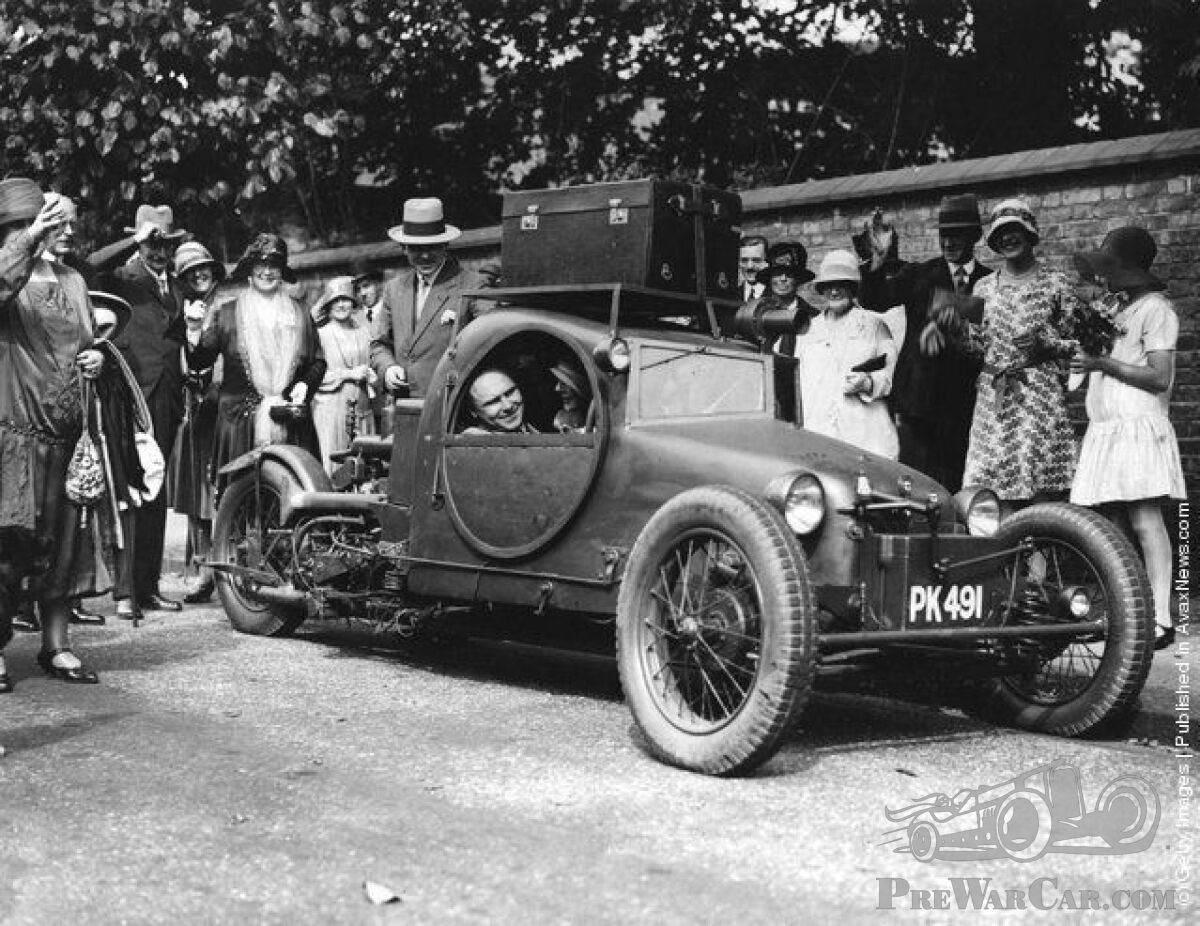
Anyway, with its aerodynamic body with round doors, the car does look rather futuristic, or perhaps just plain odd. What is it? Well, the worldwide web has scratched its head about this before, rightly identifying the car as a modified ‘made-for-movie’ version of the three-wheeler built by a man named A. Graham of Kingston near London. Graham’s vehicle was powered by what looks to be a two-cylinder motorcycle engine and was said to be capable of 70mph speeds. One article mentions that he and his newlywed wife used it on their honeymoon in August 1931, showing the registration number PK 491. From the article: 'The car, resembling a shoe in appearance, was built by the bridegroom himself to conform to his own ideas of speed and comfort.'
Words: Jeroen Booij; pictures: Hemmings, Autopuzzles
Published:
Friday April 28th, 2023
Facebook
LinkedIn
Twitter
WhatsApp
Email
Copy
Comments
David Grimstead
01 May 2023, 14:12
Philip Jamison
29 April 2023, 23:57
This film is available on YouTube in various versions, including this colorized one: https://youtu.be/Yd1FbkT5mAw
Read more
Laurent Zoller
29 April 2023, 22:38
Hello,
Here's a picture with the front suspension.
Laurent Zoller
Read more
Here's a picture with the front suspension.
Laurent Zoller
Steve Diggins
29 April 2023, 20:02
I wonder why he didn't just put a coupé body on a Morgan trike. Has anybody done that?
Read more
Anders Svenfelt
30 April 2023, 17:58
In Chris Rees's book on three-wheelers there is a photo of a coupé-bodied Morgan. Also there was a reader's letter in Motor Sport magazine somewhere in the later part of the '60s with a photo of another one built about 1927.
Read more
Anders Svenfelt
04 August 2023, 20:51
I found it, Motorsport Magazine October 1965, p. 858
Read more
The film’s opening sequence and the photo were shot near the bend in Beacon Road above Ivinghoe, where it now meets the Ridgeway paths. Both were recorded facing the distant position of the Whipsnade White Lion, which although said not to have been carved into the chalk until 1931, is exactly where the white patch is on the far hills, top right corner of the photo.
The press reported and photographed newly married Richard A. Graham and Gabriel E. Shephard setting off on honeymoon in September 1929 although, according to the film and this report about its filming in June 1929, the car was blown up… “CAR BOMBED IN THE CHILTERNS. Elvey is insistent on realism, and only a day or so previously, set up a frontier post in the Ivinghoe Hills and directed a thrilling "scrap" between the respective military guards of the post, also the blowing up of a fugitive and futuristic motor car which, hit fair and square by a bomb, blew up with a loud bang and a tremendous cloud of smoke.” Another added: “The car deserved bombing” but fortunately for the future Mr. and Mrs. Graham, what is left smoking in the road after the explosion appears to be just chassis-less bodywork.
According to a 1929 directory, R. A. Graham was running the Graham Sidecar Company at 14 and/or 49 Cambridge-road Kingston which made “Graham Sidecars, Folding Chairs, Tables to match, Toboggans and Fire Extinguishers” but he also advertised: “For Economical Parcel Delivery, 3cwt. Motor Vanette, £4 tax; new price £100; shop-soiled £25.” Graham sidecars had been around since one of the Graham Bros., cycle-makers of Enfield, patented a motorcycle side carriage in 1903.