The global magazine and marketplace for classic car enthusiasts, by enthusiasts.


Filter
Make a choice:
- Cars
-
Make >>
-
Year >>
-
- Bikes
-
Location >>
- Parts & more
-
Make of car >>
-
Manufacturer >>
-
Category >>
- Bicycles & more
-
Year >>
-
Countries


Lost record-breaker reborn: the fascinating tale of a high-speed Hotchkiss



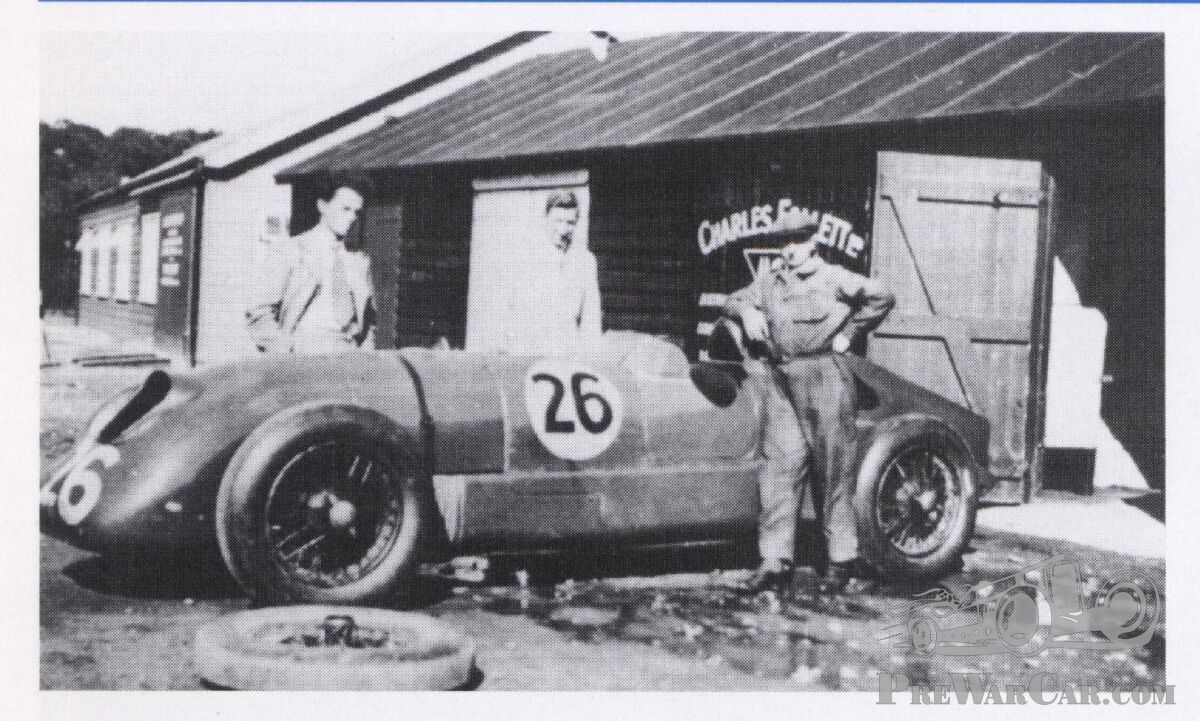
The Hotchkiss is seen here at the Brooklands racing sheds ahead of the 1935 500-Mile Race
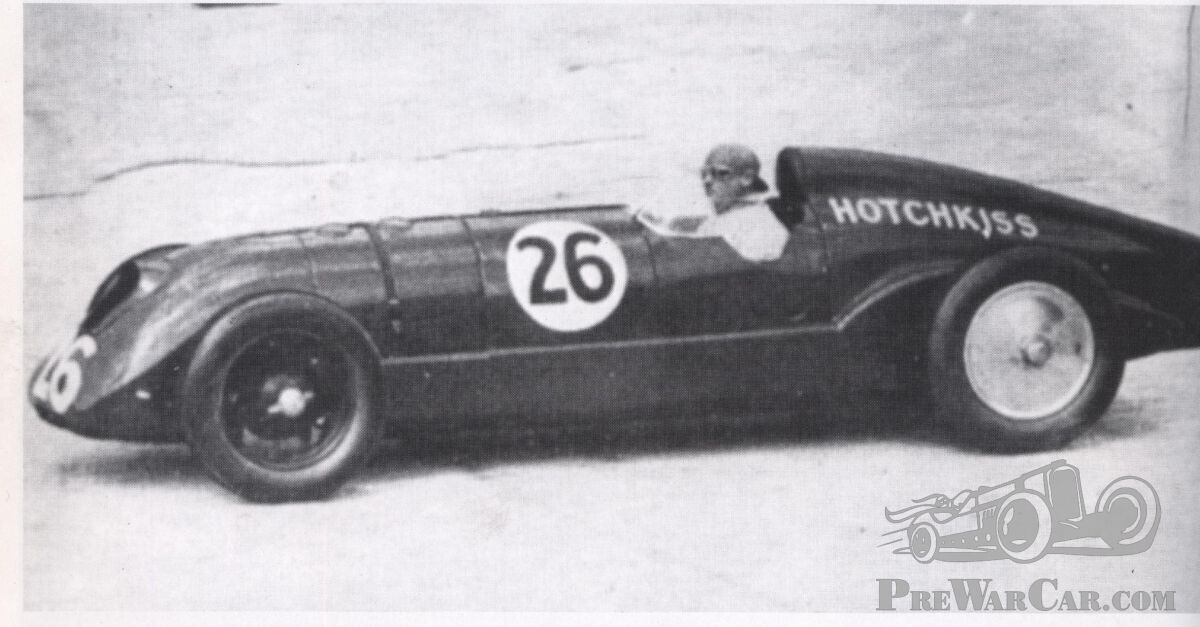
At Brooklands, with Albert Divo at the wheel


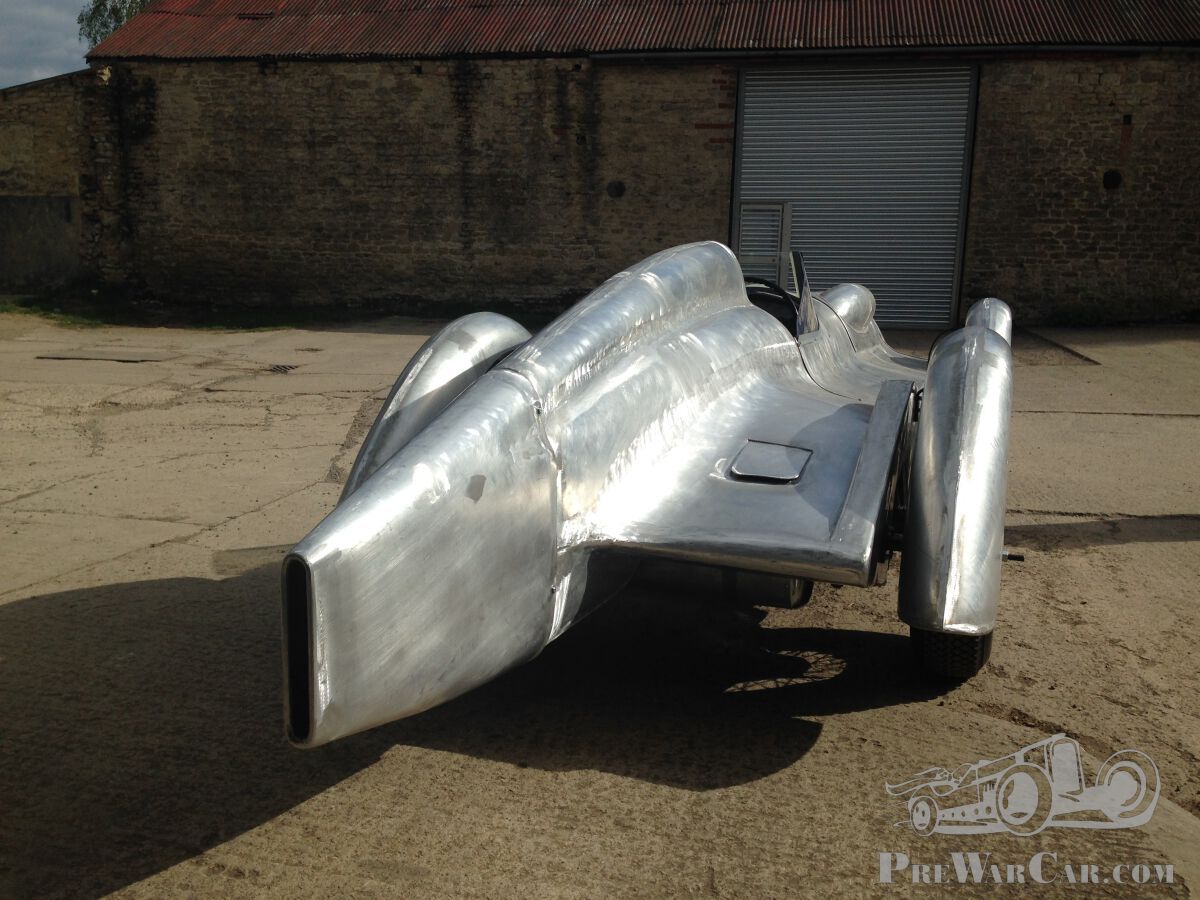
A tubular frame was made to take the body panels


The recreated Hotchkiss prior to receiving its paint




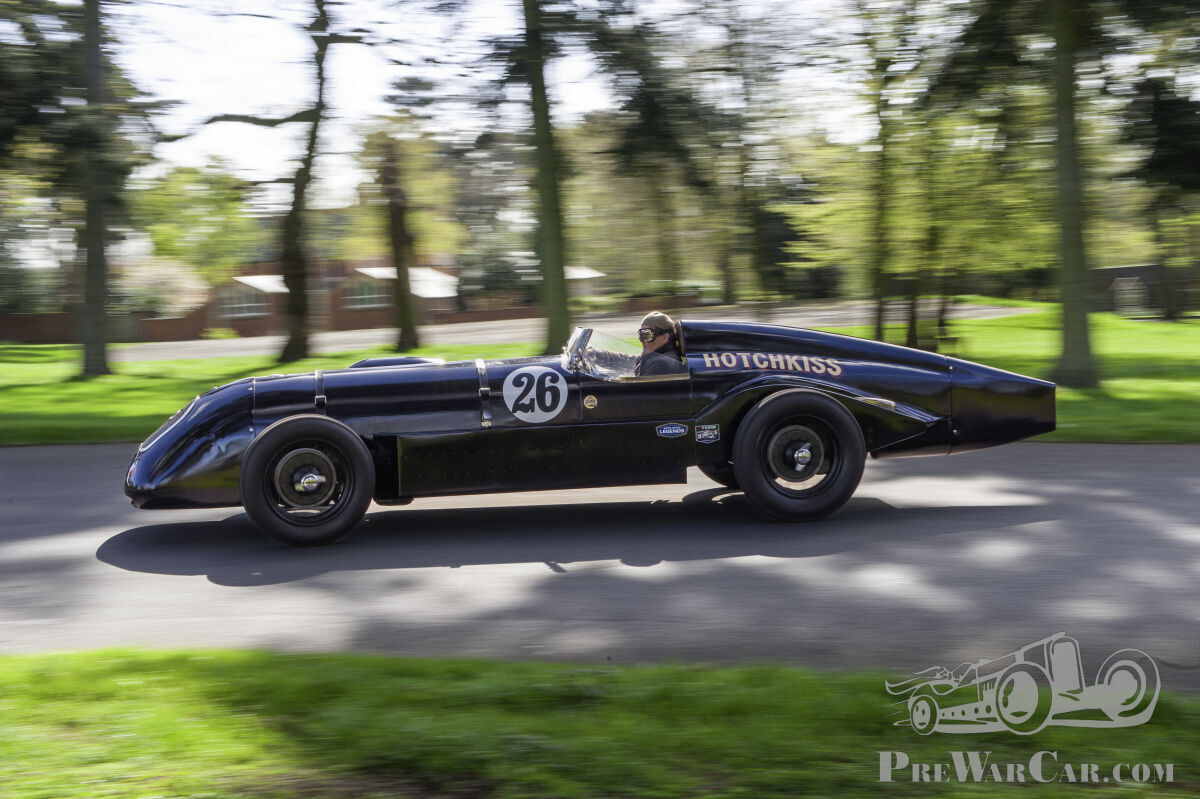
The Hotchkiss dices at Mallory Park in September, 2016
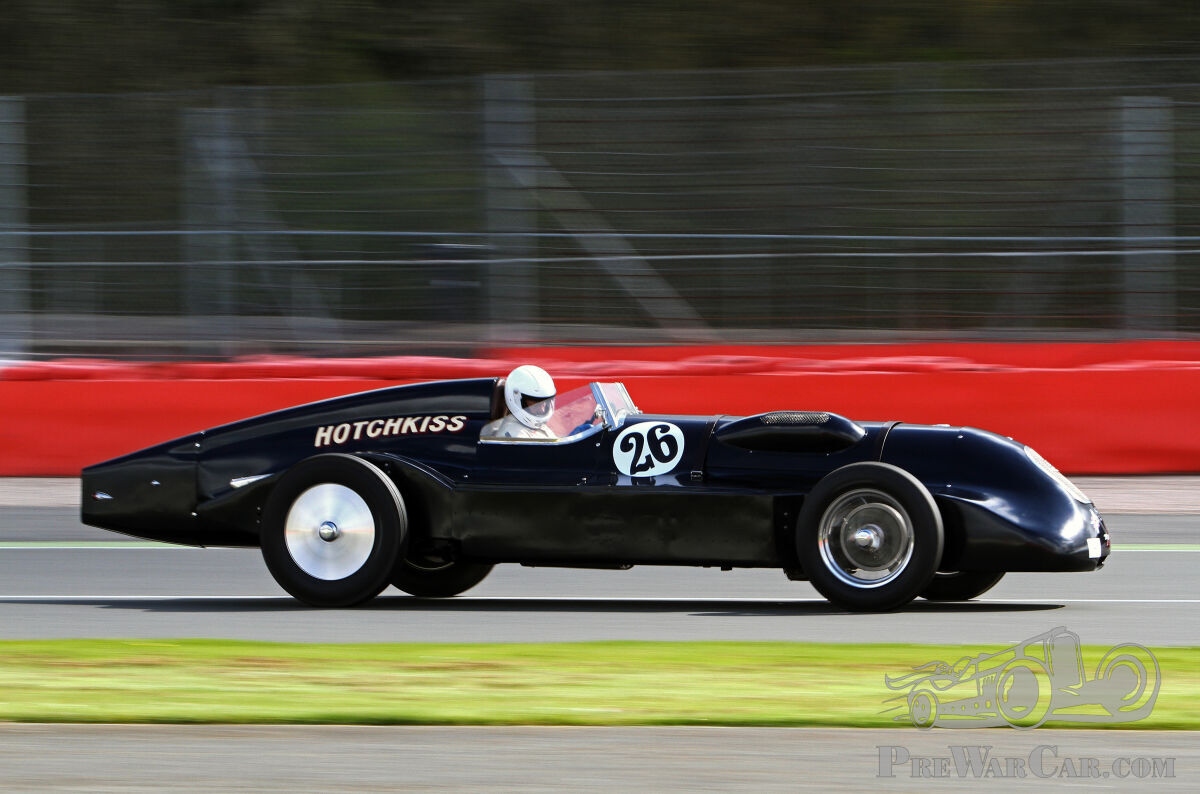
At speed at Silverstone

The Hotchkiss speeds along the Montlhéry banking in 2017

Dancing with a Pitt Special at Dunsfold Wings & Wheels
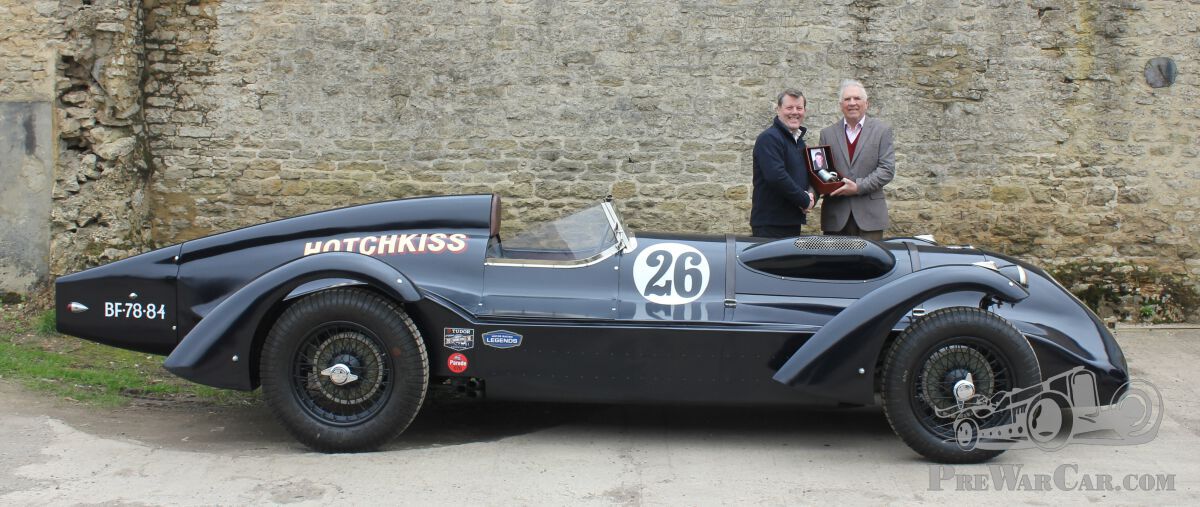
Receiving an award from the British Hotchkiss club in 2017

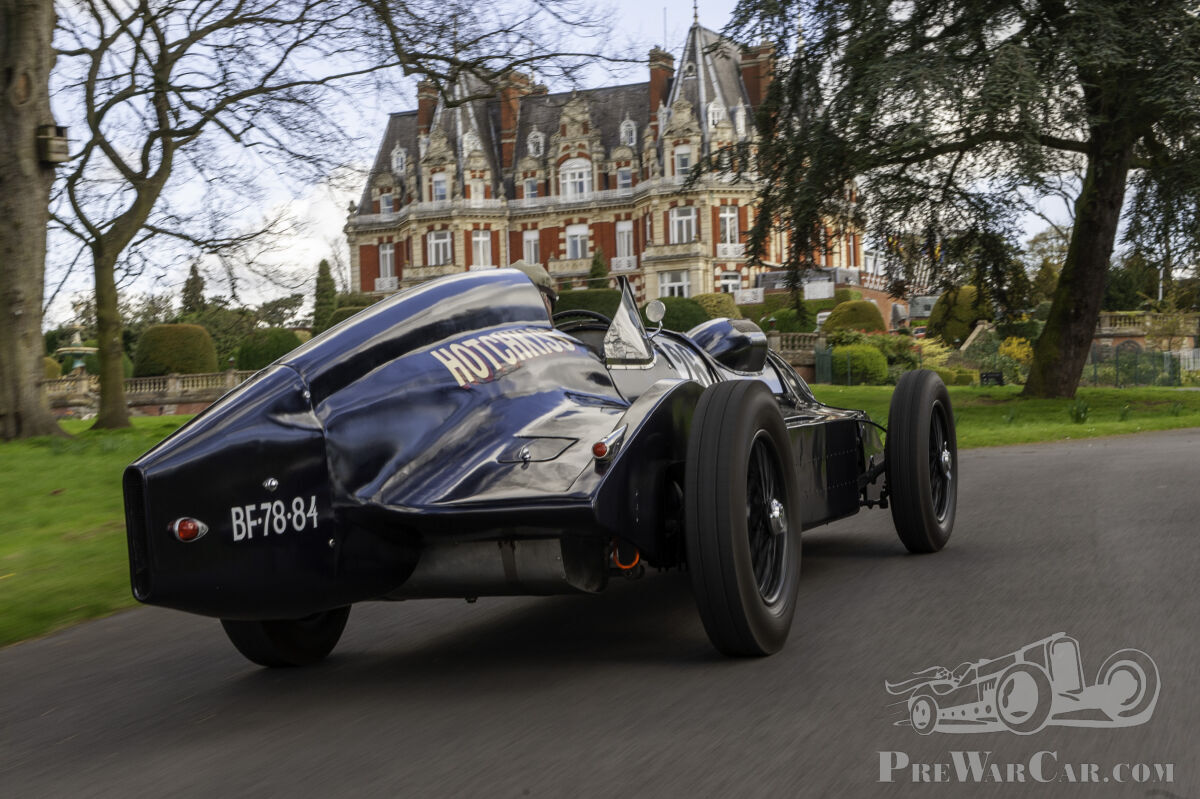
The Hotchkiss returning to the scenes of the 500-Mile Race, this time in full road trim


Never mind modern supercars, the pursuit of speed was never more earnest, nor more exciting, than in the 1920s and 1930s, when heroically determined men restlessly and insatiably pushed themselves and their machines to the limit in order to aid the development of the motor car, and win a bit of glory for themselves while they were at it. While the world land speed record itself was entirely the preserve of British cars and drivers from September, 1924, until the age of jet propulsion in the 1960s, with the exception of American Ray Keech's 1928 record which stood for 11 months, the various class, endurance and distance records were being hotly contested left, right and centre by manufacturers from across Europe which sought to establish themselves as the best in their field.
France, and the Montlhéry circuit in particular, were buzzing with activity. As the 1920s was drawing to a close, Louis Renault and Gabriel Voisin were able to walk around with their heads held high, for Renault had claimed multiple long-distance records with its 40CV streamliner in 1926, including 50 miles at 118.069 mph and 24 hours at 107.9 mph. Voisin then clinched the 24-hour record in 1927, raising it to 114.2 mph. For Hotchkiss, which prided itself on its high-quality luxury cars, it made no sense to sit around while other manufacturers basked in glory, especially after the launch of its new six-cylinder AM73 and AM80 models in 1929.
The streamliner from Saint-Denis
It needed to claim some records of its own, starting on September 12th, 1929. Hotchkiss had booked a sixteen-day session at Montlhéry with one of its three-litre AM80s, wearing a simple, low-roofed coupé body, with which it meant to attack as many International Class C records as possible. The attempt was, on the one hand, disastrous and, on the other, a great success. Time and time again, the Hotchkiss was brought to a halt by some new kind of mechanical failure, and by the end of the sixteen days the mechanics and drivers must have been about ready to murder the car, but they might have had a change of heart when they realised that they had managed to break no fewer than twenty-seven records.
The old car had promise, then, and Hotchkiss came to the opinion that, with a bit of refinement, it could really do the company proud. A streamlined body was built for it, symmetrical at first but later offset to the left of the car, requiring the engine to be tilted forty degrees, for better weight distribution on the Montlhéry banking. The space on the right-hand side of the car housed the fuel tank. Returning to the Autodrome between October 5th and 7th, 1930, the Hotchkiss team had a much happier time, setting the 3,000-mile, 4,000km, 4,000-mile and 5,000km records in the 3,000-5,000 cc class, averaging between 82 and 83 mph.
For 1933, Hotchkiss made some major changes. The total enclosure of the bodywork was simply a natural evolution, but where the project changed direction was in the engine department. Out went the AM80 six, and in went the two-litre four—essentially the AM80 engine minus two cylinders—from the new Hotchkiss 411. The revamped car went back to Montlhéry, where it was introduced to its new drivers, George Eyston and Bert Denly, who had a crack at the 500-mile, six-hour and 1000km records, achieving a best average speed of 101.753 mph over the six hours. A new nose went onto the car in 1934, and new records followed: the 4,000-mile, 5,000-mile and, at 95.362 mph, the 48-hour.
The Hotchkiss record car reached the ultimate stage of its development in 1935. Probably its greatest achievement in this final year was its claiming the 1000km record at 112.26 mph, but even as its record-breaking days came to an end, it was to have one last hurrah. In September, it was placed on a boat pointing towards England, its destination being Brooklands and the famous 500-Mile Race, where it was to be campaigned by one of France's leading drivers, Albert Divo, with co-driver Harry Rose. Averaging 106mph and pitting four times, it was a fast racer but not fast enough to beat John Cobb in the Napier-Railton.
Destruction and rebirth
Thereafter, it has been claimed that the record car made one further appearance at Brooklands in 1938, and then was shipped back to the Hotchkiss factory in Paris. More's the pity: in 1940, following the Nazi occupation, the factory was abandoned and the car was lost. Fortunately, we still have in the world some highly skilled engineers and passionate enthusiasts, such as Steve Smith, whose name will be known to racers from his dynamic balancing business Vibration Free.
Having formed an appreciation of 1930s French streamliners, he bought from a customer an unbodied AM80 chassis which had been waiting for a sympathetic enthusiast to put it to good use, and thereafter set to work bringing the record car back from the dead. To begin with, all he had to help him was a photograph, which he projected against a wall until the wheels were 19 inches in diameter, i.e. life-sized, and calculated the dimensions from that. With the aid of modern technology—CAD and three-dimensional scanning—it became possible to visualise how the car should take shape, and a wooden buck was made for forming the panels.
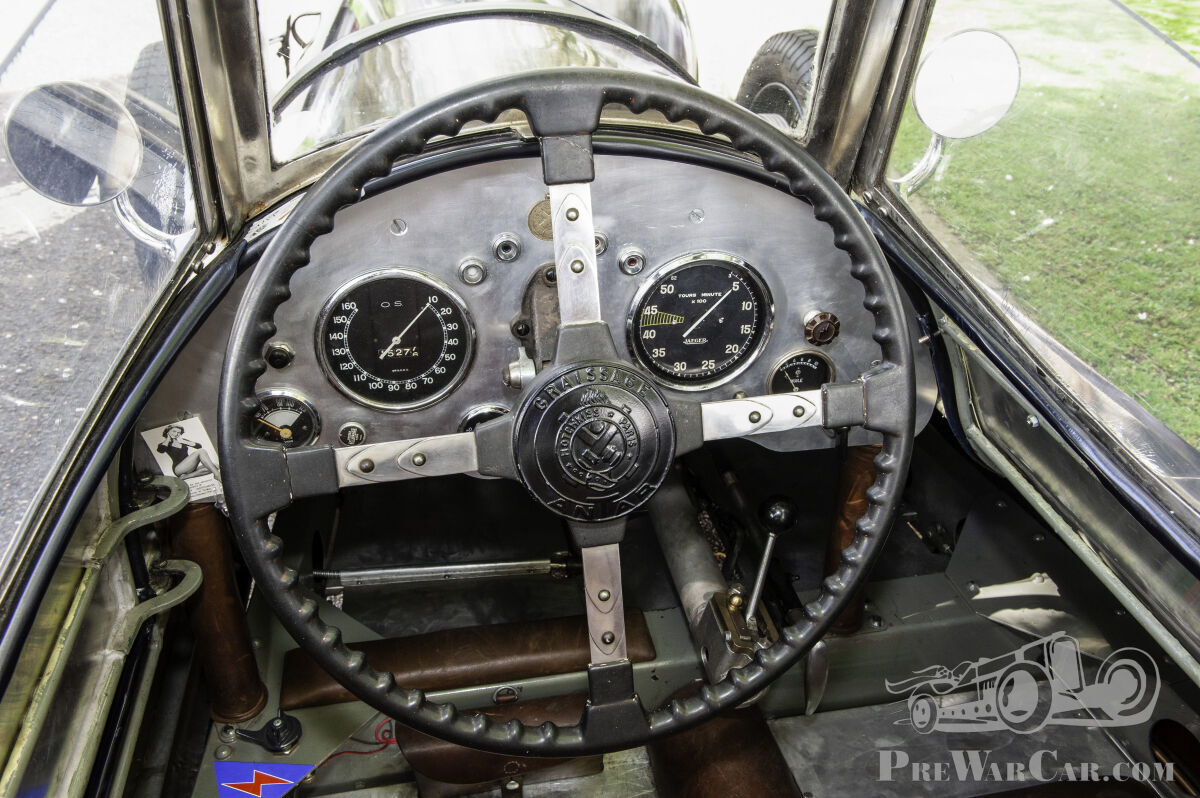
The project was started in 2012 and reached its completion in 2016, with the car appearing exactly as it did in 1935, albeit with the three-litre six and the tail shortened six inches for practicality. The engine produces in excess of 100 bhp and has been built to Hotchkiss's original specification, with billet steel crankshaft and rods, forged pistons and a unique mechanically-damped flywheel. Since completion, the Hotchkiss has been the undisputed star of so many events, including its début at the 2016 V.S.C.C. Spring Start at Silverstone, where its surprise presence must have caused quite a few jaws to drop. It has also raced at major Grand Prix circuits including Silverstone, Donington and Zandvoort and smaller clubman circuits such as Mallory Park, Cadwell and Oulton Park. As if that wasn't enough, it has also won its class at hill-climbs and sprints at Loton Park, Prescott, Shelsley Walsh and Brooklands. It most recently competed at Silverstone in 2022. Other prestigious events at which it has appeared include the Goodwood Festival of Speed, Château Impney Hill-Climb and Vintage Revival Montlhéry. Impressively, it has been driven to many of these events—with lights and mudguards fitted, it's perfectly road-legal.
Homeward bound: see the Hotchkiss at Vintage Revival
Visitors to Rétromobile in February will have seen it on the Vintage Revival Montlhéry stand, and it will be heading to the Vintage Revival once again this May to participate in the Autodrome's centenary celebrations. That's likely to be the last event it attends in Steve's hands. Afterwards, it will be offered for sale for somebody else to campaign and enjoy.
Who wouldn't want to house such a magnificent creation in their garage? Apart from it being a unique recreation of a lost multiple-record breaker, and a guaranteed head-turner at any present-day race meeting, we also happen to think that it's a particularly beautiful machine with its slippery, torpedo-like profile. We'd recommend that anyone with an interest in purchasing, or simply seeing, the Hotchkiss buys themselves a ticket to Vintage Revival Montlhéry, so they can see it in the metal and in motion.
The car has a current V.S.C.C. buff form and is eligible for F.I.A. Historic papers. For more details about, click here.
Vintage Revival Montlhéry takes place from May 11th to 12th at the Autodrome de Linas-Montlhéry, just south of Paris. Visit www.vintage-revival.fr for more information.
Published:
Thursday April 11th, 2024
Facebook
LinkedIn
Twitter
WhatsApp
Email
Copy
Comments
Ian Cheetham
18 April 2024, 14:41
This article caught my eye as I knew Harry Rose, who co-drove the Hotchkiss in the 1935 500-Mile race at Brooklands. I shared regular chats and meals out for around the last ten years of his life. A very interesting man, and a true gentleman of his time. He also owned and raced Maserati 3011, which he then sold to Prince Bira.
Read more
Ronald Sieber
14 April 2024, 19:32
Ah, Hotchkiss... I attended Loomis in Windsor, Connecticut, in the 1960s. We would play against other independent schools, and I remember Hotchkiss as quite a nice place. Being boys, we invariably nicknamed our opponents. We called attendees at that school "Crotchkiss," and they returned the favor, calling us "Loomis Looneys." The uncouthness of youth!
Regarding the streamliner, it bears some resemblance to Ab Jenkins' Mormon Meteor III, which was his final iteration for assaults on records at the Bonneville Salt Flats in Utah, U.S.A. Jenkins would leave his tent and equipment behind for others, sometimes from Britain and other environs, to use when they journeyed out to the Flats for a record run. The 1930s was a special time in absolute land speed records.
Thanks for sharing the news on the Hotchkiss car.
Read more
Regarding the streamliner, it bears some resemblance to Ab Jenkins' Mormon Meteor III, which was his final iteration for assaults on records at the Bonneville Salt Flats in Utah, U.S.A. Jenkins would leave his tent and equipment behind for others, sometimes from Britain and other environs, to use when they journeyed out to the Flats for a record run. The 1930s was a special time in absolute land speed records.
Thanks for sharing the news on the Hotchkiss car.