The global magazine and marketplace for classic car enthusiasts, by enthusiasts.


Filter
Make a choice:
- Cars
-
Make >>
-
Year >>
-
- Bikes
-
Location >>
- Parts & more
-
Make of car >>
-
Manufacturer >>
-
Category >>
- Bicycles & more
-
Year >>
-
Countries


Early motoring with central European royalty
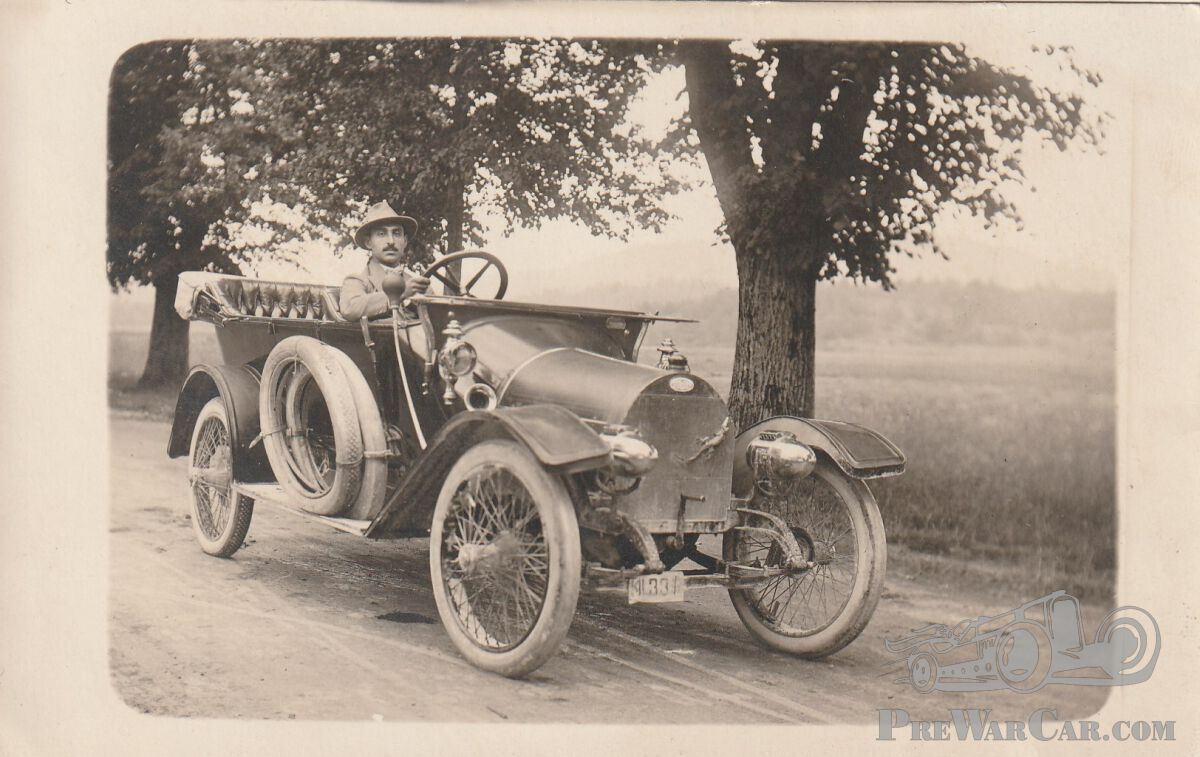
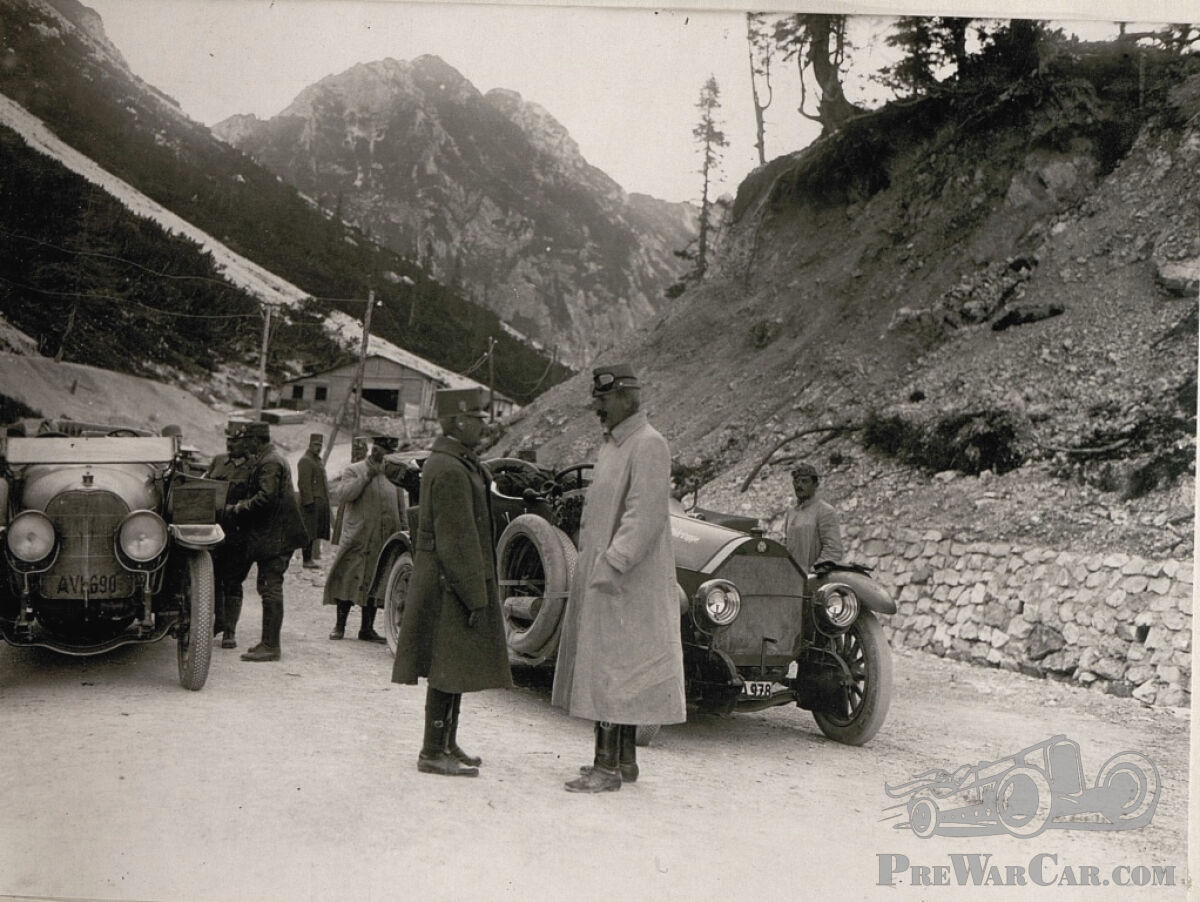


Big vintage cars, a remote and desolate mountain range and some rather sinister looking men who might be checkpoint guards or military police - it all looks a bit like the backdrop to a Bulldog Drummond adventure. Unfortunately, we don't know exactly what's going on in these pictures, but the all the uniformed men were probably a necessary presence considering the cars happen to be transporting two of the most senior members of Austro-Hungarian royalty.
We're not really in any position to speculate, though, so we'll turn our attention to that element of the photographs which actually concerns us: the four handsome motor-cars. What exactly are they? Notes accompanying the photos gives us some clues.
The first photograph was apparently taken by Anton Vilar, a Slovene photographer and also a composer, in Logatec, a small town in western Slovenia. The dashing torpedo tourer is being driven by a rather proud-looking man, and he obviously means business because he's turned his headlights back-to-front. Our instinct suggested to us that it might be a German car and a look at some Opels seemed to confirm our thoughts. We'd say it's an Opel 6/12 PS. We have one more question, though: is that a gecko stuck to his radiator?
The second photograph is even better, and we have even more detail. One of the gentlemen - surely the tall, well-groomed fellow in the long motoring coat - is named in Serbo-Croatian as Nadvojvoda Evgen Avstrijski, or Archduke Eugene of Austria, Prince of Hungary and Bohemia. Bohemia is the setting, the photogaph having been taken in the mountains near Prague in 1916. We presume the car on the right to be his one, and we think it's a Gräf & Stift. We're not quite so sure about the one on the left, though. Is it another Opel, but of slightly later manufacture?
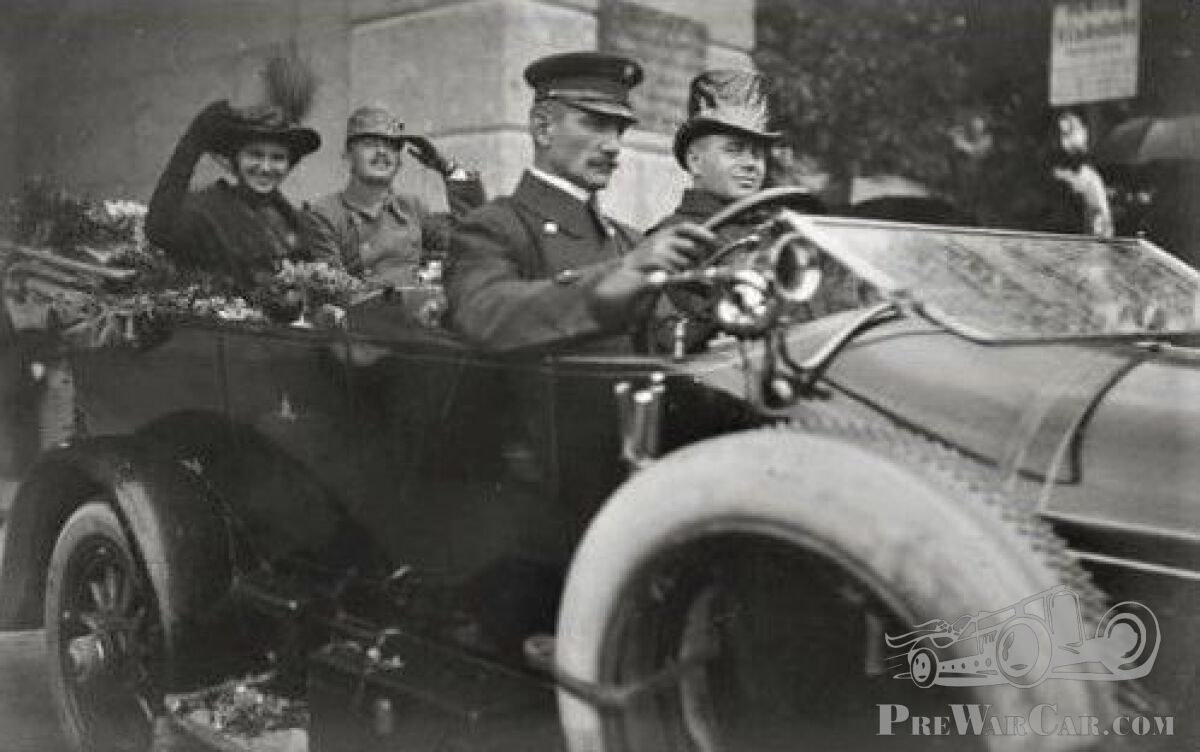
The final photograph is also dated 1916, and shows Cesar Karel I, or Charles I of Austria to you and me. The location is Tolmin, a small town in the Slovenian Alps close to the Italian border, but without a radiator to give us a hand, the car's identity has us stumped, so it's over to you...
Words: Zack Stiling; photographs: Peter Skofic
Published:
Monday July 10th, 2023
Facebook
LinkedIn
Twitter
WhatsApp
Email
Copy
Comments


Josef Kubišta
10 July 2023, 19:19
There is nothing like "mountains near Prague", as the entire Bohemia is quite flat. The type of mountains shown in the second photo are usually experienced in the north. My guess would be the German/Polish border - at least 130 kilometres from Prague. Or Slovakia, perhaps? I cannot help much with cars' identities though.
Read more
Thomas Treul
10 July 2023, 18:46
The third car is a Laurin & Klement, either a Type KB or Type M, 4¼ or 4½ litres. I would say that the wings and the bodywork are like the works version.
Regards,
Thomas
Read more
Regards,
Thomas
Ariejan Bos
10 July 2023, 12:23
The car on the last photo is indeed more difficult to identify, but it is a very large touring car reducing the number of candidates drastically. My suggestion would be a Benz of 1913-1914.
Read more
Thomas Treul
10 July 2023, 18:50
Oh, and it is our last emperor sitting on the rear bench!
Read more
Ariejan Bos
10 July 2023, 11:45
On the second photo the car on the left seems to be the Gräf & Stift. The car on the right is obviously a Benz. Both of around 1914.
Read more
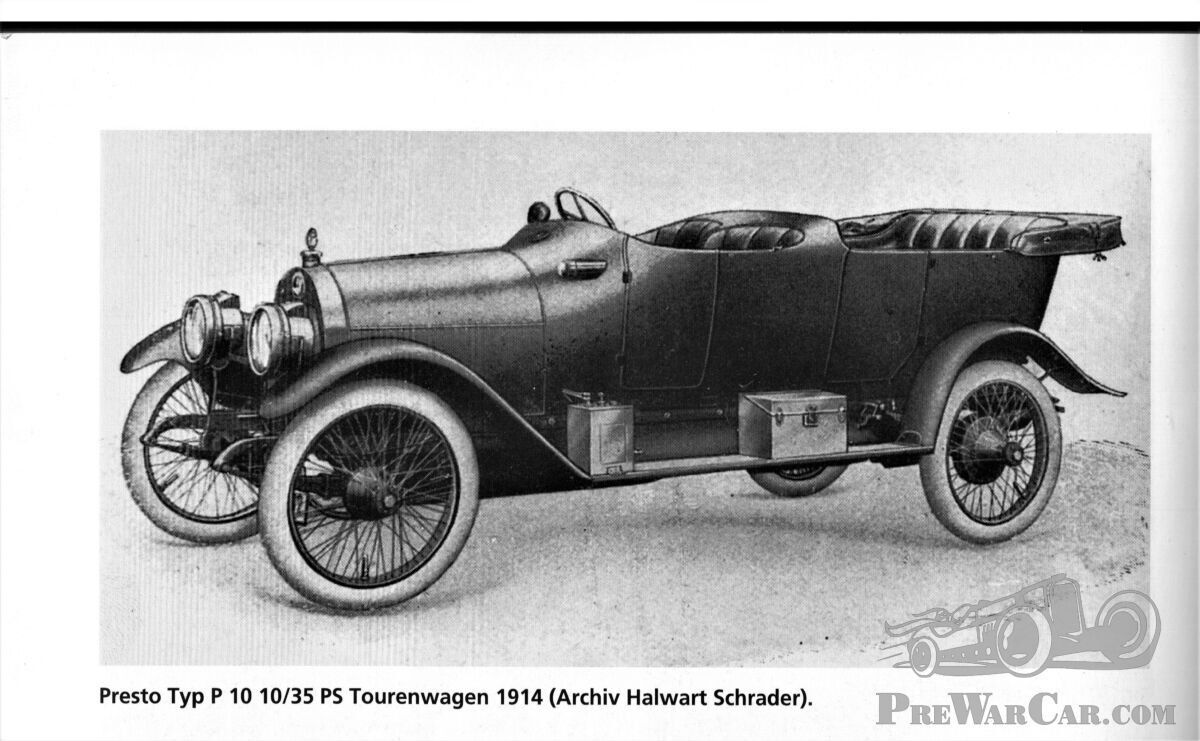
I think the car on the third photo could be a Presto Type P10 or 10/35 - only a suggestion.
This type of car was manufactured in Chemnitz between 1910 and 1914. It could be equipped with different engines.
An interesting detail on the 1914 Presto was a device that automatically turned the ignition off when the oil level in the engine dropped to prevent the pistons or bearings from sticking. A small float in the oil pan broke the contact when the level was too low, a device also possessed by the Sperber of NAW.
I have another photo of Charles I of Austria and his wife Zita in a car (the same one?) fitted with a windshield.
Laurent Zoller