The global magazine and marketplace for classic car enthusiasts, by enthusiasts.


Filter
Make a choice:
- Cars
-
Make >>
-
Year >>
-
- Bikes
-
Location >>
- Parts & more
-
Make of car >>
-
Manufacturer >>
-
Category >>
- Bicycles & more
-
Year >>
-
Countries


A car for the connoisseur: discovering the British Salmson

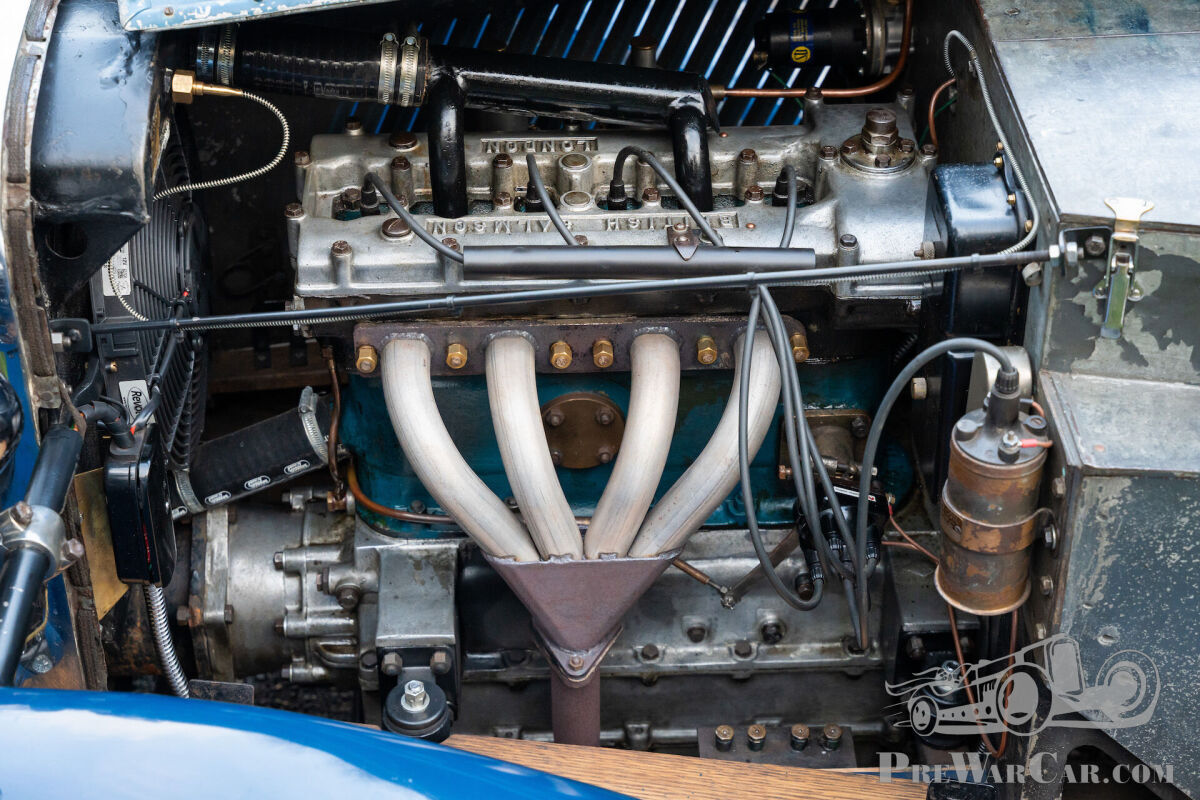


The Salmson name brings to mind all the delightful light cars produced in Boulogne-Billancourt during the 1920s, but it’s easy to forget that the firm continued building cars until 1957. Many enthusiasts today regard the spritely Vintage voiturettes as its best products, but such a thought is at odds with the attitudes of the late 1920s, when Salmson was forced to meet the demands of a new market wanting larger, more powerful, all-weather family cars.
The 1300cc, 12hp, dohc Salmson S4C was introduced in 1932, but with its factory saloon and tourer bodies, it wasn’t a very exciting affair. The potential was there, though, for something more dashing. The British Salmson Aero Engine Co was established in 1929 to produce Salmson engines under licence, but the market for light aero engines didn’t really exist. British Salmson decided instead to start making cars, and from 1934 S4Cs began to be produced in England. They differed in a few ways from their French counterparts, including being supplied as rolling chassis, and many went to owners with more exciting tastes in coachwork. There was even a high-compression, twin-carburetter option for those who wanted something really racy.
Two- or four-seat Ranalah bodies by John Charles & Co were typical of the sort of coachwork British Salmsons might receive, and it’s a 1934 Ranalah sports tourer that wesee here in beautiful Oily Rag condition. Chris Pickering lifts the lid on this overlooked post-Vintage thoroughbred in the May issue of The Automobile,on sale now.
Words by Zack Stiling
Photographs by Stefan Marjoram
Published:
Friday May 23rd, 2025
Facebook
LinkedIn
Twitter
WhatsApp
Email
Copy
Comments
R Mawer
29 May 2025, 23:04
Andrew Beacroft
23 May 2025, 17:16
My father & his brother shared a S4C Ranalah 4str tourer before the war.
Read more
Dirk Van Praag
30 May 2025, 13:40
I recently bought - togheter with a friend a Salmson Special which is based on a S 4D chassis, and underpinnings ,fitted with a postwar engine from a Salmson 2300S with Cotal gearbox.
It has a lightweight 2 seater body . We are using it for rally's in Europe, and it is a dream to drive
Read more
It has a lightweight 2 seater body . We are using it for rally's in Europe, and it is a dream to drive
It should be remembered that the company had initially been tooled up to manufacture small Salmson aero engines, for which a large demand had confidently been predicted, but never really materialised. However, a wide variety of high precision engineering products, in many cases for the local aircraft building companies, was undertaken. They also took on work for various government armament subcontractors & general engineering firms. A case in point being the machining of crankcase castings for the engines of the big vee twin motorcycles manufactured by the Vincent company, at Stevenage, on the other side of London. Another activity-post war, was the manufacture of the British Salmson "Ranger Big Crown" printing press, which was considered to be a noteworthy product in its day. This took place alongside the production of the British Salmson "Cyclaid", a small 2 stroke cycle attachment motor. This became reasonably well known, & was in production for a few years.
Final British Salmson engineering production (primarily the Printing Press) was transferred to a Scottish concern & the London works passed into other hands.