The global magazine and marketplace for classic car enthusiasts, by enthusiasts.


Filter
Make a choice:
- Cars
-
Make >>
-
Year >>
-
- Bikes
-
Location >>
- Parts & more
-
Make of car >>
-
Manufacturer >>
-
Category >>
- Bicycles & more
-
Year >>
-
Countries


Fighting fire with steam: the heroic hulk of the Boston Fire Department


Big red fire engines are things that little boys have been dreaming about for the last 12 decades or so. Bright red pumps, ladder trucks and hose lorries make great advertisements for a life of fire-fighting, especially when they race along at speed sounding their bells and whistles, with sturdy-looking men sitting in orderly rows on the benches, heroically dressed in their gleaming brass helmets.
Well, if one fire engine is more impressive than the rest, it must be this one. It's as early as can be, too, with the picture supposedly dated 1919, but the vehicle shown said to have been built as early as in 1897. What exactly is it? This, ladies and gentlemen, is an Amoskeag fire engine of the Boston Fire Department and, yes, it is steam-powered. Does that make it ineligible for PreWarCar? Not at all, just look at it! Further information tells us that it weighed 17,000 lbs. or 7,700 kg. We can only think that it must have taken quite a while to arrive at that fire, which no doubt needed urgent extinguishing!
A quick search on the internet revealed to us that “The Amoskeag Locomotive Works, in Manchester, New Hampshire, built steam locomotives at the dawn of the railroad era in the United States.” It seems clear that this fire engine was a derivative of Amoskeag’s railway locomotives, and while our internet sources say that they only made steam-powered fire engines until 1876 (making the one seen here probably at least even 21 years older then mentioned), it also tells us that “A steam-driven self-propelled appliance made by Amoskeag was used to fight the Great Boston Fire of 1872.” Boston wasn’t alone—apparently the cities of New York and Los Angeles used them as well.
Words: Jeroen Booij; picture: source unknown
Published:
Thursday August 22nd, 2024
Facebook
LinkedIn
Twitter
WhatsApp
Email
Copy
Comments
Peter Fitzgerald
28 August 2024, 03:38
Looks like the chap at back is sweeping up horse dung—probably a result of the fire engine!
Read more
Edward Bridger-Stille
26 August 2024, 18:28
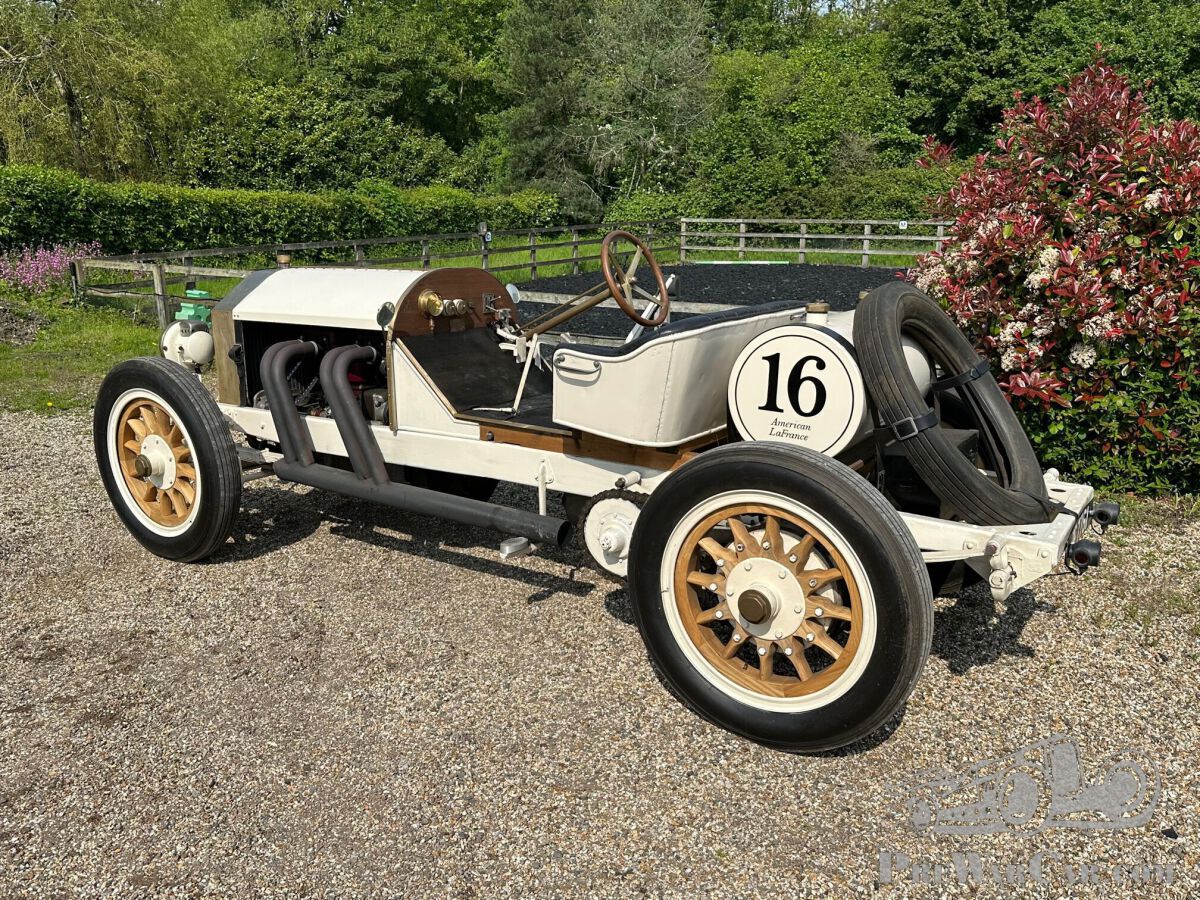
Slightly later, but no less relevant, came the American LaFrance fire engines. These were often equally impressive although usually had a slightly greater turn of speed! There were many more of these built and they can now often be found in Britain as well as on the Paris-Peking Rally. Indeed the following example is to be offered at auction in September I understand.
Read more
Martin
27 August 2024, 19:50
Nice distraction from the fact that almost, if not all, of these 'Paris-Peking' cars are replicas built from former fire engines, as everyone knows. You 'understand' that it will be on auction, Mr Bridger-Stille? You mean you know! Let's say you have a business connection with this car. Nice try at surreptitious advertising, sir, which in my humble opinion doesn't belong here.
Read more

Ariejan Bos
23 August 2024, 09:08
Thanks, David, that is the better research! I have uploaded the picture of this fire engine from the Motor Age of March 30th, 1911. It will definitely take a strong fireman to start this engine!
Read more
David Grimstead
25 August 2024, 23:30
Ariejan and Martin—thanks but your plaudits are not fully deserved... The Knox chassis was ordered by Waldo in November, 1910, not March, 1911, and cost $4500, but was not used in making this fire engine, although it probably became an F.D.N.Y. high-pressure hose wagon. Testing of the Nott fire engine started in February, 1911.
Other reports found clearly state Nott built the whole vehicle: chassis, engine, pump, etc., and that the gasoline-engined chassis was developed over three years specifically to facilitate conversion of existing horse-drawn steam-pump fire engines. But its gasoline engine was probably also intended to replace steam-driven pumps, as it developed more power than a Nott steam engine. The steam engine fitted here was a Nott-built “second-size metropolitan unit dating from 1908” and from the rear there appears to be no back axle or springs due to its low position. Hence too, the backward shaft-drives to the chain sprockets.
Ariejan could be right about hand-cranking the motor. Bore was 5¼in., stroke 8in. (706 cu. in.) and the crankshaft, milled from a 625lb. high-tensile steel ingot, weighed 185lbs. and had a 20in. flywheel. After failures, the rear wheels were changed to 60 by 6in. fitted with the largest solid rubber tyres Goodrich had ever made and each wheel weighed 850lbs. The machine was indeed a monster but its fuel tank held just 21 gallons—not much at only three miles to a gallon.
It may have been unique in New York and subject to contrary views of its performance but others were built for Bridgeport, Conn., and Birmingham, Ala., later in 1911, at a conversion price between $6000 and $10,000.
Read more
Other reports found clearly state Nott built the whole vehicle: chassis, engine, pump, etc., and that the gasoline-engined chassis was developed over three years specifically to facilitate conversion of existing horse-drawn steam-pump fire engines. But its gasoline engine was probably also intended to replace steam-driven pumps, as it developed more power than a Nott steam engine. The steam engine fitted here was a Nott-built “second-size metropolitan unit dating from 1908” and from the rear there appears to be no back axle or springs due to its low position. Hence too, the backward shaft-drives to the chain sprockets.
Ariejan could be right about hand-cranking the motor. Bore was 5¼in., stroke 8in. (706 cu. in.) and the crankshaft, milled from a 625lb. high-tensile steel ingot, weighed 185lbs. and had a 20in. flywheel. After failures, the rear wheels were changed to 60 by 6in. fitted with the largest solid rubber tyres Goodrich had ever made and each wheel weighed 850lbs. The machine was indeed a monster but its fuel tank held just 21 gallons—not much at only three miles to a gallon.
It may have been unique in New York and subject to contrary views of its performance but others were built for Bridgeport, Conn., and Birmingham, Ala., later in 1911, at a conversion price between $6000 and $10,000.
David Grimstead
22 August 2024, 21:00
This is New York’s first combination steam engine-pumped/gasoline motor-driven fire engine, which was built in 1911. The city was already using gasoline-powered hose tenders and personnel carriers but was slow to adopt combined gasoline-powered pumps and chassis even after trying out such a Knox unit two years earlier.
New York Fire Commissioner Rhinelander Waldo ordered a bare $5400 chassis from the Knox Automobile Company of Springfield, Mass., early in March, 1911, and the finished vehicle made by the Nott Fire Engine Company of Minneapolis, Minn., was tested by him, Chief Croker and a fire crew in New York on March 20th, 1911.
Its motor was a 110-h.p. vertical long-stroke 4-cylinder, driving a three forward and one reverse, sliding pinion gearbox via a 6-inch Raybestos-lined cone clutch, a differential and side chains. As a new development, it cost Nott $20,000 to make but contract price to New York was just $9772, with a promised programme to convert old horse-drawn steam units (a Nott speciality) expected to cost just $6000 each. Motorised units were expected to save $700-$800 per year in horse-shoeing costs.
The whole engine weighed 16,000 lbs., was capable of 40 m.p.h. and the 83 h.p. steam water pump delivered 753 gallons per minute. It was, given the number 58, which can be seen above the radiator and it was stationed at the One-hundred and Fifteenth-street and Madison-avenue fire station, in an area experiencing 1,000 fire alarms per year.
It was photographed for an article in 1912, when described as unique, which it perhaps remained. A correspondent asked the 1911 Motor Age magazine why “the” New York Fire engine had a steam-engined water pump and did not use its gasoline motor. The reply was that no motors were up to the duty of pumping at the same volume, which was an odd reply because New York had by late 1911, six-cylinder, 60/120 h.p. Knox fire engines, with drive-motor driven water pumps. But then they still had 87 steam pumps spread around boroughs of the city.
Read more
New York Fire Commissioner Rhinelander Waldo ordered a bare $5400 chassis from the Knox Automobile Company of Springfield, Mass., early in March, 1911, and the finished vehicle made by the Nott Fire Engine Company of Minneapolis, Minn., was tested by him, Chief Croker and a fire crew in New York on March 20th, 1911.
Its motor was a 110-h.p. vertical long-stroke 4-cylinder, driving a three forward and one reverse, sliding pinion gearbox via a 6-inch Raybestos-lined cone clutch, a differential and side chains. As a new development, it cost Nott $20,000 to make but contract price to New York was just $9772, with a promised programme to convert old horse-drawn steam units (a Nott speciality) expected to cost just $6000 each. Motorised units were expected to save $700-$800 per year in horse-shoeing costs.
The whole engine weighed 16,000 lbs., was capable of 40 m.p.h. and the 83 h.p. steam water pump delivered 753 gallons per minute. It was, given the number 58, which can be seen above the radiator and it was stationed at the One-hundred and Fifteenth-street and Madison-avenue fire station, in an area experiencing 1,000 fire alarms per year.
It was photographed for an article in 1912, when described as unique, which it perhaps remained. A correspondent asked the 1911 Motor Age magazine why “the” New York Fire engine had a steam-engined water pump and did not use its gasoline motor. The reply was that no motors were up to the duty of pumping at the same volume, which was an odd reply because New York had by late 1911, six-cylinder, 60/120 h.p. Knox fire engines, with drive-motor driven water pumps. But then they still had 87 steam pumps spread around boroughs of the city.
Martin
25 August 2024, 10:25
Excellent research, Mr. Grimstead, and very useful information. Well done! I, too, would have questioned an 'internet source' stating that some manufacturer made its last steam fire engine around 1870, while this beautiful monster, clearly self-propelled, almost certain cannot have been made pre-1900, considering its design and technological features. Thank you for taking the time to research and clarify this.
All things aside: this is a stunning machine!
Read more
All things aside: this is a stunning machine!
Ariejan Bos
22 August 2024, 10:28
It is clear that the description of this vehicle is not entirely correct. First of all the hood has FDNY written on it, so this is New York. Second, the vehicle has a crank handle and two side levers, of which one will be a gear shifting lever. A steam engine wouldn't need those, of course. A undated postcard from the period showing this vehicle has the caption "New motor propelled fire engine, New York". This indicates that it was gasoline-powered. There is also some information that suggests that the original steam-driven vehicle built by Amoskeag was converted into one with a gasoline electric power unit. The fire fighting part would have remained steam-driven. The date of the conversion would have been around 1915, but as there is some contradictory information here, more background information is needed to know what exactly has happened.
Read more


Mark Roberts
22 August 2024, 03:10
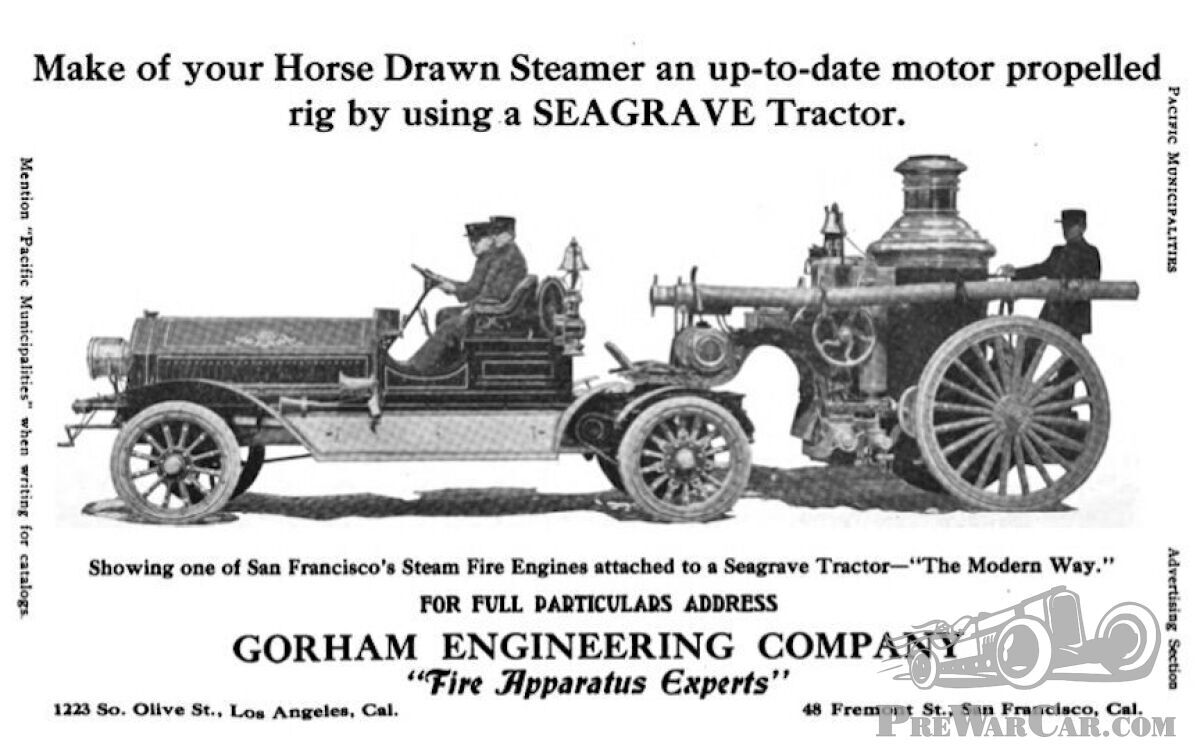
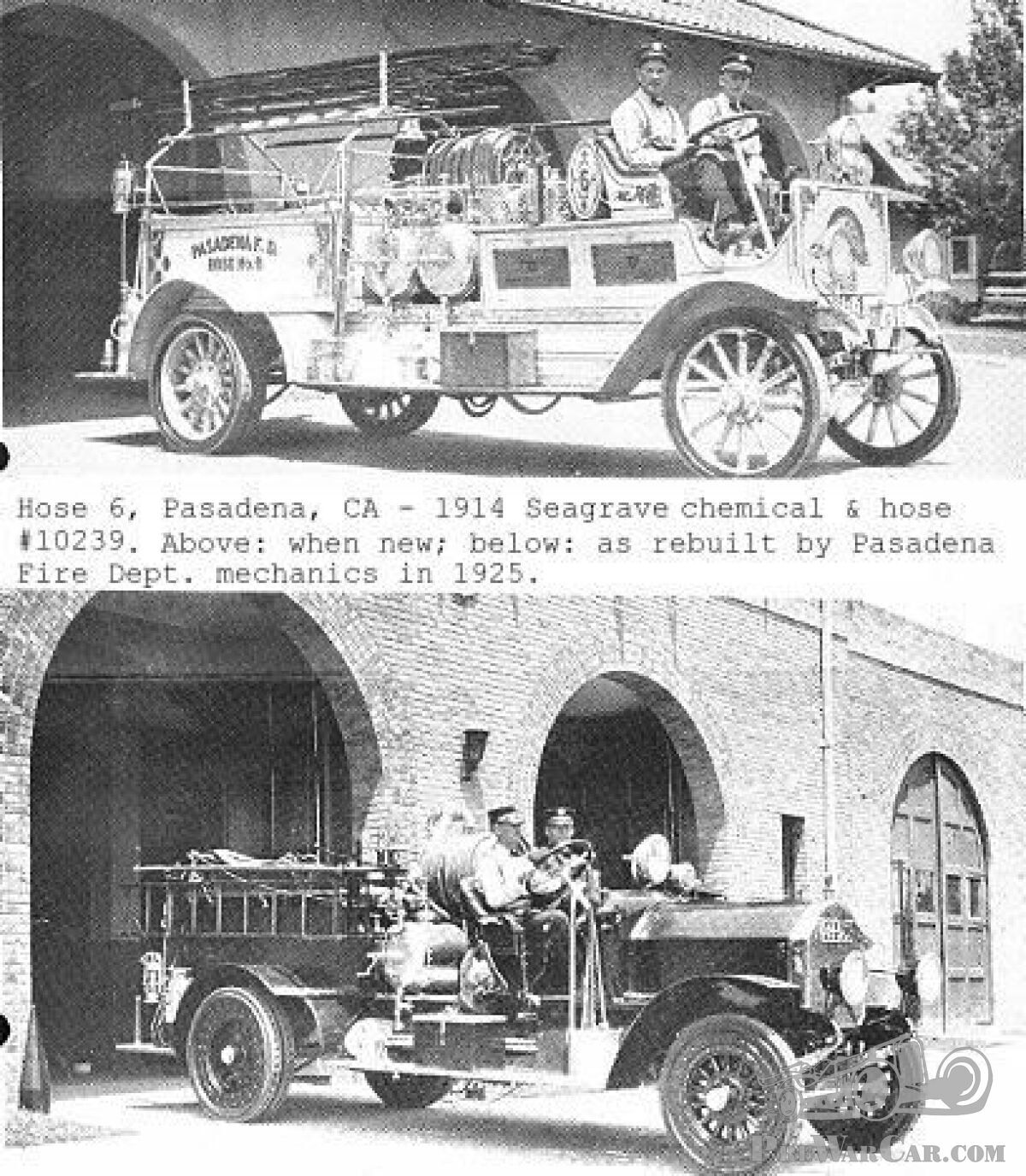
I am certainly not an expert in this field and I'm also from Australia, where many Hotchkiss chassis found themselves being fire trucks in the earlier part of last century, but nothing like this. With this photo, though, I think we need to consider that this may be an early conversion from a horse-drawn/steam-driven fire pumping apparatus converted to a more modern internal combustion-engined chassis; it has a steering wheel, advance/retard controls, a hand brake, gear lever, foot pedals and the possibility of electric lighting; Seagrave, perhaps? There was a couple on this page advertised for sale recently.
Read more