The global magazine and marketplace for classic car enthusiasts, by enthusiasts.


Filter
Make a choice:
- Cars
-
Make >>
-
Year >>
-
- Bikes
-
Location >>
- Parts & more
-
Make of car >>
-
Manufacturer >>
-
Category >>
- Bicycles & more
-
Year >>
-
Countries


Four soldiers, a French barn and the Peugeot that didn't exist...


The wonders of photography have, from time to time, brought us pictures seemingly from the realm of myth. For almost 100 years, now the world has been presented with photographs of things thought not to exist primarily because there is no convincing evidence that they do, like the Loch Ness Monster and Bigfoot. The pictures, of course, hoaxes dreamt up by practical jokers, publicity seekers and cranks, but the car in this picture is something very real. However, if it wasn't for this photograph, we'd not know that it ever existed.
Firstly, a bit about the photo: it comes to us from a French gentleman who tells us that it was taken in Orléans, probably on 27th January 1916. The four men are all French soldiers, and the one in the back was the brother of our correspondent's great-grandfather.
The car itself is a Peugeot Type 147 40hp tourer, a model which, we are told, was only ever produced during the 1914-1918 war. Apparently, so we are led to understand, it is not to be found listed in any Peugeot catalogues of the period. It seems to be the case that there are no such cars in existence today, but what is surprising is that we cannot even find period photographs of it on the internet, or even anything similar, save for one poor-quality side-profile picture which may have been printed as an advertisement in a journal. We are told that a picture of the same car with a different soldier appears in Claude Rouxel's book Ghota de l'automobile Française, but we have not seen this for ourselves.
We'd best take a moment to take it all in, for it's quite a magnificent thing to be hold. It's a huge beast, and the engine must be of quite a prodigious size - maybe six or seven litres, we should think. The enormous vee-shaped radiator is not one we are used to seeing on Peugeots of the period, and it must have given the car rather a domineering presence on the road. Most of all, though, we are struck by those curious shrouds on the wings which presumably house the side lights. Whatever could their purpose be, we wonder?
This really is a picture full of mysteries. What can you tell us about the magnificent, but long-lost, 40hp Peugeot?
Words: Zack Stiling; photograph: Niepceron
Firstly, a bit about the photo: it comes to us from a French gentleman who tells us that it was taken in Orléans, probably on 27th January 1916. The four men are all French soldiers, and the one in the back was the brother of our correspondent's great-grandfather.
The car itself is a Peugeot Type 147 40hp tourer, a model which, we are told, was only ever produced during the 1914-1918 war. Apparently, so we are led to understand, it is not to be found listed in any Peugeot catalogues of the period. It seems to be the case that there are no such cars in existence today, but what is surprising is that we cannot even find period photographs of it on the internet, or even anything similar, save for one poor-quality side-profile picture which may have been printed as an advertisement in a journal. We are told that a picture of the same car with a different soldier appears in Claude Rouxel's book Ghota de l'automobile Française, but we have not seen this for ourselves.
We'd best take a moment to take it all in, for it's quite a magnificent thing to be hold. It's a huge beast, and the engine must be of quite a prodigious size - maybe six or seven litres, we should think. The enormous vee-shaped radiator is not one we are used to seeing on Peugeots of the period, and it must have given the car rather a domineering presence on the road. Most of all, though, we are struck by those curious shrouds on the wings which presumably house the side lights. Whatever could their purpose be, we wonder?
This really is a picture full of mysteries. What can you tell us about the magnificent, but long-lost, 40hp Peugeot?
Words: Zack Stiling; photograph: Niepceron
Published:
Monday July 3rd, 2023
Facebook
LinkedIn
Twitter
WhatsApp
Email
Copy
Comments


William Mundt
09 July 2023, 15:47
This Gallic beast must have struck fear in the heart of its contemporary Mercedes!
Read more


Jean-Pierre Record
09 July 2023, 13:34
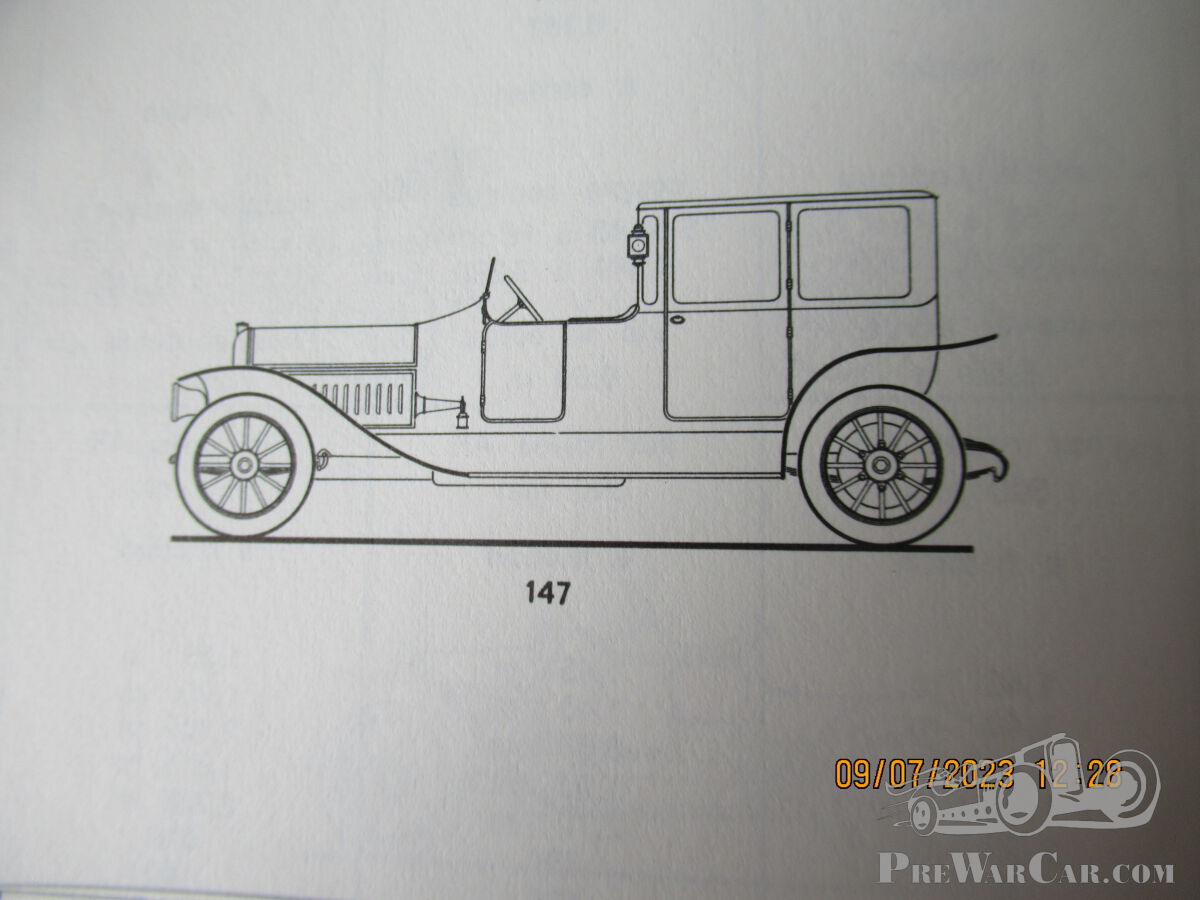
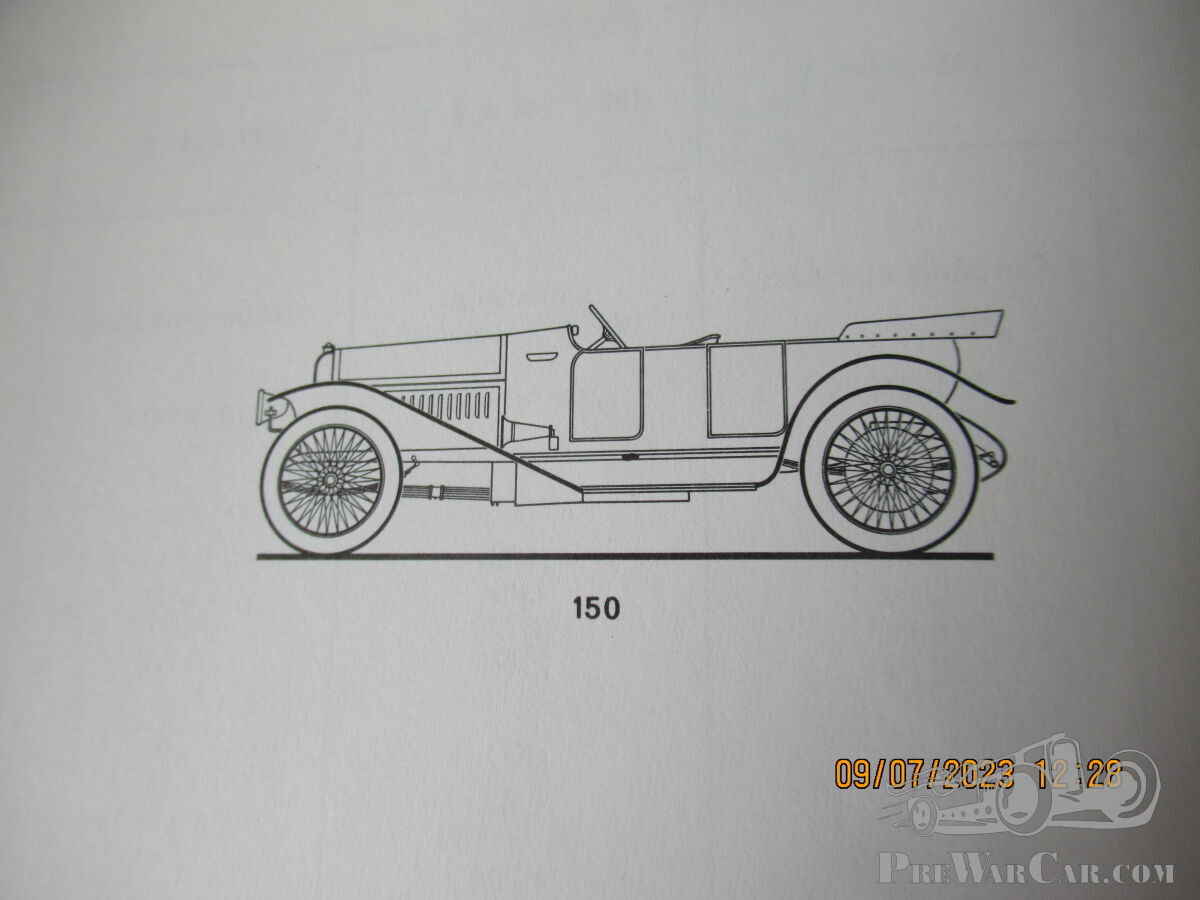
Well, I, like Laurent, think it could be a 147-147S or 150-150S made in Peugeot's Lille factory, but with at least a radiator grille seemingly shared with a contemporary Benz or Daimler-Mercedes.
According to the book "La production Peugeot 1889 à 1928", the 147-147S was made in 1913 and 1914 and powered by the enormous four-cylinder, 40 hp, 7½-litre, was a maximum speed of 79 to 85 km/h (49 to 53 mph) with coupé limousine bodywork, with a total production of only 45 cars. The 150-150S was made in 1914 in the same factory with the same engine, and with torpédo and sport bodies it achieved an astonishing maximum speed from 122 to 129 km/h (76 to 80 mph) depending on the rear axle ratio; it had a production run of only 49 vehicles.
Read more
According to the book "La production Peugeot 1889 à 1928", the 147-147S was made in 1913 and 1914 and powered by the enormous four-cylinder, 40 hp, 7½-litre, was a maximum speed of 79 to 85 km/h (49 to 53 mph) with coupé limousine bodywork, with a total production of only 45 cars. The 150-150S was made in 1914 in the same factory with the same engine, and with torpédo and sport bodies it achieved an astonishing maximum speed from 122 to 129 km/h (76 to 80 mph) depending on the rear axle ratio; it had a production run of only 49 vehicles.
Laurent Friry
08 July 2023, 11:45
Ariejan is really an expert and I can only agree with him.
I am the co-author of the book mentioned by Zack and when Claude Rouxel and I worked on the Ghota de l’automobile française, we were very intrigued by this car and only knew that it was a Peugeot.
Since, I have found other pictures of the same car.
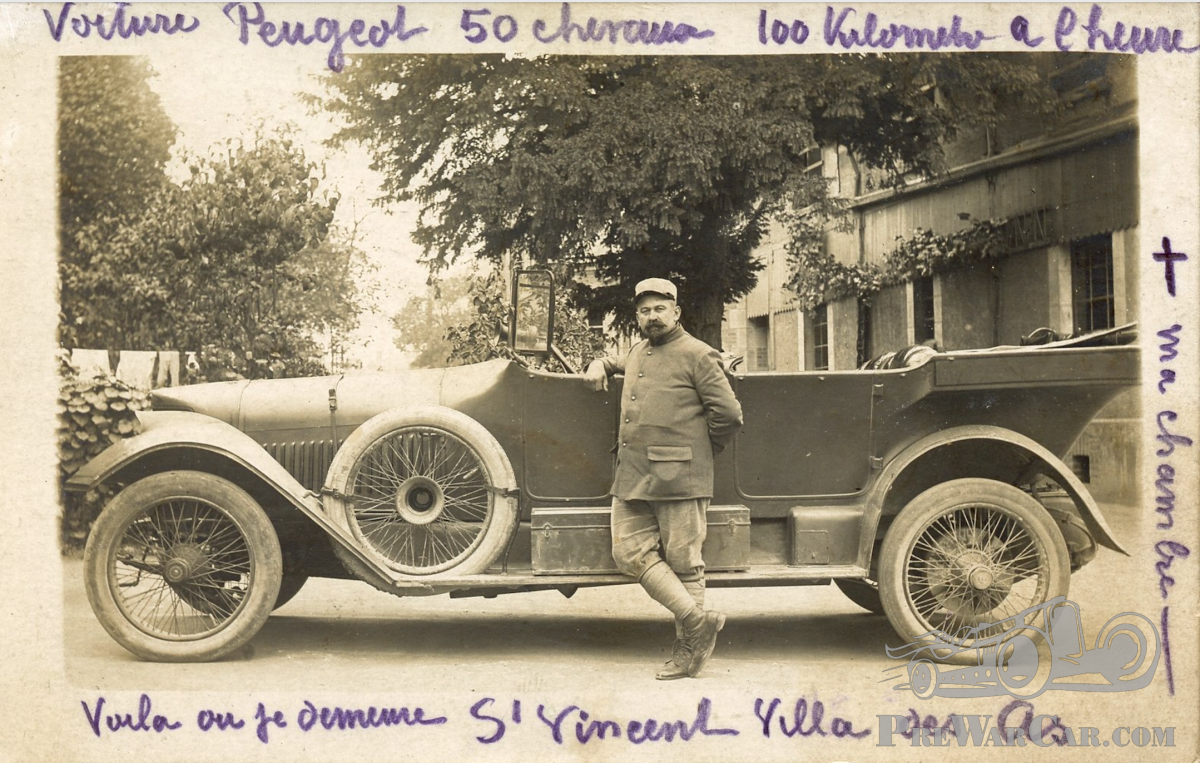
One of them is giving further details as it is a postcard, and the sender, a certain Victor, wrote: Car Peugeot 50 HP, 100 km/h. Here is where I live: St Vincent, villa des As. My bedroom (X).
Looking at the pre-WWI Peugeot production record, it could be a Type 147 or 150, both equipped with a very large four-cylinder engine of 7½-litre capacity.
The body is definitely of German origin, which makes me think that this car was a "prise de guerre", taken from the enemy, and then effected as a staff car.
Read more
I am the co-author of the book mentioned by Zack and when Claude Rouxel and I worked on the Ghota de l’automobile française, we were very intrigued by this car and only knew that it was a Peugeot.
Since, I have found other pictures of the same car.
One of them is giving further details as it is a postcard, and the sender, a certain Victor, wrote: Car Peugeot 50 HP, 100 km/h. Here is where I live: St Vincent, villa des As. My bedroom (X).
Looking at the pre-WWI Peugeot production record, it could be a Type 147 or 150, both equipped with a very large four-cylinder engine of 7½-litre capacity.
The body is definitely of German origin, which makes me think that this car was a "prise de guerre", taken from the enemy, and then effected as a staff car.
Thomas Ulrich
09 July 2023, 12:39
Hallo,
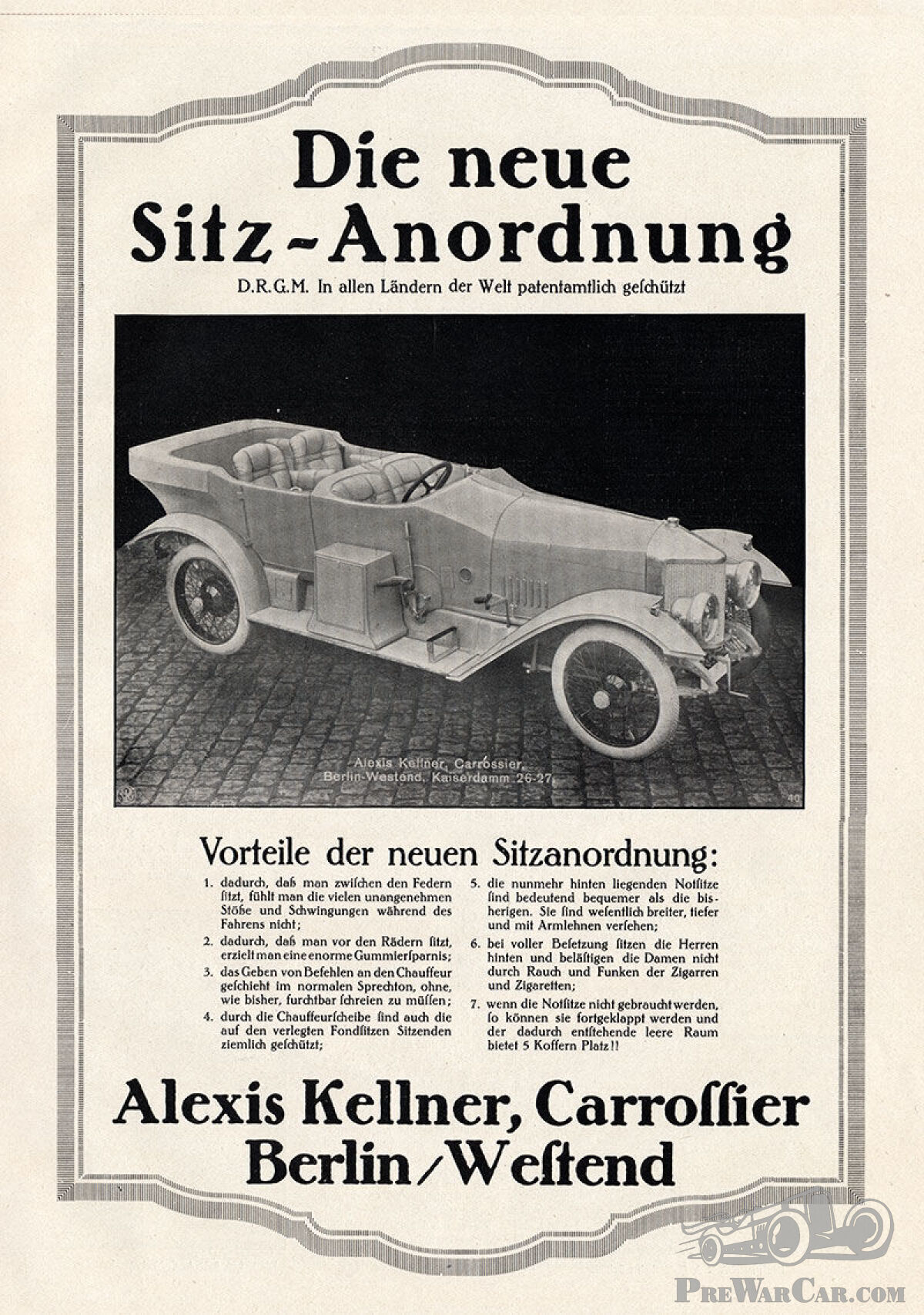
I think Laurent is right. It is definitely German and it has an Alexis Kellner body. Alexis Kellner had a patent on the sidelights included at the front wings before the Kaiser War. I know that Alexis Kellner fitted several French cars with his bodies.
Read more
I think Laurent is right. It is definitely German and it has an Alexis Kellner body. Alexis Kellner had a patent on the sidelights included at the front wings before the Kaiser War. I know that Alexis Kellner fitted several French cars with his bodies.


Luc Ryckaert
03 July 2023, 11:33
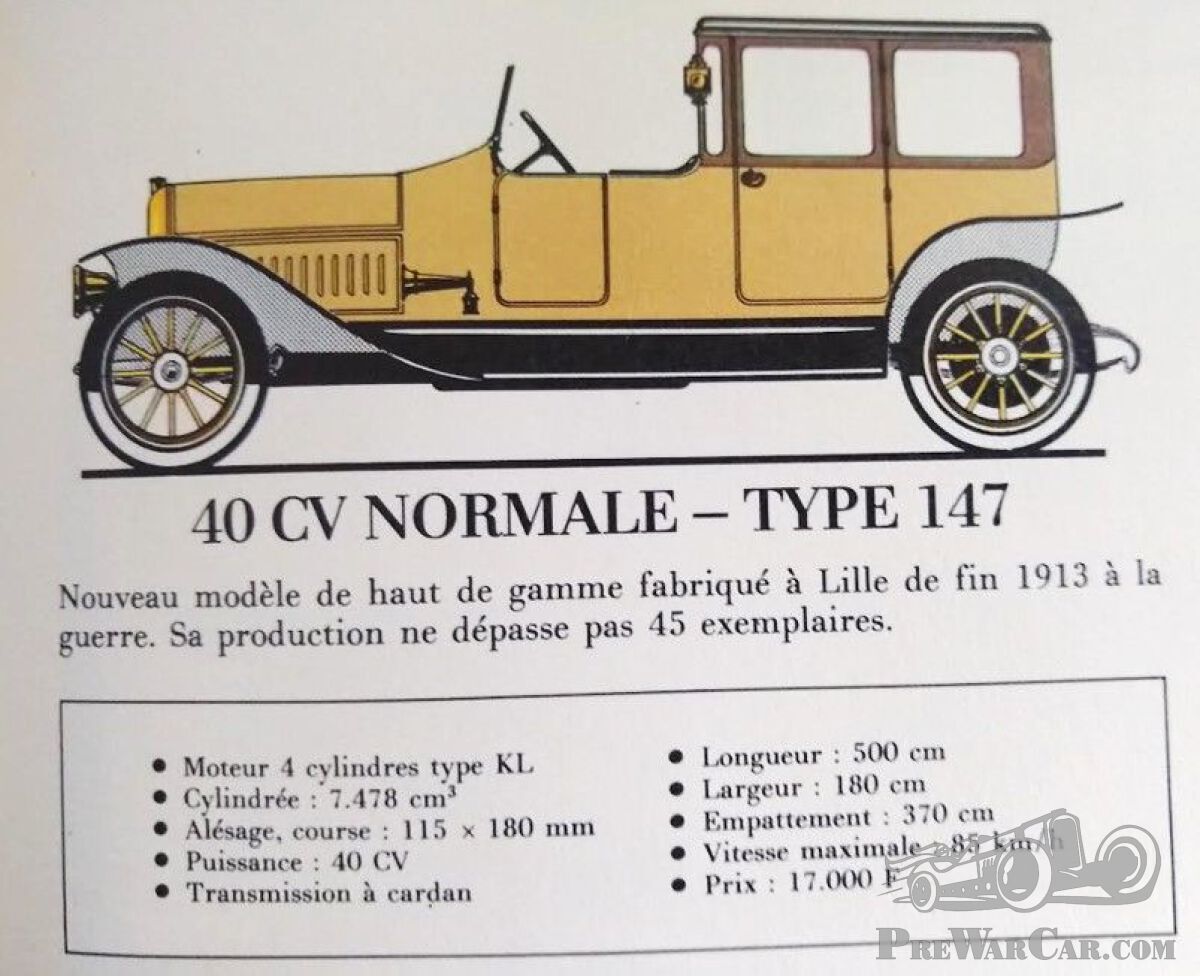
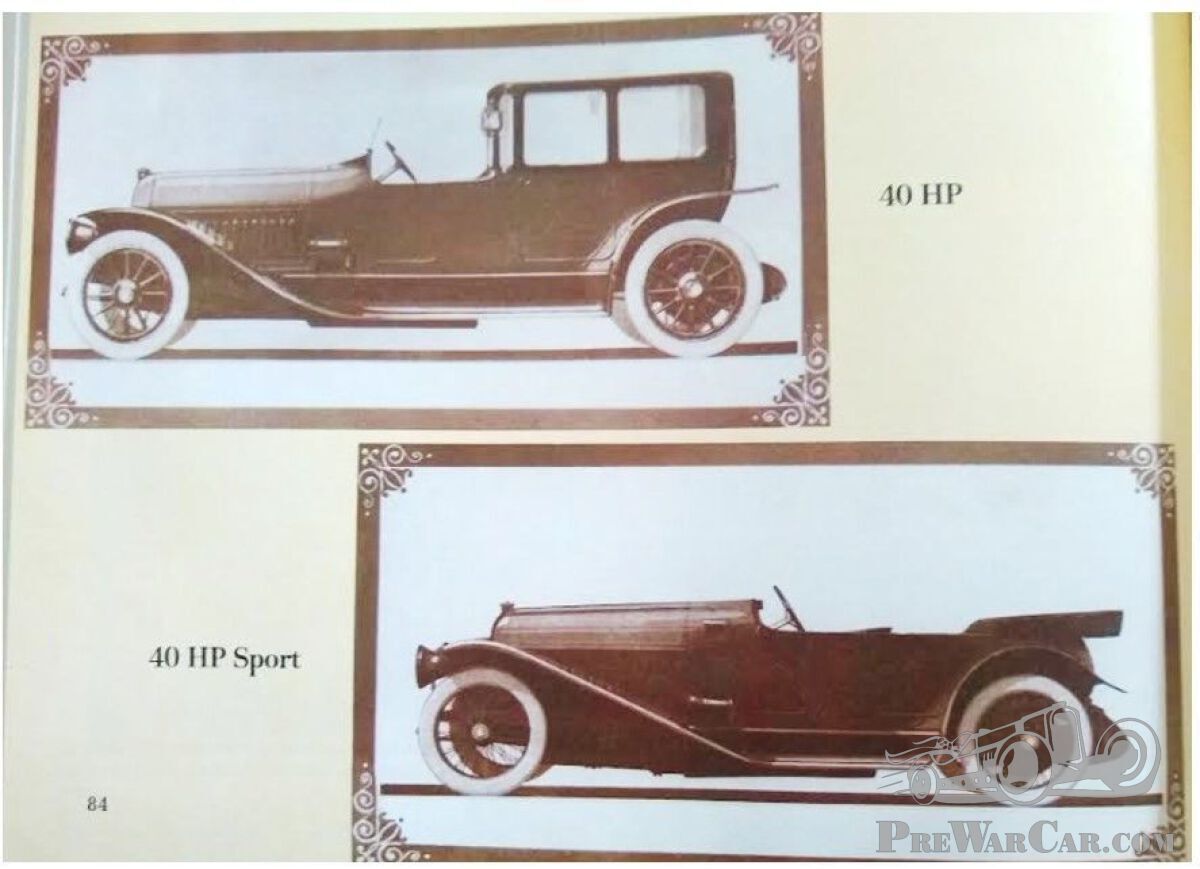
Hello. This is what I found in "Toutes les Peugeot" by René Bellu (1980). The pictures of the 40 HP and 40 HP Sport come from the 1914 Peugeot catalogue. Kind regards, Luc Ryckaert.
Read more
Niepceron
03 July 2023, 16:21
Hello Luc,
Thank you for this but I think it’s not the same car: a front bulkhead and the radiator…
Read more
Thank you for this but I think it’s not the same car: a front bulkhead and the radiator…
Ariejan Bos
03 July 2023, 11:28
Although I have several photos of this model, based on the curiously mounted manually operated siren at the window side, it's my opinion that the car was a one-off. According to the information written on the different postcards, the Peugeot would be a 45hp or 50hp model capable of more than 100 km/h (62 mph), which was used as an instruction vehicle. The body is described as a "carrosserie boche", the derogatory name hinting at the German origin. It resembles very much the Alexis Kellner type of body of shortly before the Great War with its pointed radiator and mudguards. A well known example of this style is the better known 1914 Minerva. This type of mudguard lights was shown for the first time at the 1913 Bruxelles Show.
Read more
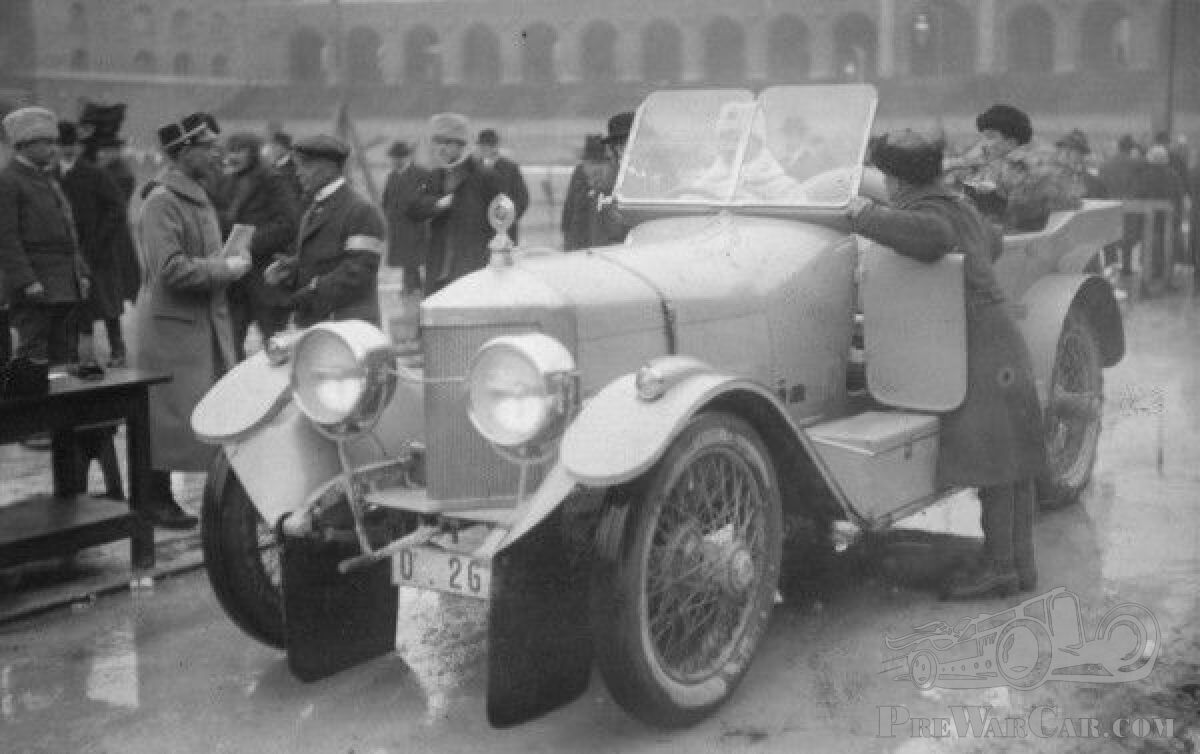
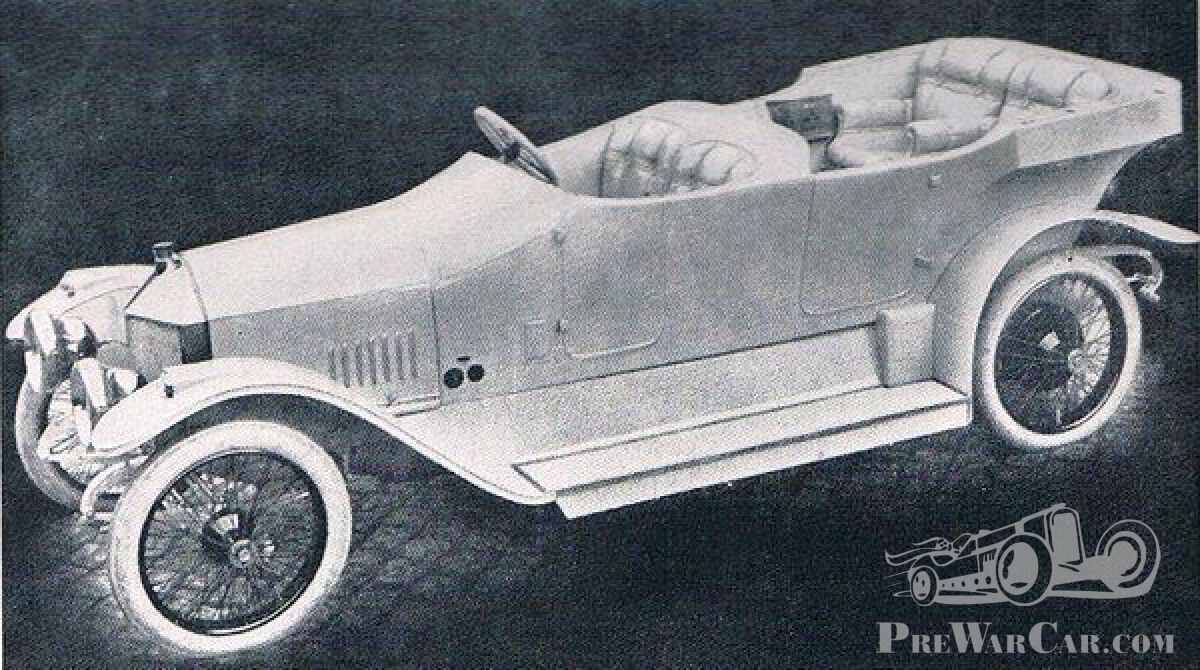
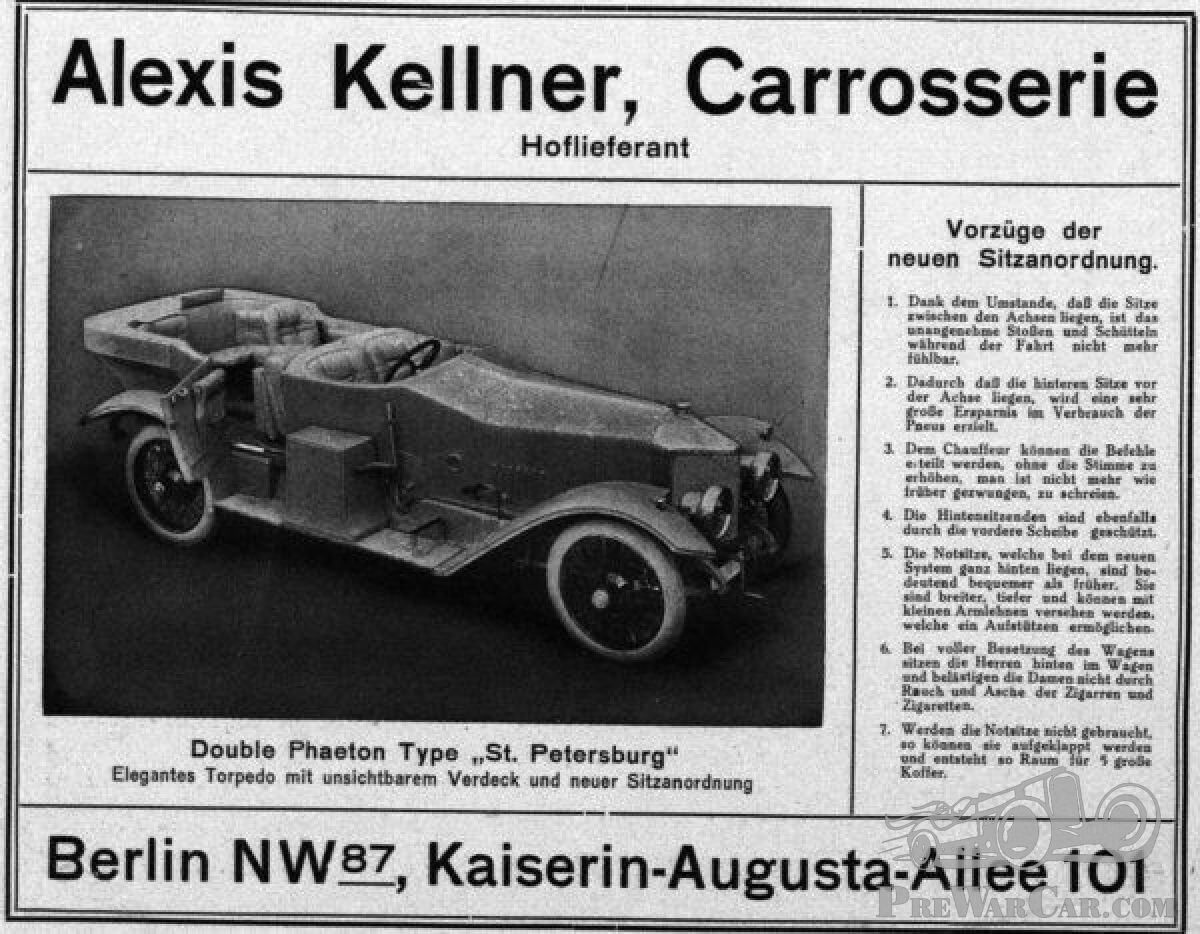
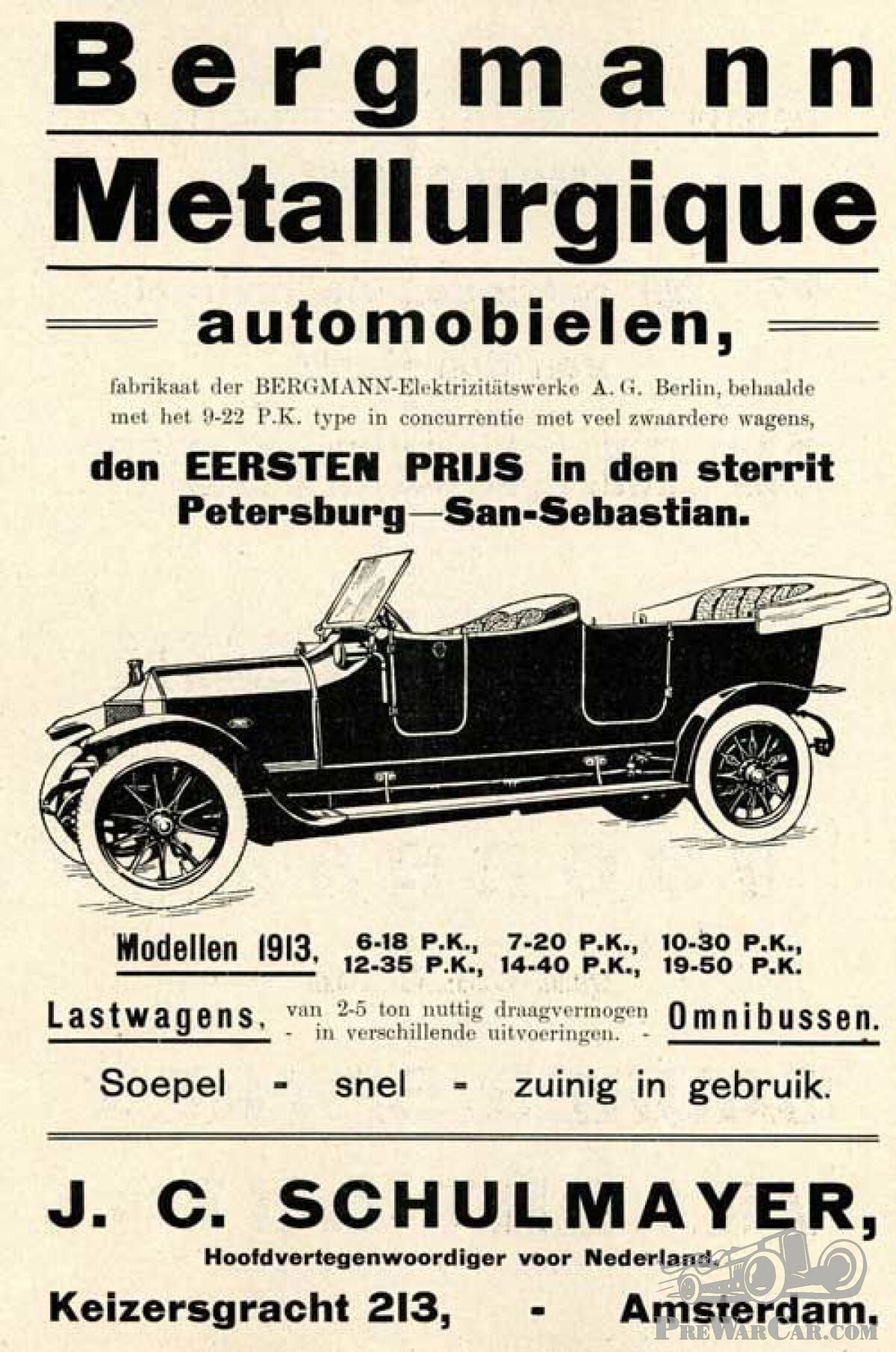
This bodywork by Alexis Kellner is of "St. Petersburg" type (photo 1).
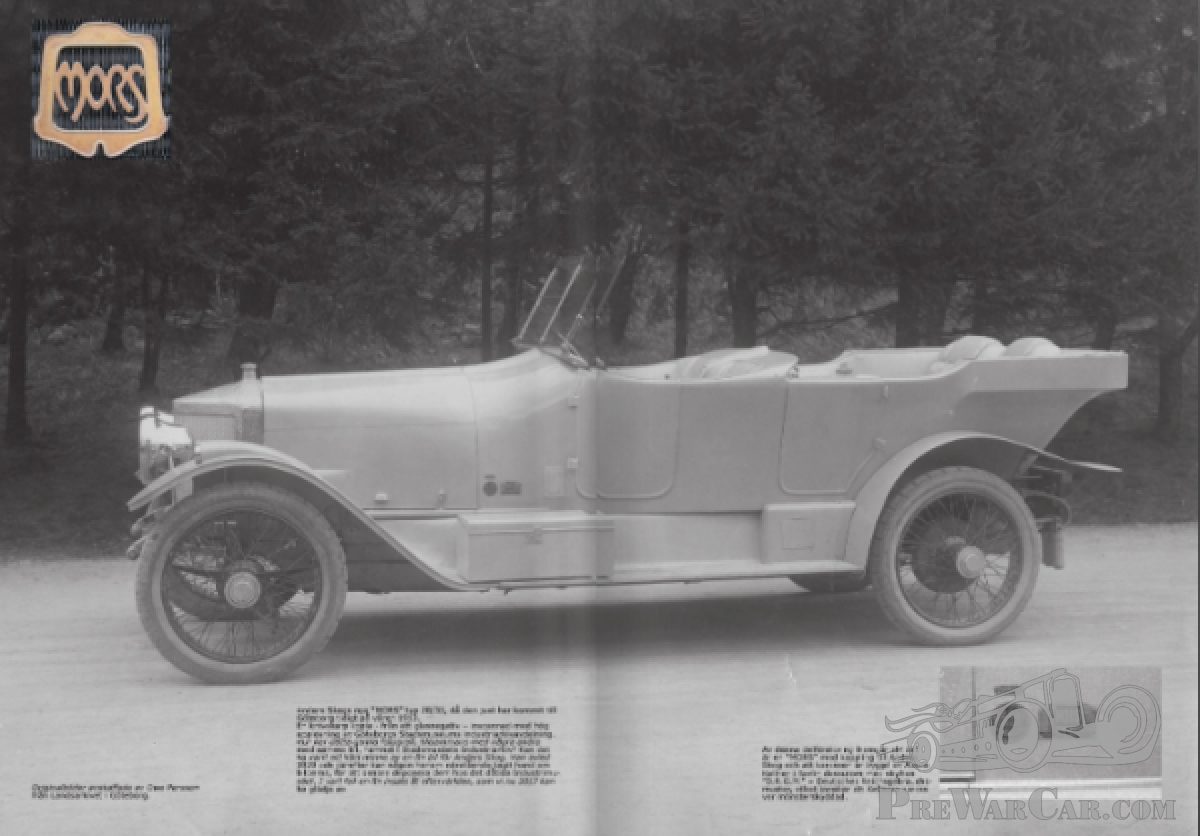
It was mounted on several cars of different marques, German, Belgian and French.
The Kellner Minerva is indeed well-known, as Arejian reminds us. It even participated in a concours d'élégance in 1915 in Spain.
This bodywork is also found in Germany on a Bergmann Métallurgique chassis. (photo 2 and 3). Prince Georg of Saxony owned one.
The German vehicle could have six different engines: 6-18, 7-20, 10-30, 12-35, 14-40 or 19-50.
I also have photos of a French Mors car with this bodywork (photo 4 and 5).
Thank you Laurent Friry for your beautiful document.
Laurent Zoller