The global magazine and marketplace for classic car enthusiasts, by enthusiasts.


Filter
Make a choice:
- Cars
-
Make >>
-
Year >>
-
- Bikes
-
Location >>
- Parts & more
-
Make of car >>
-
Manufacturer >>
-
Category >>
- Bicycles & more
-
Year >>
-
Countries


From Chichibio to a Grand Prix Racer
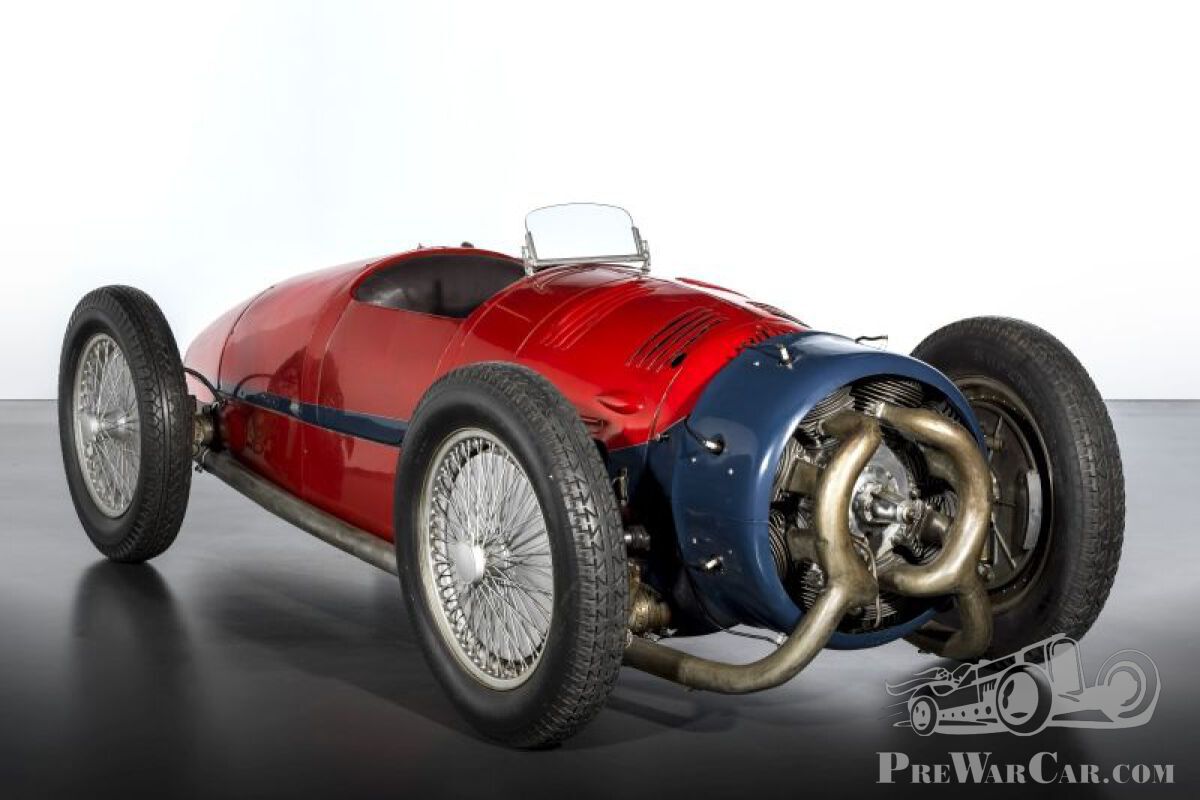
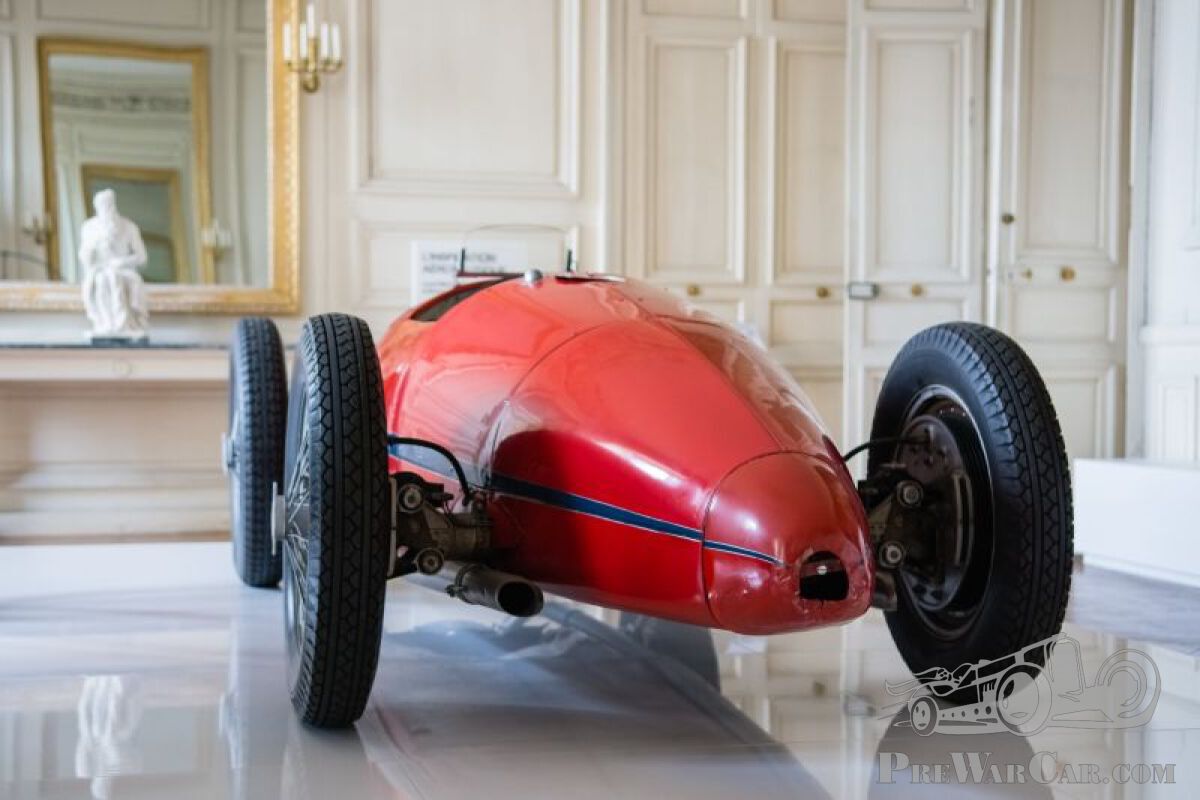
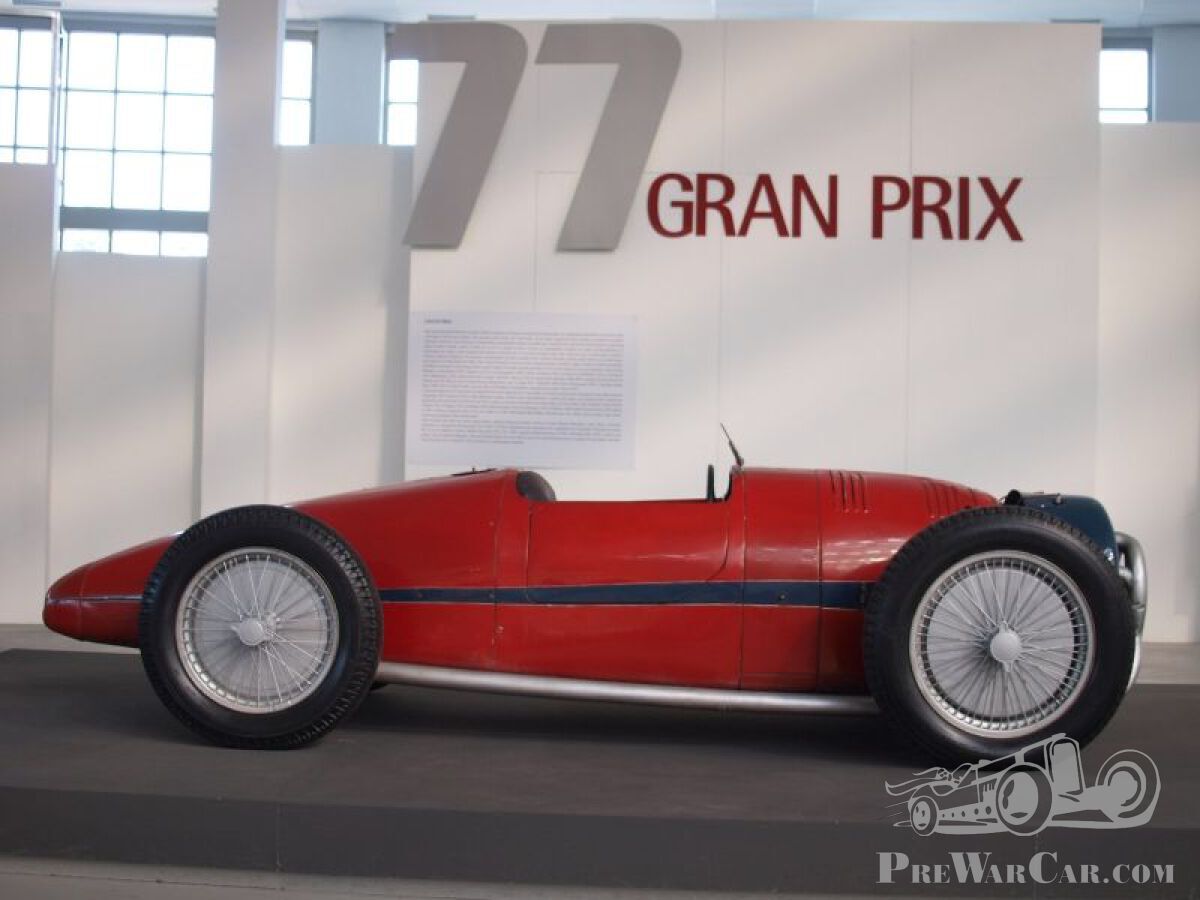


Augusto Camillo Pietro Monaco was born to Italian parents in Buenos Aires, Argentina, on March 15, 1903. At the end of the 1920s he moved to Turin, where he began to work in various companies in the chemical and mechanical sectors. He preferred short-time collaborations that did not tie him down, which suited his free and independent spirit.
Monaco-Nardi Chichibio
In 1932 he developed his first car, which was designed in collaboration with his friend Giulio Aymini. The acclaimed team of Massimo Lancia and Enrico Nardi were also involved. Together they set out to build a light and compact hill-climb racer. The end result, called the Monaco-Nardi Chichibio, was named after Monaco's dachshund dog ― probably because it also had an elongated silhouette! At just 83cm from the bonnet to the ground, it was very long. It was powered by a JAP 998-cc V-2 motorcycle engine capable of 65 hp (!), which was more than enough to propel a 300kg car. The car clocked up many victories and once reached 180km/h on the flying kilometre at the Monza racetrack.
Monaco-Trossi Grand Prix Racer
Boosted by the results of the Chichibio, Monaco went on to work on the most important project of his life ― a Grand Prix racing car. The idea, which was fine-tuned with his friend Aymini, was to develop a car with front-wheel drive, thus avoiding the heavy and bulky transmission, and to combine the engine, gearbox, and differential into one compact and lightweight unit. The air-cooled engine, reduced frontal area, independent suspension, low stance, and simple aerodynamic body were all carried over from the Chichibio. The most troublesome obstacle was the engine. Monaco turned his attention to the aeronautical field and studied radial engines, which had always fascinated him. In a radial engine, the cylinders are exposed directly to the airflow for cooling thus avoiding a forced-air system. This enables an extremely compact car with a clean, tapered and streamlined shape.
The engine that Monaco visualised was a two-stroke radial unit with cylinders split in a double coaxial star for a total of 16 cylinders (8 + 8), with a capacity of 3982cc, and a maximum power of 250hp at 6000rpm. The engine was placed at the front, cantilevered in front of the wheels and fed by two Zenith carburettors and two Zoller superchargers. The five-speed gearbox was placed in the longitudinal 'transaxle' position behind the engine with a manual lever under the steering wheel. The suspension was independent on all four wheels, with overlapping triangles, coil springs, and driver-adjusted hydraulic shock absorbers. The four drum brakes were hydraulic.
Along the way Count Carlo Felice Trossi became fascinated by Monaco’s project and offered him the necessary financial support to complete the project.
It’s debut in Monza
The debut of the futuristic Monaco-Trossi Grand Prix took place during the tests (in July) for the Monza Grand Prix on September 8, 1935, in which it was registered to participate. The designated speed of 200km/h was easily exceeded as the car reached 280km/h in the hands of Aymini and Trossi. It became apparent that the car tended to overheat, and it also repeatedly broke the spark plugs. But it was the tendency for unmanageable oversteer that sealed the fate of the car. Tests were immediately halted for fear of a serious accident.
In 1950, the car was donated to today's MAUTO in Turin by Trossi's sister, Lisetta, where it continues to amaze today with its aesthetics, boldness and genius.
Would you like to read more? The Spring 2022 issue of Rare & Unique Vehicles features more than a dozen articles on the special theme Alternative Power, including an overview of the failed Monaco Trossi Grand Prix car by Frederico Signorelli and the MAUTO museum.
Published:
Monday March 14th, 2022
Facebook
LinkedIn
Twitter
WhatsApp
Email
Copy