The global magazine and marketplace for classic car enthusiasts, by enthusiasts.


Filter
Make a choice:
- Cars
-
Make >>
- Bikes
-
Location >>
- Parts & more
-
Make of car >>
-
Manufacturer >>
-
Category >>
- Bicycles & more
-
Year >>
-
Countries


From horse-carriage to motor car: Friday Ladies demonstrate evolution in action
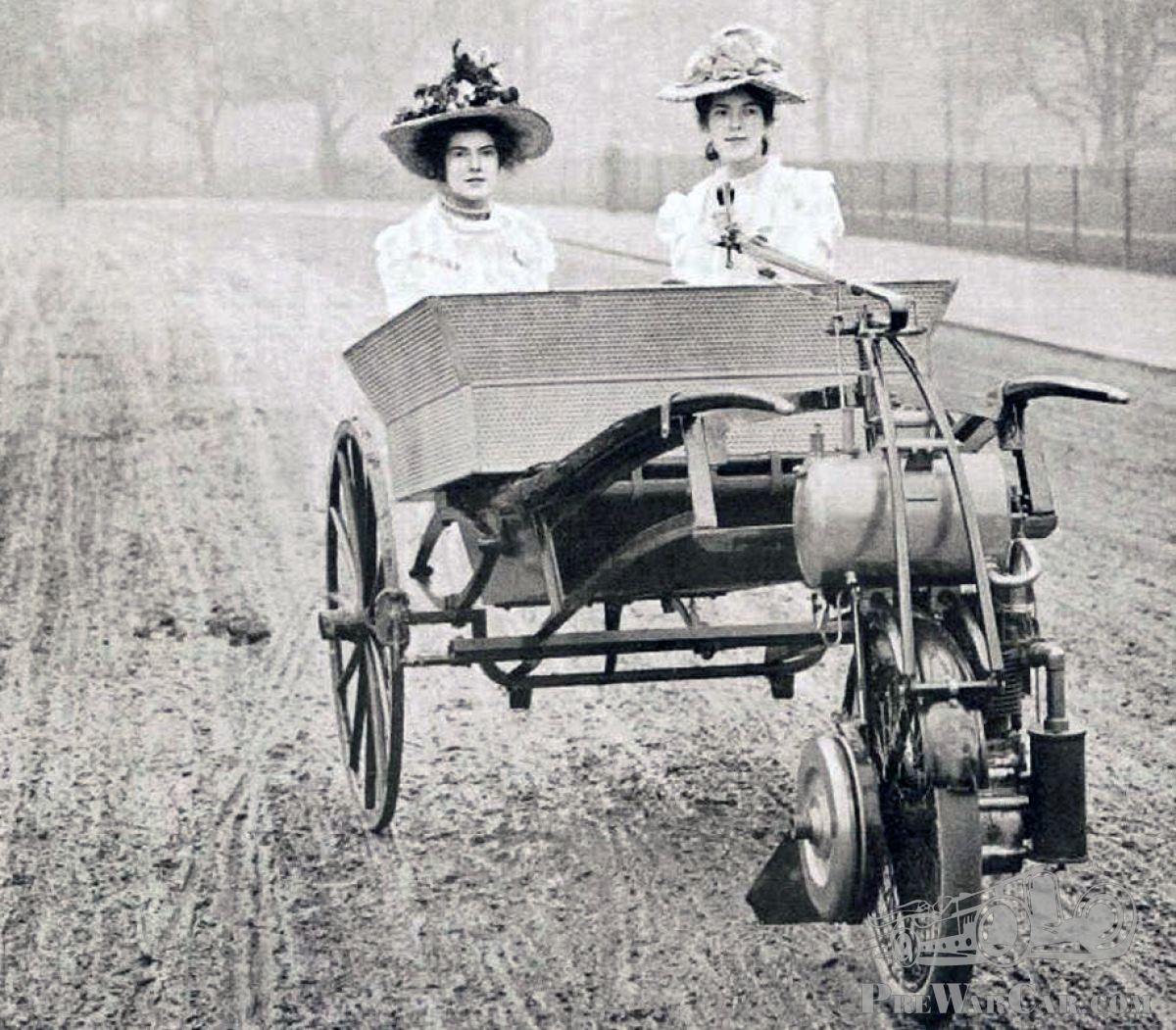

With the London to Brighton Run just around the corner, we take a look back at transport at the dawn of the 20th century. And however, as odd as it may appear today, the idea of the Lawson Motor Wheel, as demonstrated here by the two lovely ladies with Mona Lisa smiles, wasn’t quite so strange in 1902, when the photograph is believed to have been taken. This, ladies and gentleman, is transport captured in the very act of evolution.
Although we see women demonstrating the Motor Wheel here, it was a man who was the driving force behind the project and it should come as no great surprise that his name was Lawson—Harry Lawson. According to the Society of Automotive Historians, we should be thankful to the man as Mr. Lawson "Set up the first British motorcar factory, the Motor Mills in Coventry in the mid-1890s,” and was “The motivating force behind the country’s first series-produced cars: the English Daimlers.” If that's not enough, he also “Founded the Motor Car Club, which in November, 1896, organised the Emancipation Run—better-known these days as the London to Brighton Run.” That’s quite a list of achievements!
Driving the single front wheel of his earliest contraption was a 1½ h.p. single-cylinder air-cooled engine with hot-tube ignition and two-speed epicyclic gearing, giving a 12mph top speed. It may not represent the pinnacle of the British motor engineering, but it does beautifully illustrate a short-lived innovation from an era of rapid development. Note the handles on what must have been a horse-drawn carriage in a previous life. Evolution in action indeed.
Whether one has survived, and whether we might glimpse it along the route on Sunday 2 November, remains to be seen. But as we said before: this is evolution in action!
Words: Jeroen Booij
Published:
Friday October 31st, 2025
Facebook
LinkedIn
Twitter
WhatsApp
Email
Copy