The global magazine and marketplace for classic car enthusiasts, by enthusiasts.


Filter
Make a choice:
- Cars
-
Make >>
-
Year >>
-
- Bikes
- Parts & more
-
Make of car >>
-
Manufacturer >>
-
Category >>
- Bicycles & more
-
Year >>
-
Countries


Going Loco on the open road
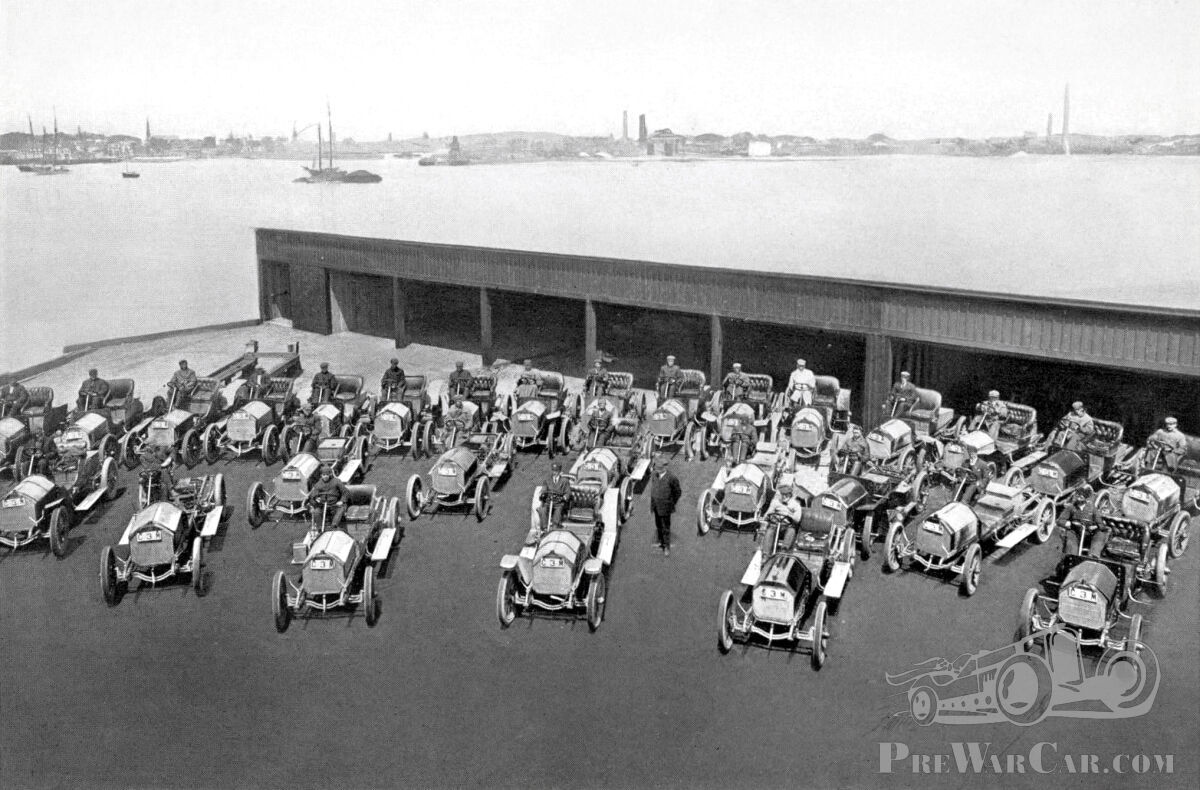

Oh, you will have come across the Locomobile name before - the name itself being a mixture of locomotive and automobile. You may even have seen one, as these post-1904 leviathans (before then they made more humble steam cars) turn up in prestigious events and auctions every now and then. At the Pebble Beach Concours back in 2023, for example, the unrestored “Old Number 16” — the 90hp works car that famously came first in the 1908 Vanderbilt Cup — was a real star of the show.
But 28 of them in one picture? Well, for that you must have been at the factory on the day these great cars were made. That’s exactly where this alluring shot was taken: ‘The Locomobile testing crew ready for the road’, or so the original caption tells us. It comes from a 1912 book about the American marque and was probably taken that very year at the Bridgeport, Connecticut, plant.
Interestingly, all the cars wear a similar number plate, ‘C 3 M’, which must have made it clear to any Bridgeport inhabitants that this was yet another product of the Locomobile Company of America flying past. Connecticut is said to have been the first US state to get rid of the 15mph speed limit in 1901, which may have helped to give these cars some proper testing.
Are these 28 Locomobiles seen here all Model 48 cars, as introduced in 1911? These were expensive vehicles costing approximately $10,000 for a fully bodied and ready-to-go open tourer - that’s without any of the fancy accessories that were offered at the time, including custom-made ornamental light units by Tiffany & Co. This was when the average Ford Model T Phaeton cost about $600, with Henry Ford working hard on further cost savings, which would make it even cheaper in the years to come. No wonder Locomobile disappeared, then...?
Words Jeroen Booij
Picture from ‘The Locomobile book’
Published:
Wednesday November 26th, 2025
Facebook
LinkedIn
Twitter
WhatsApp
Email
Copy
Comments
R.Douglas Miller
30 November 2025, 20:39
Daniel Reuben
29 November 2025, 03:39
I suspect the majority, if not all of these are their 4 cylinder Model L's. Supporting this, the hoods seem short and in the front row at either end are cars that look like they could be chain driven. Most Model M and R (future 48's and 38's) were LHD although I can't say if the very first might have been RHD however. The model L also overlapped and continued production as late as 1915. The company established an Experimental Department where they would test over many months about 5-8 cars at a time through the year. While some could be mixed into this photo these are more likely production cars outfitted with seats in which to pilot them prior to being outfitted with coachwork. They are unlikely race cars at this late date and additionally since a few manifest vertical dashboards that the racers didn't have. The Connecticut license plates (ending in "M") were for registered manufacturers and they could purchase multiple redundant ones at the time (for a fee).
Read more
Maybe they never left the area or were brought back by collectors more familiar with the Marque.