The global magazine and marketplace for classic car enthusiasts, by enthusiasts.


Filter
Make a choice:
- Cars
-
Make >>
- Bikes
-
Location >>
- Parts & more
-
Make of car >>
-
Manufacturer >>
-
Category >>
- Bicycles & more
-
Year >>
-
Countries


Introducing the Dachshund: the world's lowest car, or the world's largest slipper?
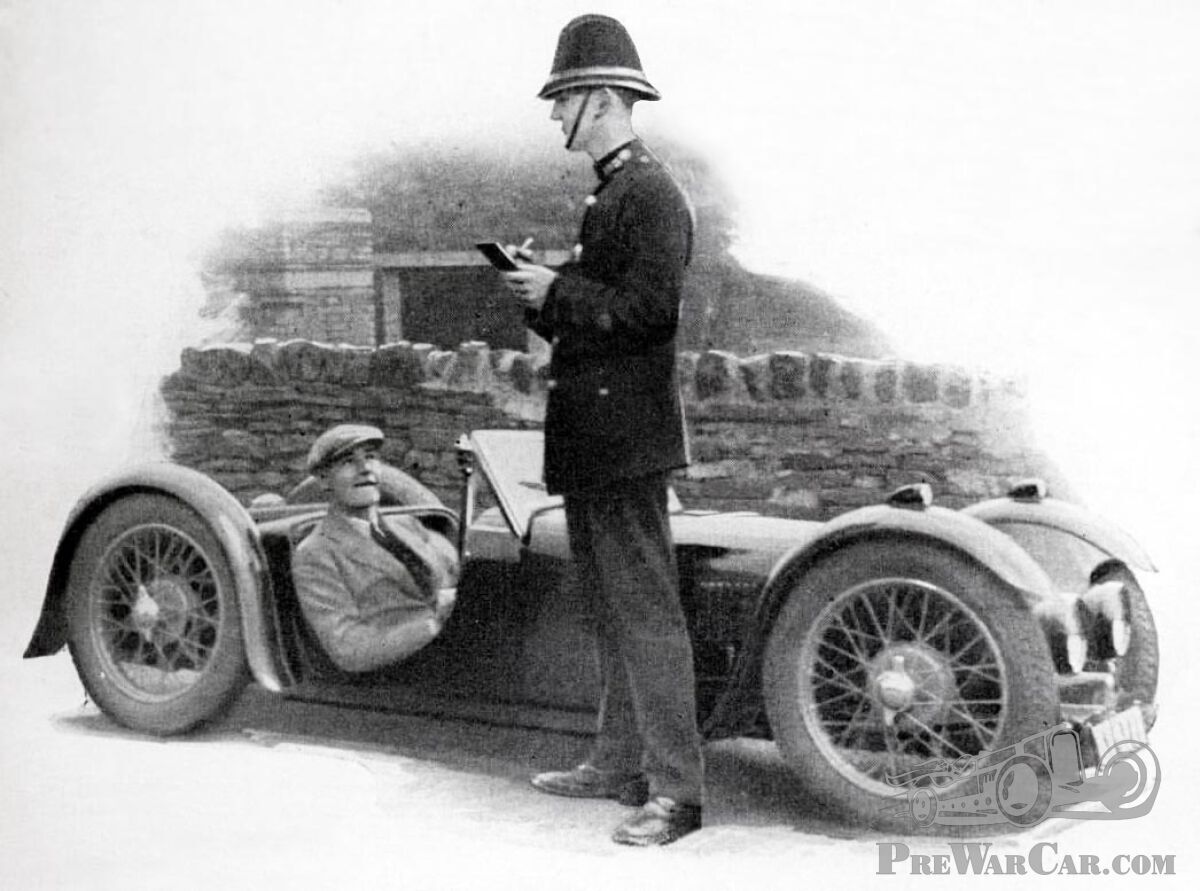

If you like strange inventions, odd discoveries, general scientific silliness and all things mechanical and technical, Popular Science magazine was the periodical to go for in the 1930s, with motoring oddities appearing on your doormat every month.
The November, 1933, issue was another edition which presented no shortage of peculiarities, from illustrated pipe dreams about electric ships to mono-wheel military tanks. However, the real object of interest, from page 43, seems relatively grounded in reality. The image is edited, but it seems to be a real photograph. Unfortunately, the information provided with it is limited. We reproduce the original caption in full here: “With an overall height of only twenty-seven inches, a dachshund car recently appeared on the roads in England. It is believed to be the lowest automobile in the world, the distance from the top of the windshield to the pavement being less than three times the height of this page. It was built by a Bradford engineer.”
It must be said that the Dachshund (which seems an appropriate name, but was it really called that?) must have been a most extraordinary vehicle. How did our Bradford man manage to build it? Unfortunately, we couldn’t find anything else at all about his crazy creation, which seems odd and leaves us with a few questions. What was the base vehicle he used to build it? How did he alter the chassis in order to make it so low? What engine is under that bonnet? Where did it go? Could the registration be a starting point? It looks like KY 4777.
Words: Jeroen Booij;
Picture: Popular Science Monthly
Published:
Wednesday September 18th, 2024
Facebook
LinkedIn
Twitter
WhatsApp
Email
Copy
Comments
Herman van Oldeneel
23 September 2024, 19:25
Ken Rogers
22 September 2024, 12:12
It wouldn't surprise me if he used a Jowett flat-twin engine, being from Bradford, as it would allow the very low body.
Read more
Laurent Zoller
18 September 2024, 17:45
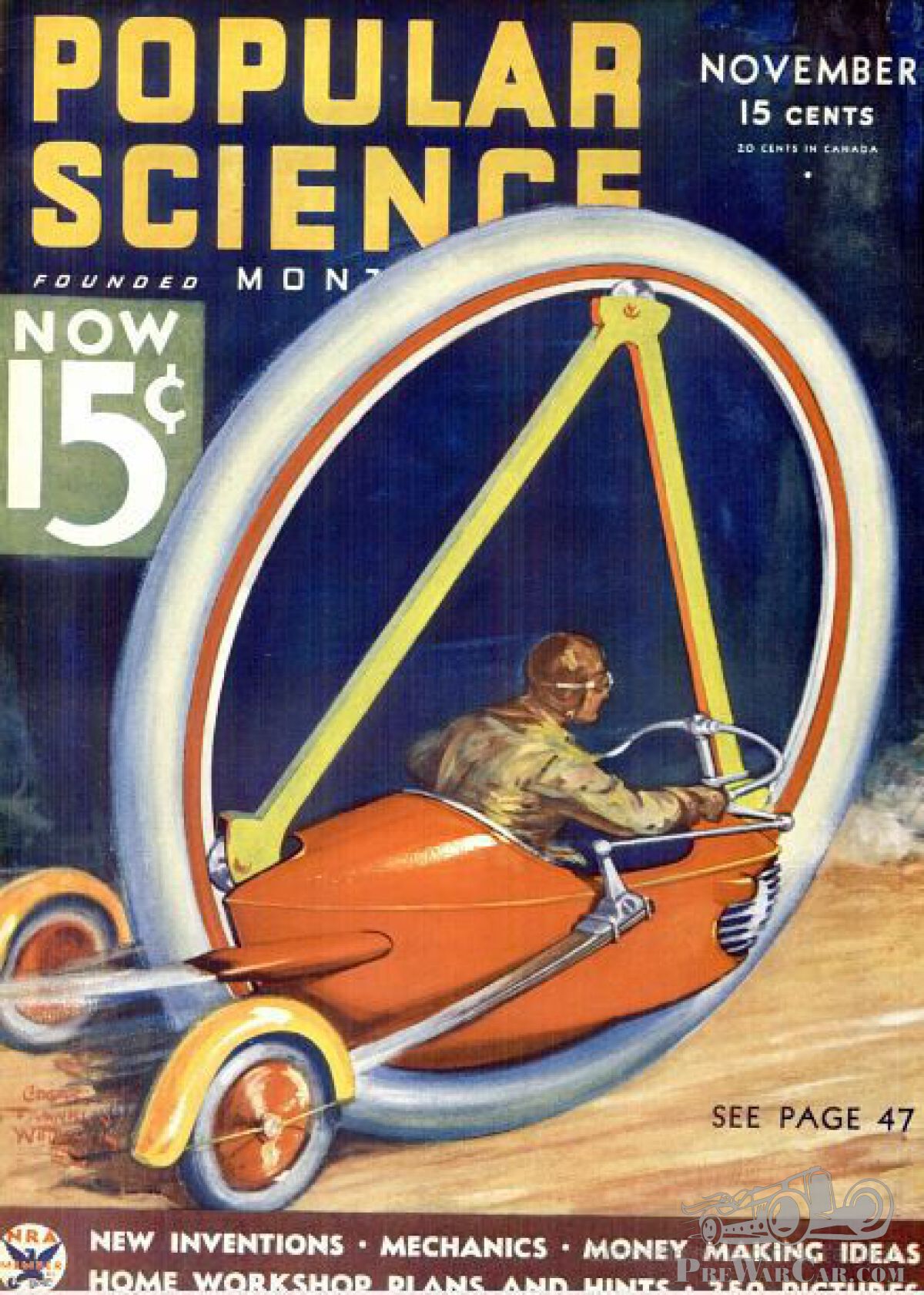
On the cover of this same magazine from November, 1933, we discover another strange vehicle: a motorised unicycle. The Italian Goventosa from Udine was its inventor in 1931. This vehicle is, however, very high!
-------------------------------------------------------------
Sur la couverture de cette même revue de novembre 1933, on découvre un autre véhicule étrange : Un monocycle à moteur . L'italien Goventosa de Udine en serait l'inventeur en 1931. Ce véhicule est par contre ... très haut !
Read more
-------------------------------------------------------------
Sur la couverture de cette même revue de novembre 1933, on découvre un autre véhicule étrange : Un monocycle à moteur . L'italien Goventosa de Udine en serait l'inventeur en 1931. Ce véhicule est par contre ... très haut !
Keith Kuehn
18 September 2024, 17:33
It does look like a young Mr. Chapman at that doesn't it! And, looking at the car, you sure see the future lines of the Seven... Ground clearance is about five to seven inches, so plenty. Heck, my Europa I don't think had that much! The chassis also looks to be underslung, that would get it down!
Great article! Thanks.
Read more
Great article! Thanks.
Tony Press
19 September 2024, 06:14
Reverse curve the rear quarter-elliptic springs and a generous Z bracket at the front with some careful relocating of the two arms could drop the Austin Seven chassis. The driver is noticeably reclining.
Read more
Tony Press
18 September 2024, 07:51
Are they Austin Seven wheels with dummy knock-offs ?
Read more
Rick Harvey
18 September 2024, 06:06
Is that Colin Chapman in his early years? It looks almost impossible without a "backbone chassis", and there must be some serious "road rash" due to the closeness to the pavement.
Read more
---------------------------------------------------------
Waarschijnlijk bedoelde men 27 inches? In 1987 claimde Andy Saunders het record van 's werelds laagste auto. Hij verlaagde zijn Mini tot 34,5 inch hoogte, inclusief dak. Toepasselijke naam: Mini Claustrophobia