The global magazine and marketplace for classic car enthusiasts, by enthusiasts.


Filter
Make a choice:
- Cars
-
Make >>
-
Year >>
-
- Bikes
-
Location >>
- Parts & more
-
Make of car >>
-
Manufacturer >>
-
Category >>
- Bicycles & more
-
Year >>
-
Countries


Le Raid au Cap: FN and the first Belgians to cross Africa by car
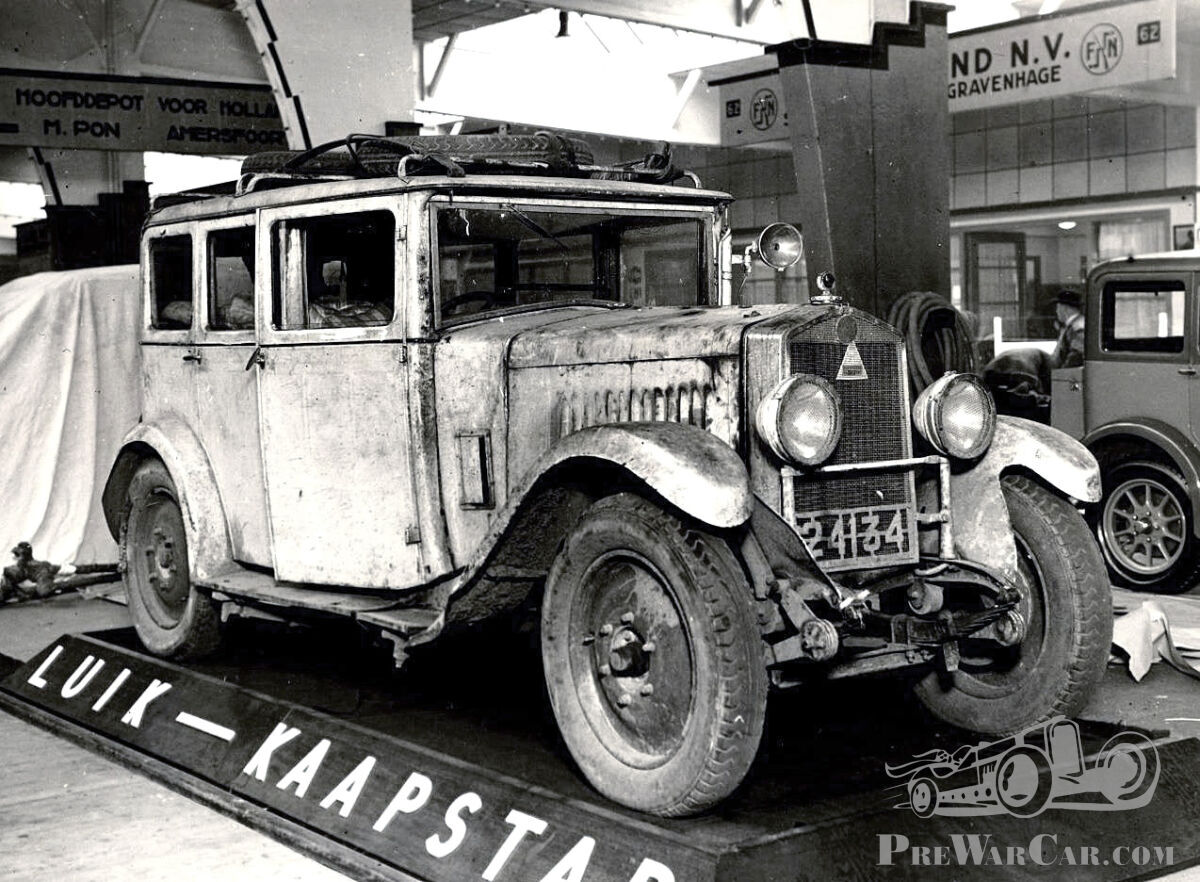
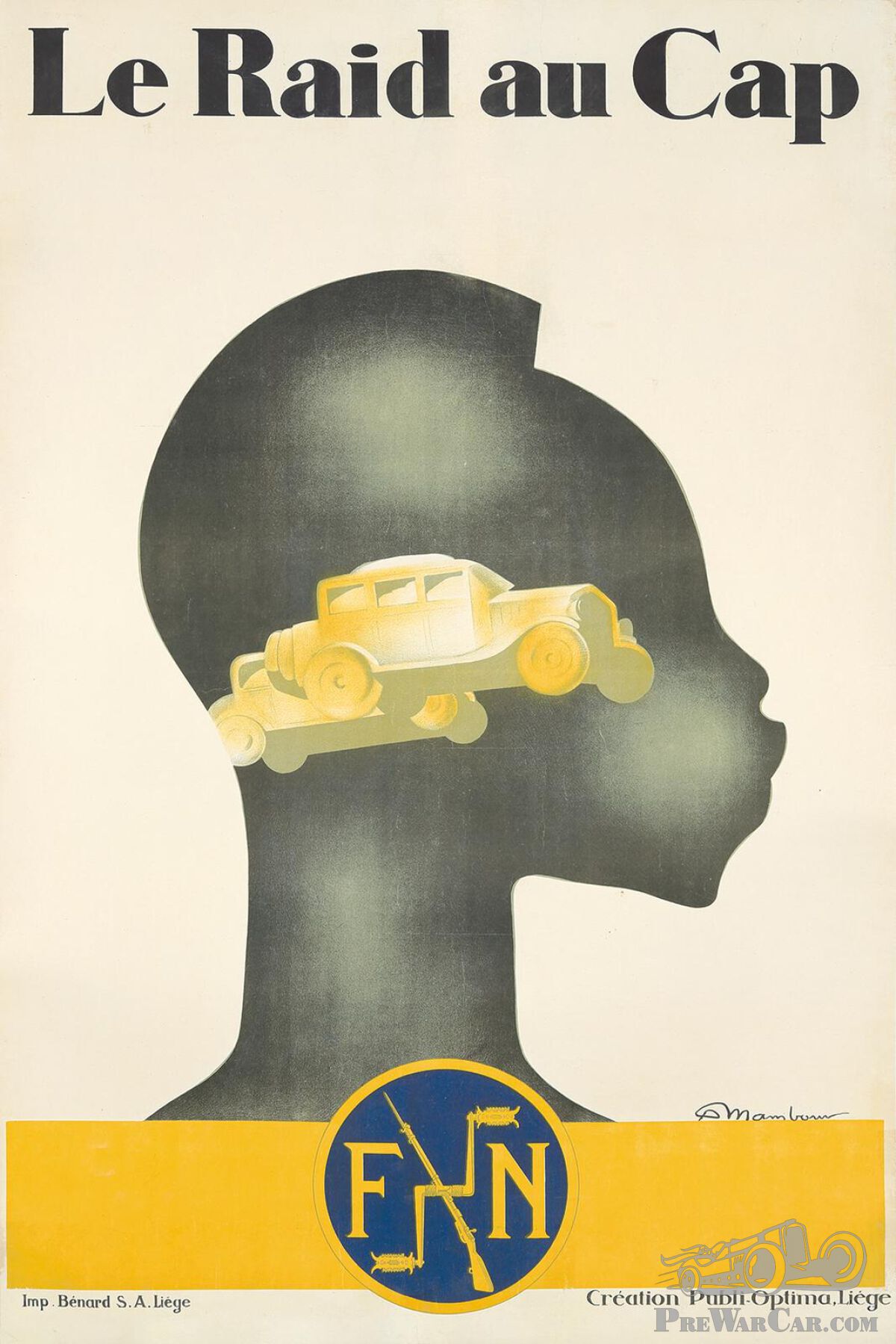


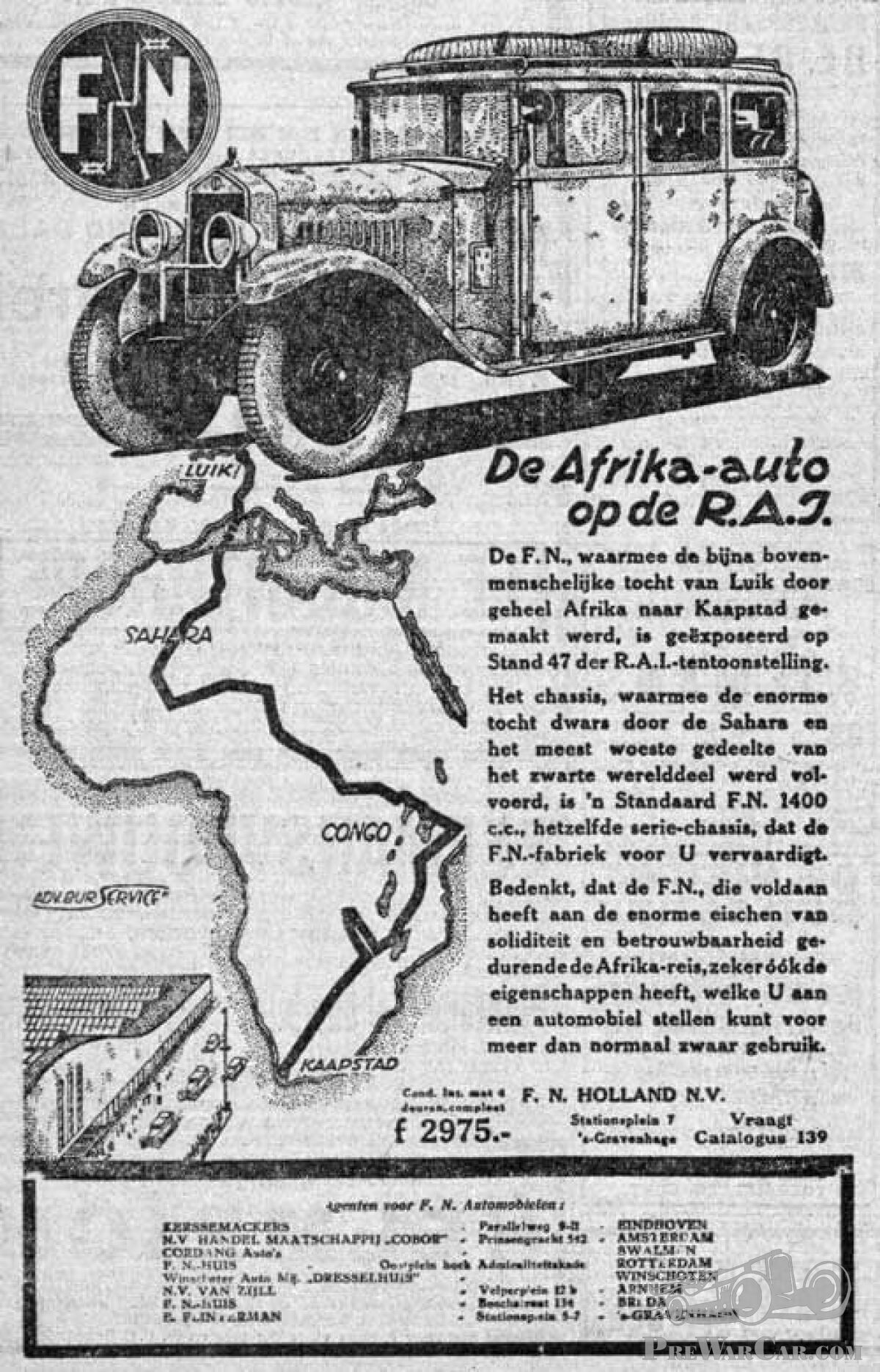
Motor shows as we knew them may be a thing of the past now, but we were fortunate to have them for over a century, with hundreds of photographs surviving as evidence of some of the greatest efforts in automotive marketing. This picture is a beautiful example of marketing at its grandest. What we see is an FN, made in Belgium, at the Amsterdam Motor Show of 1929. But it’s not your average brand-new, highly-polished and immaculately-presented show car, and that makes this one all the more interesting.
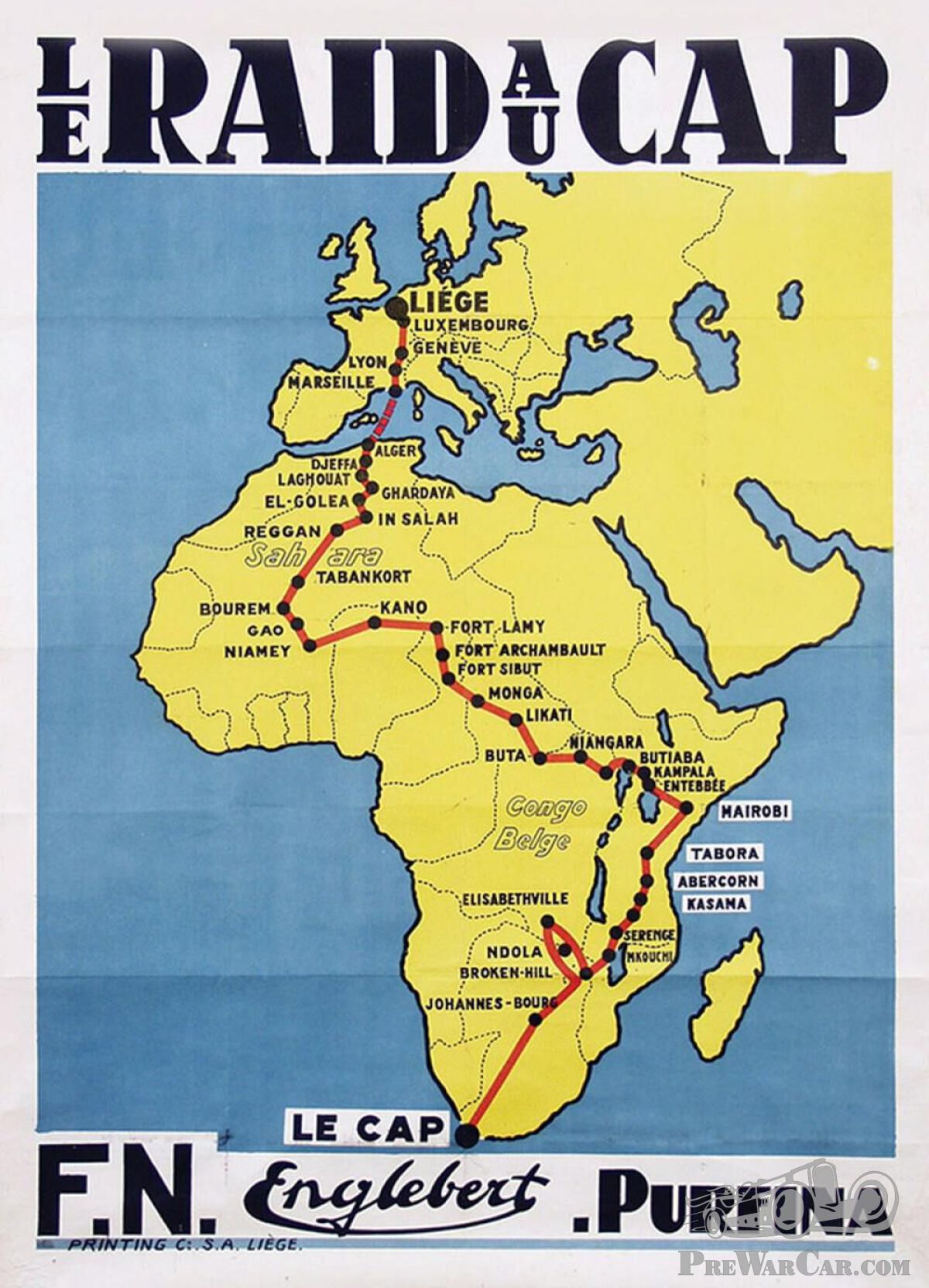
The beaten-up saloon had, as a matter of fact, just returned from a monster trip from Liège to Cape Town and shows off its scars from the cross-Continental trip in all their rugged splendour. If you think that trip would be adventurous today, imagine how it must have been back in the 1920s. Even Tintin in the Congo hadn’t been published yet. The journey was undertaken by Belgian aeronautical pioneer Robert Fabry. When FN heard of Fabry’s African adventures by aeroplane they thought they’d ask him to undertake a similar journey by motor car in 1928. Similar promotional raids had been carried out by French teams, using the well-known half-tracked and fully-prepared Citroën-Kégresse vehicles, but FN decided to take a different path. Apart from a limited number of spare parts and considerably larger (65-gallon) petrol tanks, the cars used by Fabry and his team were just about standard. With two cars and four men. they left Liège on May 13th, 1928, and followed the route south to Geneva, Lyon and Marseilles, and on to Algiers by ship.
In Africa things started to become difficult soon enough. Temperatures supposedly reached 131 degrees Fahrenheit in Reggan, where the two teams got lost. They found their way back after a delay of four but had thousands and thousands of miles ahead of them still. They travelled through Nigeria, the Congo, Uganda and Kenya and were crossing Chad in the rainy season when one of the cars got stuck in the forest of Kamega. Two days were spent to get it moving again and repair the burned clutch with the help of an Irish colonist. In the mountains that followed, one of the cars’ rear axle packed up. A new part had to be ordered from Nairobi while the car was towed to Arusha by 16 oxen. At the end of July, the cars carried on to Kigoma and Dar-Es-Salaam. Unfortunately, the next stretch saw forest fires in which one of the cars got trapped, and with the big 65-gallon petrol tank going up in flames, it was totally destroyed. Fabry and his co-driver decided to carry on in the sole surviving car, while the other two team members continued the trip in a separate car which they hired from a South African colonist. They still had a massive journey ahead of them then but eventually reached Cape Town on August 25th, averaging a very impressive 137 miles a day over 105 days in total.
The surviving car was transported back to Europe by ship to Dover to be exhibited in a number of exhibitions, this one in Amsterdam having been documented beautifully. Does anyone know what happened to it afterwards?
Words: Jeroen Booij
Published:
Thursday July 25th, 2024
Facebook
LinkedIn
Twitter
WhatsApp
Email
Copy
Comments
Job-Jan Bakker
28 July 2024, 10:47
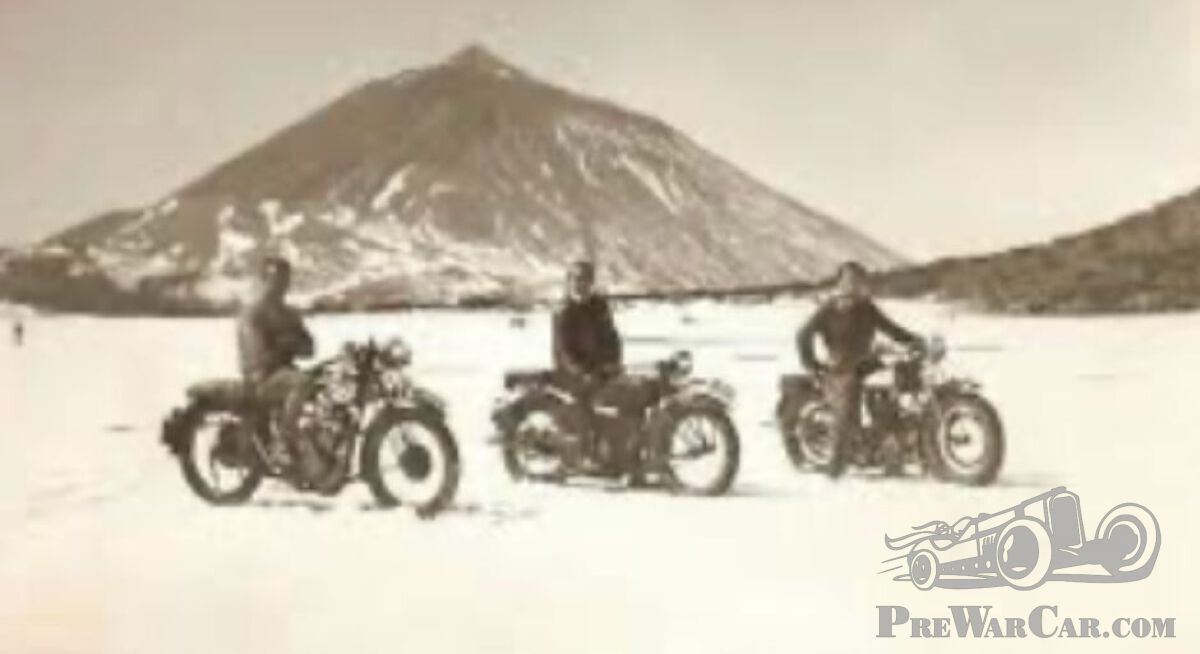
In 1927 FN did a somewhat similar thing with their FN M70 motorcycle, nicknamed the “FN Sahara”. Two French and a Belgian mechanic named Bruneteau, Gimie and Weerens completed this trip. Which also deliveted great marketing material. A great black/white film can be found online, not sure if I’m allowed to place the link here.
Read more


Alexander Stolpmann
27 July 2024, 14:38
The best car in the show, I would say. As the first car to travel all over Africa, the 1,400 c.c FN 10CV is something very special.
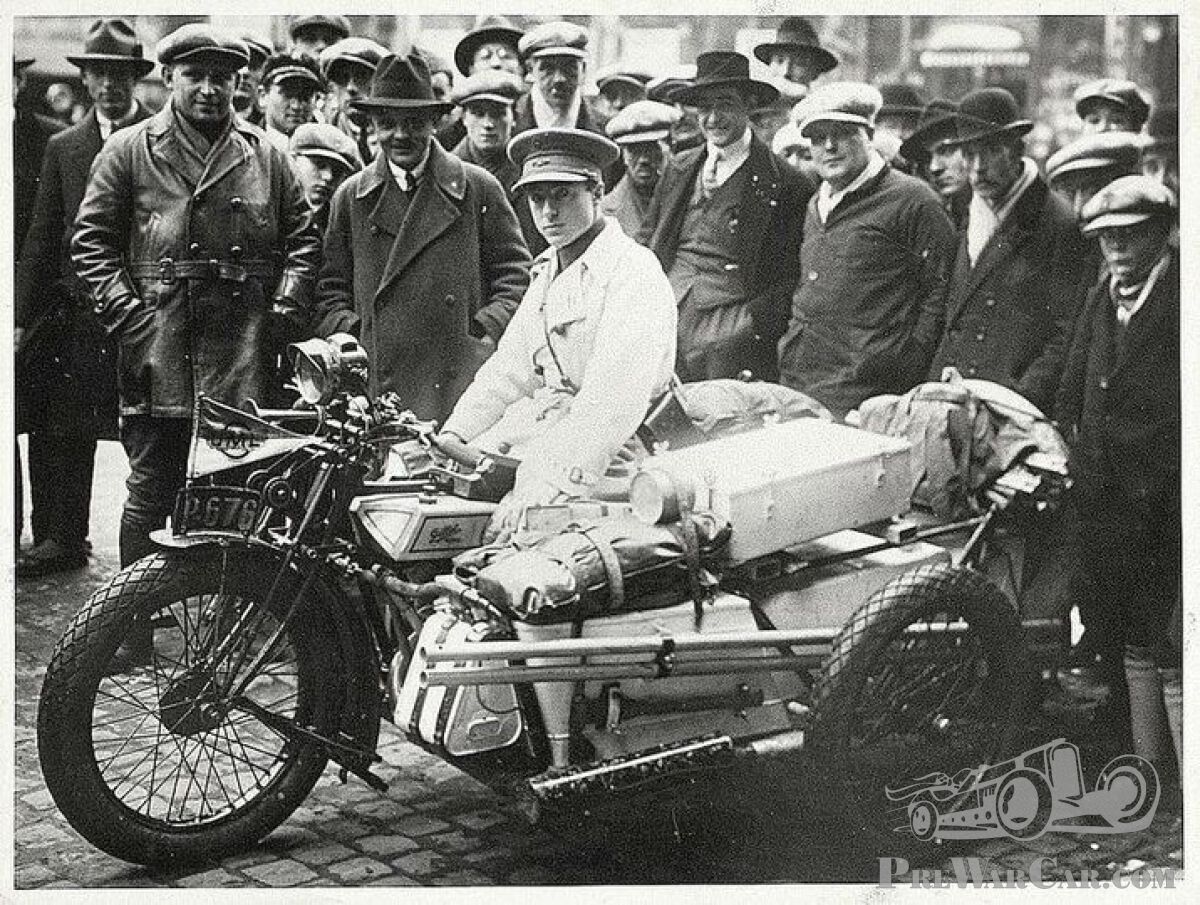
Very little information can be found about Robert Fabry (1899-1987), a lieutenant in the Belgian Air Army. His first flight to bring mail to the Belgian Congo did not take place until 1930. In 1926, he set off on a journey from Liège to Élisabethville (now commonly referred to as Lubumbashi) in a 350 c.c. Gillet-Herstal with sidecar. On this first trip, he investigated the possibility of an air link between Brussels and the Congo.
The motorcycle with sidecar is still in a museum in Liège and can only be viewed by prior arrangement. Perhaps the museum staff know more about the whereabouts of the car, or the FN Herstal company itself.
Read more
Very little information can be found about Robert Fabry (1899-1987), a lieutenant in the Belgian Air Army. His first flight to bring mail to the Belgian Congo did not take place until 1930. In 1926, he set off on a journey from Liège to Élisabethville (now commonly referred to as Lubumbashi) in a 350 c.c. Gillet-Herstal with sidecar. On this first trip, he investigated the possibility of an air link between Brussels and the Congo.
The motorcycle with sidecar is still in a museum in Liège and can only be viewed by prior arrangement. Perhaps the museum staff know more about the whereabouts of the car, or the FN Herstal company itself.



Nicolas Van Frausum
25 July 2024, 10:44
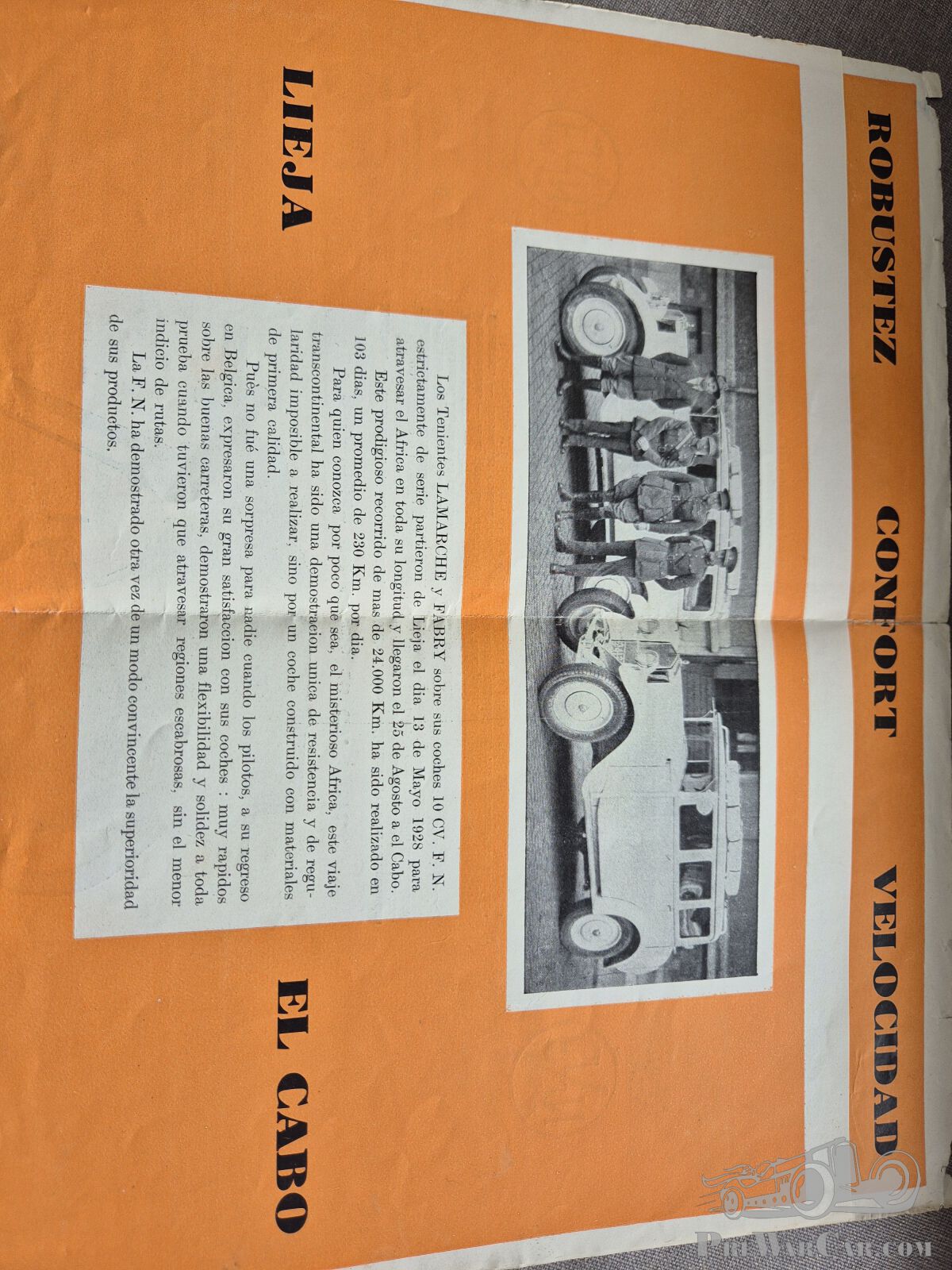
Thank you for this great article covering an interesting piece of Belgian automotive history. I have been searching for the whereabouts of these two cars and found an FN 1300 with "Le Cap" body style that competed in our 2010 Antwerp Concours. However, we were never able to prove that it was one of the two cars in question. Our concours car was on wooden wheels whereas both Raid au Cap cars had closed steel wheels. Some years ago I was able to obtain through auction an original FN sales brochure on which the "Le Cap" achievement was announced on the cover—see pictures attached.
Regards,
Nicolas Van Frausum
Antwerp Concours
Read more
Regards,
Nicolas Van Frausum
Antwerp Concours