The global magazine and marketplace for classic car enthusiasts, by enthusiasts.


Filter
Make a choice:
- Cars
-
Make >>
-
Year >>
-
- Bikes
-
Location >>
- Parts & more
-
Make of car >>
-
Manufacturer >>
-
Category >>
- Bicycles & more
-
Year >>
-
Countries


Monday Mystery: Thomas Davies drives into the new century
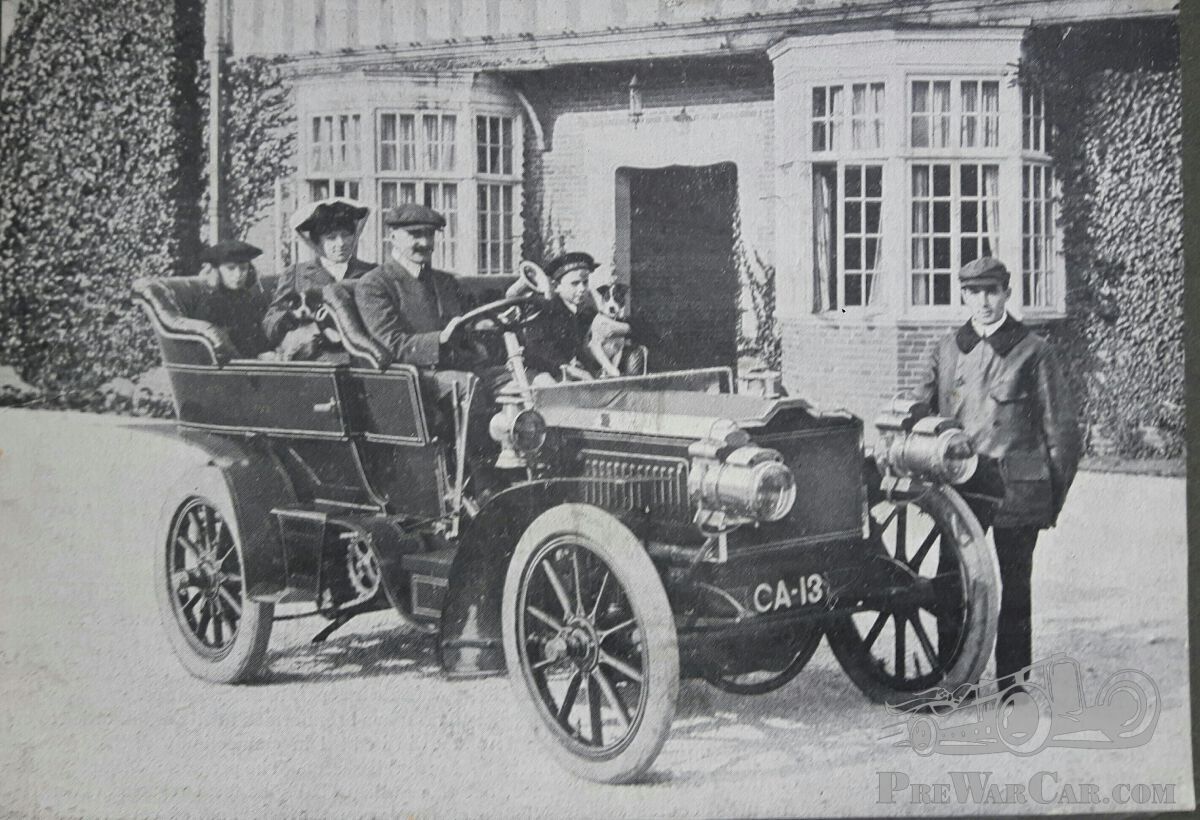


The year is 1903. The motorcar is still in its infancy, and only a small number of wealthy industrialists can afford such a revolutionary machine. In North Wales, James Coster Edwards, a successful entrepreneur in the brick and tile industry around Ruabon, belongs to that forward-thinking elite. From his impressive Bryn Howel estate near Llangollen, he decides to acquire one of the latest marvels of modern technology: an automobile.
Maintaining such a complex machine requires someone who is not only dependable but also mechanically gifted. Edwards finds that person in Thomas Davies, a young man who began his working life as an apprentice blacksmith in Llangollen. According to family recollections, Thomas was known as someone who was “good with his hands”. His practical insight and craftsmanship made him the ideal candidate for an entirely new profession: chauffeur and mechanic.
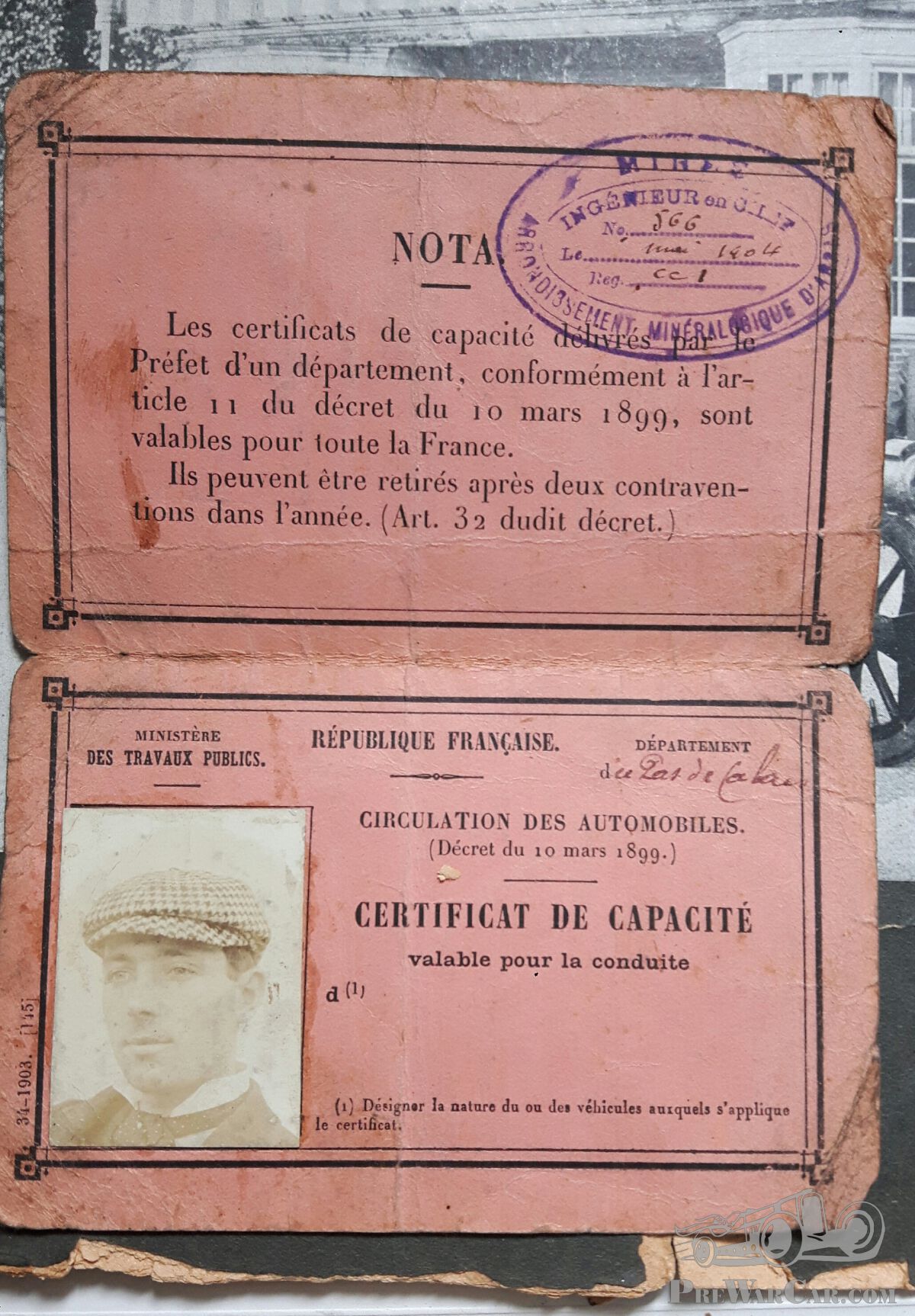
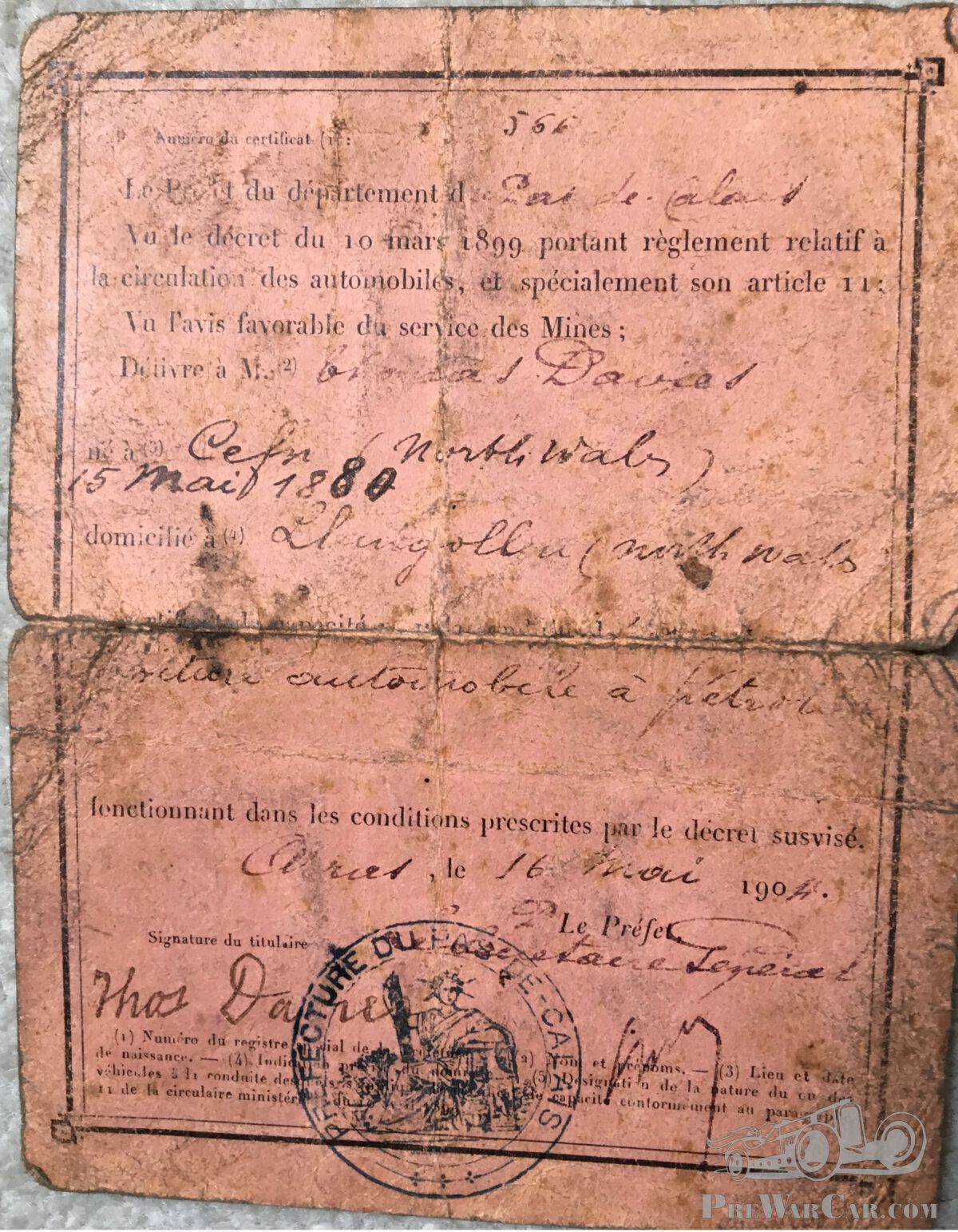
Before the car could be put into service, Thomas was sent to France. There he learned not so much how to drive as how to maintain and repair the vehicle's intricate mechanical systems. He may even have received training directly from the manufacturer. A surviving French driving licence from 1904 suggests that his education extended beyond simply operating a motorcar and may also have included certification of his technical abilities.
A family photograph from that period captures the result of this remarkable undertaking. Thomas Davies stands proudly beside the new automobile, while what is believed to be James Coster Edwards sits at the wheel, surrounded by family members. In the passenger seat sits a young boy accompanied by a dog. If this is John Francis Coster Edwards, the industrialist's son, the photograph acquires a particularly poignant historical significance. Fourteen years later, he would be killed in action as a captain on 11 November 1918, the final day of the First World War, just hours before the Armistice came into effect.
For Thomas, the arrival of the motorcar marked the beginning of a remarkable career. By 1908, at the birth of his son, his occupation was officially recorded as “motor driver” – one of the earliest job descriptions for an automobile chauffeur. He remained in Edwards' employment for many years, developing into an experienced driver and mechanic at a time when such expertise was exceptionally rare.
His interest in automotive technology extended far beyond his daily duties. Thomas became involved in the early years of British motor sport and worked as a mechanic at races held at Brooklands, the famous circuit widely regarded as the birthplace of British motorsport. He also followed with great interest the land-speed record attempts at Pendine Sands, where pioneers of automotive engineering pushed the limits of speed and reliability.
The connection between the Davies and Edwards families endured for many years. As late as 1922, the Davies family was still living in a modest cottage on the Bryn Howel estate.
More than a century later, Thomas's story continues to fascinate, and his great-grandson is searching for further information. What car did he actually drive? Where in France did he receive his training? And how did his journey unfold from village blacksmith to chauffeur, mechanic and motoring pioneer? These are questions that invite further research, yet they already paint the portrait of an extraordinary life.
Words: Laurens Klein, Photograph: Rhys Davies (great-grandson)
Published:
Monday June 22nd, 2026
Facebook
LinkedIn
Twitter
WhatsApp
Email
Copy
Comments
Jan
29 June, 11:05
Peter Bennett
28 June, 11:15
I remember there was a garage in Chester called James Edwards taken over in the 60s by McAlpines, the civil engineers. I wonder if there's a connection?
Read more
Rhys Davies
24 June, 09:10
thanks for the identification @Ariejan and the picture! That's fantastic. I guess I always assumed it was a French car due to the trip to France for his training. I suppose there maybe two reasons for this. 1) as France was leading the motor industry at the time, he was sent there to receive the best training or 2) He needed the French licence to drive the car through France? Another mystery there, then.
Read more
STEPHEN MCCANN
23 June, 08:33
The car in the photograph I think is an early Napier.
Read more
Ariejan Bos
22 June, 22:47
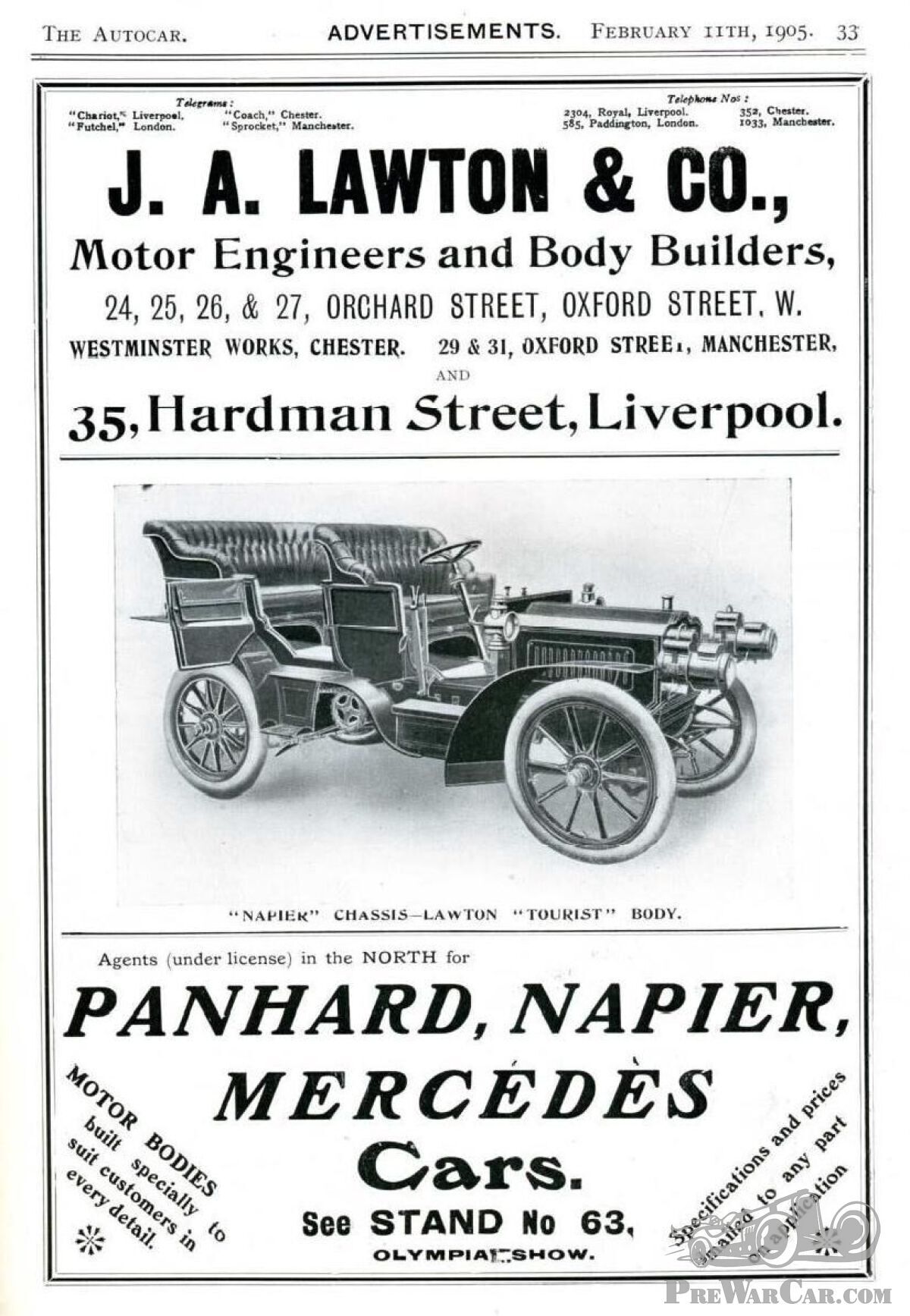
This is a 4 cylinder Napier model, which was introduced end of 1903 and was available through 1904 and at least part of 1905. This model with the very characteristic bonnet profile was one of the many models of Napier, of which the large 6 cylinder models with the very long bonnets and roundish bonnet tops are normally the more conspicuous and better known ones. This specific 4 cylinder model was available as a 15hp or 24hp version. They are not often seen, but were definitely not uncommon at the time. The car we see in the picture is the larger 24hp model, in this case with side entrance doors for the rear passengers. As can be seen from the 1905 advertisement the car is provided with the Tourist body built by Lawton.
Read more
At the end, the author asks, among other things, where in France Thomas got his training.
The documents shown seem to give an answer:
Driver Licence received in Arras on 16th May 1904, Licence as "Chief Engineer" May 1904. Arras is the administrative capital of Département Pas de Calais. Which is adjacent to The Channel.