The global magazine and marketplace for classic car enthusiasts, by enthusiasts.


Filter
Make a choice:
- Cars
-
Make >>
-
Year >>
-
- Bikes
-
Location >>
- Parts & more
-
Make of car >>
-
Manufacturer >>
-
Category >>
- Bicycles & more
-
Year >>
-
Countries


Montauban et Marchandier: a lost veteran marque?
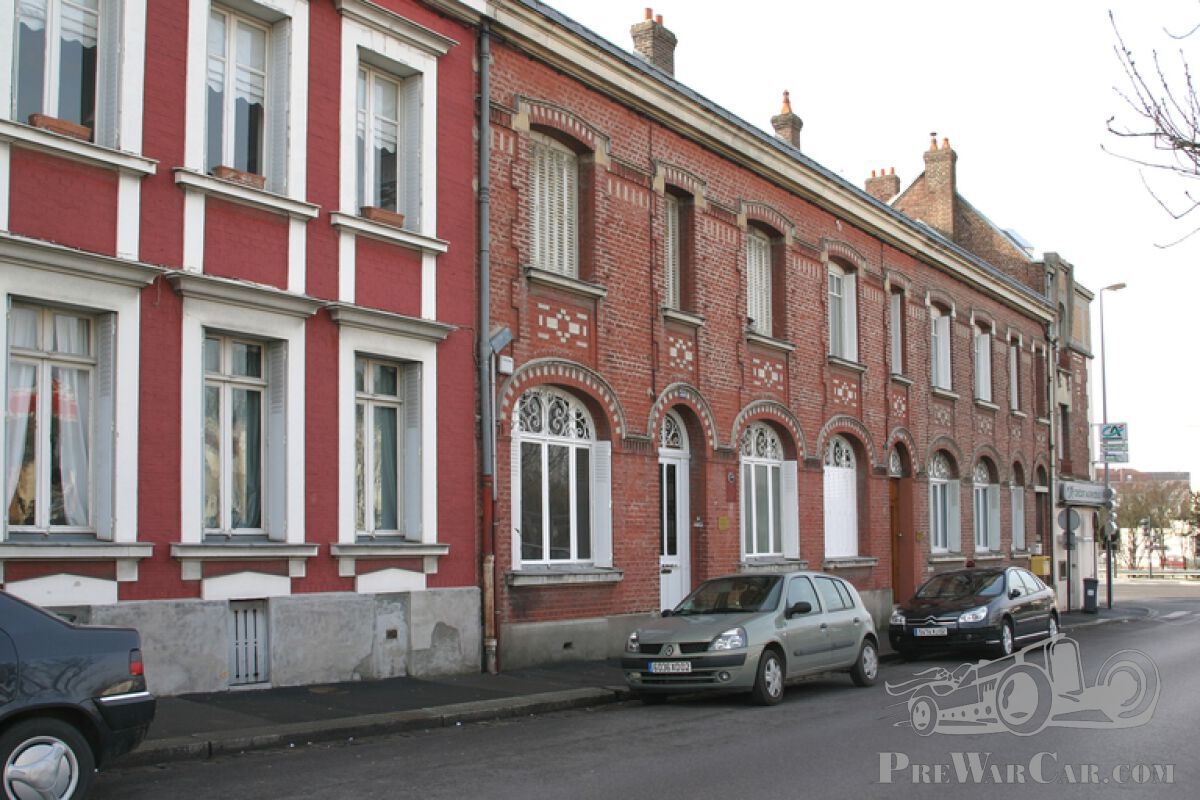
The Montauban et Marchandier factory with employers' housing on the left


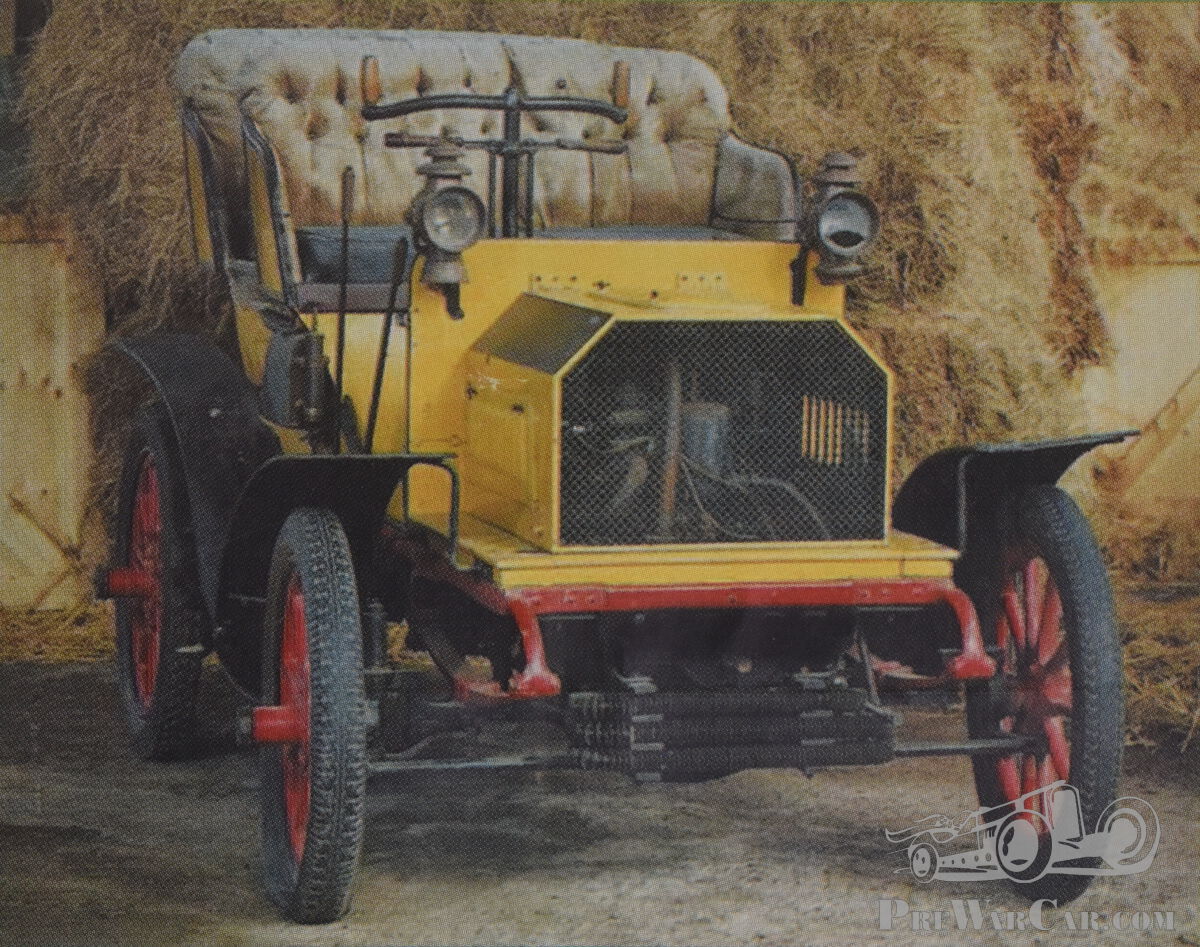
One of occasional joys of living in a state of disorder is the discovery of things you never knew existed. While rifling through some papers the other day, I discovered that I had somehow acquired a catalogue for a motor car sale on May 25th, 2005, by a minor Kentish auction house named Lambert & Foster, which still exists as a property auctioneer and has not been involved with cars for many years. You can imagine the sort of machines they specialised in—Austin 10s, Morris Eights and the like—but there in the middle of the catalogue was something quite remarkable: a c.1900 Montauban et Marchandier 5hp double phaeton, registration BS 8394, with a hand-written note that it had sold for £18,000. Does that ring any bells?
The catalogue entry makes for interesting reading, but tells us little about Montauban et Marchandier itself: "A huge history file accompanies this surely unique veteran, which formerly was in the ownership of the Schlumpf Collection. Previously ascribed to Auge, it is now believed that the car was a Montauban et Marchandier product, which were fitted with engines by Daniel Auge.
"Auge built cars in their own right, but also supplied engines to other manufacturers including Amiot-Peneau and Farman-Micot, both French car builders at the turn of the last century. The Science Museum have given a certificate stating that in their view the age of the car is no later than 1901, and the D.V.L.A. have registered it on that basis.
"The company of Montauban & Marchandier, although active for some years in producing motoring components, are listed in Guide de l'automobile française as having built cars at their Saint-Quentin works in northern France from 1897 to 1900, so it is possible that this is a 1900 model.
"It is fitted with the Auge Cyclope 5hp engine, so-called because the earlier models used hot-tube ignition, with the platinum tubes being heated with one lamp."
It's enough to make anyone want to enquire further, but my first port of call is always Georgano's encyclopædia, and that yielded no fruit. Luckily, the internet has come to our aid. It turns out that the factory building is still in existence—quite a modest structure with a broad façade and some lovely decorative brickwork, very suggestive of vernacular industry—and is now listed for conservation by the Ministry of Culture. As an important remnant of the industrial heritage of Saint-Quentin, it is described in the General Inventory of the Cultural Heritage of Hauts-de-France as follows: "In 1883, Antoine Montauban and Ernest Marchandier founded the company Montauban et Marchandier for the operation of mechanical workshops, which were built with employers' housing on the edge of Avenue Faidherbe, as well as Boulevard Victor-Hugo. As manufacturers of internal combustion engines, they created the Vautour engine, a marque they registered in 1904, and operated under the name of Société Anonyme des Moteurs Vautour. In 1908, the company was dissolved. In 1910, Ernest Marchandier and Émile Colliard, liquidators of the company, created a new limited company, the Ateliers de Construction de Saint-Quentin.
"At the end of the First World War, the factory did not restart. The workshops, which were hard-hit, were acquired by Fernand Moret's nearby mechanical engineering factory. The latter restored the employers' housing, and rebuilt the workshops on Boulevard Victor-Hugo around 1923. On the edge of Avenue Faidherbe, alongside the housing, the company's offices were built under the direction of the architectural firm Malgras-Delmas, enlarged in 1951 according to the plans of the architect Jules Arduin. Around 1970, the Moret company left this site to set up shop on Chemin des Ponts-et-Chaussées.
"On the eve of the First World War, the workshops were equipped with two gas engines. The number of workers in the workshops was 11 in 1885, 25 in 1891, 35 in 1901, 48 in 1907, then only 22 in 1914."
That is as much as we might hope to find out about this wonderful provincial marque, but perhaps there are readers who know a little more. As for the car itself, we wonder what's become of it. It appears to still be in Britain and it was sold in 2005 with a full 12-month M.O.T., but we have no knowledge of it ever being on the road or attending a rally. Has it done the Brighton Run, we wonder? And has anyone ever seen anything like the strange double-tillered steering?
Words: Zack Stiling
Photographs: Lambert & Foster / Ministère de la Culture
Published:
Wednesday September 10th, 2025
Facebook
LinkedIn
Twitter
WhatsApp
Email
Copy
Comments


Fons Alkemade
16 September 2025, 12:48
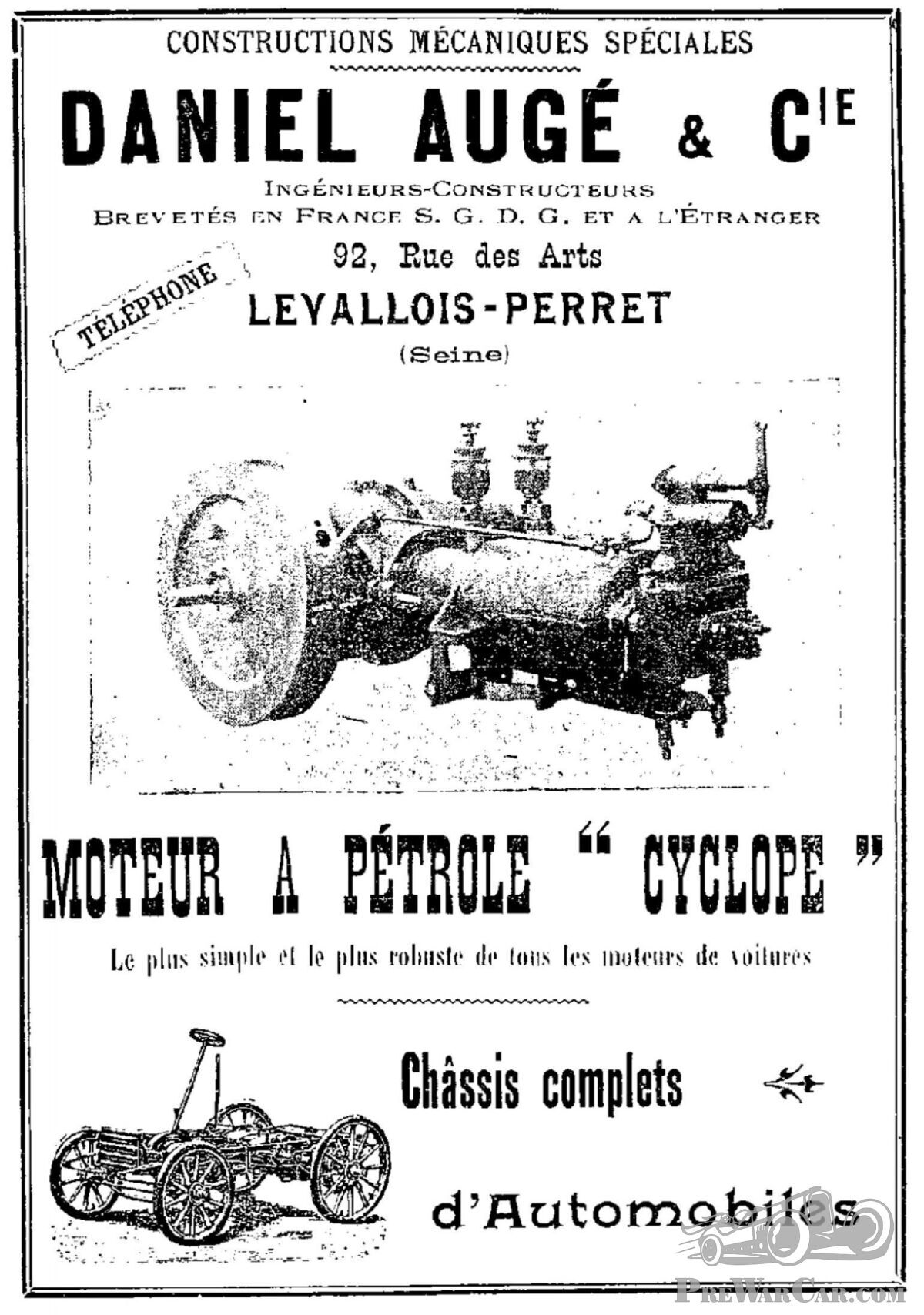
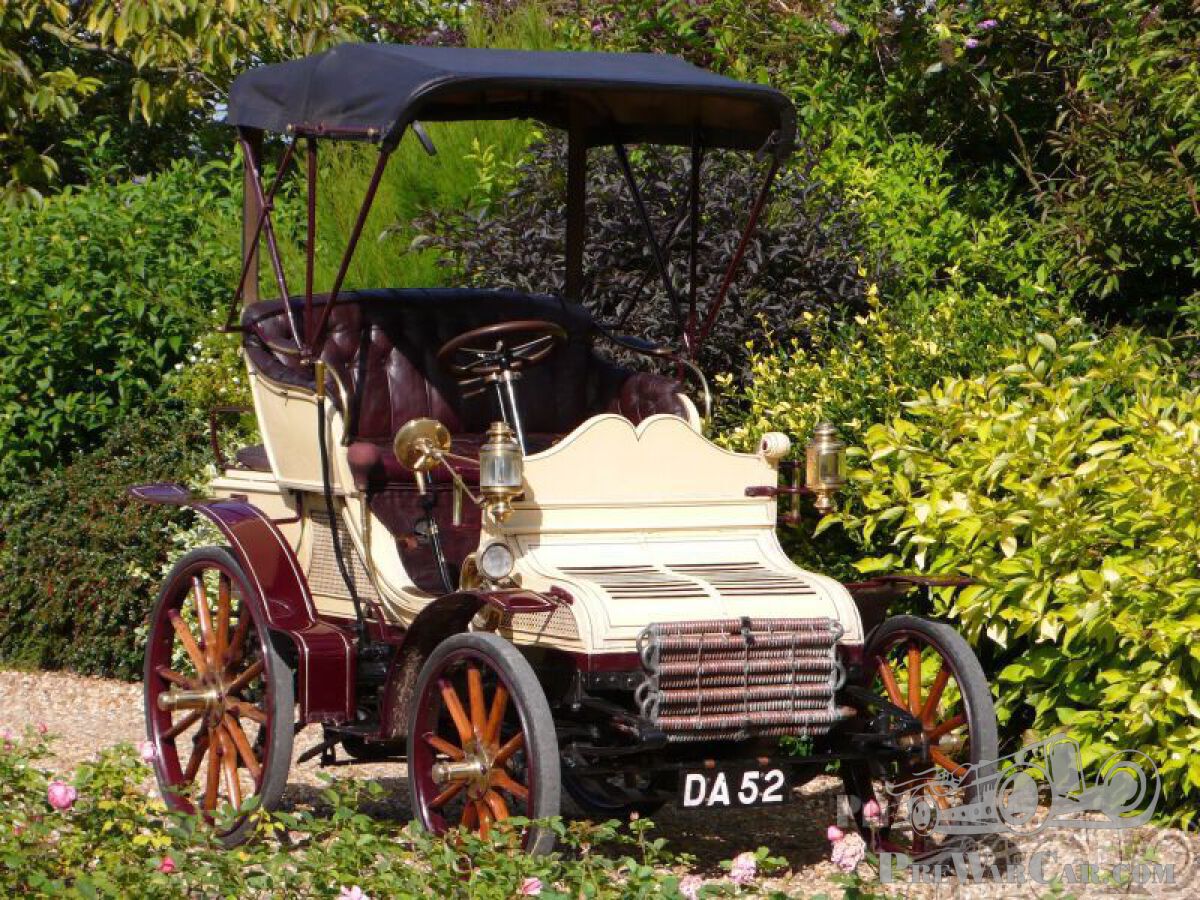
Very interesting. I cannot add any new information on M-M. I did find some ads from Daniel Augé (with the accent aigu) but they do not mention M-M as supplier of their engine. One Augé car survives and used to have license plate DA52. I guess it is still in the UK and maybe some day someone can compare these two cars.
Read more
Mahistre
12 September 2025, 12:27
The common name company Montauban et Marchandier was created in Saint-Quentin in May 1883 by Paul Montauban and Ernest Marchandier with a capital of 35,000 francs. These engineer-constructors filed their first patent for invention on March 25, 1884 for "transformation of simple washing filter presses or rather simple cleaning ones, into absolute washing filter presses for the cake, resulting in the complete exhaustion of the latter" and received a bronze medal for confectionery equipment at the 1889 Exposition Universelle, etc., etc..... In 1899, they filed a patent for a gearbox casing for changing gears and speeds for automobiles and presented a first automobile at the International Exhibition of 1900 in Paris, etc;
La société en nom commun Montauban et Marchandier a été crée à Saint-Quentin en mai 1883 par Paul Montauban et Ernest Marchandier au capitaal de 35000frs. Ces ingénieurs-constructeurs déposent leur 1er brevet d'invention le 25.03.1884 pour "transformation des filtres-presses à lavage simple ou plutôt à nettoyage simple, en filtres-presses à lavage absolu des tourteaux produisant l'épuisement complet de ces derniers" et ont obtenu une médaille de bronze pour un matériel de sucrerie lors de l'Exposition Universelle de 1889, etc., etc..... En 1899, ils déposent une brevet pour carter d'engrenages de changement de marche et de vitesse pour automobile et présente une première automobile à l'Exposition internationale de 1900 à Paris, etc;
Read more
La société en nom commun Montauban et Marchandier a été crée à Saint-Quentin en mai 1883 par Paul Montauban et Ernest Marchandier au capitaal de 35000frs. Ces ingénieurs-constructeurs déposent leur 1er brevet d'invention le 25.03.1884 pour "transformation des filtres-presses à lavage simple ou plutôt à nettoyage simple, en filtres-presses à lavage absolu des tourteaux produisant l'épuisement complet de ces derniers" et ont obtenu une médaille de bronze pour un matériel de sucrerie lors de l'Exposition Universelle de 1889, etc., etc..... En 1899, ils déposent une brevet pour carter d'engrenages de changement de marche et de vitesse pour automobile et présente une première automobile à l'Exposition internationale de 1900 à Paris, etc;
Laurent ZOLLER
11 September 2025, 20:29
Hello
The company "Montauban et Marchandier" is one of four early 20th century car manufacturers in the town of St Quentin for which I have documentation.
This company was originally created to manufacture machine tools for processing beet into sugar.
Between 1897 and 1902, Montauban et Marchandier manufactured car parts for the firm "Daniel AUGE". Cars were produced under this brand name.
EXPLANATION OF THE SECOND STEERING WHEEL
At the International Motor Show in June 1898, the company presented a vehicle equipped with a rear engine and a transmission block under the bonnet (very innovative). The gears were changed by turning this second steering wheel. This allowed the clutch to be disengaged, the pulley to be changed and the clutch to be engaged continuously.
From 1903 onwards, the company moved into the manufacture of 2- and 4-cylinder engines, which were very successful: the Vautour engines.
From the same period onwards, Montauban and Marchandier built engines and cars for the HENRIOD company.
The company closed in 1908.
Following the purchase of the Vautour name, VAUTOUR cars were produced from 1910 onwards.
Many thanks to Tim MOORE for the information about this vehicle.
Laurent ZOLLER
----
Hello
La société "Montauban et Marchandier" fait partie des quatre constructeurs automobiles du début du 20 ème siècle de la ville de St Quentin pour lesquels je possède de la documentation.
Cette société est créée à l'origine pour fabriquer des machines-outils afin de transformer les betteraves en sucre.
Entre 1897 et 1902, Montauban et Marchandier fabrique des pièces automobiles pour la firme "Daniel AUGE". Des automobiles sortent sous cette marque.
EXPLICATION DU 2ème VOLANT
La société présente à l'exposition internationale d'automobiles en juin 1898 un véhicule équipé d'un moteur arrière et d'un bloc transmission sous carter (très innovateur). Les vitesses passent en tournant ce deuxième volant. Celui-ci permet par rotation le débrayage, le changement de poulie puis l'embrayage d'une façon continue.
A partir de 1903, l'entreprise se dirige vers la fabrication de moteurs 2 et 4 cylindres qui ont un bon succès: Les moteurs Vautour.
A partir de la même époque, Montauban et Marchandier construit moteurs et automobiles pour la firme HENRIOD.
L'entreprise ferme en 1908.
Suite au rachat du nom Vautour, des automobiles VAUTOUR sortent à partir de 1910.
Un grand Merci à Tim MOORE pour les renseignements concernant ce véhicule.
Laurent ZOLLER
Read more
The company "Montauban et Marchandier" is one of four early 20th century car manufacturers in the town of St Quentin for which I have documentation.
This company was originally created to manufacture machine tools for processing beet into sugar.
Between 1897 and 1902, Montauban et Marchandier manufactured car parts for the firm "Daniel AUGE". Cars were produced under this brand name.
EXPLANATION OF THE SECOND STEERING WHEEL
At the International Motor Show in June 1898, the company presented a vehicle equipped with a rear engine and a transmission block under the bonnet (very innovative). The gears were changed by turning this second steering wheel. This allowed the clutch to be disengaged, the pulley to be changed and the clutch to be engaged continuously.
From 1903 onwards, the company moved into the manufacture of 2- and 4-cylinder engines, which were very successful: the Vautour engines.
From the same period onwards, Montauban and Marchandier built engines and cars for the HENRIOD company.
The company closed in 1908.
Following the purchase of the Vautour name, VAUTOUR cars were produced from 1910 onwards.
Many thanks to Tim MOORE for the information about this vehicle.
Laurent ZOLLER
----
Hello
La société "Montauban et Marchandier" fait partie des quatre constructeurs automobiles du début du 20 ème siècle de la ville de St Quentin pour lesquels je possède de la documentation.
Cette société est créée à l'origine pour fabriquer des machines-outils afin de transformer les betteraves en sucre.
Entre 1897 et 1902, Montauban et Marchandier fabrique des pièces automobiles pour la firme "Daniel AUGE". Des automobiles sortent sous cette marque.
EXPLICATION DU 2ème VOLANT
La société présente à l'exposition internationale d'automobiles en juin 1898 un véhicule équipé d'un moteur arrière et d'un bloc transmission sous carter (très innovateur). Les vitesses passent en tournant ce deuxième volant. Celui-ci permet par rotation le débrayage, le changement de poulie puis l'embrayage d'une façon continue.
A partir de 1903, l'entreprise se dirige vers la fabrication de moteurs 2 et 4 cylindres qui ont un bon succès: Les moteurs Vautour.
A partir de la même époque, Montauban et Marchandier construit moteurs et automobiles pour la firme HENRIOD.
L'entreprise ferme en 1908.
Suite au rachat du nom Vautour, des automobiles VAUTOUR sortent à partir de 1910.
Un grand Merci à Tim MOORE pour les renseignements concernant ce véhicule.
Laurent ZOLLER
Tim Moore
10 September 2025, 21:40
Hi Zak
This car was part of the Andre Laporte collection in Montpellier. It was sold by Poulain Le Fer as part of the dispersal sale on 4th October 1998.
Lot 3, they catalogued it as a Daniel Auge circa 1901/1904. It was registered 437 C7. Daniel Auge 5hp engine 85x120mm, 4 speed M & M gearbox. Further that it was an older restoration during which several liberties were taken in the body and mechanicals. Maybe this gives you a further place to look..….?
Kind regards
Tim Moore
Read more
This car was part of the Andre Laporte collection in Montpellier. It was sold by Poulain Le Fer as part of the dispersal sale on 4th October 1998.
Lot 3, they catalogued it as a Daniel Auge circa 1901/1904. It was registered 437 C7. Daniel Auge 5hp engine 85x120mm, 4 speed M & M gearbox. Further that it was an older restoration during which several liberties were taken in the body and mechanicals. Maybe this gives you a further place to look..….?
Kind regards
Tim Moore