The global magazine and marketplace for classic car enthusiasts, by enthusiasts.


Filter
Make a choice:
- Cars
-
Make >>
- Bikes
-
Location >>
- Parts & more
-
Make of car >>
-
Manufacturer >>
-
Category >>
- Bicycles & more
-
Year >>
-
Countries


Morgans or not Morgans? The mysterious two-wheelers of Mauser and Monotrace
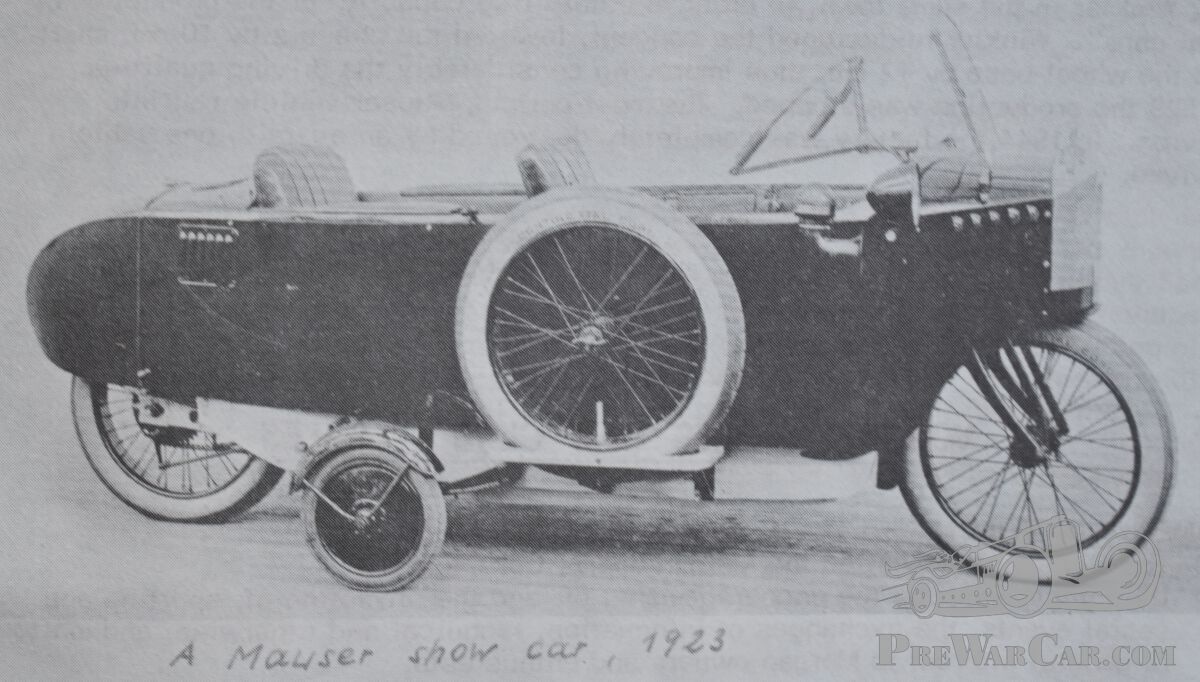
The photograph accompanying the Reese-Rudolf article
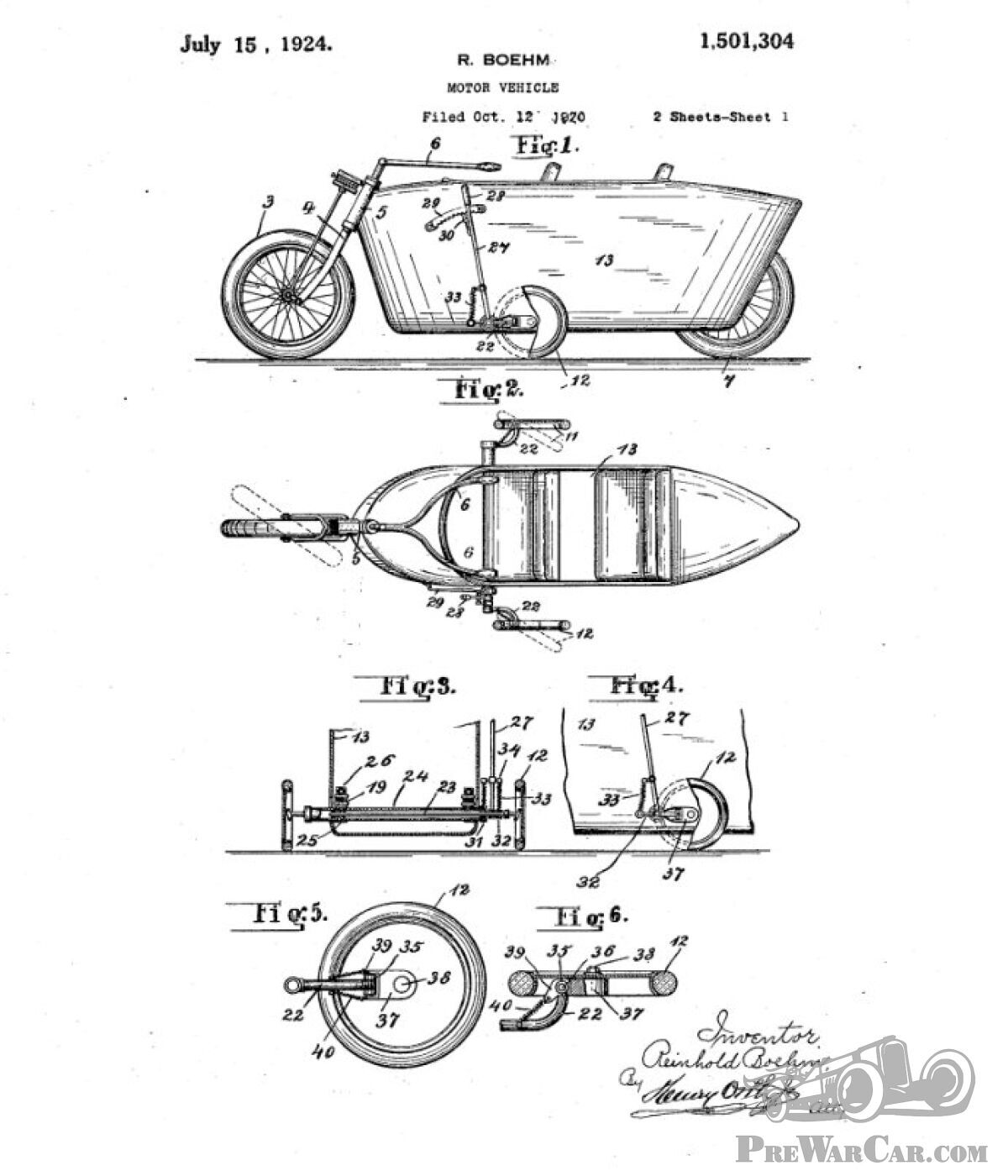
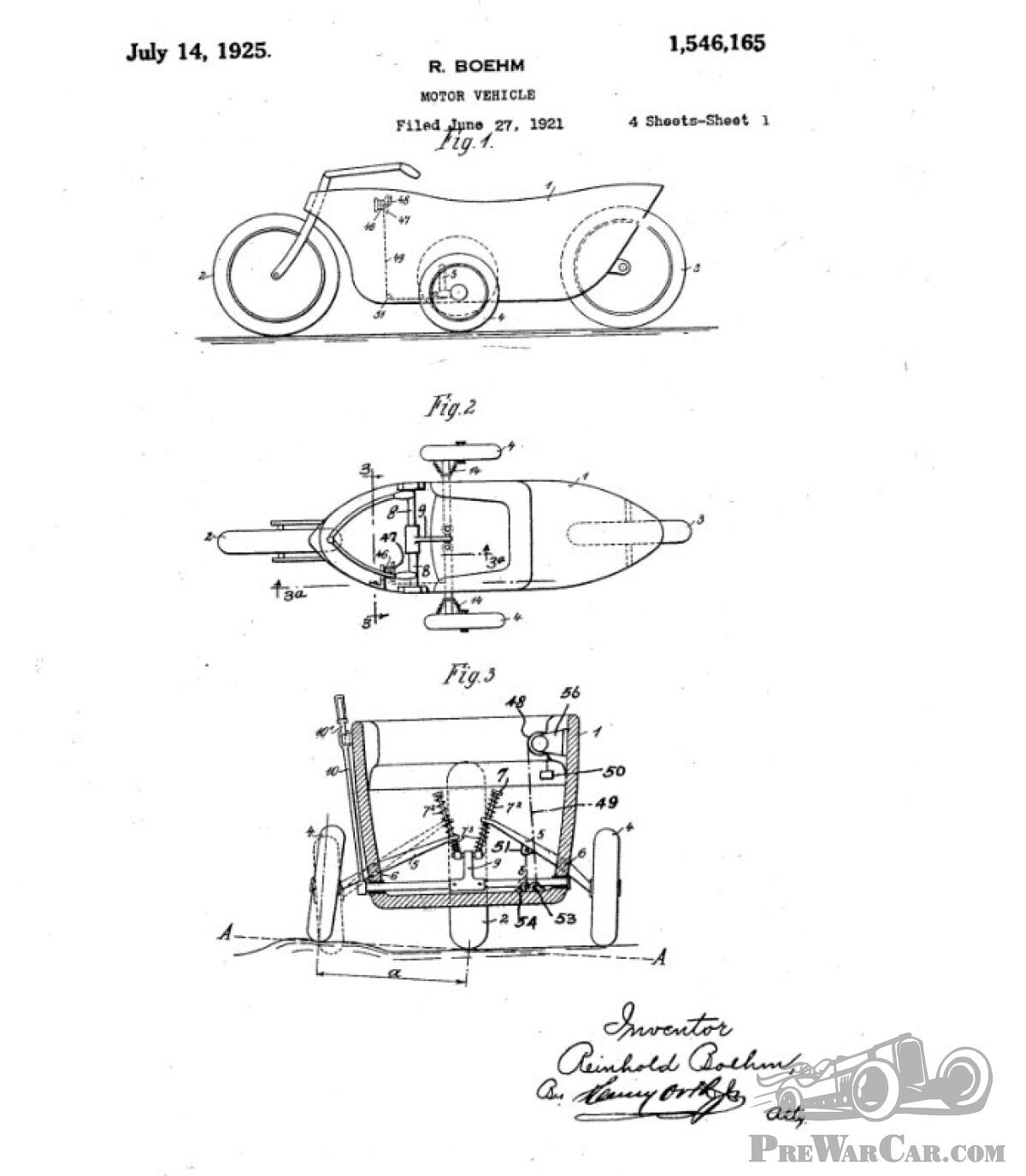
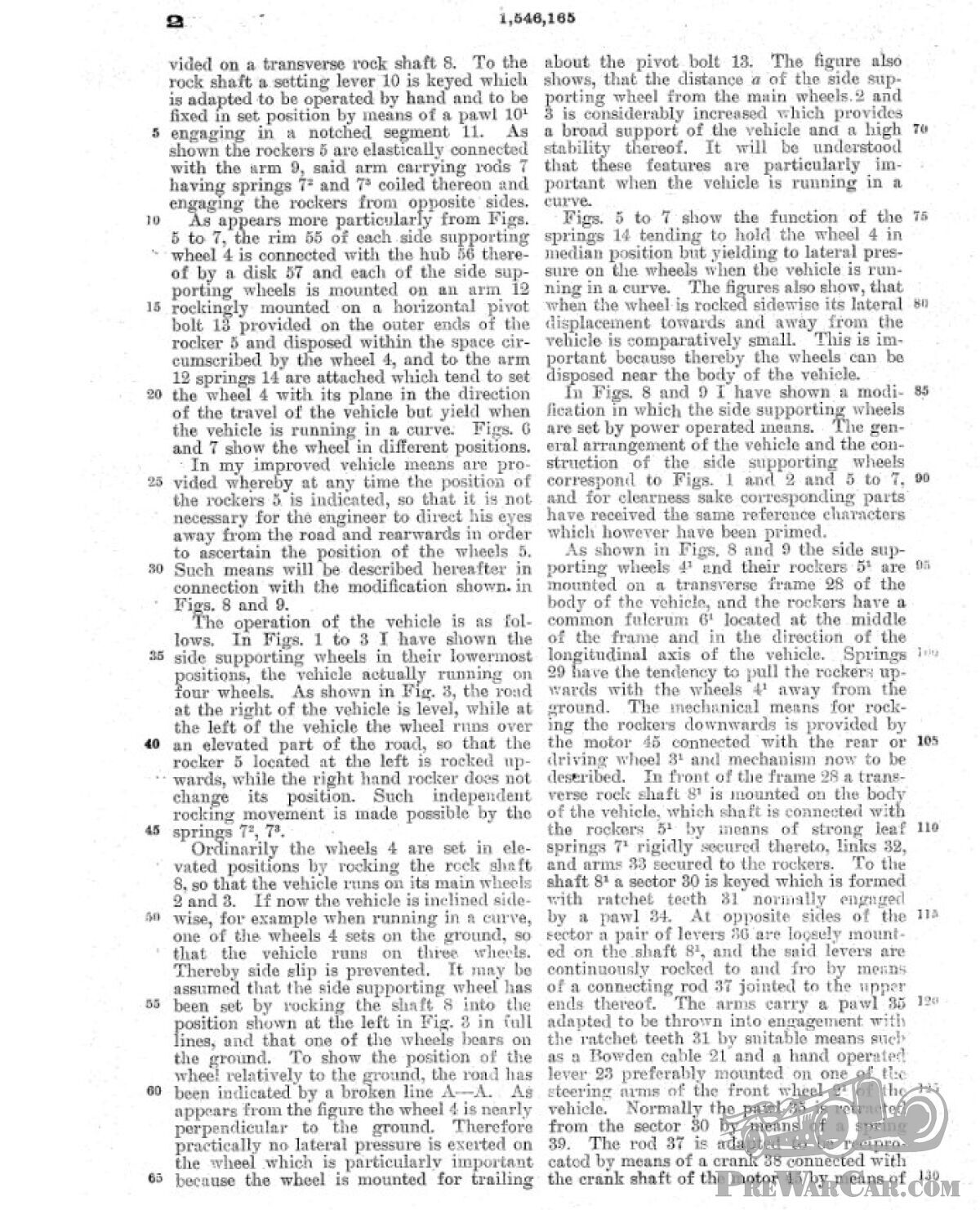
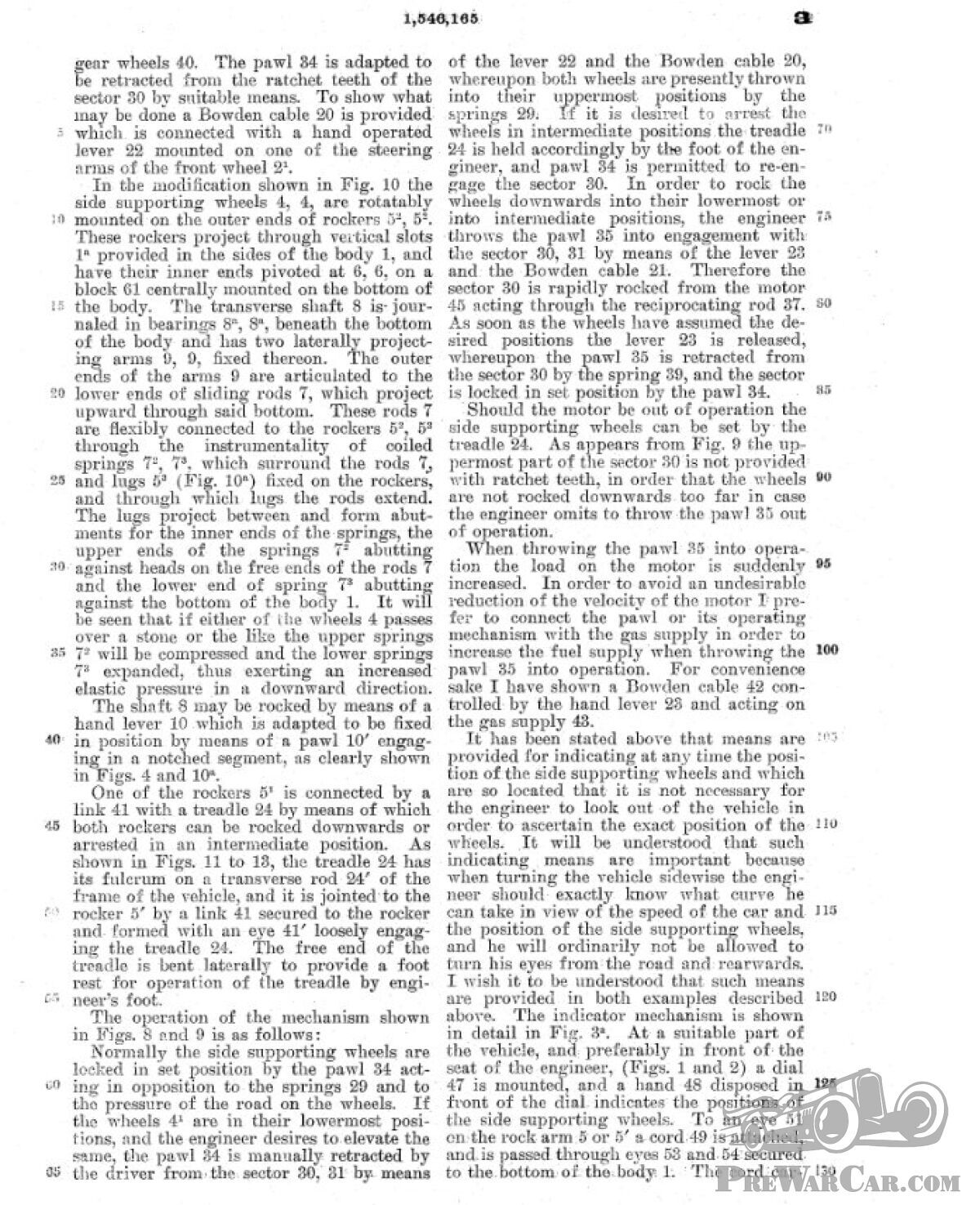
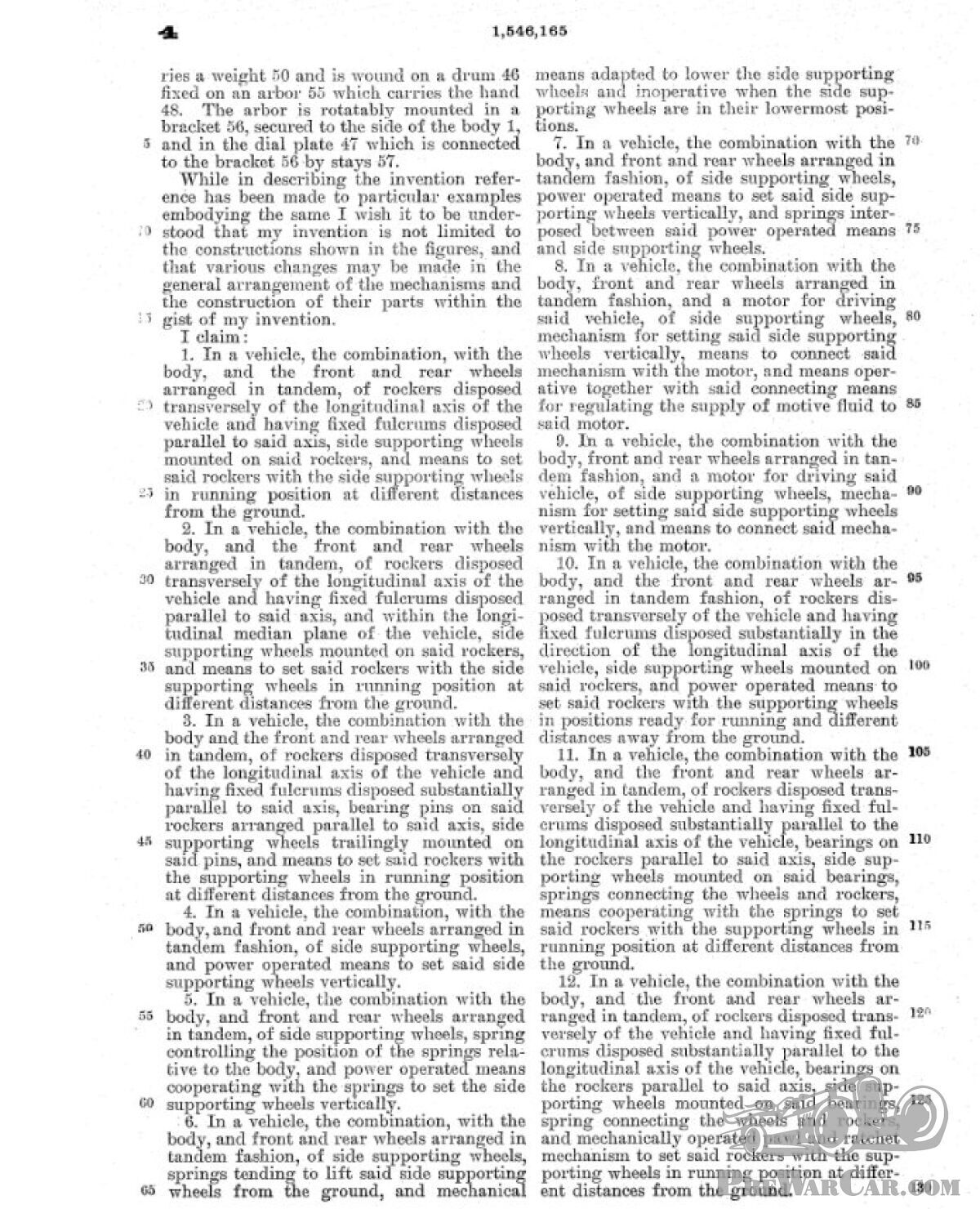


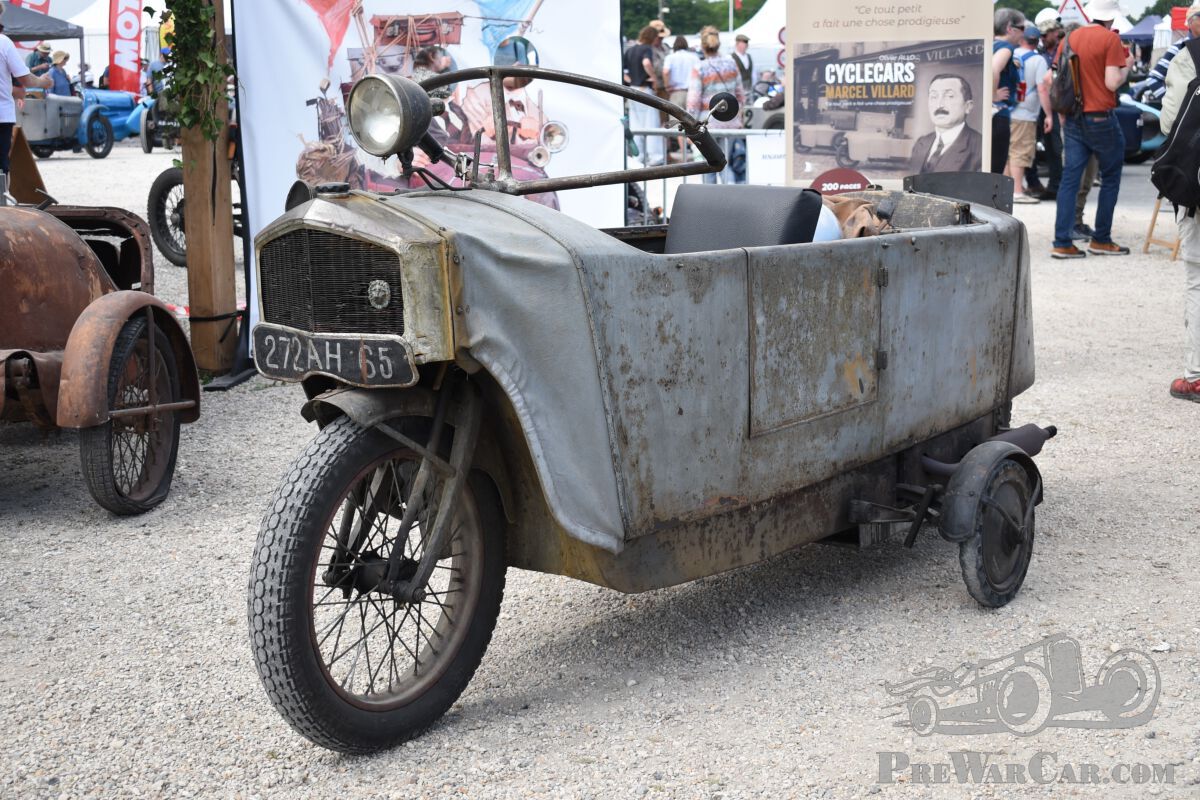
The Morgan-Monotrace, a not-quite-car, not-quite-motorcycle confection which appeared to defy explanation. Among all the wonderfully strange machines which descended upon Montlhéry for the Vintage Revival and the circuit's centenary celebrations in 2024, the Morgan Monotrace was perhaps the strangest. The frame consisted of a sort of narrow U-section tub in which were openings through which passed the motorcycle-style suspension and wheels. A small radiator sat over the front wheel to provide cooling for the single-cylinder engine. The tub was just wide enough to permit the construction of a full conduite intérieure body, with a tandem seating arrangement for two. Other distinguishing features included the preposterously large half-steering wheel, and the swivelling stabiliser wheels which could be raised or lowered by a lever next to the driver.
After the Monotrace's strange design, perhaps the most intriguing thing about it is the Morgan in its name. What, if anything, could connect this contraption with the three-wheeled sports cars of Malvern Link? Around that time, a near-identical machine to the one I had seen at Montlhéry had just been sold by Gooding from the Mullin Museum's reserve collection, so I looked to Gooding's catalogue for enlightenment but found nothing. With no further useful information readily available, and being motivated by nothing more pressing than idle curiosity, I soon forgot the search.
I have been spurred back into action, however, by the recent discovery of an article and the realisation that another Monotrace is for sale now with Yesterdays Motorcycles in the Netherlands, which has this to say: "One of the people who tried to combine the simplicity, economy and manoeuvrability of a motorcycle with the comfort and protection of a car was German engineer Gustav Winkler and his design was built and marketed by the Mauser arms factory as the Mauser Einspurauto. License rights were sold to Switzerland and France, where in 1923 the Morgan Monotrace saw the light of day; there seems to have been no connection with the British Morgan company."
So that answers that question... except it doesn't. It was while rummaging through some papers a few weeks ago that I chanced upon a copy of the Morgan Sports Car Club's Miscellany of July, 1978, and therein was an article concerning the Morgan-Mauser by K. Reese and W. Rudolf, two Morgan enthusiasts from MAD-Mog in Germany, which we shall repeat below:
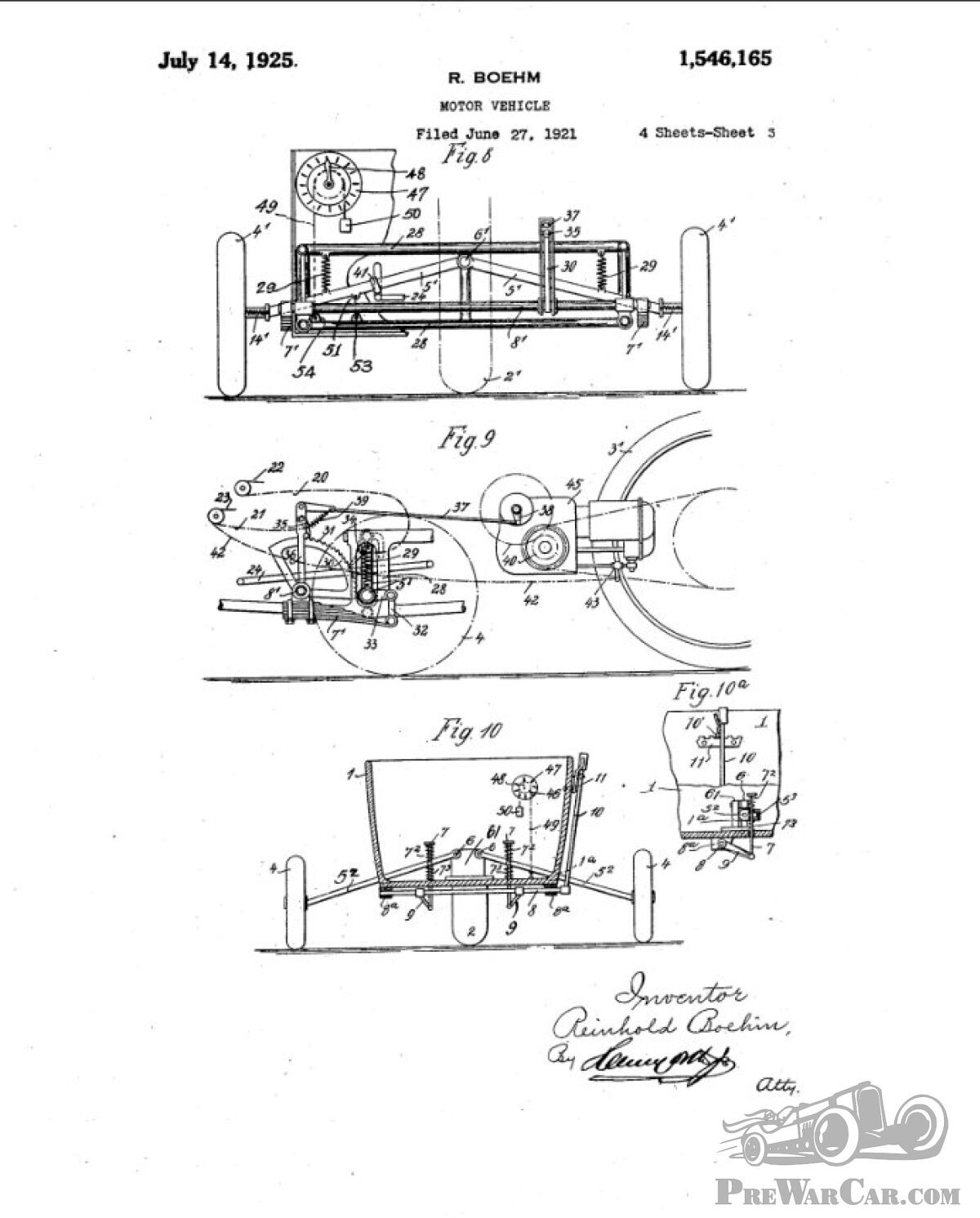
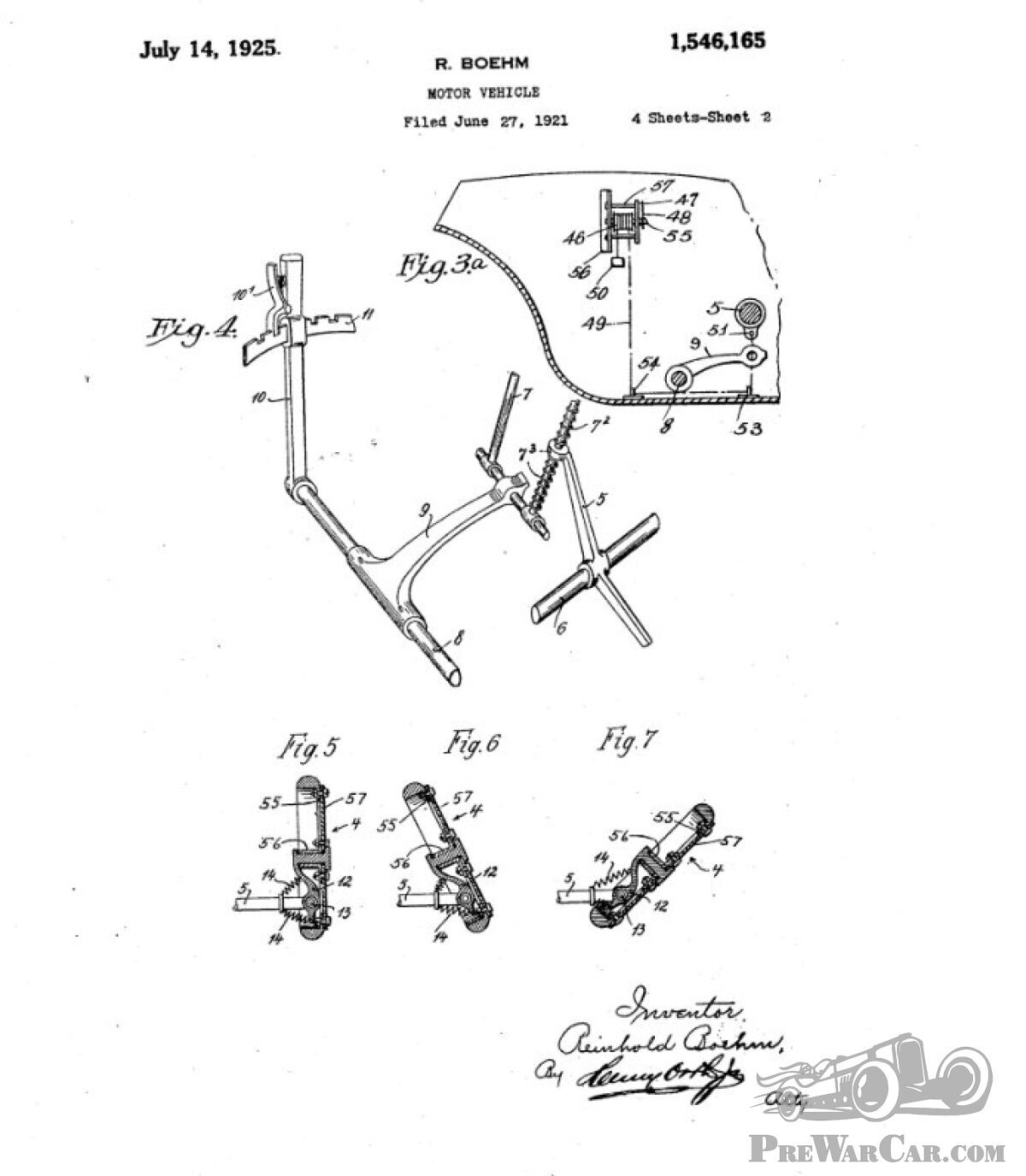
The company Mauser was a famous arms factory with its production facilities in Oberndorf in the Black Forest. At the end of World War 1, however, this branch had to come up with some new ideas in order to survive. So, late in 1921, the first two test vehicles appeared in the factory yard, one with a short, the other with a long wheel base. In principle, they were motorcycles, but the vehicles were equipped with jackwheels one on each side, which were lowered on stopping and raised on starting. The "coachbuilt" two-wheeled vehicle, however, was protected by a patent held by the British Morgan company. Mauser had to apply for a manufacturing licence from Morgan, which was granted. The structural design of this single-track vehicle was half automobile, half motorcycle, providing quite interesting technical details in those days, such as air-cushion springing. The chassis was a box-type frame rivetted from U-section steel. The back wheel was fixed in a forked axle with its pivot immediately behind the engine. Foot brake as well as hand brake act on the back wheel. The drive from engine to back wheel is effective over a chain, the chain wheel on the back wheel being equipped with a shock-absorber. The horizontal single-cylinder engine included the gears in its crankcase. The first 200 engines were 510 ccm aggregates with side-valves, the following power units were designed with overhead valves. In this design the complete valve sets were flanged on the cylinder head. The valves were arranged at a right angle to the cylinder axis, the admission valves on the right side, the exhaust valves on the left. This arrangement necessitated huge valve levers, since the two camshafts were located in the crankcase. As opposed to the sv-engine with the dimensions 85 x 90 the ohv-engine had the dimensions 90 x 90 mm thus having 573 ccm capacity. Both power units were produced by Mauser.
The engine was lubricated by an oil-pump driven by the gears' auxiliary shaft. As the gearbox, also the multiple-disc steel clutch was integrated in the crankcase. The Mauser machine did not have a reverse gear. The gears were shifted by a hand lever next to the driver's seat. As usual at that time, the body was composed of wooden sub-frames with sheeting.
In 1926 the manufacture of the single-track Mauser was delegated to the company Winkler in the same town, in order to obtain free capacity for the production of "real cars". Winkler re-designed the concept, lowered the chassis by 10 cm, shortened the wheelbase by 12 cm, thus improving considerably the driving qualities. In 1929 the production was stopped. The most curious Mauser vehicle fell into oblivion. In 1944 the factory was completely destroyed by an air raid; one vehicle survived.
Messrs. Reese and Rudolf had clearly done their homework and knew what they were talking about. Their technical description of the Mauser is precise and is entirely corroborated by Yesterdays' own briefer description, and yet they disagree on the involvement of British Morgan and the rôle of Winkler. The Reese and Rudolf case for the Morgan licence is, lacking further details, far from compelling. Had H. F. S. or any of his Malvern colleagues really been applying for patents for a full-bodied, two-wheeled motorcycle-car hybrid? It scarcely seems credible, not least because the Mauser design has very little in common with the lightweight tubular chassis Morgan favoured for its three-wheelers.
Usually the first port of call when making any enquiry into an obscure marque is Georgano's Complete Encyclopaedia, which contains entries both for Mauser and Monotrace, but they consist only of the briefest descriptions of the two-wheeler and do not even reference one another. Mauser also produced a 1½-litre, 6/24 PS four-wheeled car with overhead valves and front brakes in 1923, but information on Monotrace is so scant that Georgano does not even identify the approximate location of the factory. But there is just more thing... Besides the British Morgan Motor Co., Georgano includes another firm, Morgan Auto-AG of Berlin, active from 1924 to 1925. Contributor Hans-Otto Neubauer writes: "This car followed the unusual layout of the Sunbeam-Mabley. It was a 3-track vehicle with one rear wheel driven by shaft and spiral bevel gear. The two side wheels were of the same size as the two others and were not retractable as auxiliary wheels. An opposed twin-cylinder 500cc 2/12PS engine was placed in the rear." Clearly, that's not the same machine as the Mauser, but its maker sounds like just the sort of oddball who might have patented a two-wheeled car some two or three years previously. What are we to think?
Update
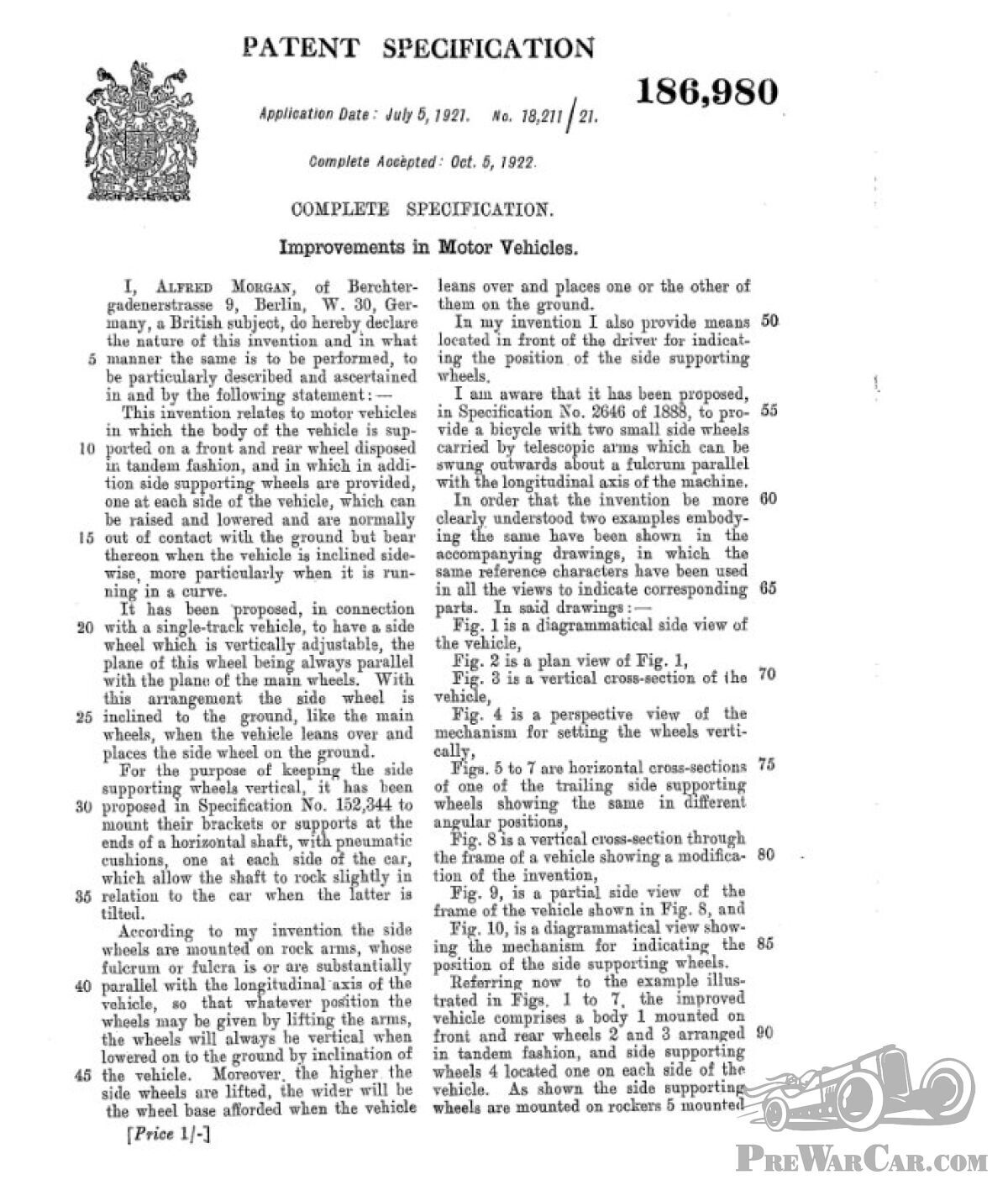
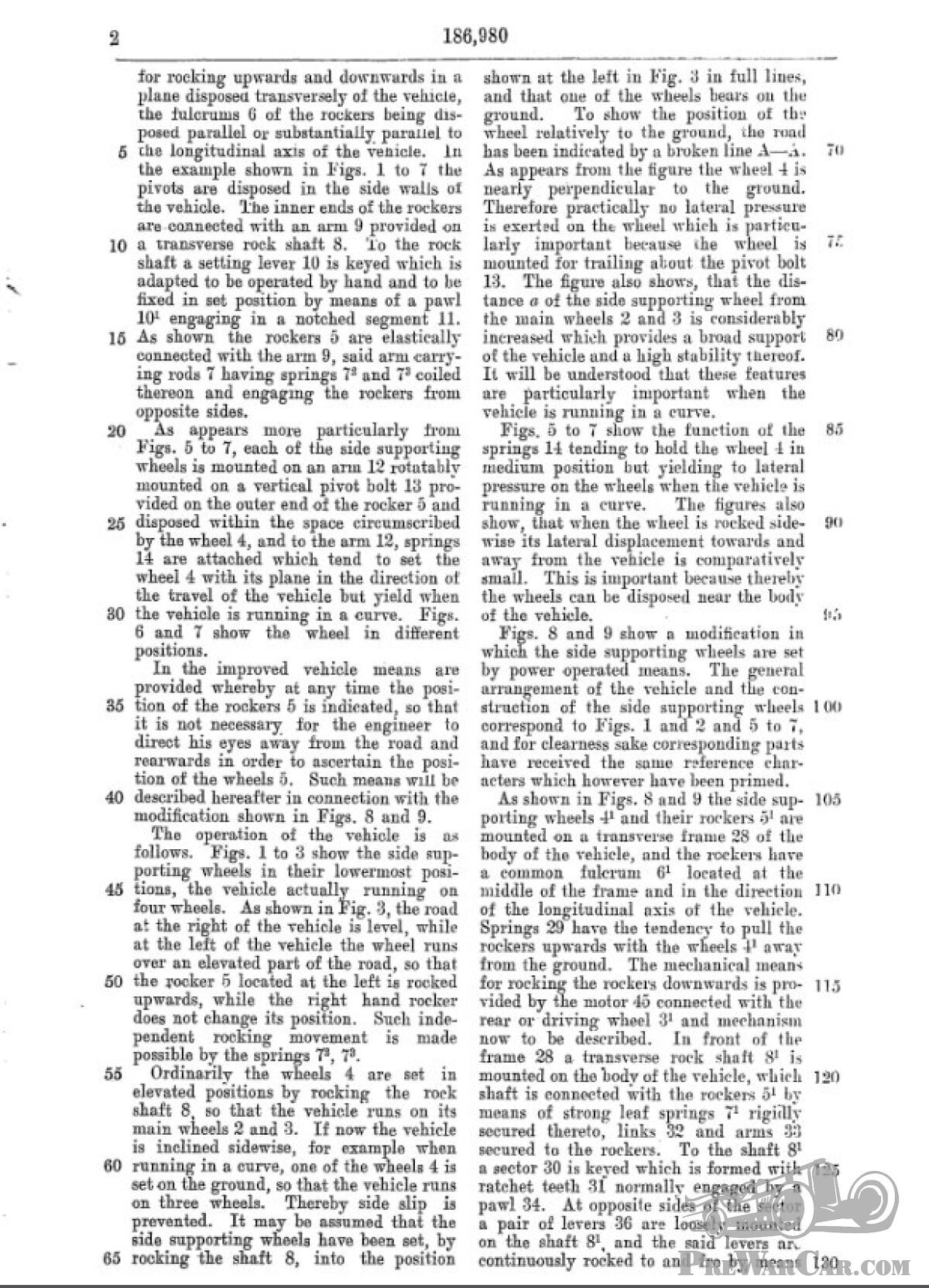
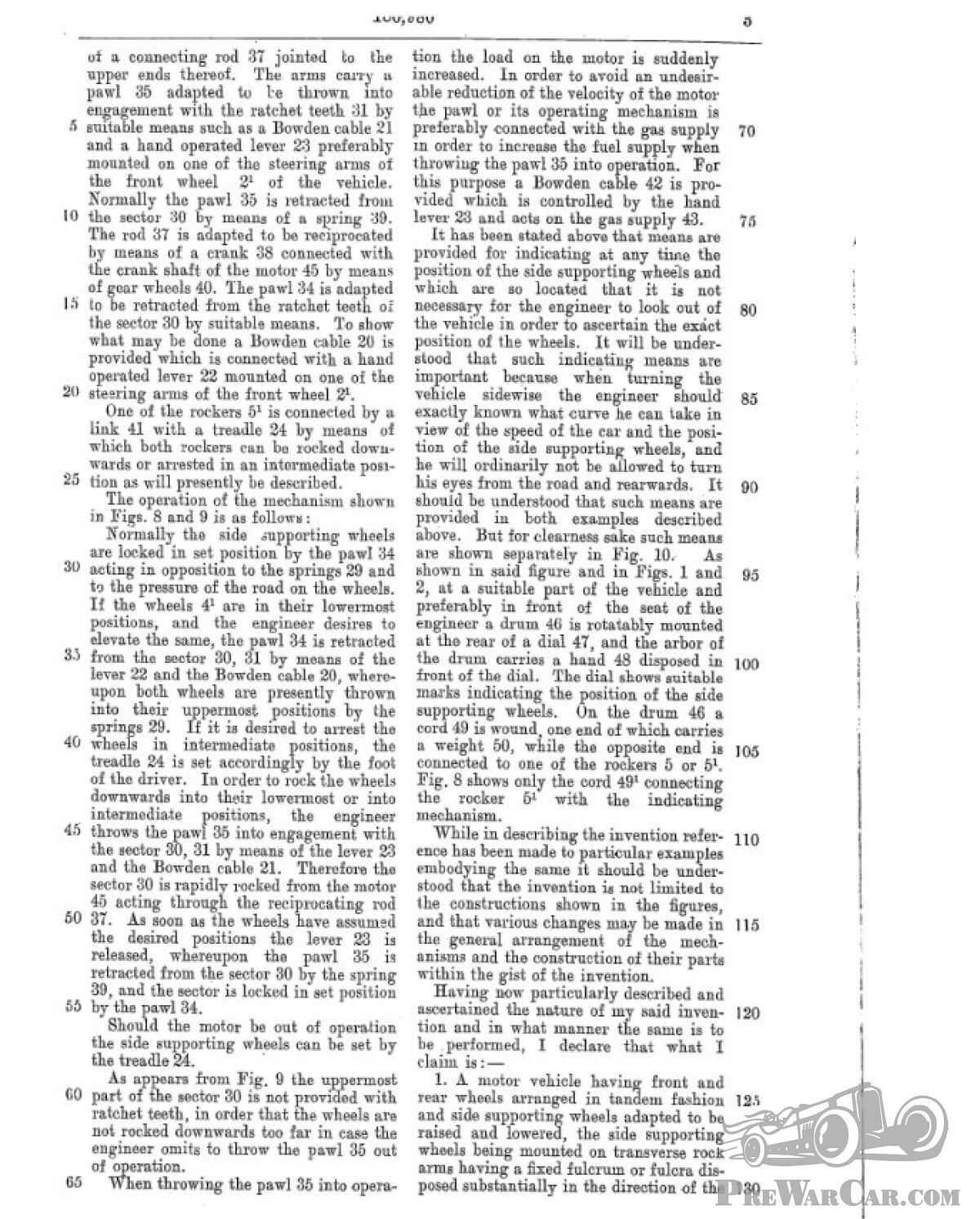
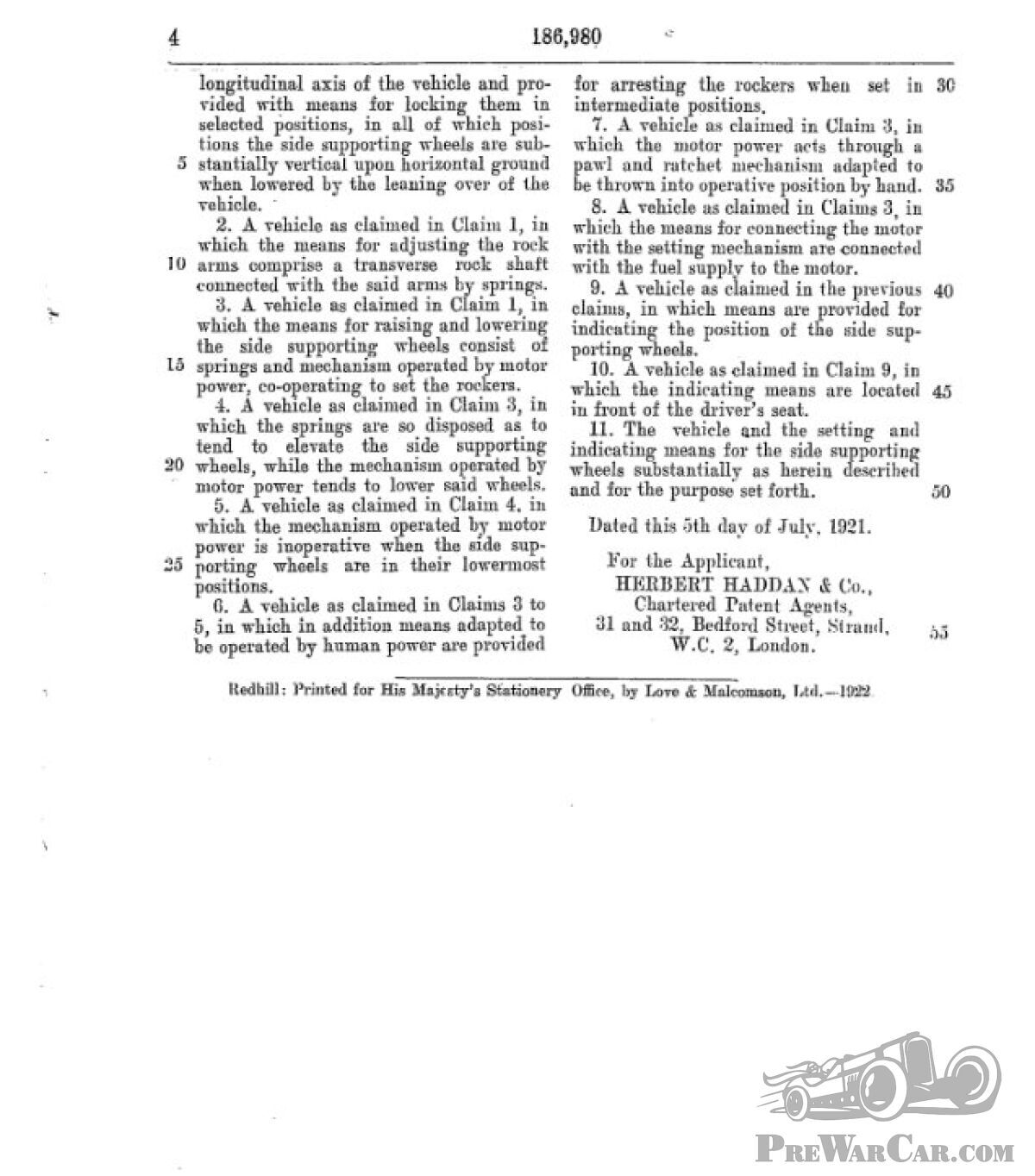
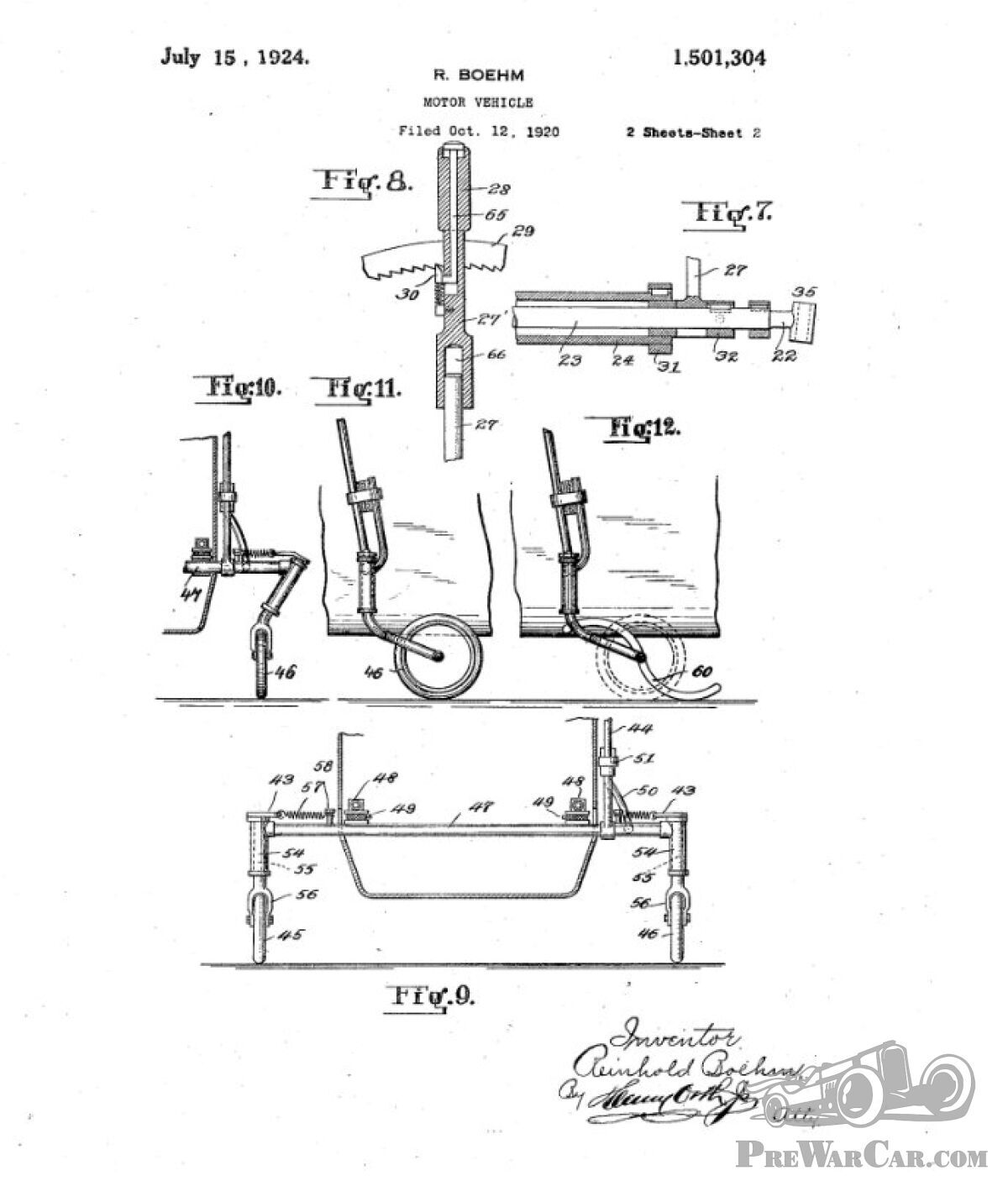
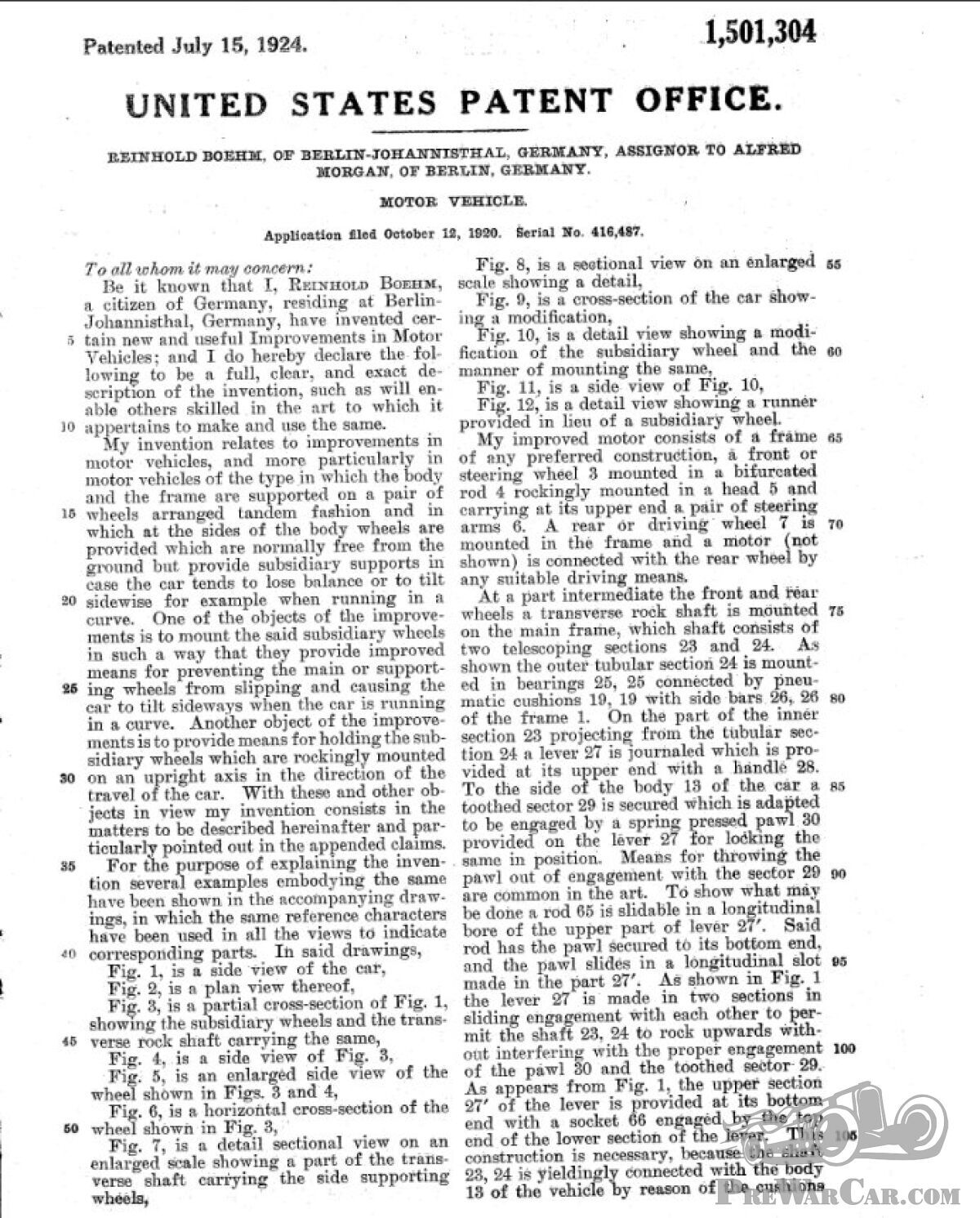
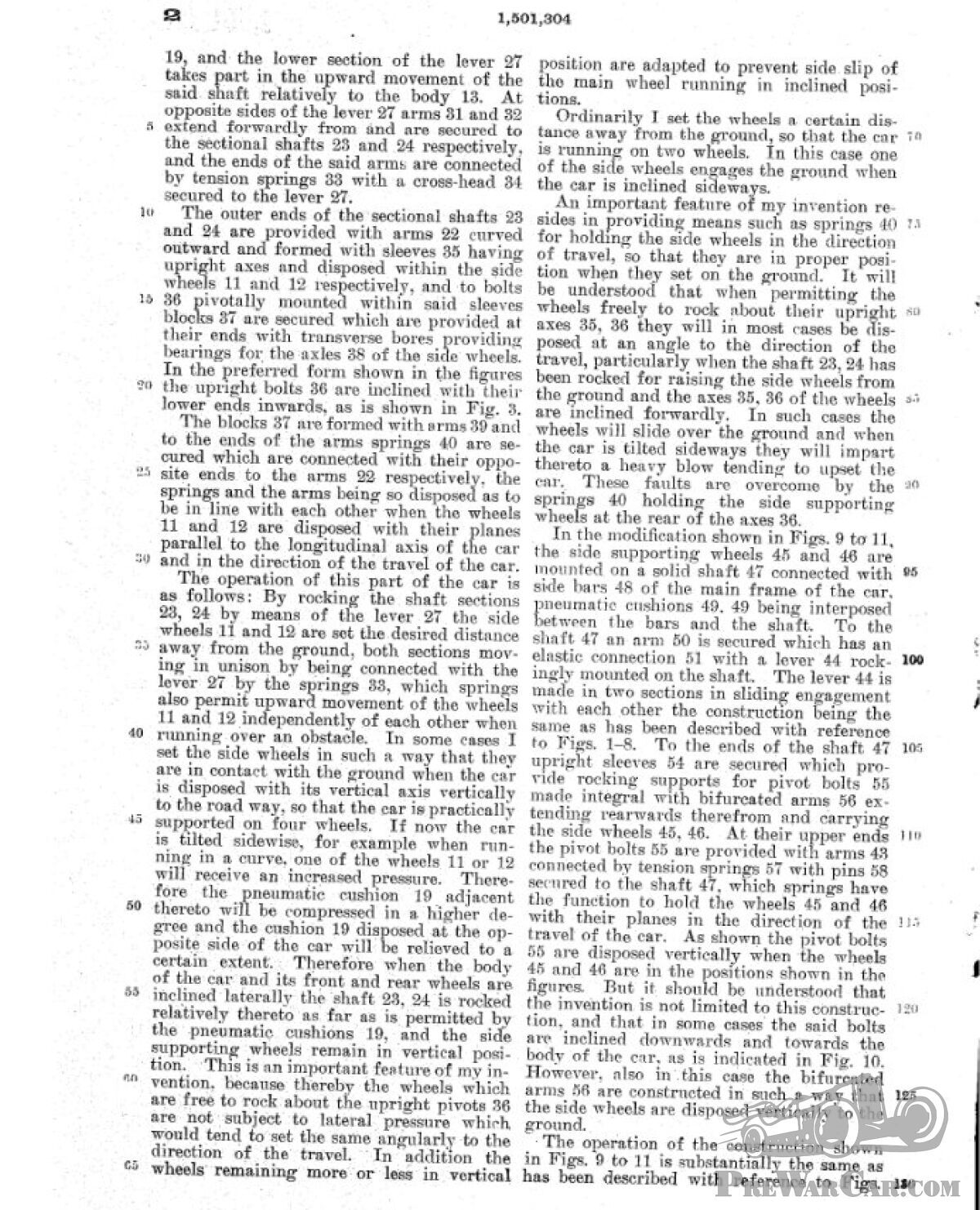
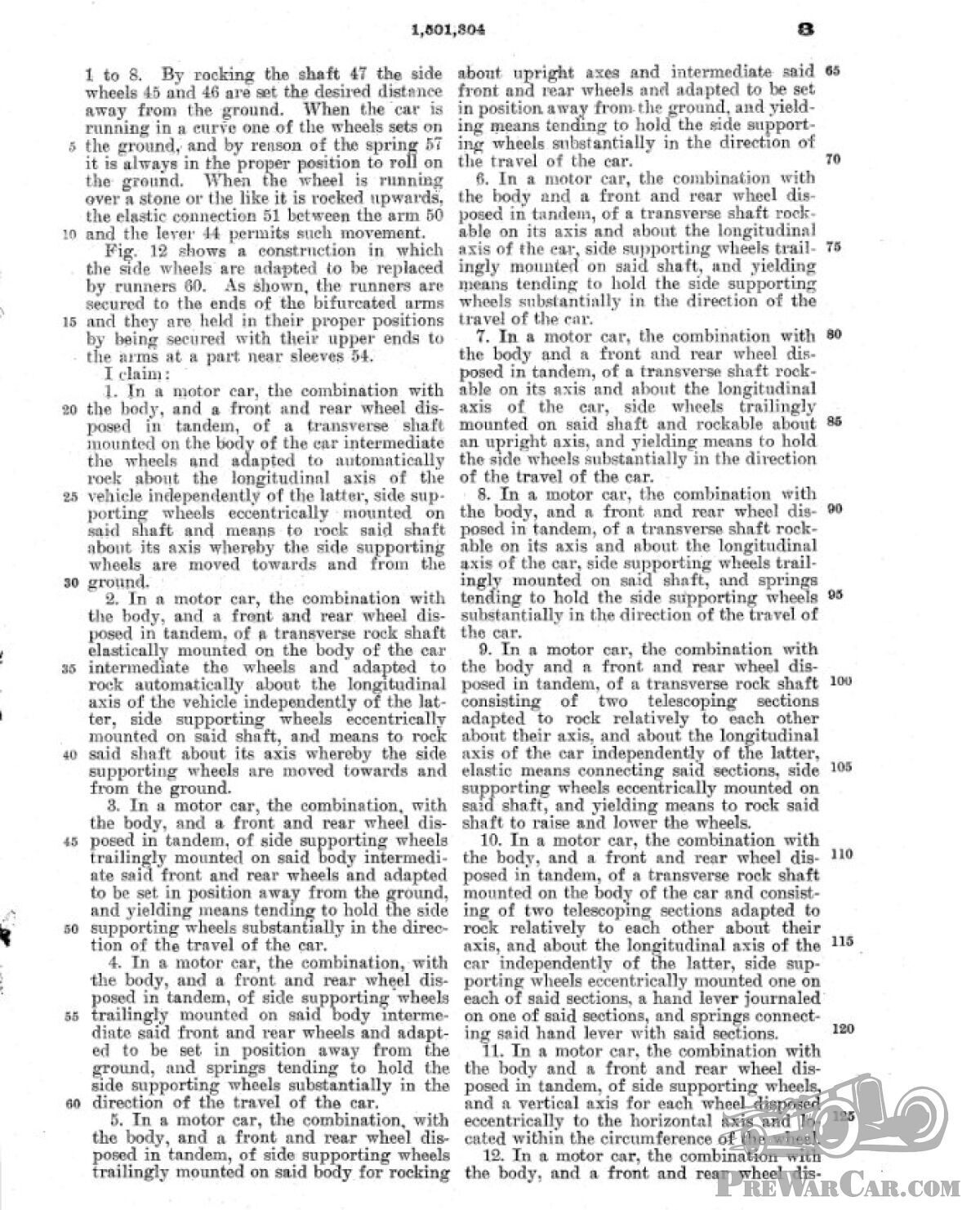
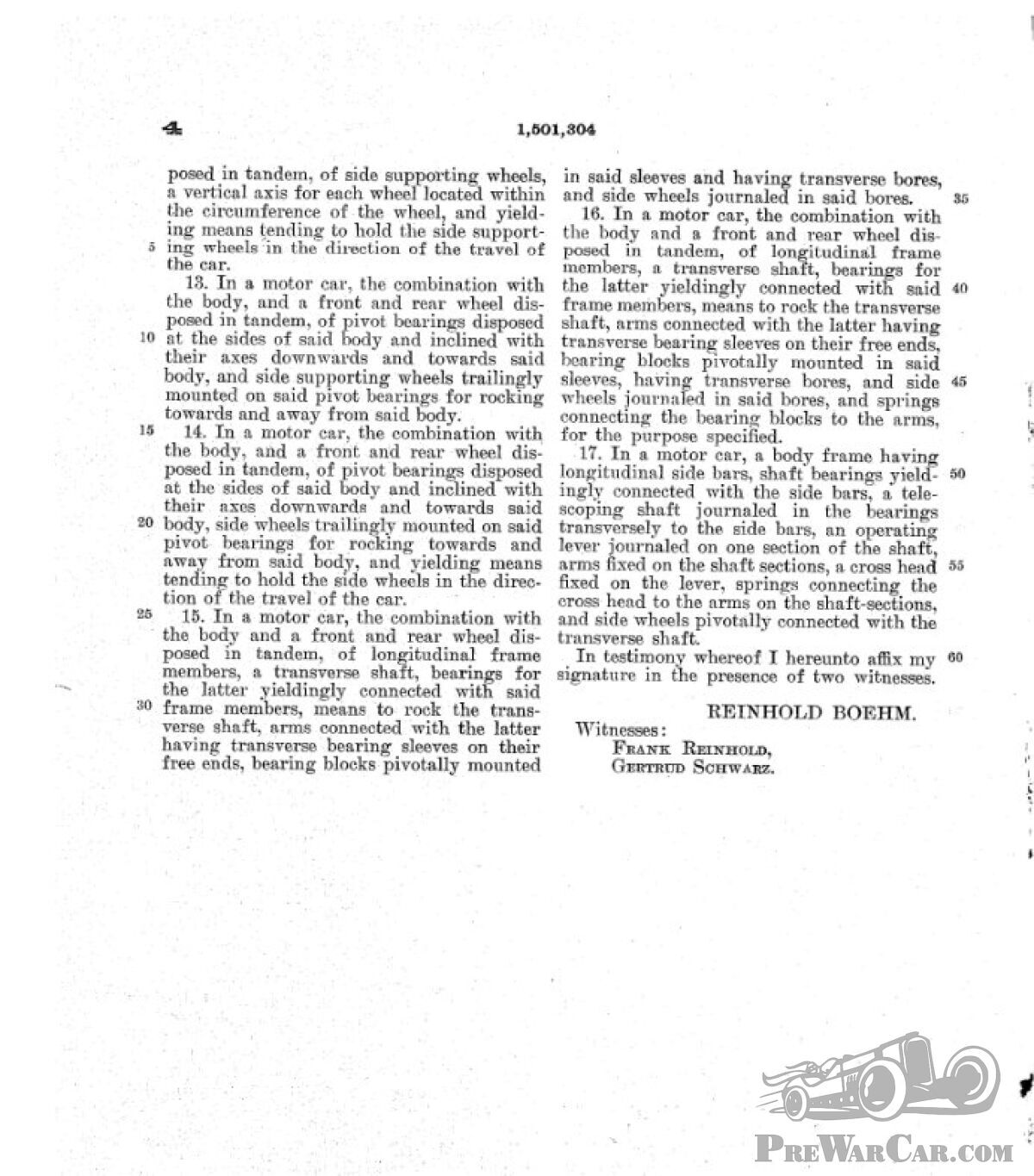
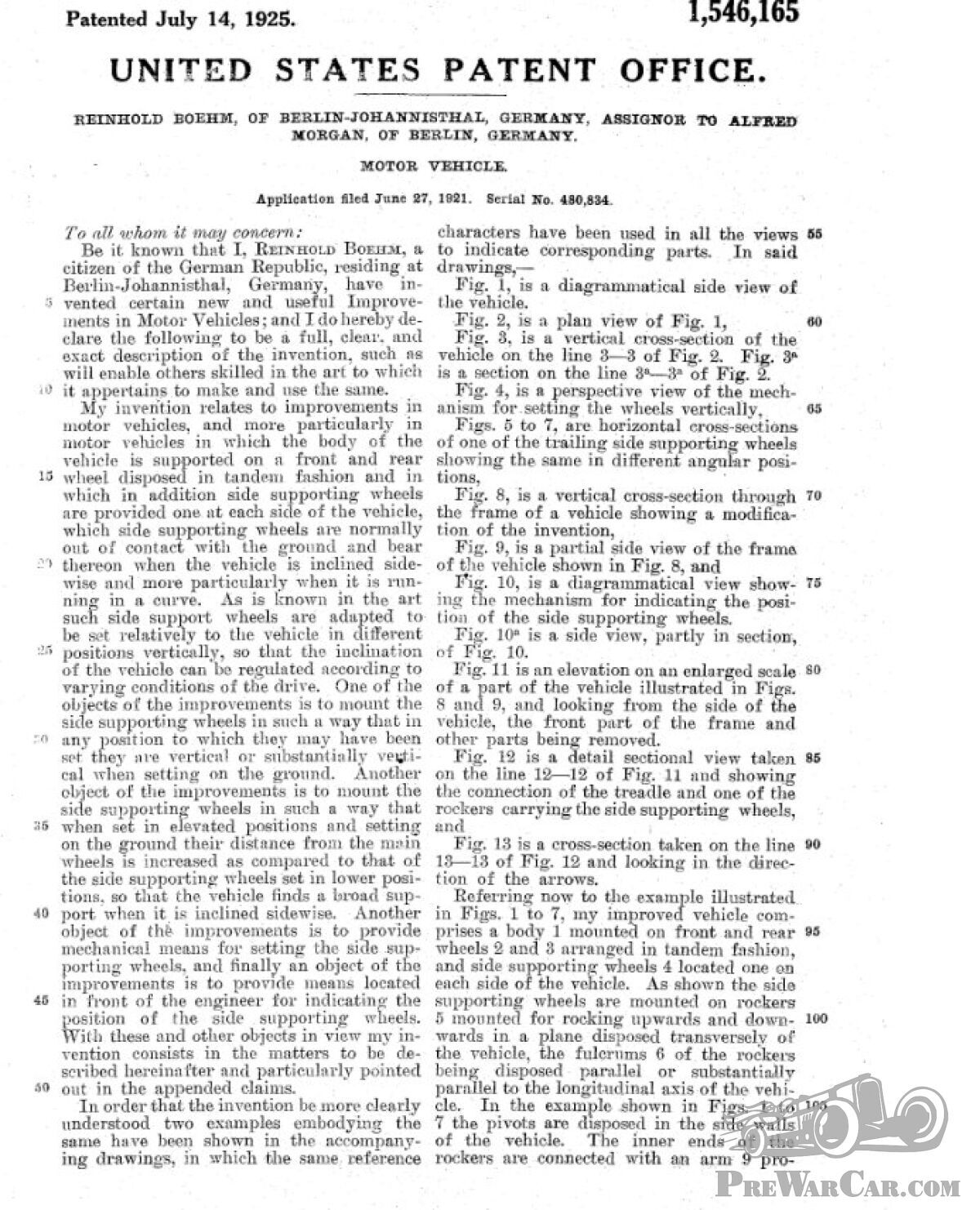
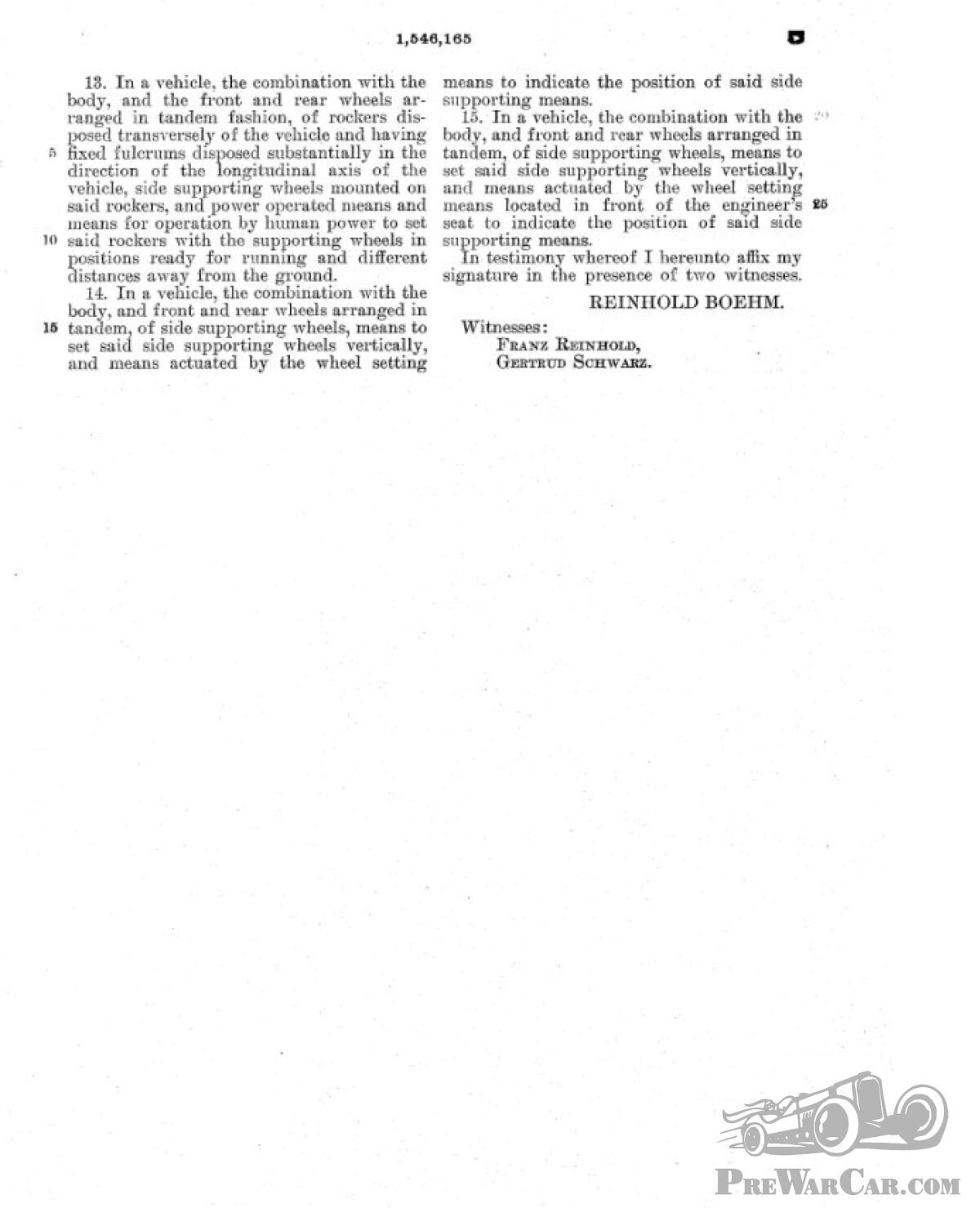
Yesterdays Motorcycles have been holding the key to the mystery all along. They have very kindly supplied some copies of international patents from Great Britain, France, Germany and the United States which were filed between 1920 and 1921 in the name of Alfred Morgan of Berlin (though in some instances the inventor is named as Reinhold Boehm, "assigner to Alfred Morgan"). According to AllCarIndex.com, Alfred Morgan was indeed associated with Morgan Auto-AG. For dedicated students, copies of the English-language patents now appear in the image gallery.
Words: Zack Stiling
Published:
Wednesday September 17th, 2025
Facebook
LinkedIn
Twitter
WhatsApp
Email
Copy
Comments
Miss C Upton
25 February, 18:48
Regards Claire upton