The global magazine and marketplace for classic car enthusiasts, by enthusiasts.


Filter
Make a choice:
- Cars
-
Make >>
-
Year >>
-
- Bikes
-
Location >>
- Parts & more
-
Make of car >>
-
Manufacturer >>
-
Category >>
- Bicycles & more
-
Year >>
-
Countries


Olympian workhorses: remembering Exhibition season with Trojan's show-stoppers
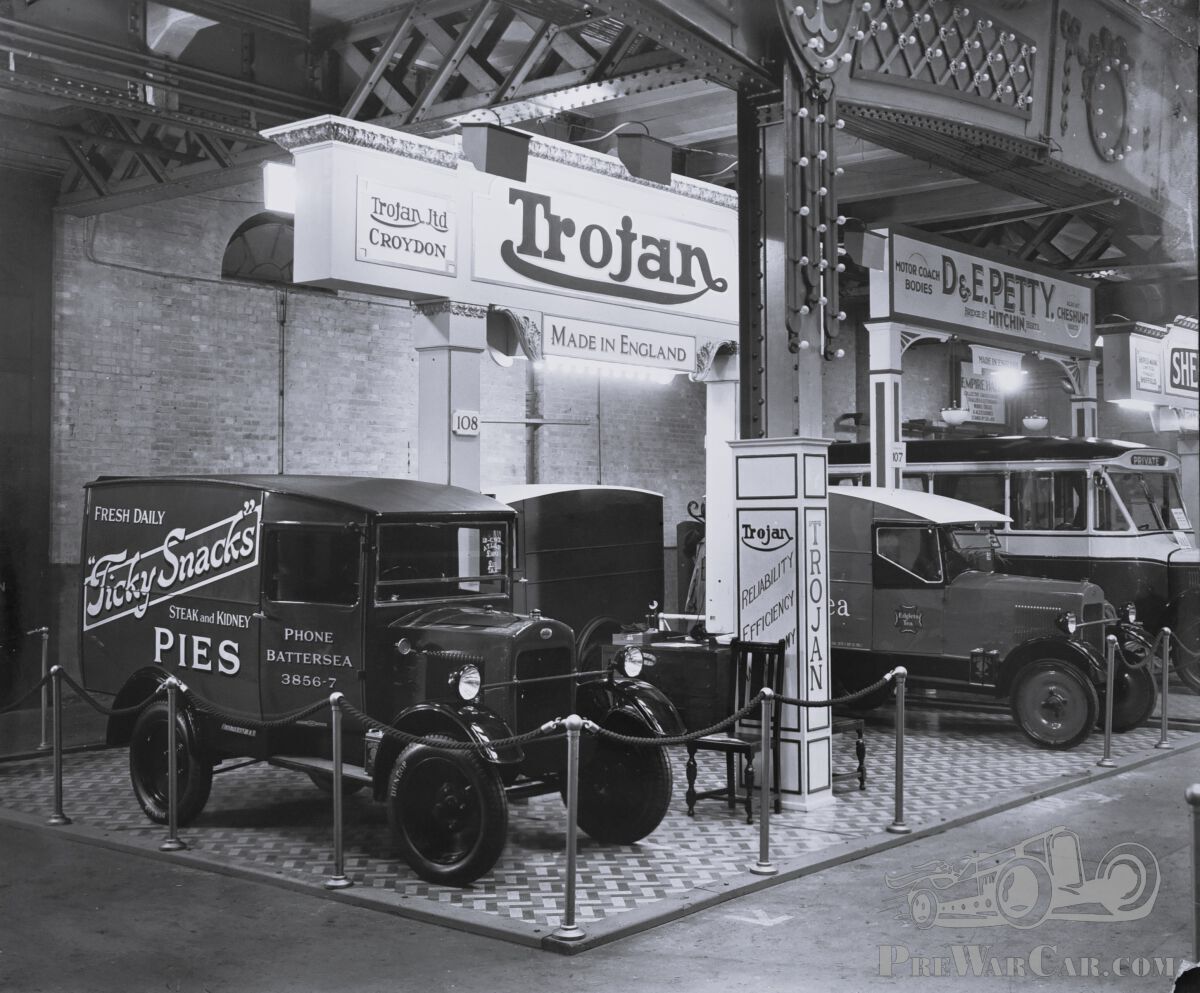
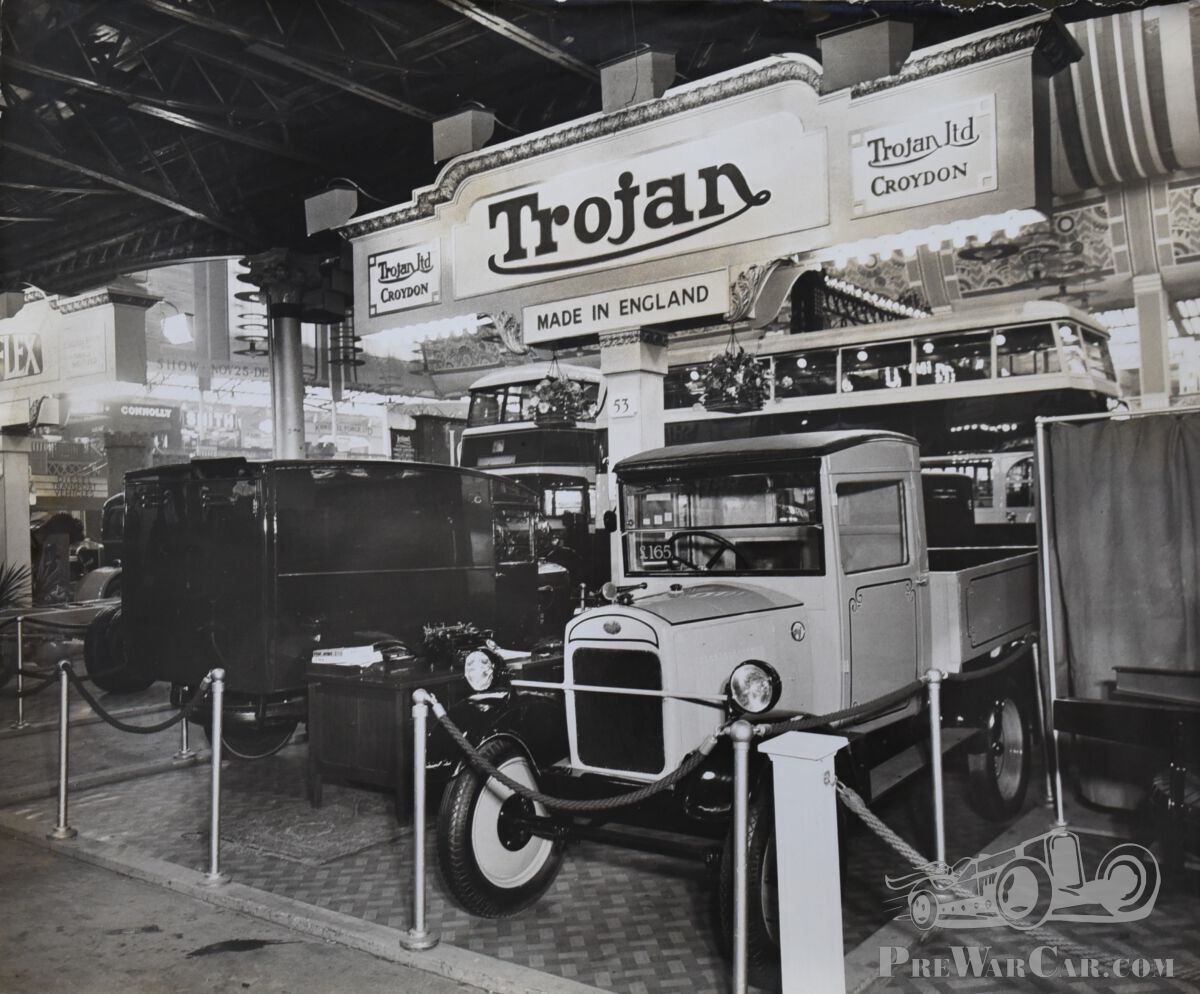
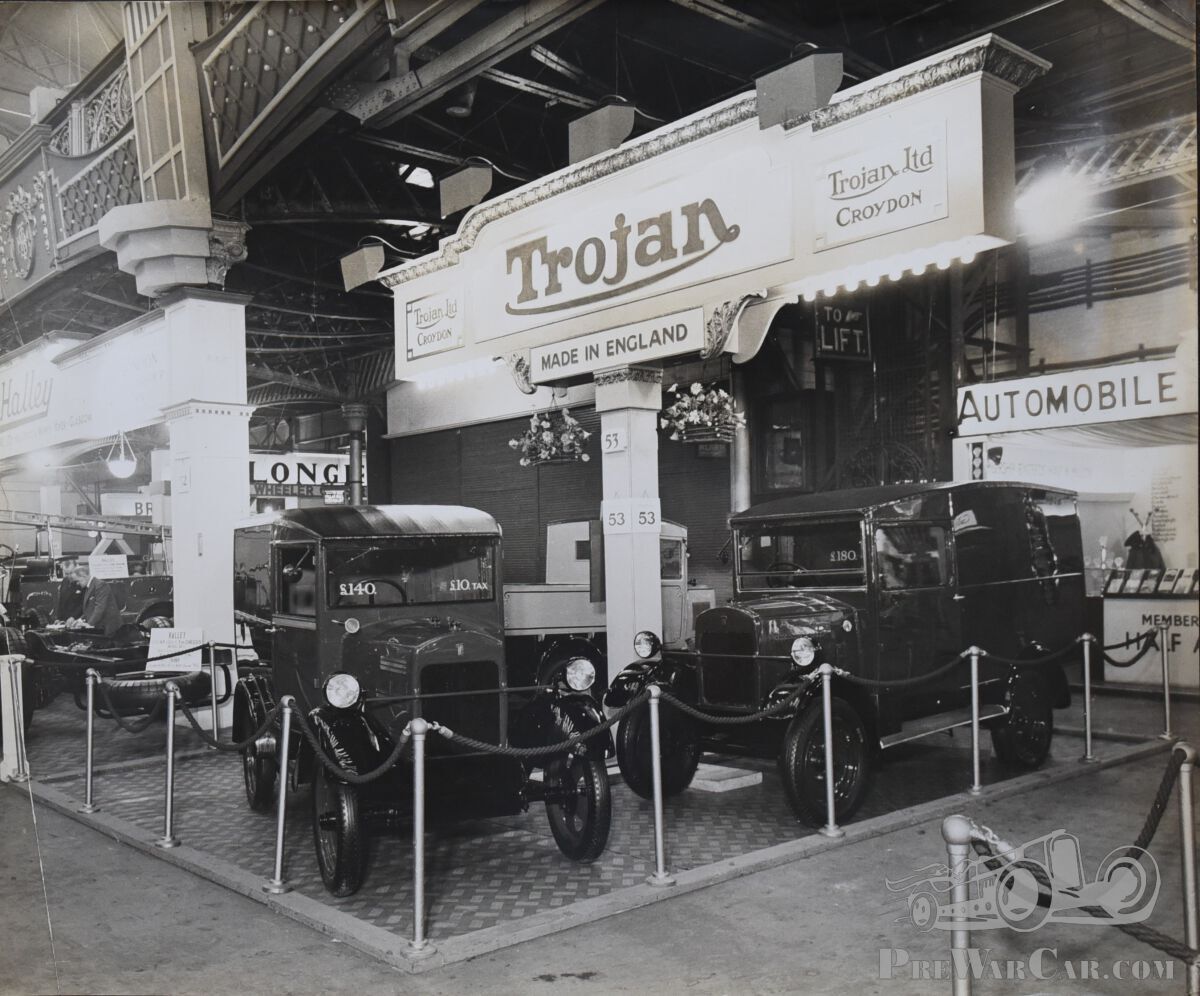
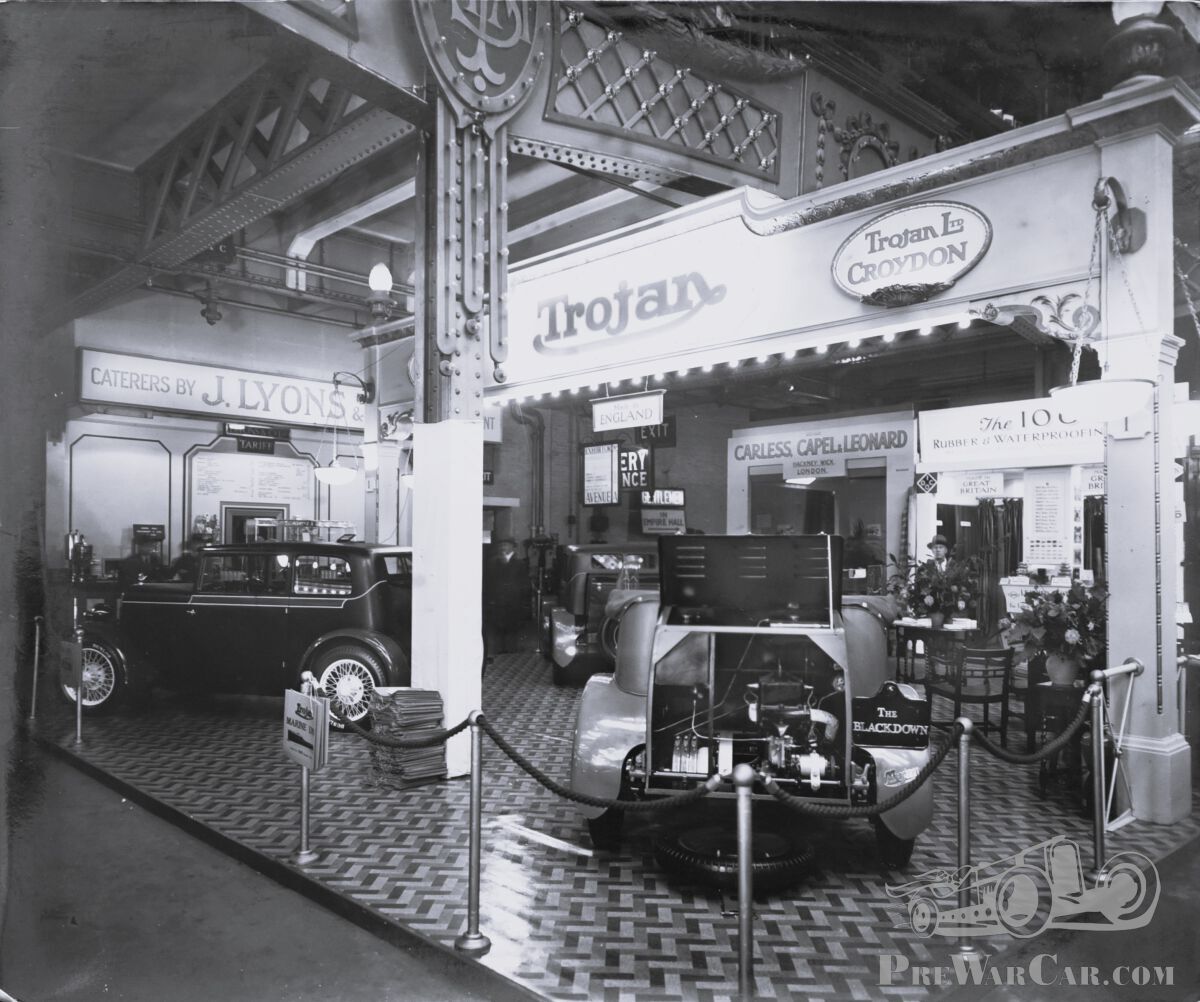


Today, as we enter what was historically motor show season, we present what appear to be previously unpublished photographs of some of history’s more curious vehicles. Far from rakish or exotic, these machines, seen at Olympia Motor or Commercial Motor Exhibitions in the early 1930s, have a distinct Noddy Goes to Toyland look. They are unmistakeably the products of Trojan Ltd. of Croydon.
The original Trojan Utility, despite its plain appearance, drew great interest in the 1920s for its eccentric yet meritorious design. Passenger versions ended in 1929, replaced in 1930 by a rear-engined model, but the commercial line—starting with a 5cwt. van—expanded through the early ’30s. Based on the old Utility, production lasted until 1940, when the factory turned fully to war work.
Our opening photograph shows Trojan’s stand at the 1931 Commercial Motor Exhibition, the foreground occupied by the 12cwt. Atlas van, new for 1932. Until then, Trojan sold its vans simply by payload, from 5 to 12cwt., but the Atlas name marked something different. It introduced the Type BH engine with roller big-end and ball main bearings, and offered 110 cu. ft. of load space. It was the first Trojan with electric starter and pneumatic tyres, priced at £180. In Edglets Tea livery appears a standard 10cwt., at £150, while all models shared the same engine and £15 tax.
The Atlas livery is notable: Ticky Snacks, like Trojan, was Croydon-founded before moving to Battersea in 1931. Established by Henry Telfer Thompson in 1927, Ticky Snacks—“Made as Muvver Makes ’Em”—were sold at pie stalls and shops, before J. Lyons acquired the business in 1933, appalled at Thompson’s casual hygiene.
“Trojans for Work”
Two further photographs from the 1933 Exhibition show a 7cwt. van at £140, a Victory at £165 and another Atlas. The Victory, another 12cwt., had a larger load space than the standard van but smaller than the Atlas, powered by the Type XL engine with roller big-end and plain main bearings.
By then, Trojan’s interest in cars was waning. At the 1930 Olympia Motor Exhibition, the RE (Rear-Engined) range replaced the Utility. Retaining the old engine but with “evaporitic” cooling, it featured a three-speed epicyclic with preselector, offering six speeds for a 50mph car. Though low-slung and smartly bodied, it drew criticism for controls and tail-heavy balance. With too many models proposed and little success, it was dropped in 1933, and Trojan left car manufacture until the Heinkel bubble cars of the 1960s.
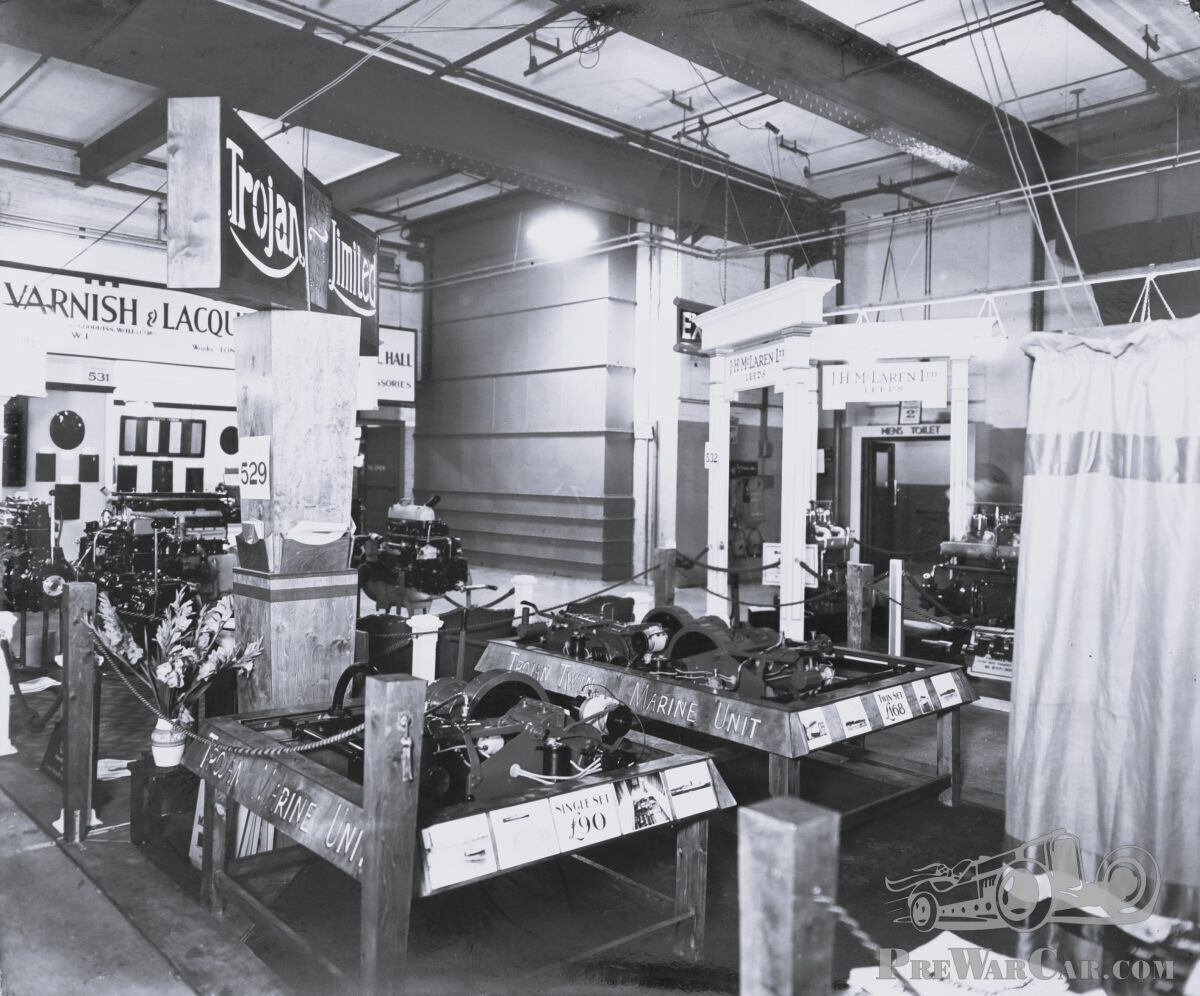
One final photograph, also from 1930, shows Trojan’s marine engines. True to its philosophy of diversification, the firm also made bomb carriers for the Air Ministry, later war materiel, and post-war products from lawnmower engines to crop-driers—endeavours that kept the Croydon works alive through changing times.
Words: Zack Stiling
Photographs: Stiling Collection
Published:
Wednesday October 8th, 2025
Facebook
LinkedIn
Twitter
WhatsApp
Email
Copy
Comments


Tony
13 October 2025, 17:00
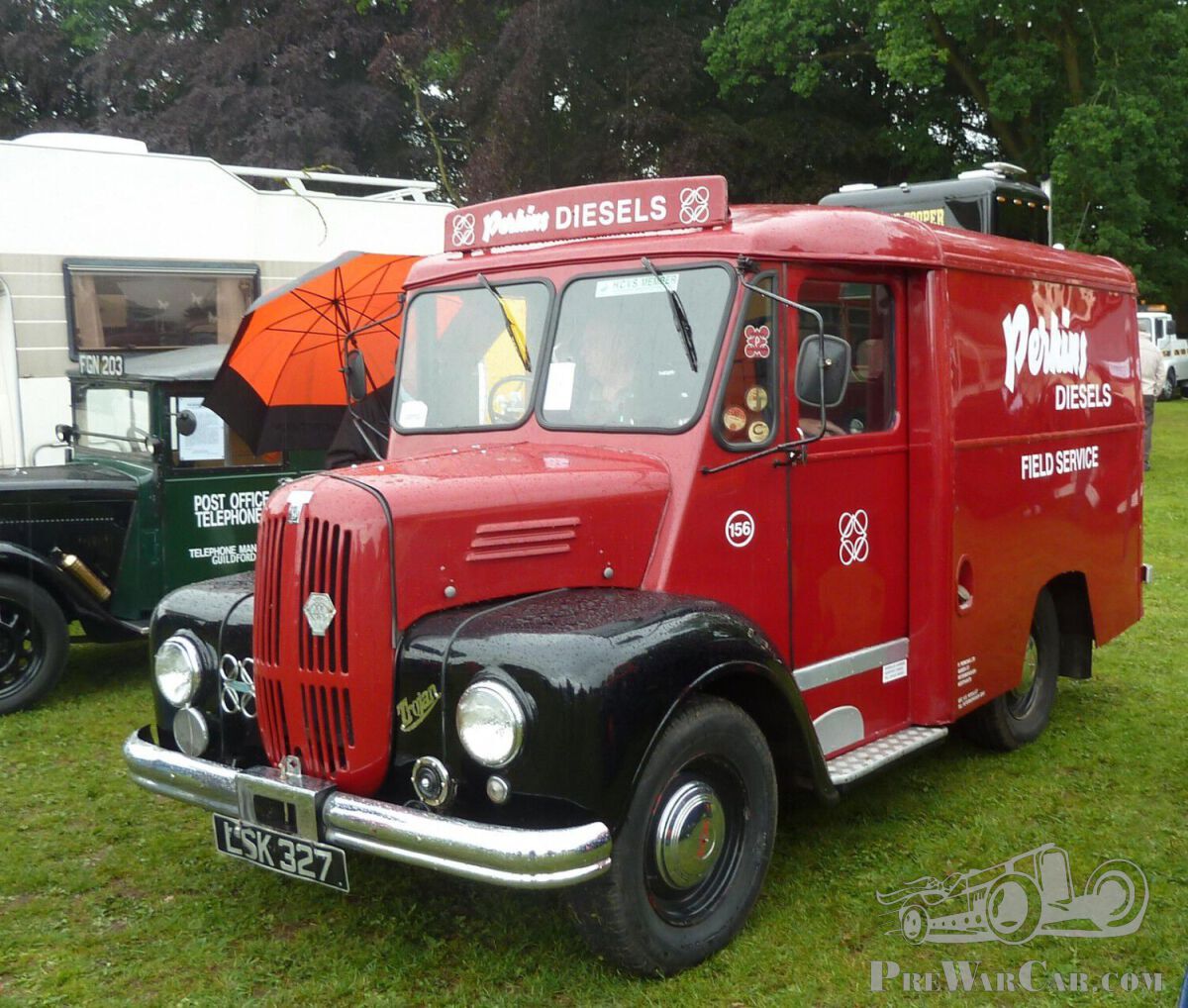
What about the 3 cylinder Perkins engined Brooke Bond tea Trojan vans of the fifties and sixties Zack??
Read more