The global magazine and marketplace for classic car enthusiasts, by enthusiasts.


Filter
Make a choice:
- Cars
-
Make >>
-
Year >>
-
- Bikes
-
Location >>
- Parts & more
-
Make of car >>
-
Manufacturer >>
-
Category >>
- Bicycles & more
-
Year >>
-
Countries


Outside the box: the rotary motor of Walter Macomber


When there’s talk about rotary engines these days, it's usually about Wankel engines, which were designed by Felix Wankel and have been seen in production cars from 1964 onwards. As a matter of fact, keen Wankel engine proponents Mazda Motors (the only manufacturer still using them?) announced a rotary-engined hybrid electric car earlier this year.
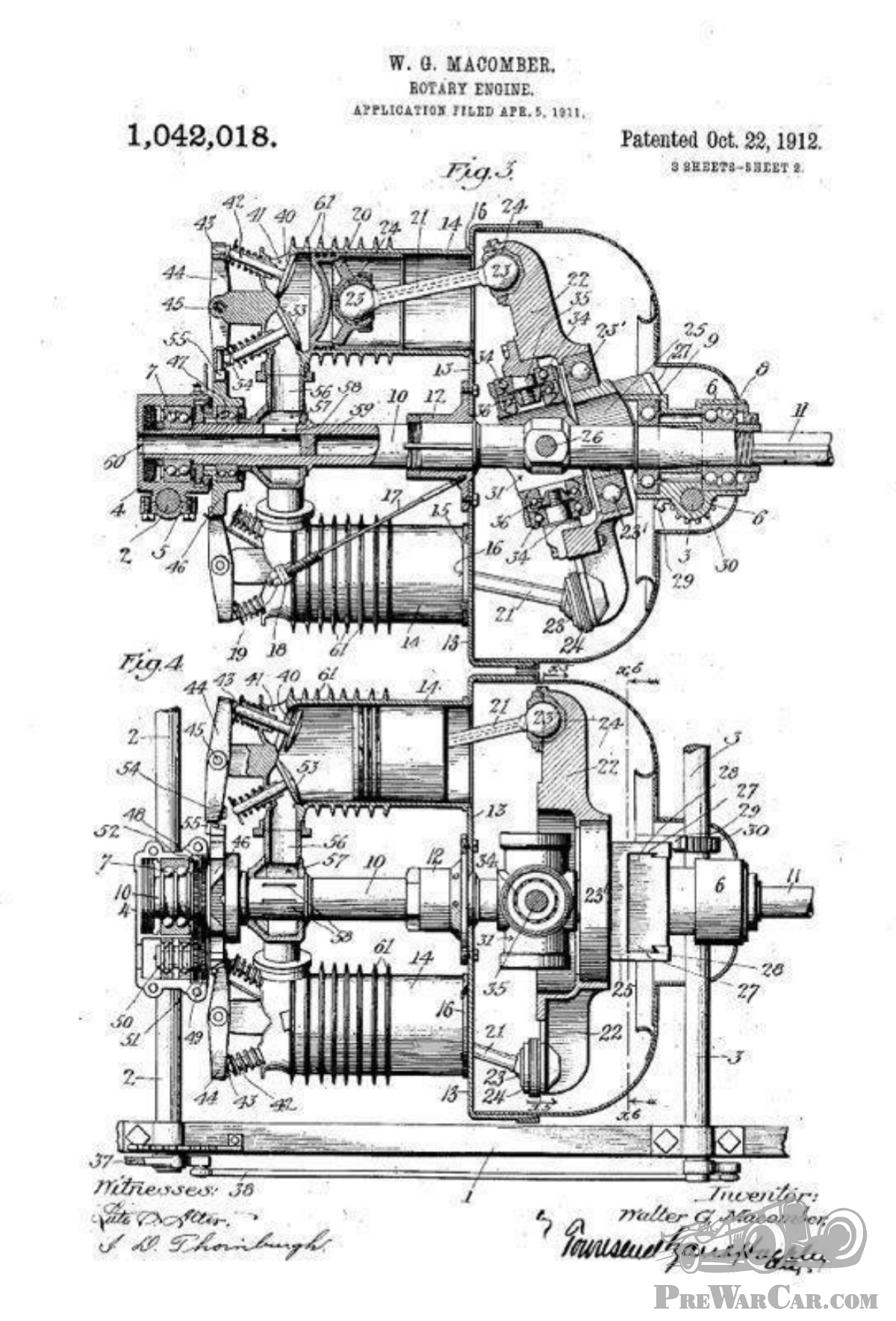
However, the rotary engine mentioned on the side of the big car seen here is of a very different kind. Walter Macomber and his Macomber Rotary Engine Company in Los Angeles created an axial engine as early as in 1909. This was an air-cooled engine with seven cylinders, built on an axial scheme with a single rotating cylinder block. Yes, the block with all its seven cylinders was rotating. According to its creator the main advantage was that it would improve the cooling of the cylinders due to constant blowing without the use of additional fans. Early versions produced up to 60hp at 800 to 1,400 rpm and it's one of those powerhouses which is believed to have been mounted in the vehicle, seen in San Diego in 1915.
According to one source, “The Macomber Rotary was used in numerous prototype cars between 1914-1918... A factory in Sandusky, Ohio, was primed to mass-produce Eagle-Macomber motor cars. Macomber even drove an Eagle-Macomber car from Los Angeles to Chicago in November-December 1916 to prove the engine’s worthiness.”
Some of Macomber’s rotary engines found their way to aeroplanes, too, but it seems that the inventor had trouble selling his patented design. A 1915 advertisement promised: “Will replace all other gas engines,” but with the in-line engine having become the norm by that time it never happened. A smaller version of the rotary engine from 1916 came with five rather than seven cylinders but once again it never achieved its hoped-for success, and by 1918 the designer had given up.
We wonder if any cars with this fascinating engine design could survive today?
Words: Jeroen Booij; picture: Cynthia Anderson (Cynthia's Hi-Desert Blog)
Published:
Monday February 26th, 2024
Facebook
LinkedIn
Twitter
WhatsApp
Email
Copy
Comments
Tery Hurst
03 March 2024, 23:59
My father invented a rotary engine in the 1970s which he forwarded to Repco Research in Melbourne, Australia, for evaluation and they confirmed it would work but sadly his health declined and he was unable to progress any further. I still have the model which works on compressed air.
Read more
E. Dean Butler
03 March 2024, 12:03
Don't forget the Julian, Adams-Farwell and a few other radial engine attempts. The Julian Sports Coupé was a great looking car.
Read more
Ross Thornhill
27 February 2024, 05:19
Rotary engines are only feasible with 'odd' numbers of cylinders, so three, five, seven and nine are potentially feasible—there will be an increased 'flywheel' mass and were probably 'in the day' (perhaps not now with modern electronics) throttling issues—and of course finally the potential effects of gyroscopic precession with that rather large rotating mass.
Read more
Christoph Röhrs
26 February 2024, 17:49
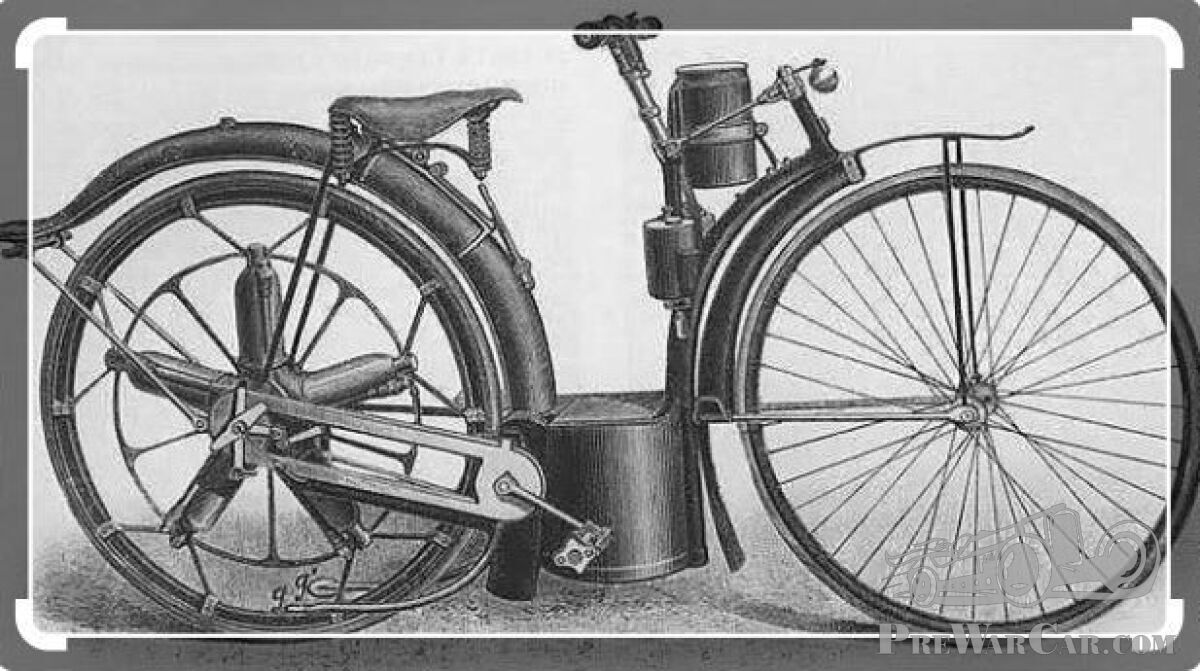
Not to be forgotten is the Megola by Fritz Cockerell with its five-cylinder engine in the front wheel!
Read more
Laurent Zoller
26 February 2024, 15:31
Hello,
Rotary engines are not to be confused with rotary piston engines. It is common to incorrectly call rotary engines 'rotary piston engines,' such as the Wankel or the Quasiturbine.
There are many precursors, including Stephen Balzer's three-cylinder in a quadricycle from 1894 and Felix Millet's five-cylinder on his motorcycle from 1893. The best known-rotary engines are the Gnome, Rhône and Clerget, which equipped the planes of the pioneers of aviation before being manufactured in very large series (tens of thousands with licensed production) to supply combat aircraft of the First World War.
Laurent Zoller
Read more
Rotary engines are not to be confused with rotary piston engines. It is common to incorrectly call rotary engines 'rotary piston engines,' such as the Wankel or the Quasiturbine.
There are many precursors, including Stephen Balzer's three-cylinder in a quadricycle from 1894 and Felix Millet's five-cylinder on his motorcycle from 1893. The best known-rotary engines are the Gnome, Rhône and Clerget, which equipped the planes of the pioneers of aviation before being manufactured in very large series (tens of thousands with licensed production) to supply combat aircraft of the First World War.
Laurent Zoller
Fred Veenschoten
26 February 2024, 14:31
Quite different from the Gnome rotary aircraft engine. This used a "swash plate" for the crankshaft which is very limited in how much thrust it can withstand.
Read more
Phil Seed
26 February 2024, 11:26
Adams-Farwell used rotary engines between 1898 and 1913. Only one car still exists, according to Automobile Quarterly.
Read more
Larry Lewis
26 February 2024, 02:25
I don't know about cars, but there are plenty of aircraft around with rotary engines, e.g. the Nieuport 17, the Fokker DR1 and Sopwiths of various types like the Pup or the Camel.
Read more