The global magazine and marketplace for classic car enthusiasts, by enthusiasts.


Filter
Victor for sale - Victor parts for sale
-

New Old Stock Brass Tap for twin fuel Tank set up
New Old Stock Brass Fuel Tap manufactured by Le Bozec Made for twin Tank equipped cars or cars with additional fuel Tank . -
New Old Stock Ducellier Control Box Conjoncteur Disjoncteur 12 V Régulateur
New Old Stock Ducellier Contro Box 12V Conjoncteur Disjoncteur Ducellier Neuf 12V Régulateur Modèle : 12 Volts 18 Amperes Ref Ducellier 1016 12 Volts B1 Sp3The black paint on the box is not damaged , it is peinture mouchetée . Very Clean and Dry Stored . -
Vintage Michelin Talcum powder tube
Vintage Michelin Talcum powder tube. French wording. Original condition. A decorative item.Contact us for more details -
Early AA Member's Badge
Early AA Member’s Badge. Stenson Cooke signature motif. Not numbered. Brass. Contact us for more details -
Austin 7 Switch Panel
Austin seven switch panel. Black face to amperes meter. Complete and in original condition needs re-commissioning Contact us for more details


Victor
US, 1907 – 1911
Victor Automobile Manufacturing Co, St. Louis, Mo.
The Victor car was a high-wheeler powered by a 2-stroke, single-cylinder water-cooled engine, rated at 12hp and driving through friction transmission. Seven different styles Victor car were offered with either solid rubber or pneumatic tyres.
US, 1913 – 1914
Victor Motor Car Co, Philadelphia, Pa.
The Victor cyclecar had a more substantial appearance than most cars of its class. The 2.2-litre, 4-cylinder engine of the Victor car was water-cooled and drove through a 3-speed gearbox and a shaft to the differential. Semi-elliptic springs were used on the Victor car.
US, 1914 – 1915
Richmond Cycle Car Manufacturing Co, Richmond, Va.
This two-seater Victor cyclecar used a 2-cylinder, 13hp air-cooled De Luxe engine. The Victor car manufacturer was forced to get rid of the last of these Victor cars at $245 each after the cyclecar boom ended.
GB, 1914 – 1915
(1) Victor Motors Ltd, Eynsford, Kent, 1914 – 1915
(2) Victor Cars Ltd, Ealing, London W., 1915
Victor Motors Ltd had previously been the DEW Engineering Company, makers of the Dew cyclecar, and the Victor car was similar to the later Dews. The Victor car had a 10hp 965cc Precision engine and belt drive. The 4½hp Dew monocarp was apparently not continued under the Victor car name. In 1915 there was an 1.100cc 4-cylinder version Victor car, still belt-driven.
Source: Georgano, encyclopedia of motorcar; GMN, GNG
The information is written with the greatest of care. However, if you have any suggested amendments please contact us at office@prewarcar.com


Featured
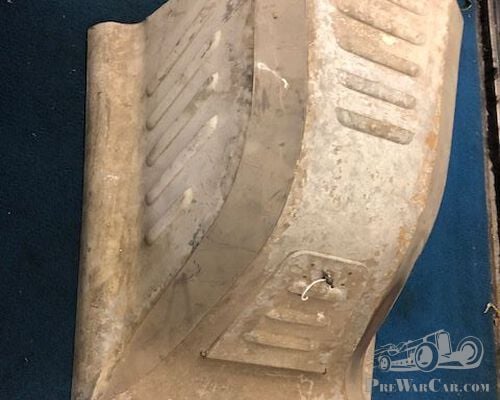
Bonnet in Lovely original condition
This bonnet looks very similar to those used on many Veteran Cars.It is in an excellent original condition with no rust.Please contac..
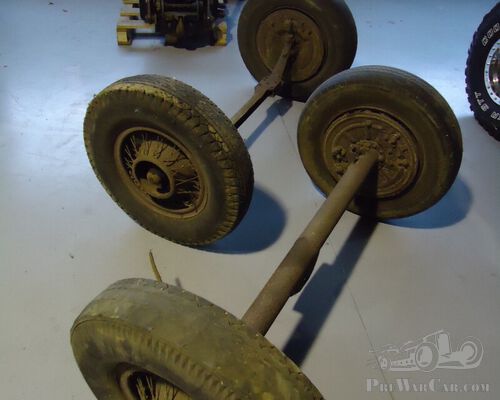
Horch axles (front & rear) for Horch
Original Horch wheels and axles. Submitted by Horch 780 from Year 1932. Complete with
front axle, steering knuckle and 4 drums.
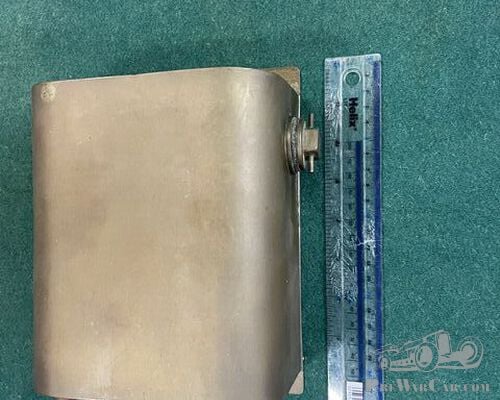
Veteran Oil tank. Suitable for De Dion Bouton and other makes.
Beautifully made in the last 5 years or so. Complete with cap.