The global magazine and marketplace for classic car enthusiasts, by enthusiasts.


Filter
Make a choice:
- Cars
-
Make >>
-
Year >>
-
- Bikes
-
Location >>
- Parts & more
-
Make of car >>
-
Manufacturer >>
-
Category >>
- Bicycles & more
-
Year >>
-
Countries


Preview: a century of bicycle history under the hammer



The history of the automobile begins—strange as it may sound—with the bicycle. Many early car manufacturers emerged from the world of pedals, chains, and steel frames. It is therefore no surprise that quite a few car collectors own one or more historic bicycles. Your editor will gladly admit it: several unmotorised two-wheelers are hiding in the shed. But sometimes a collection surfaces that makes even the most seasoned enthusiast’s mouth water. That is certainly the case with the collection of Monsieur M.
On 4 December 2025, the French auction house Carrère et Laborie will offer this exceptional collection for sale. Spanning more than a century—from 1820 to 1920—it contains pieces that can, without exaggeration, be considered museum-quality. We highlight some of our favourites.
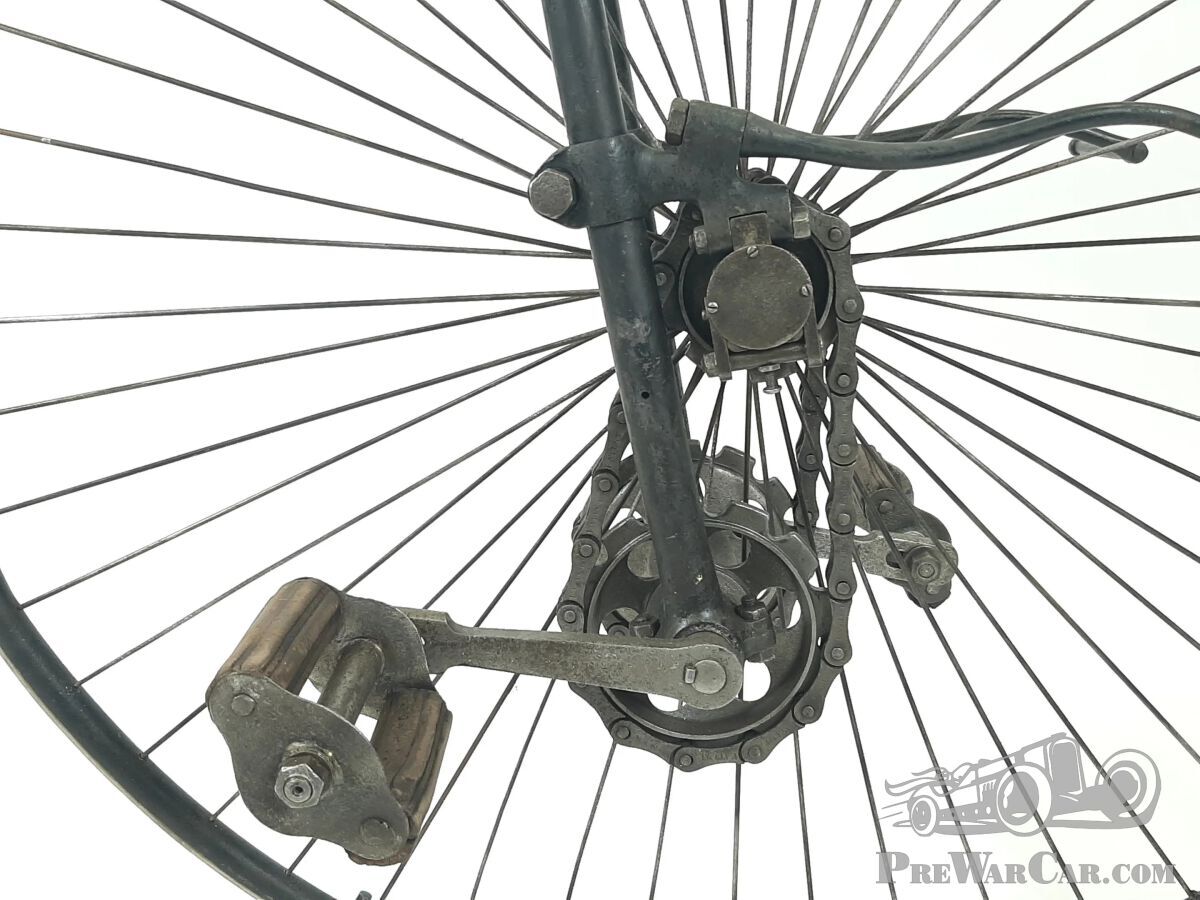
Grand-Bi Dwarf Safety Bicycle “Kangaroo” (1884)
Built by Hillman, Herbert & Cooper, this example stands as a technical curiosity from the early days of bicycle development. It was an attempt to make the tall and hazardous “ordinary” or penny-farthing safer, without entirely abandoning the large front wheel considered essential for speed at the time.
Instead of an enormous front wheel (50–60 inches), the Kangaroo used a much smaller one of about 36 inches. This lowered the rider and significantly reduced the potential fall height — a major step toward improved safety.
The bicycle was driven by two chains, one on each side of the front wheel. These chains ran over a transmission system that increased the effective development: even with a smaller wheel, riders could approximate the speed of a large-wheeled machine. In essence, it was an early form of gearing — long before the derailleur existed.
The frame still echoed the geometry of the high-wheeler, but in a more compact layout. The bicycle remained a direct-drive (front-wheel-driven) machine, but with mechanical multiplication.
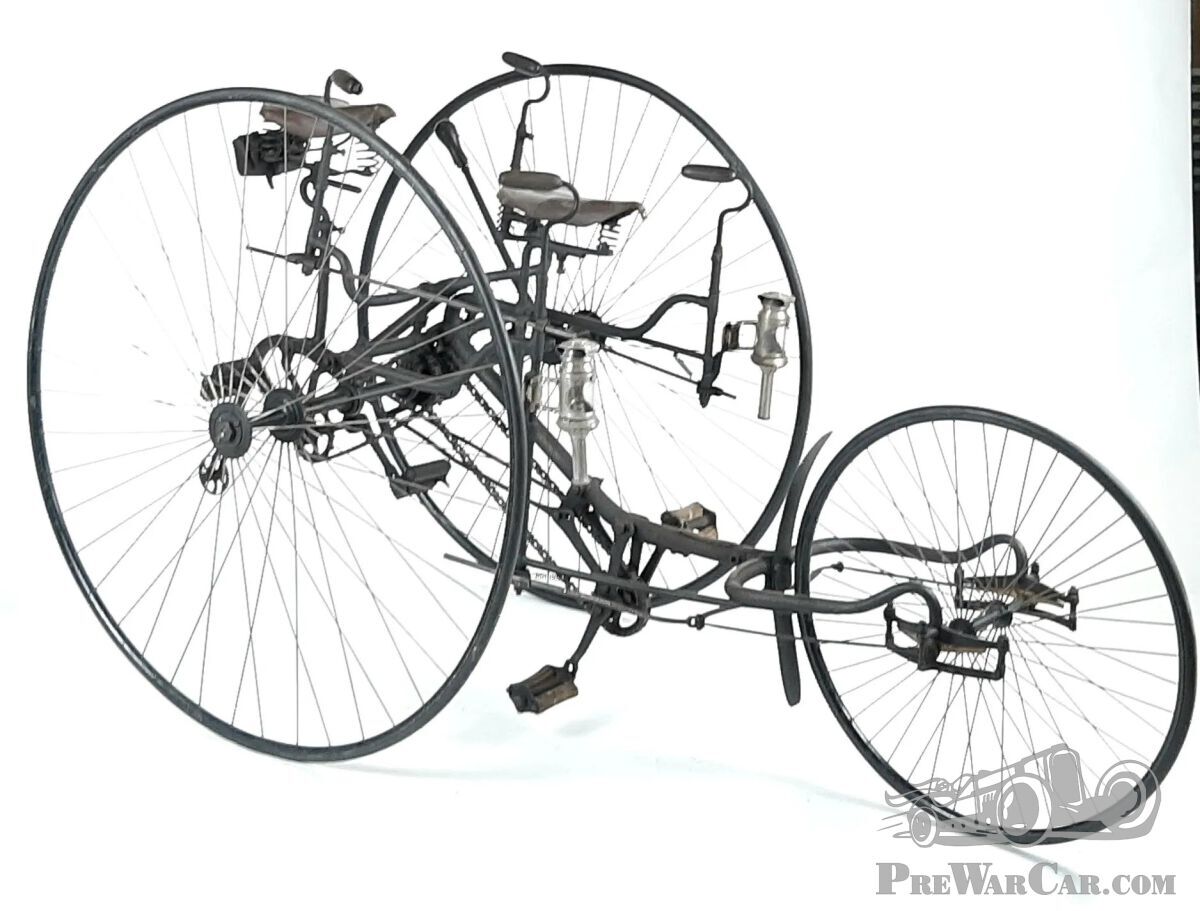
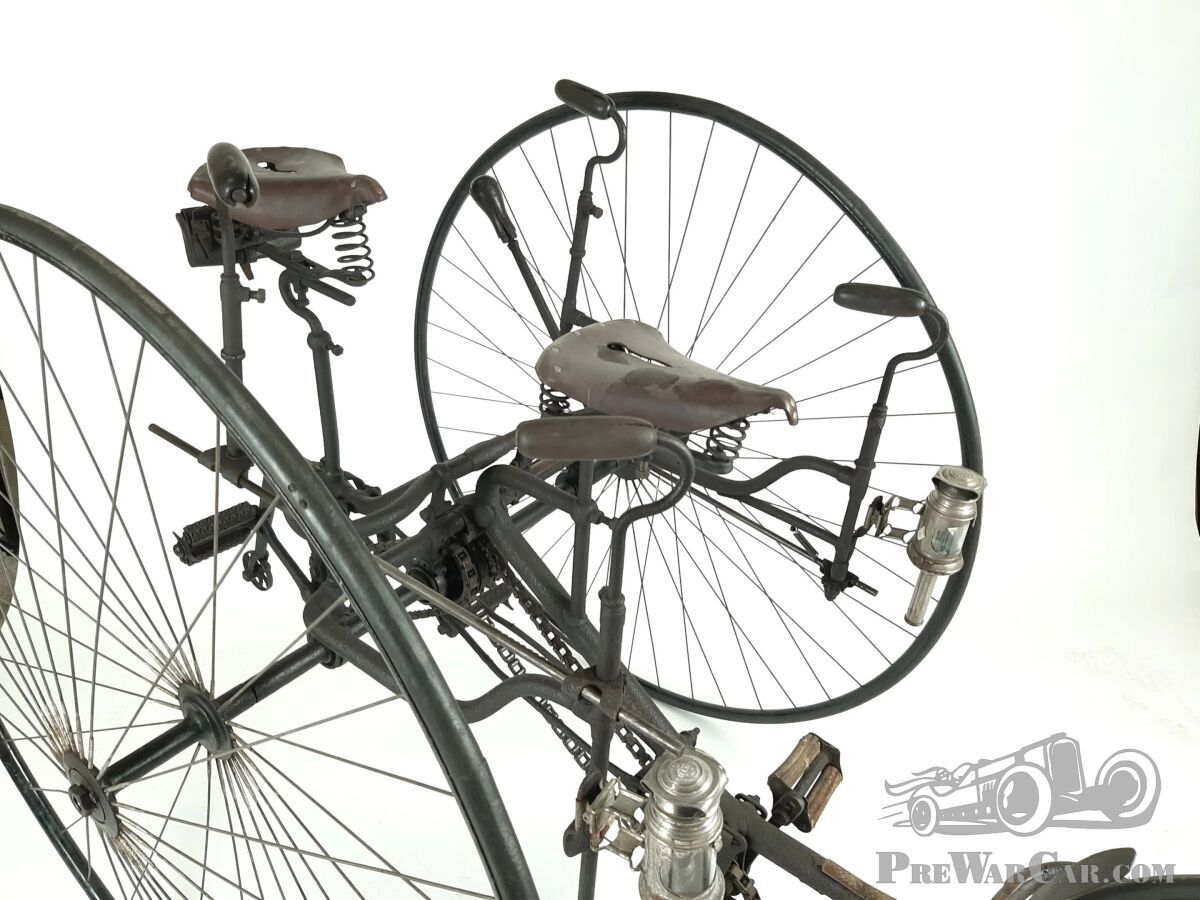
Quadrant tandem-tricycle (ca. 1886)
Imagine walking down a 19th-century street and seeing this remarkable three-wheeled tandem rolling past. It must have looked almost extraterrestrial at the time. Built by Quadrant Tricycle Co. (later Quadrant Cycle Co., Birmingham, UK), a manufacturer specialising in tricycles, early tandems, and experimental drive systems.
This tandem-tricycle allowed two riders to sit one behind the other in a stable three-wheeled configuration — a concept that, before 1890, was very popular among both sportsmen and touring cyclists. It also reflects the thinking of the era: these tricycles were safer than high-wheelers and — not unimportant — suitable for ladies (who generally did not ride high bicycles).
Its popularity, however, faded quickly with the rise of the safety bicycle.
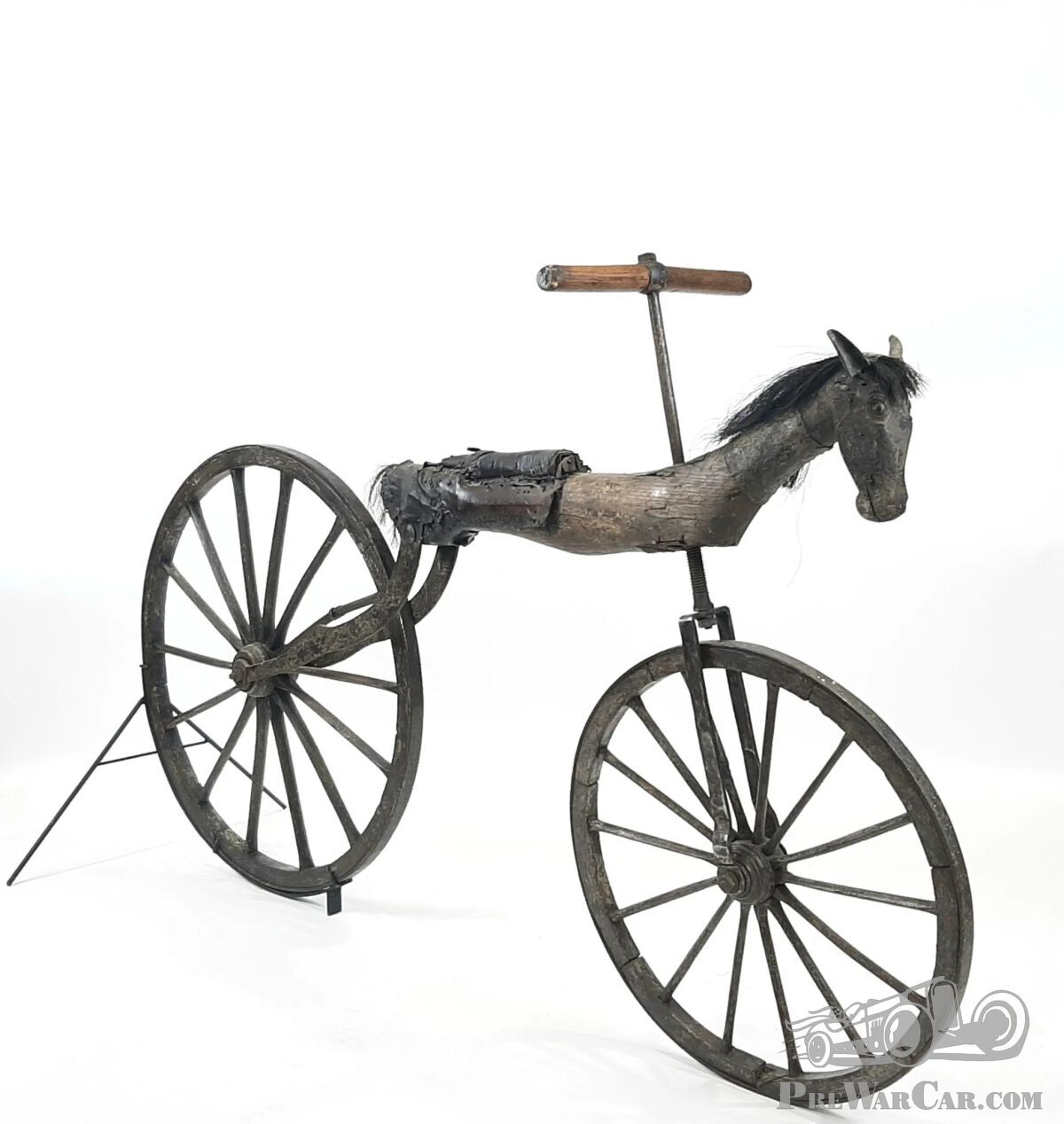
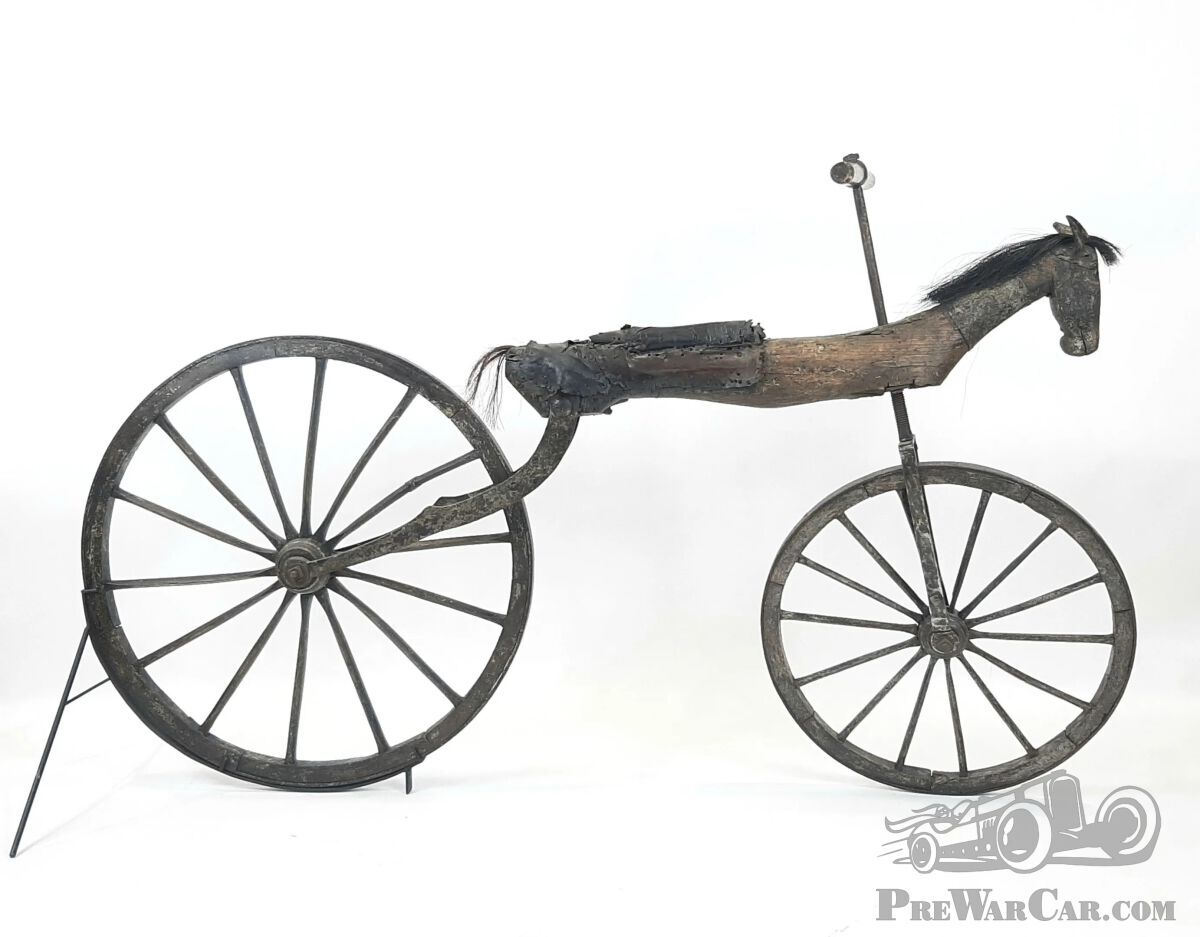
Zoomorphic draisine with horse head (ca. 1820)
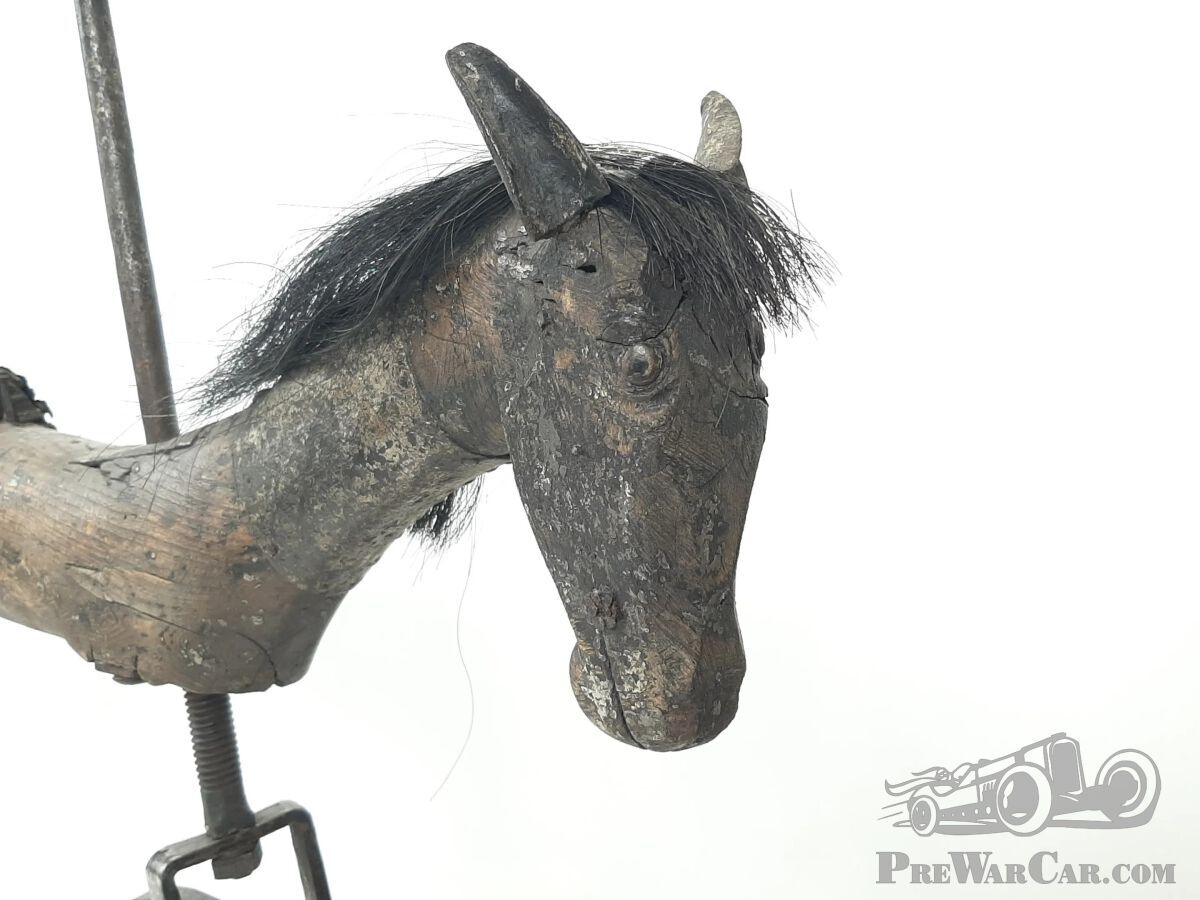
The oldest piece in the collection is a balance bicycle that harks back to the earliest form of personal mobility: the draisine. While most drazines featured a simple wooden construction, this example is notable for its zoomorphic design: a finely carved horse’s head at the front. It played into the familiar imagery of the horse, which until then had been the primary personal means of transport. The balance bicycle became, quite literally, an artificial horse — familiar and attractive to contemporaries.
Despite its seemingly simple construction, the draisine introduced several principles that would later become fundamental: balancing on two wheels, a straight frame, and direct human propulsion without animal power.
Around 1820, such decorated “hobby horses” were primarily status symbols. They appeared in parks and on promenades, ridden by the well-to-do eager to display the latest technology. This zoomorphic variant reflects both the fashion-consciousness and the craftsmanship of early bicycle production: each example was unique, often with carved details that enhanced the story and character of the vehicle.
The so-called “hobby horse” in many ways replaced the living horse and marked a crucial step in the development of modern transport. The name refers to inventor Karl von Drais, the German baron who around 1817 laid the foundation for the balance bicycle.
With more than two centuries behind it, it is almost a miracle that this specimen has survived. Although it will presumably never again be ridden — nor could it be — it remains an impressive piece of moving heritage and an undeniable eye-catcher in any home or office.
Bicycles can be seen as utilitarian objects, but in collections like this they transcend that role and become art objects in their own right. This promises to be a truly fascinating auction.
Text: Laurens Klein
Details
- Title: 1820–1950: Cent-trente ans d’histoire du cycle – Collection de Monsieur M.
- Date: 4 December 2025, 14:30
- Location: Pau (64000), France
- All listings >
- Bidding? Click here.
Published:
Sunday November 30th, 2025
Facebook
LinkedIn
Twitter
WhatsApp
Email
Copy