The global magazine and marketplace for classic car enthusiasts, by enthusiasts.


Filter
Make a choice:
- Cars
-
Make >>
- Bikes
-
Location >>
- Parts & more
-
Make of car >>
-
Manufacturer >>
-
Category >>
- Bicycles & more
-
Year >>
-
Countries


Salon Rétromobile: a century of motoring shows
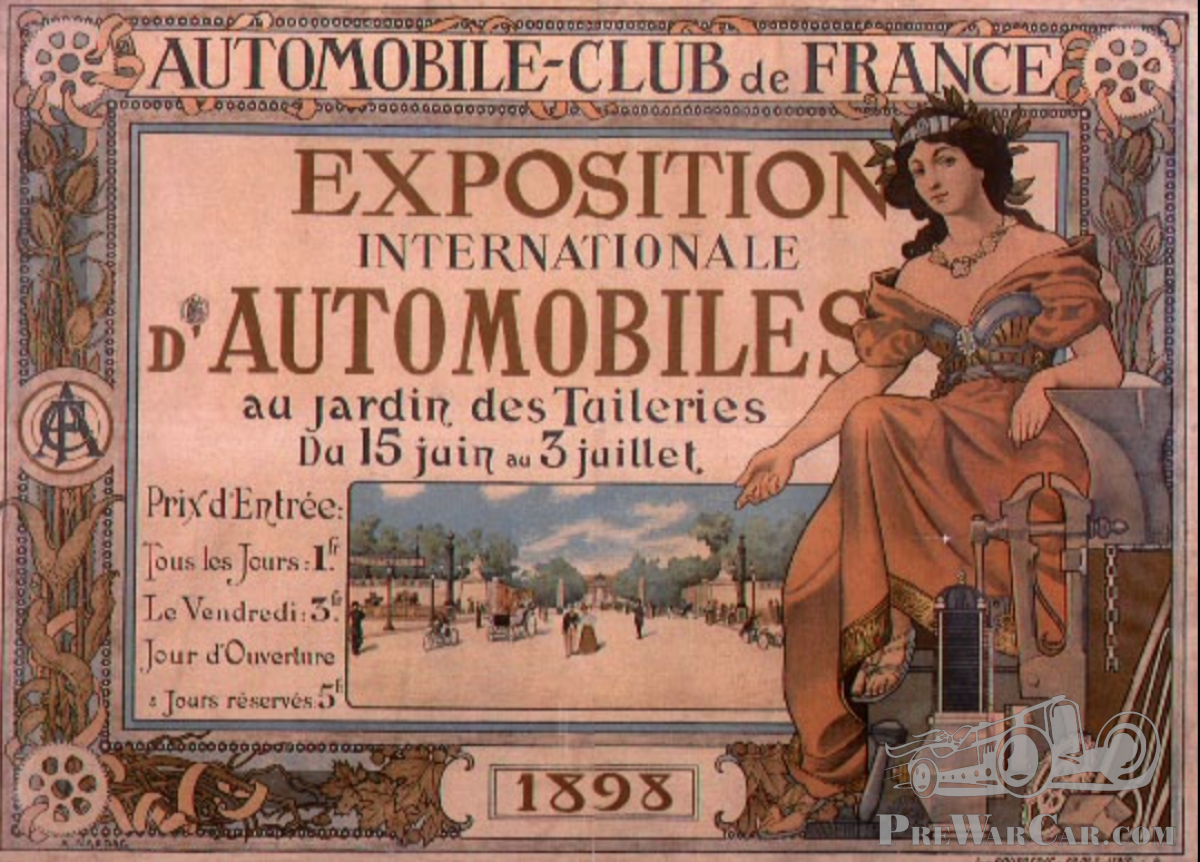
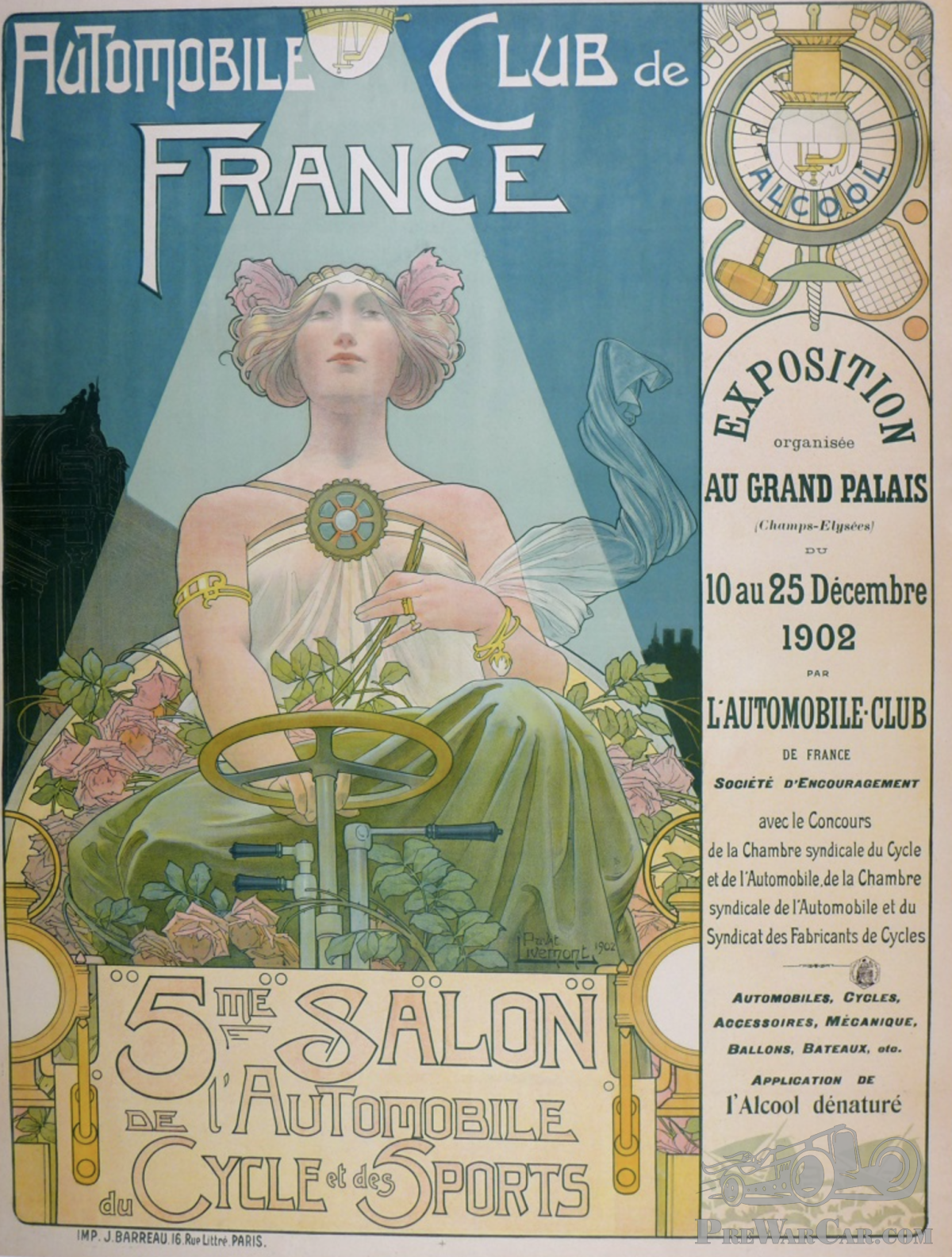


The imminent arrival of Salon Retromobile is a time to celebrate more than 120 years of motoring. Countless designers, engineers, and manufacturers from across the industrialised world have made their contributions to the evolution of the road vehicles that will be on display in Paris. Perhaps there is no better occasion to step back in time and consider how the concept of these large-scale motoring shows started.
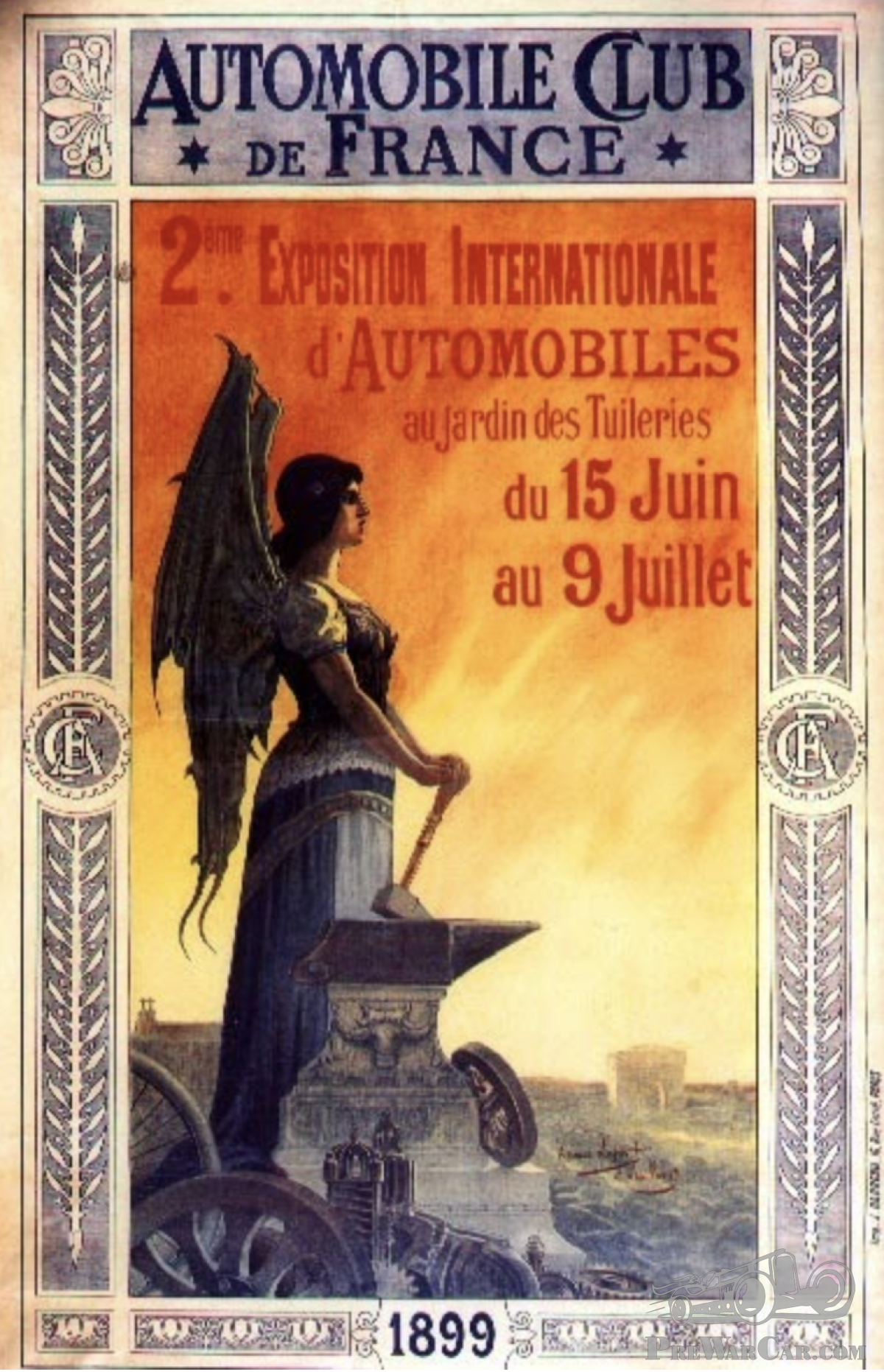
The Automobile Club de France, established in November, 1895, had among its primary objectives to be a "Society of Encouragement," promoting the motoring movement through competitions and annual races, exhibitions and shows where motor manufacturers could display their products, and potential dealers, magazine commentators, customers and enthusiasts could learn more about motoring developments. The Automobile Club de France created Le salon de l’automobile du cycle et des sports in 1898 on the terrace of the Tuileries Garden in the centre of Paris.
The 1898 event followed in the footsteps of the Salon du Cycle, a regular event held every year, starting in 1893, which itself very much emulated a concept instigated some years earlier, in March, 1878, with the Stanley Show in Great Britain. The National Cycle Show, established in 1892 as a trade show for the members of the Manufacturers’ Association, was held at Crystal Palace several weeks after the Stanley Show, and attracted an attendance of 100,000 people.
Motor cars made their first appearance at the Salle Wagram, Paris, in 1894, but only two examples were present. The first exhibition of a number of cars in France was in connection with the Paris-Bordeaux race of 1895, when the participating vehicles were on display in Paris before the start, and later at the Galerie Rapp in Bordeaux at the finish. The Automobile Club de France, no doubt exasperated by its failure to achieve an adequate profile at the Salon du Cycle events, made the decision in 1897 to host its own event in the Tuileries Garden in mid-1898. The timing was designed to attract the summer visitors to Paris and the importance of the event was underscored by the inclusion of the word "Internationale" in the title.
In 1900, to celebrate the new millennium, a universal exhibition (Exposition Universelle) of all transport (and much more) was organised, located on the Champ de Mars on the banks of the Seine, which attracted 32 million visitors between April and November that year.
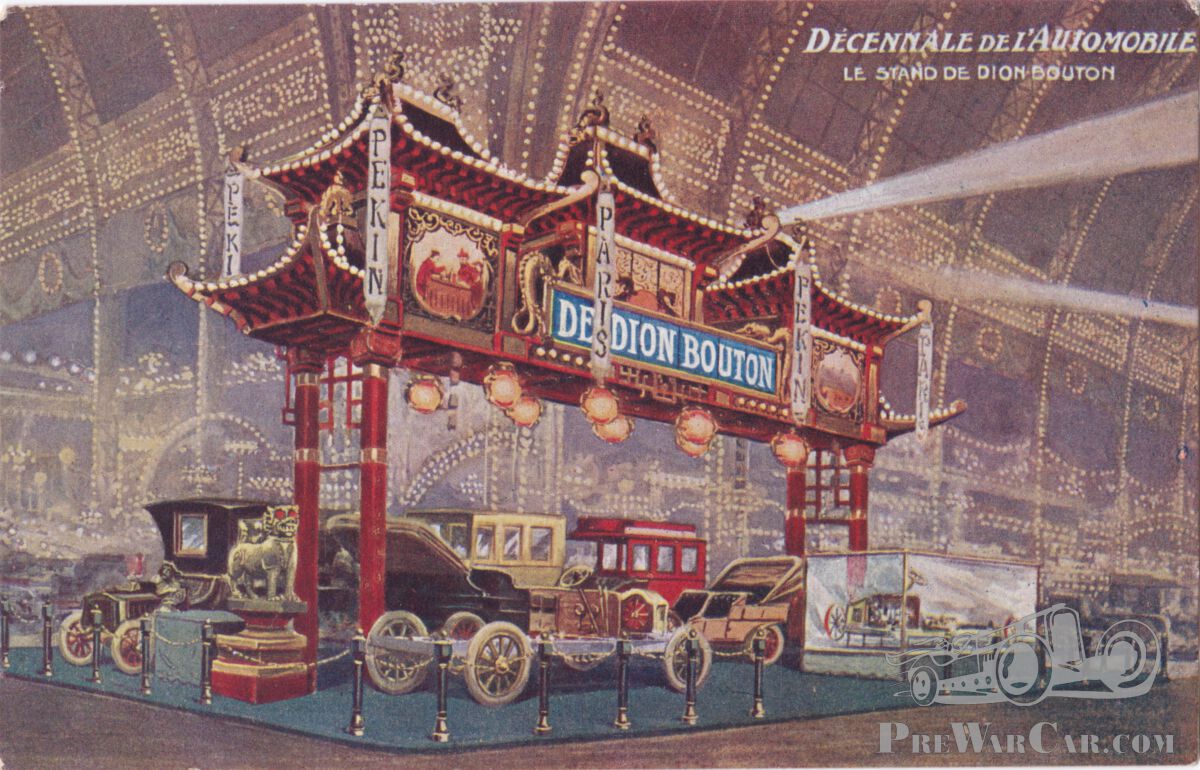
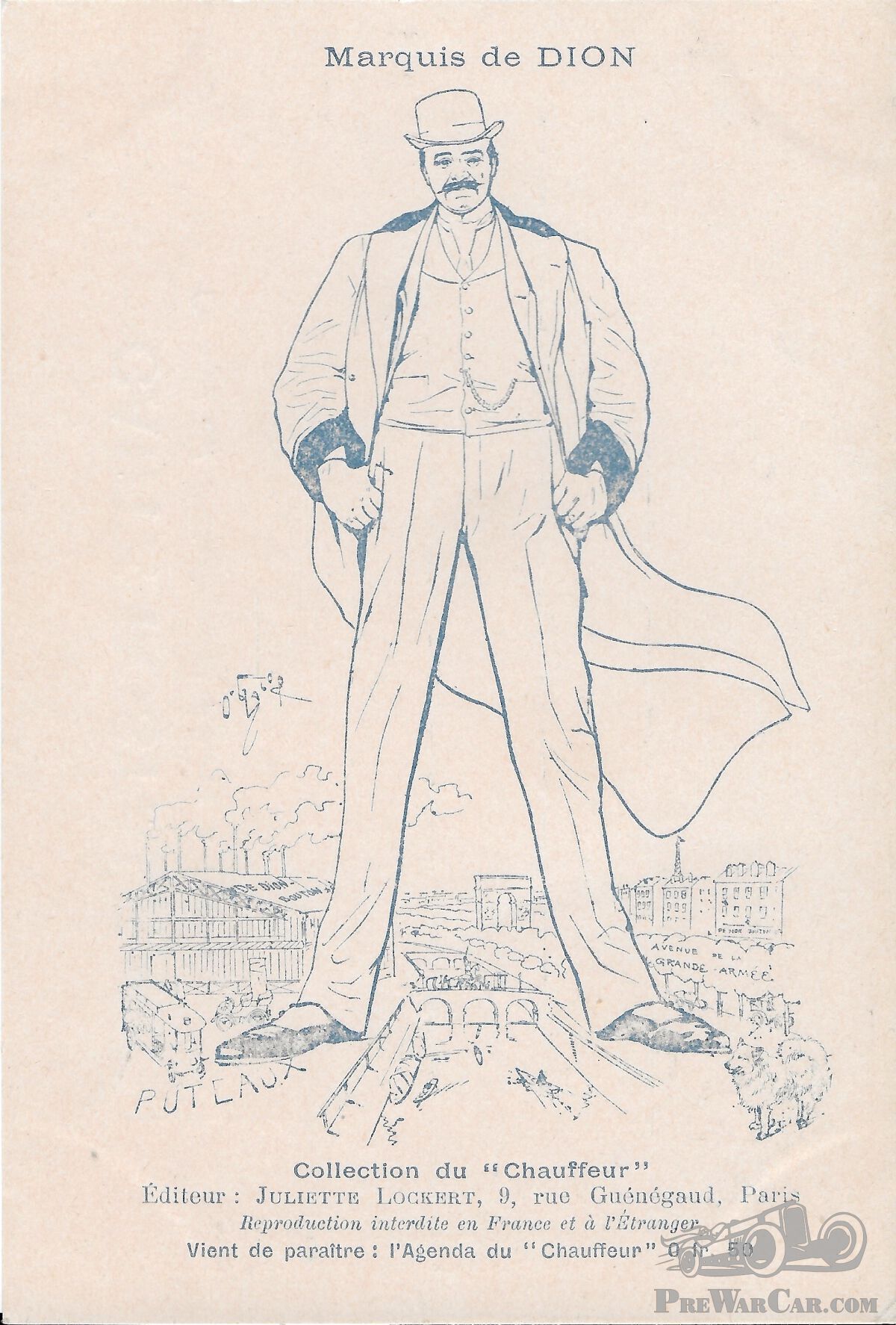
Motorists had to wait until January, 1901, before the next dedicated show, organised by the Automobile Club de France, was staged. Thereafter, the Paris Salon became a staple of the annual calendar, growing in scale and opulence: in 1907, De Dion-Bouton recreated the Gates of Peking to celebrate the company’s achievements on the Peking-Paris event. The Comte (Marquis from 1902) de Dion was pivotal to so many of the initiatives that fostered an awareness of the potential of motoring, and which were designed to support manufacturers. He understood the value for Paris of hosting the Salon, and from 1901 the revised December timeframe was designed to ensure that local manufacturers had an international stage for promoting their new models for the following year in the magnificent surroundings of the Grand Palais.
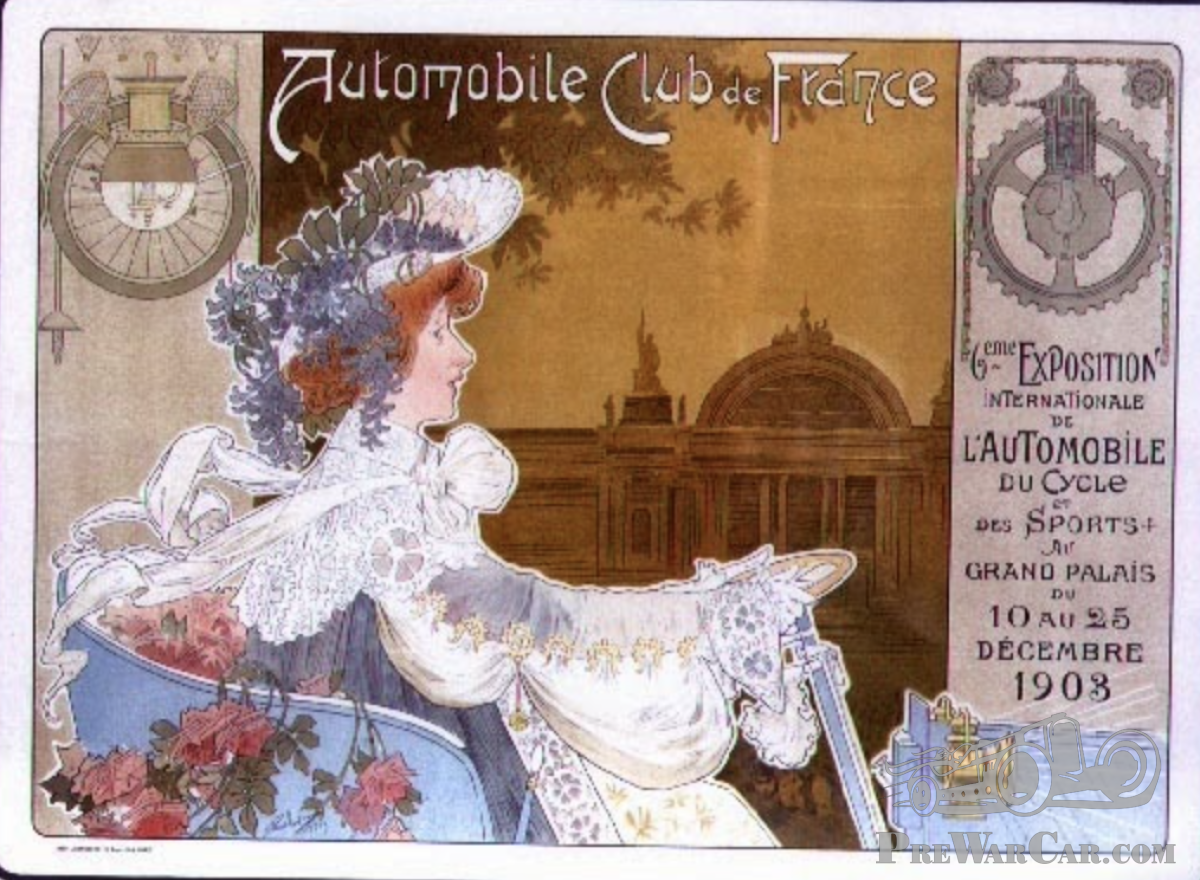
The adverts and posters promoting the Automobile Club de France’s annual Salon de l’Automobile avoided any specific reference to the rôle of the De Dion-Bouton company and its vehicles, and yet in each illustration there are elements such as engines, steering columns, and coachwork that are clearly identifiable as belonging to that marque. From 1900 to 1904, a lavish publication entitled the Grand Album Illustré de l’Industrie Automobile was produced to coincide with the Salon, for presentation to attending dignitaries.
There were many challenges facing every vehicle manufacturer in France following the recession of 1907-08, when they had to significantly control their expenditure. Following the conclusion of the 1908 Paris Salon event, Armand Peugeot voiced the opinion that the automobile was not developing quickly enough to warrant an annual display. He convened a meeting of 30 manufacturers to propose that the events should be held less frequently. The Marquis de Dion disagreed, but Peugeot won. The proposed 1909 Salon was cancelled, but it returned at the end of 1910 under the leadership of Armand Peugeot, who was president until his death in 1913 when Louis Renault succeeded him.
More information can be found on early motoring in France, and the De Dion-Bouton company in: De Dion Bouton: The Veteran Years, 1899-1904 by Michael Edwards, available at Rétromobile on the PreWarCar.com stand(1R022).
Published:
Tuesday January 28th, 2025
Facebook
LinkedIn
Twitter
WhatsApp
Email
Copy
Comments
Bruno Mazzei
02 February 2025, 18:29
------------------------------
Molto interessante.