The global magazine and marketplace for classic car enthusiasts, by enthusiasts.


Filter
Make a choice:
- Cars
-
Make >>
- Bikes
-
Location >>
- Parts & more
-
Make of car >>
-
Manufacturer >>
-
Category >>
- Bicycles & more
-
Year >>
-
Countries


Inner tubes explained, by Dougal Cawley of Longstone Tyres




- Most vintage and classic cars will need inner tubes.
- Tubeless wheels started to be prolific towards the end of the 1960s.
- If your classic car has wire wheels, then we strongly recommend inner tubes. We will not fit any wire wheel without an inner tube.
- Do not fit inner tubes in tyres with a lower profile than 70 per cent.
- Generally speaking we suggest fitting Michelin inner tubes.
It is critical to get the right size innertube for your tyre, with the right kind of valve stem to suit your wheel. Contact Longstone Tyres or use the search on their web site to be sure you get the right one.
It is worth pointing out that we strongly recommend fitting Michelin inner tubes to your classic car. We will offer Michelin in every circumstance where they are available. Where there isn't a Michelin tube that fits, we have offered the best one possible. In some sizes, there may be some alternative tubes, but please use a Michelin tube where you can – we like happy customers.
You may find there is an option of central valve or offset valve inner tubes. This describes how the valve exits your wheel rim, through the centre of the wheel (central valve) or from the side of the well in your wheel (offset valve). The majority of European vintage and classic cars from the mid-1920s will want an offset valve on their inner tube. Vintage cars with beaded-edge tyres, straight-sided tyres and some American cars such as a Model A Fords stuck with central-valve inner tubes. H/D denotes heavy-duty inner tubes.
You may find there is an option of central valve or offset valve inner tubes. This describes how the valve exits your wheel rim, through the centre of the wheel (central valve) or from the side of the well in your wheel (offset valve). The majority of European vintage and classic cars from the mid-1920s will want an offset valve on their inner tube. Vintage cars with beaded-edge tyres, straight-sided tyres and some American cars such as a Model A Fords stuck with central-valve inner tubes. H/D denotes heavy-duty inner tubes.
Rim tapes are used on well-based wire wheels to protect the inner tube from the spoke ends in the centre of the wheel and are available in two sizes, 14-17" and 18-21".
Flaps are essentially very heavy duty rim tapes and are used solely in straight sided wheels. They fit around the tube inside the tyre and protect the inner tube from the spokes, and also stop the inner tube getting trapped between the rim and the bead of the tyre.
Vintage Car Inner Tubes
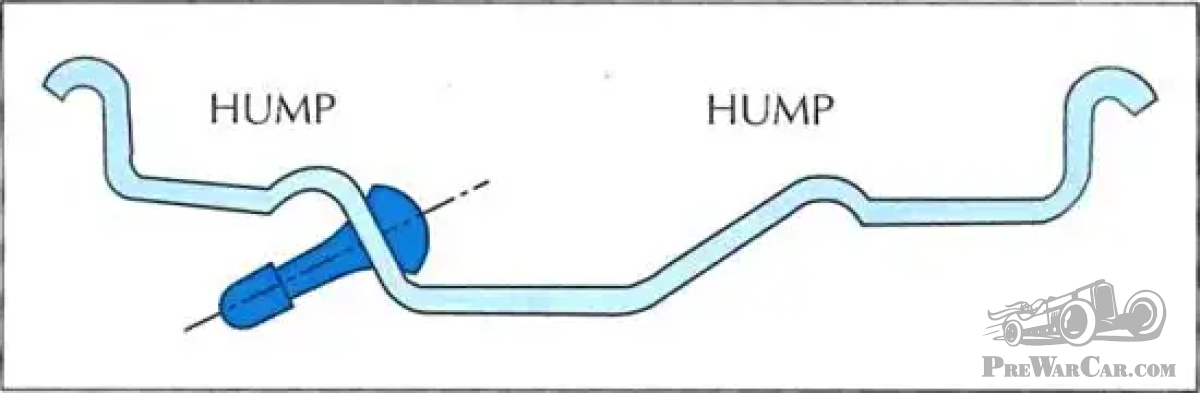
The safety hump displayed in this picture shows the hump that in Longstone’s view shows that this wheel is built to be used without an inner tube.
Inner tubes were essential with all manner of tyres until the safety hump/safety rib was developed and the tubeless wheel rim. When a tyre is 70 per cent. profile or taller it can be fitted with an inner tube. Tyres that are 65 per cent. profile or less should not run an inner tube.
Classic Car Inner Tubes
A large portion of the classic cars on the road today are fitted with wire wheels. Wire wheels were designed to be fitted with inner tubes. All the tyres that were fitted to the classic cars with wire wheels were not low profile tyres and therefore should fit inner tubes.
Radial Tyres and Inner Tubes
Inner tubes are not essential on modern radial tyres, however, there are situations in which fitting an inner tube is advantageous, providing the tyre is 70 per cent. profile or higher. If you run your radial tyres on a wheel without a safety rib, inner tubes will be an advantage, similarly, if you aren't sure about the quality of your wheel rim then an inner tube would be preferable with radial tyres.
When to Fit Inner Tubes
- A tubeless wheel needs an inner tube if fitted with a tube-type tyre.
- A tubeless tyre needs an inner tube if fitted to a wheel that is built to be used with a tube.
Only a tubeless wheel, fitted with a tubeless tyre can be run tubeless. You need both.
Please Consider
- Tyres with a profile below 70 per cent. (e.g. 185/60 VR 14 Michelin Pilot Exalto PE2) should not fit inner tubes.
- All wire wheels require inner tubes to be fitted, so do not buy less than 70 per cent. profile tyres if you have wire wheels fitted.
Reading Tyre Fitment Guides
When using data from our period fitment guides please note that tyre manufacturers base their fitment guide data on whether an inner tube is necessary with their own recommended tyres. Not just whether the wheel fitted to the vehicle is a tubeless wheel.
For example, many cars from the 1970s fitted tubeless wheels (wheels featuring a safety rib). The Michelin XAS tyres, in period, were tube-type tyres. In cases where Michelin recommends an XAS for a car, their fitment guides will say the car needs inner tubes. However, the wheel is a tubeless wheel with a safety rib and if fitted with an alternative tubeless tyre, no tube would have been needed. Therefore, for example; if the same car listed in a Pirelli fitment guide, where a tubeless CN36 tyre was recommended, the same car will be listed as tubeless.
Published:
Thursday March 6th, 2025
Facebook
LinkedIn
Twitter
WhatsApp
Email
Copy
Comments
Julien A
07 March 2025, 09:15
I confirm Michelin innertube are much more endurant and much thicker than other models. As it is one of our main safety part in our vintage cars, I would also strongly recommend Michelin Innertube.
Read more