The global magazine and marketplace for classic car enthusiasts, by enthusiasts.


Filter
Make a choice:
- Cars
-
Make >>
- Bikes
-
Location >>
- Parts & more
-
Make of car >>
-
Manufacturer >>
-
Category >>
- Bicycles & more
-
Year >>
-
Countries


Christie's special: the world's wackiest racer?

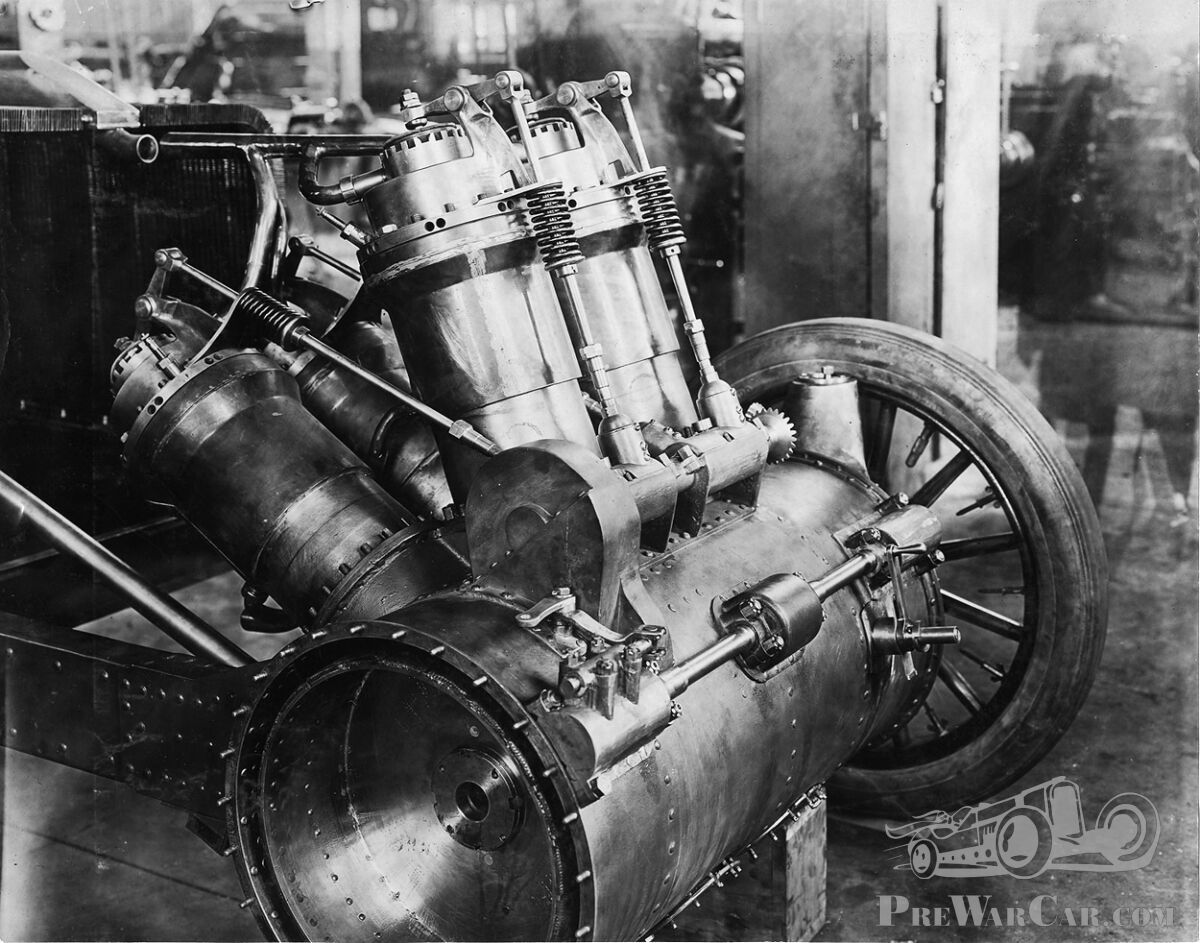


With its exposed cylinders the size of milk churns, the 20-litre V4 of J. Walter Christie’s racing special certainly was not your everyday pre-war car. This racer deserve the "mad" moniker like few others.
The massive engine is the first thing one notices about Christie’s racer, but it’s also the way it drove the vehicle that made it stand out like nothing else. Mounted transversely between the front wheels, the engine was not just for propelling the thing. Its impressive nickel steel crankcase served as an integral part of the chassis, playing the part of a front axle ánd giving the front an excellent degree of rigidity, too.
It utilised a single camshaft to operate the big exhaust valves, with intake managed by eight valves, if we understand correctly. The radiator in front of the driver sees the steering column pass through it, with the carburetter in between the engine and radiator. The V4 produced an estimated 100 to 130 horsepower, but think about the torque! It was said to run at 120 m.p.h. at 1,200 r.p.m. Incidentally, the front wheel drive set-up did not leave any room for brakes at the front…
There’s no doubt it must have been a challenging drive. Entered in the 1907 French Grand Prix near Dieppe, the car made some fast laps at almost 60 m.p.h. but retired soon after completing only four laps due to overheating and clutch issues. Nonetheless, it marked a significant milestone as the first American-built car to compete in a French Grand Prix event. Back in the U.S., it ran more successfully in New York, Boston, Massachusetts and Minnesota but on a track near Pittsburgh, Pennsylvania, things went wrong when it crashed into another car.
It was repaired but, oddly, Christie’s co-driver Lewis Strang took the car for some unauthorised runs, while the man himself was in hospital. Strang even sold it! It was seen in action for another year or two, but by that time, J. Walter Christie’s Christie Direct Action Motor Car Company had fallen into receivership, although Christie himself had already established a new motor company. He would later design and develop some noteworthy vehicles, among them a New York taxicab with front-wheel drive, fire engines with front-wheel drive, too, plus armoured cars and amphibious tanks. The V4 Special and its development cars are all believed not to survive.
Words: Jeroen Booij
Pictures: Old Machine Press
Published:
Monday May 12th, 2025
Facebook
LinkedIn
Twitter
WhatsApp
Email
Copy
Comments


Lee Stohr
19 May 2025, 16:30
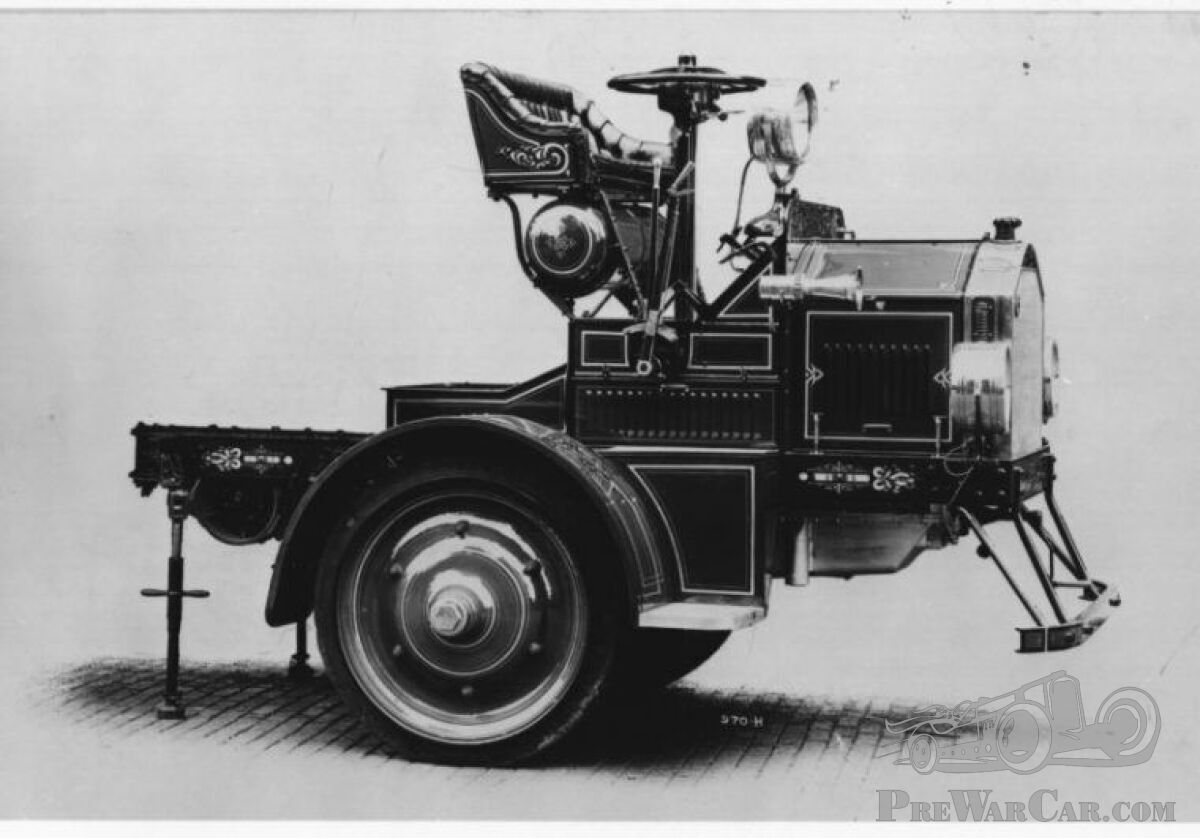
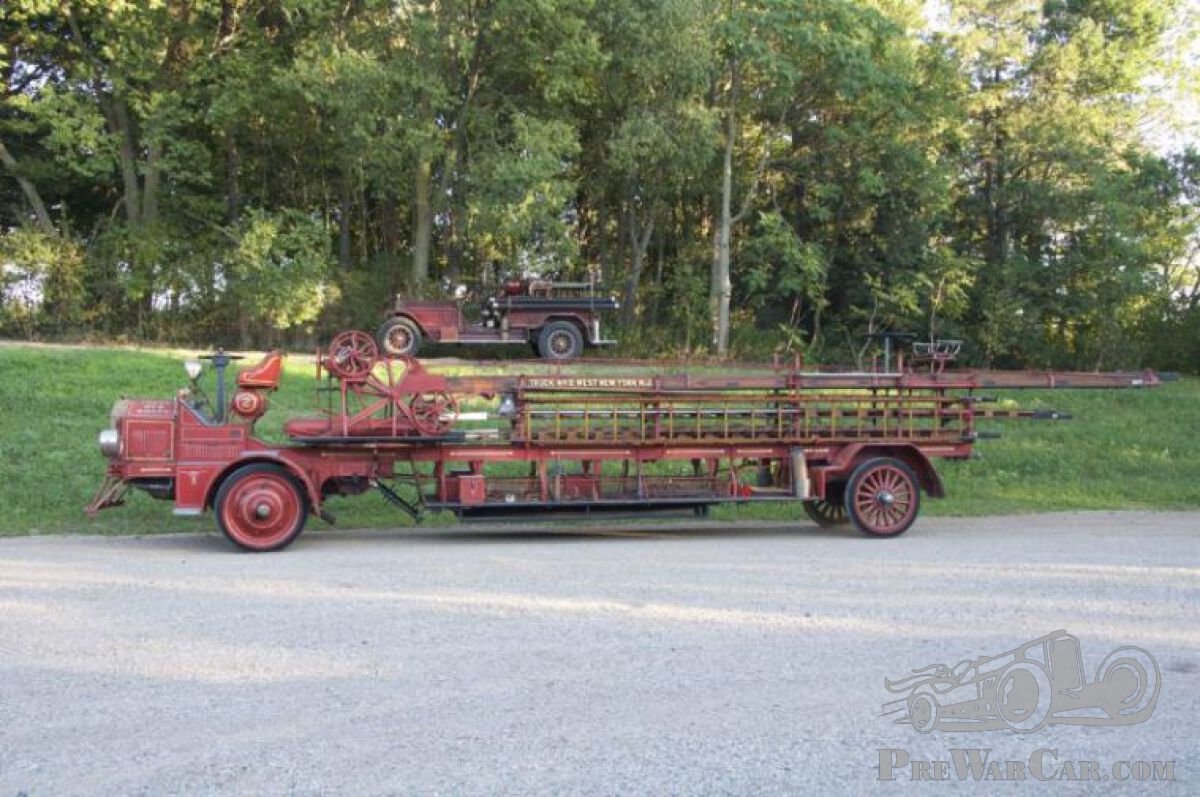
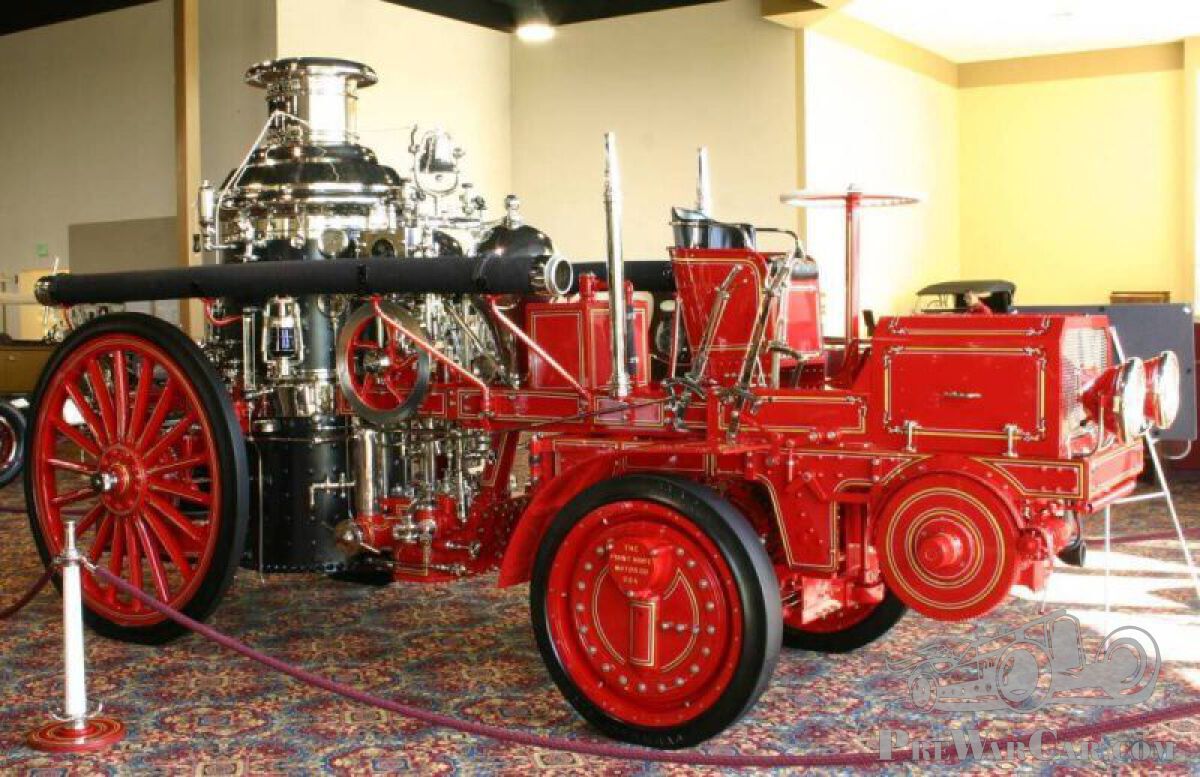
Terry, Christie's front-wheel drive fire equipment tractors were very clever and lucrative for him. Your first photo is actually an American LaFrance device, very similar to Christie's. Several Christie tractors exist in American museums. Here is one:
Read more

Lee Stohr
18 May 2025, 17:47
What is shown in the photo is the final configuration of the 1907 Christie Grand Prix car. It looked quite different at the French GP. I'll try and attach a photo from the French site Gallica. The extra front tire was probably added to reduce understeer on the American dirt oval tracks where the car was used in it's last races.
There was a cone clutch on each end of the crankshaft, and each front wheel was driven by a short driveshaft. You can find more in the VSCC Bulletin, Autumn, 2013, in which I made some contributions regarding the transmission design.
Christie did not have a good result in the French Grand Prix, but many other big name manufacturers didn't finish either. A FIAT won, their other 2 cars retired. Two of three Mercedes retired. The entire 3 car Panhard team retired.
Film of the race still exists and it includes 2 short clips of the Christie in action.
60 years later, Dan Gurney became the only American to win a Grand Prix in his own car.
Read more
There was a cone clutch on each end of the crankshaft, and each front wheel was driven by a short driveshaft. You can find more in the VSCC Bulletin, Autumn, 2013, in which I made some contributions regarding the transmission design.
Christie did not have a good result in the French Grand Prix, but many other big name manufacturers didn't finish either. A FIAT won, their other 2 cars retired. Two of three Mercedes retired. The entire 3 car Panhard team retired.
Film of the race still exists and it includes 2 short clips of the Christie in action.
60 years later, Dan Gurney became the only American to win a Grand Prix in his own car.
Keith Kuehn
13 May 2025, 21:18
Can you imagine that monster at Goodwood today? Or tooling down a country road? Wow! It's unfortunate it isn't around...
Read more

Larry A. Lewis
12 May 2025, 16:19
Christie designed a tank that would do 120 miles per hour on roads and 80 miles per hour on rough terrain. He tried to sell the design to the U.S. Army but they weren't interested. He later sold it to the Russians who used it as the basis for the T34 which was one of the best tanks used in World War II.
Read more
Mike Clark
12 May 2025, 09:29
It looks well engineered but why did it need two tyres on one side at the front?
Read more
Michael Rose
17 May 2025, 03:29
Well, if Mr Christie didn't provide two wheels on the starboard side, to marginally improve his famous one-wheel drive, he'd have one helluva job figuring how to get a driveshaft through that magnificent crankcase... :-)
Read more
Michael Rose
18 May 2025, 00:33
I imagine he had quite enough problems connecting the crankshaft to one wheel without hoping for enough university education to drive the other. That's even before finding a diff.
Read more
The 20 liter V4 was a BEAST! It actually drove through both front wheels. There were flywheels and clutches at either end of the engine then through rudimentary universal joints and shafts to the wheels.
The two wheels on the RHS were to give better drive on the corners as there was NO differential.
The orientation of the cylinders was to put some weight on the back wheels.
The radiator was located also to put some weight on the back wheels.
I believe this incredible machine was eventually broken up for scrap.