The global magazine and marketplace for classic car enthusiasts, by enthusiasts.


Filter
Make a choice:
- Cars
-
Make >>
- Bikes
-
Location >>
- Parts & more
-
Make of car >>
-
Manufacturer >>
-
Category >>
- Bicycles & more
-
Year >>
-
Countries


The cars of Briggs Cunningham, collector and connoisseur
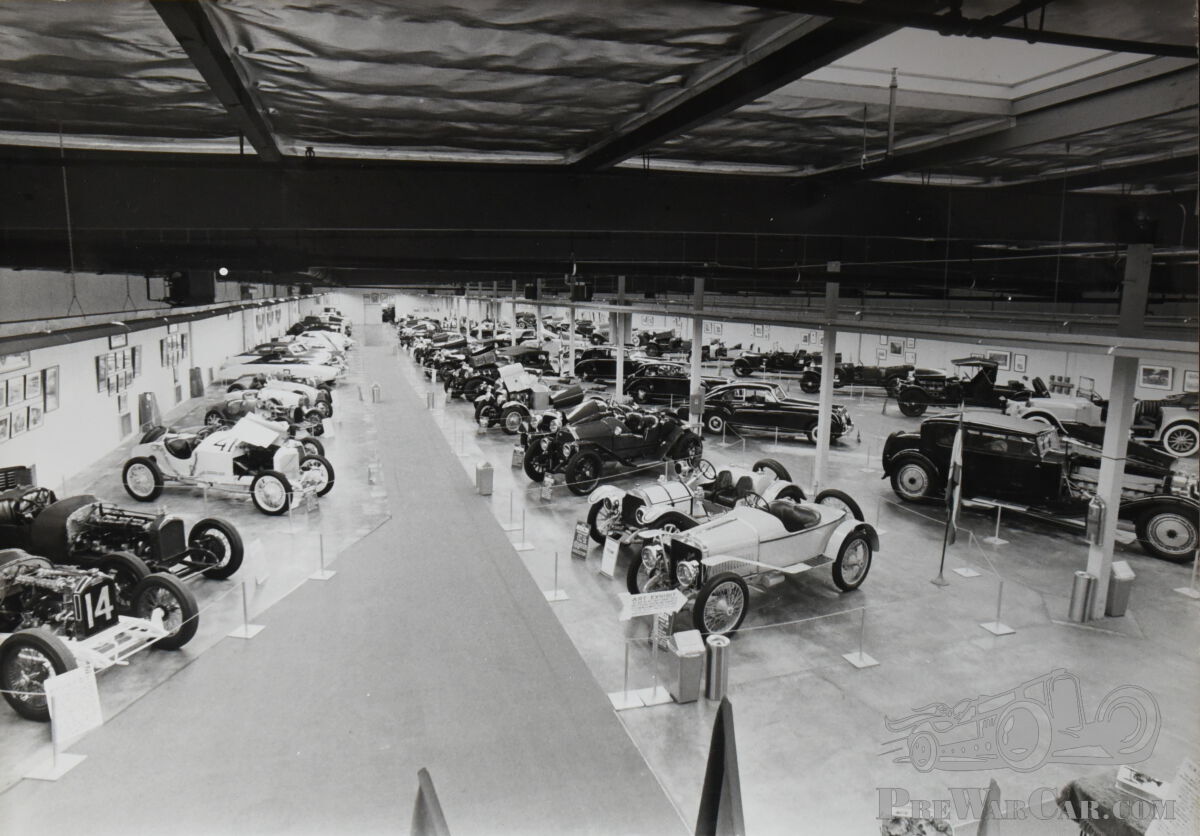


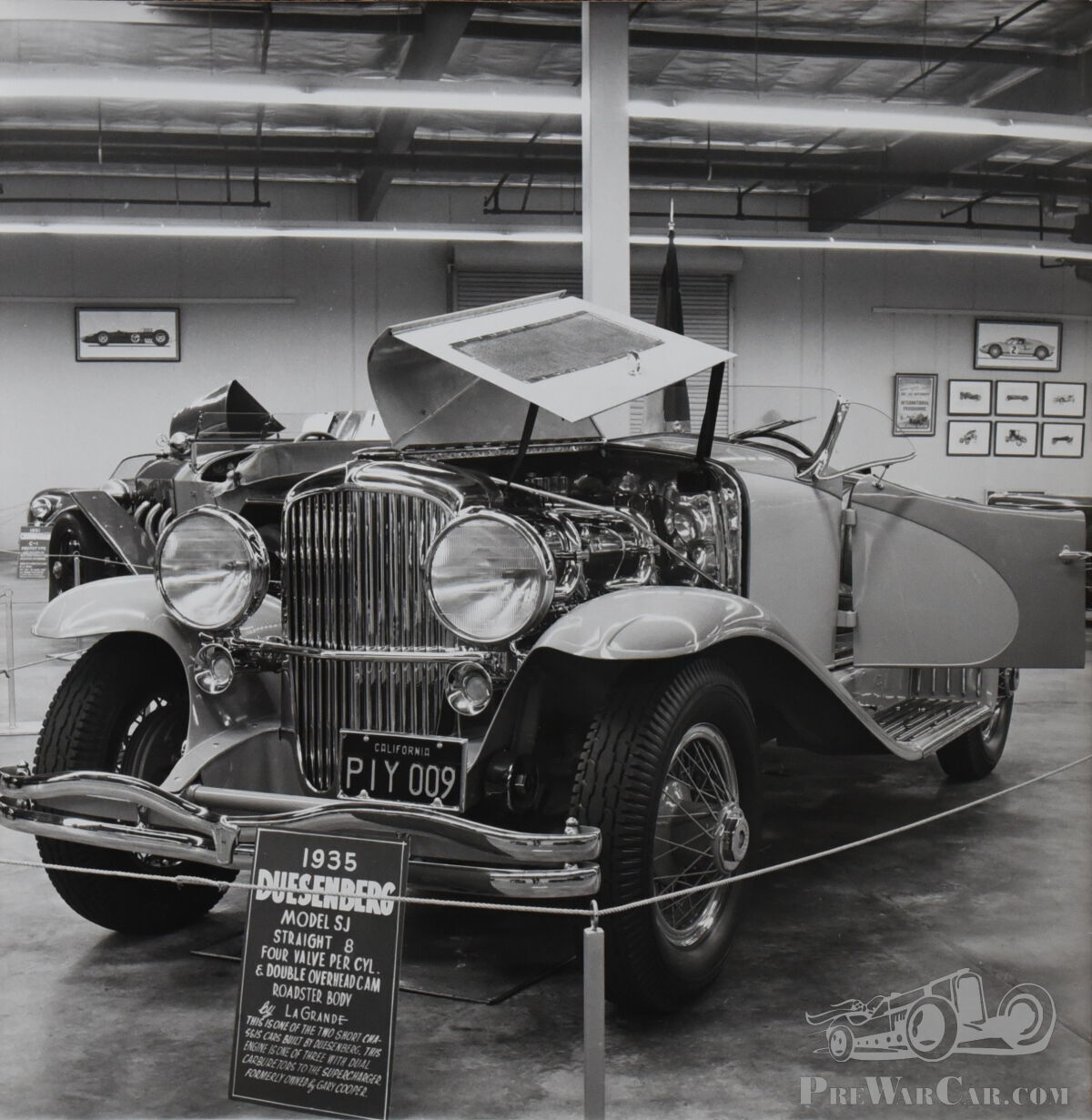


Briggs Cunningham is a name one primarily associates with post-war motor sport, particularly as a champion of the American V8 at Le Mans during the 1950s, as well as with his very handsome, and very expensive, Cunningham C-3 road-going sports cars which were built in very low volume with Chrysler V8s and Vignale coachwork. However, like most racing drivers of his era, he was also a great enthusiast with a genuine affection and respect for the work of car-makers of previous generations.
Briggs Swift Cunningham II. was born in 1907 into a wealthy commercial family and would have travelled in motor cars on multiple occasions during his childhood in Cincinatti. Before he became internationally famous as a constructor in the 1950s, he had been gradually rising to prominence since 1930, when he won a concours d'élégance in Cannes with his brand-new Mercedes-Benz SSK while on his honeymoon. He also started racing around that time with his old college friends, Miles and Sam Collier, who founded the Automobile Racing Club of America in 1933, which became the Sports Car Club of America in 1944. During this period, some of his early cars included the Number Five Special, which consisted of a Model T Ford engine with Frontenac head in a bespoke chassis, an MG J2, an MG K3 Magnette and the Bu-Merc, which used a modified 1939 Buick straight-eight chassis and the body from a crashed Mercedes-Benz SSK.
Cunningham retired from racing in 1965, and immediately channelled his energy into developing a first-class collection of historic vehicles, which he would put on display for the benefit of the public. He had been collecting for some years, aided and encouraged by William Harrah. Following a move to California with the enthusiastic support of his second wife, Laura, a permanent location for a museum was eventually found on a five-acre site in Orange County, where a building covering 40,000 sq. ft. was constructed. The Briggs Cunningham Automotive Museum officially opened with a gala dinner for 650 guests on February 5th, 1966. Sadly, it operated at a loss and closed on December 31st, 1986, when the entire collection was sold to Miles Collier Jr.
Thanks, however, to some historic photographs, we may still pay a fleeting visit as time-travellers. We can see from the photographs a predilection for Duesenbergs, about which we needn't say more as their information boards are clearly legible, except to add that the ex-Gary Cooper SJ was sold by Gooding & Company at Pebble Beach in 2021 for $22,000,000. Cunningham had paid $3,500 for it... The tank-like car, incidentally, is Le Monstre, an aerodynamically rebodied Cadillac which Cunningham used to contest the 1950 Le Mans. Driven by Cunningham and Phil Walters, it finished eleventh. Cunningham also fielded a standard-bodied Cadillac Series 62 coupé, driven by the Collier brothers, which finished tenth. But it is the photograph of the main hall which is most of interest. Several cars are easily recognisable. There's a Hispano-Suiza followed by a Mercer Raceabout and a Simplex, and we can also see one of the 1913 Indianapolis Peugeots, a 1914 Grand Prix Mercédès, a Bugatti Type 35, a large brass-era Pierce-Arrow and the jewel in the crown, the Kellner-bodied Bugatti Royale. What else is among them?
Words: Zack Stiling
Photographs: Stiling Collection
Published:
Tuesday November 5th, 2024
Facebook
LinkedIn
Twitter
WhatsApp
Email
Copy
Comments
Jon Speer
16 September 2025, 20:27
Ced Pearce
11 November 2024, 10:19
Mention was made of the curator, John Burgess. I wonder if he is still around? A most friendly and extremely knowledgeable fellow, he was a talented artist as well, recording in the watercolour medium the early dirt track races of the 1930s and earlier. In fact, he had himself participated in those exciting events, and could tell great stories about them. I own and cherish a set of prints of some of these artworks.
Read more
Brakeservo
10 November 2024, 18:40
I remember seeing several C.E.R.V. (I think that stands for Corvette Experimental Racing Vehicles) at his collection in the 1980s. I was most impressed with the Bugatti Royale, however.
Read more
Ole Kristian Haugen
07 November 2024, 14:21
There were also a short-chassis Alfa Romeo 8C2300 with a spider body by Touring, side-by-side with a factory-bodied Type 55 Bugatti, allowing direct comparison.
Read more
David A. Watts
07 November 2024, 00:25
I remember visiting the museum in Costa Mesa several times and getting to know Mr. Cunningham's curator, John Burgess. I met Mr. Cunningham a few times and had the great pleasure spending time with him in Newport (RI) when he was on the committee to choose a defender of the America's Cup race (having won it in '57 in a J-boat). From memory there were a number of Rolls-Royces (1914 Silver Ghost, Phantom II Continental drophead coupe, Phantom III limousine—ex-Barbara Hutton/Count Reventlow) and Bentleys (Three-Litre boat tail, Blower 4½-Litre, 6½-Litre Speed Six, 4¼-Litre). The collection was only 92 cars but each one was very personal and important. Burgess once told me the Type-41 was actually quite easy to drive (despite its monstrous length) because you never needed to use first gear and you didn't shift into third until the car was doing 70 m.p.h., making it almost like driving an automatic.
Read more
On quiet days, which, sadly, was most of the time, Mr. Burgess would accompany groups on an informal tour of the collection. My wife and I, as well as a fellow motorhead and his wife, were once given the tour. The one thing I will never forget has to do with the Phantom IV — which might seem surprising given that it was parked next to the Bugatti Royale. Mr. Burgess walked up to the Rolls’s driver side door and remarked that “they don’t make them like this anymore “. He opened the door wide; the jamb looked like it was chrome (or nickel) plated, polished to a mirror-like finish. He gave it a very slight push (at this point we were starting to wonder if he was a little … vacant). The door started to move SLOWLY back to the closed position. When it got there there 2-3 seconds later it closed completely with this perfect click which I wish I could better describe. As my group picked our collective jaws up off the ground, Mr. Burgess repeated “yep, they don’t make them like that anymore”. Amazing bit of engineering.
A relatively small collection but, for my money, the best “pound for pound” car collection ever.