The global magazine and marketplace for classic car enthusiasts, by enthusiasts.


Filter
Make a choice:
- Cars
-
Make >>
-
Year >>
-
- Bikes
-
Location >>
- Parts & more
-
Make of car >>
-
Manufacturer >>
-
Category >>
- Bicycles & more
-
Year >>
-
Countries


The crossing at Ballachulish, Scotland
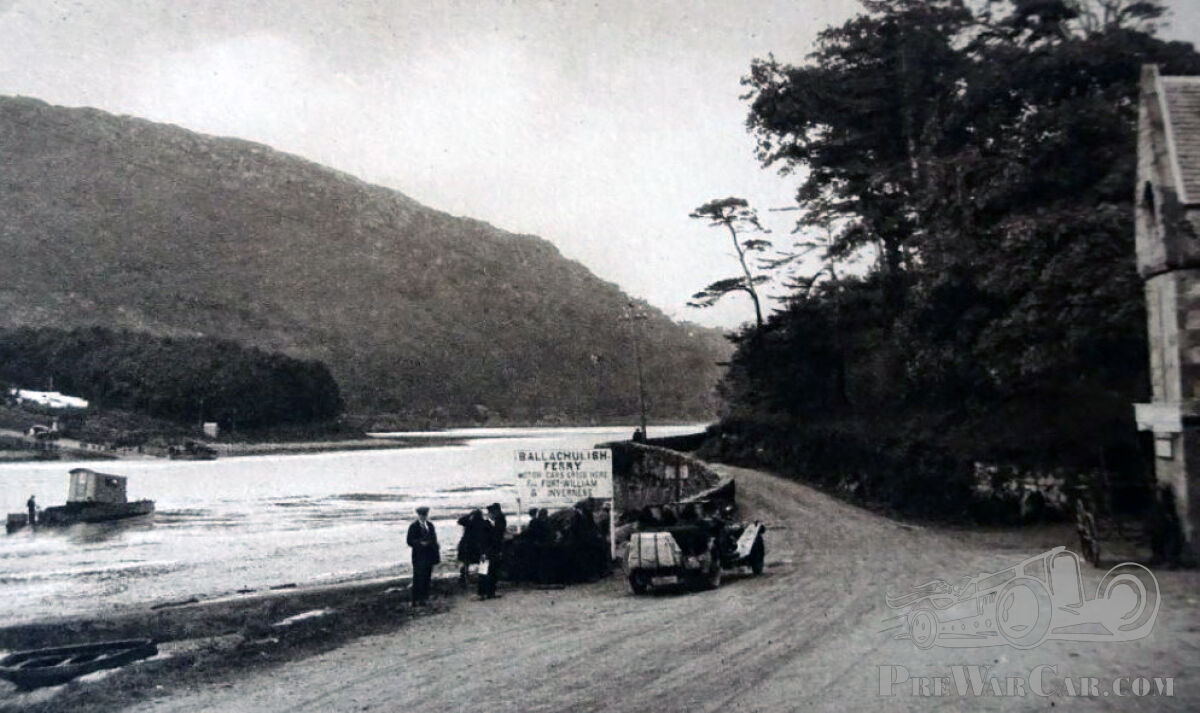
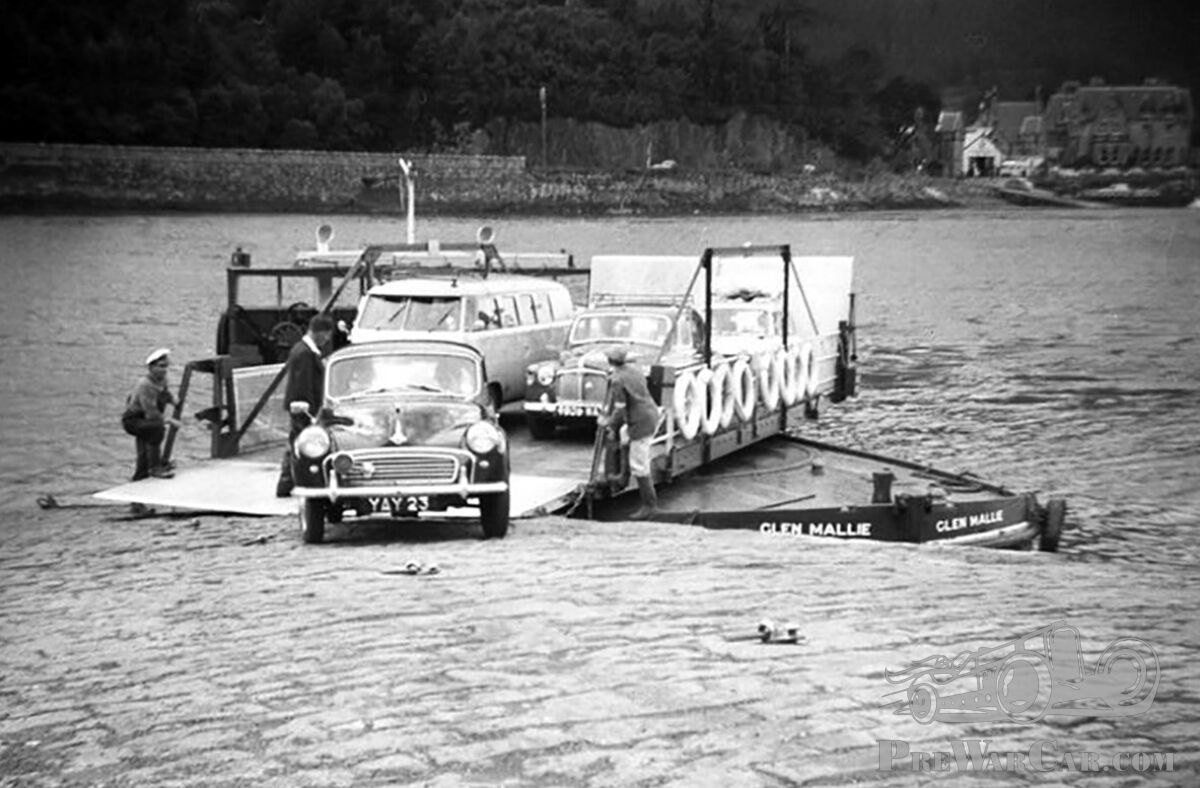


Before the construction of the Ballachulish Bridge (that now carries the A82, the main route between Glasgow and Inverness) in the West Highlands of Scotland, the only way to cross the narrows between Lock Leven and Loch Linnhe was by ferry.
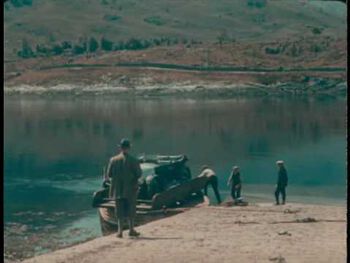
The video shows ME 1699 crossing from North Ballachulish to South Ballachulish, reportedly in 1926. In the distance we see the Ballachulish Hotel on the Argyll side.
In later years the standard of the boat was improved as the vehicle traffic on the ferry increased. By the 1960s the crossing was operated by three turntable roll-on, roll-off ferries, each capable of carrying six cars. However, this all came to an end in 1975 with the opening of the Ballachulish Bridge.
Can anyone tell us more about ME 1699 seen in the video?
Published:
Thursday November 11th, 2021
Facebook
LinkedIn
Twitter
WhatsApp
Email
Copy
Comments
David Grimstead
12 November 2021, 16:33
Ewan
11 November 2021, 13:35
My grandmother took this type of thing in her stride. The car now belongs to me but I don't think I would feel happy crossing water like this!
Read more
Graham Rankin
11 November 2021, 09:40
Likely to be William Friese-Greene :
https://player.bfi.org.uk/free/film/watch-the-open-road-2006-online
Read more
https://player.bfi.org.uk/free/film/watch-the-open-road-2006-online
Laurens Klein
11 November 2021, 08:59
Beautiful images, I always ask myself if I would dare to put my classic car on such a ferry and especially, what I would do if something went wrong.
Read more
John Kent
11 November 2021, 03:54
Definitely a vintage Vauxhall either a 25 HP 'D' type or the OHV 23/60 or OD model but I think it is the former.
Read more
Matthew Parkin
11 November 2021, 10:26
From the well-known film 'The Open Road' made and produced by Claude Friese-Greene who pioneered a version of colour film. A trip from South to North up the UK. It was his car - a D-type Vauxhall.
https://player.bfi.org.uk/free/film/watch-the-open-road-2006-online
Claude's father William began the development of an additive colour film process called Biocolour. This process produced the illusion of true colour by exposing each alternate frame of ordinary black-and-white film stock through two different coloured filters. Each alternate frame of the monochrome print was then stained red or green. Although the projection of Biocolour prints did provide a tolerable illusion of true colour, like the more famous Kinemacolor process of George Albert Smith it suffered from noticeable colour flicker (a potentially headache-inducing defect known technically as 'colour bombardment') and from red-and-green fringing around anything in the scene that moved very rapidly. In an attempt to overcome these problems, a faster-than-usual frame rate was used.
After William's death in 1921, Claude Friese-Greene continued to develop the system during the 1920s and renamed the process Friese-Greene Natural Colour then the Spectrum Colour Film process. Claude went on to be a highly-respected cinematographer on more than 60 films from 1923 to 1943 and a was one of the first to shoot in Technicolor in Britain. He died as the result of an accident when filming at the Denham Film Studios in January 1943.[3]
In 2006, the BBC ran a series of programmes called The Lost World of Friese-Greene. The series, presented by Dan Cruickshank, included The Open Road, Claude Friese-Greene's film of his 1920s road trip from Land's End to John o' Groats.[4] The Open Road was filmed using the Spectrum Colour Film process, and the British Film Institute used computer processing of the images to minimise the red and green fringes around rapidly moving objects.
Well worth a look - beautifully filmed and a social history from another world. Lovely.
Read more
https://player.bfi.org.uk/free/film/watch-the-open-road-2006-online
Claude's father William began the development of an additive colour film process called Biocolour. This process produced the illusion of true colour by exposing each alternate frame of ordinary black-and-white film stock through two different coloured filters. Each alternate frame of the monochrome print was then stained red or green. Although the projection of Biocolour prints did provide a tolerable illusion of true colour, like the more famous Kinemacolor process of George Albert Smith it suffered from noticeable colour flicker (a potentially headache-inducing defect known technically as 'colour bombardment') and from red-and-green fringing around anything in the scene that moved very rapidly. In an attempt to overcome these problems, a faster-than-usual frame rate was used.
After William's death in 1921, Claude Friese-Greene continued to develop the system during the 1920s and renamed the process Friese-Greene Natural Colour then the Spectrum Colour Film process. Claude went on to be a highly-respected cinematographer on more than 60 films from 1923 to 1943 and a was one of the first to shoot in Technicolor in Britain. He died as the result of an accident when filming at the Denham Film Studios in January 1943.[3]
In 2006, the BBC ran a series of programmes called The Lost World of Friese-Greene. The series, presented by Dan Cruickshank, included The Open Road, Claude Friese-Greene's film of his 1920s road trip from Land's End to John o' Groats.[4] The Open Road was filmed using the Spectrum Colour Film process, and the British Film Institute used computer processing of the images to minimise the red and green fringes around rapidly moving objects.
Well worth a look - beautifully filmed and a social history from another world. Lovely.
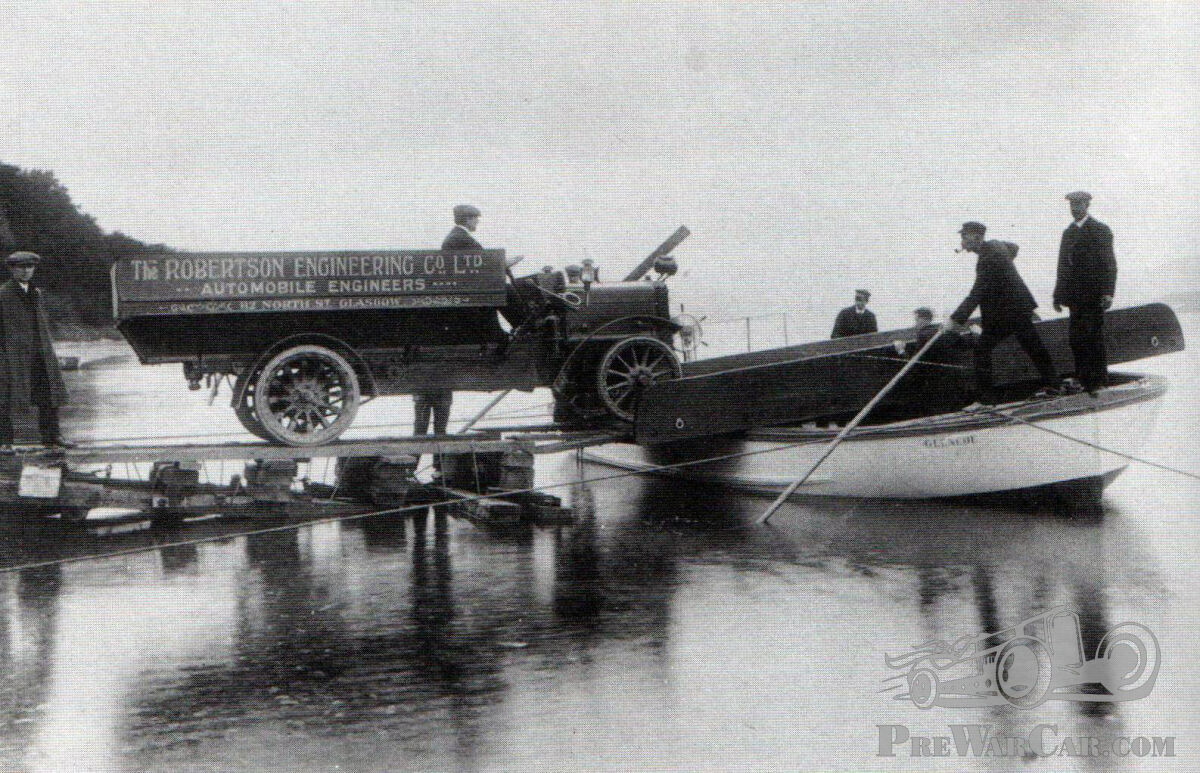
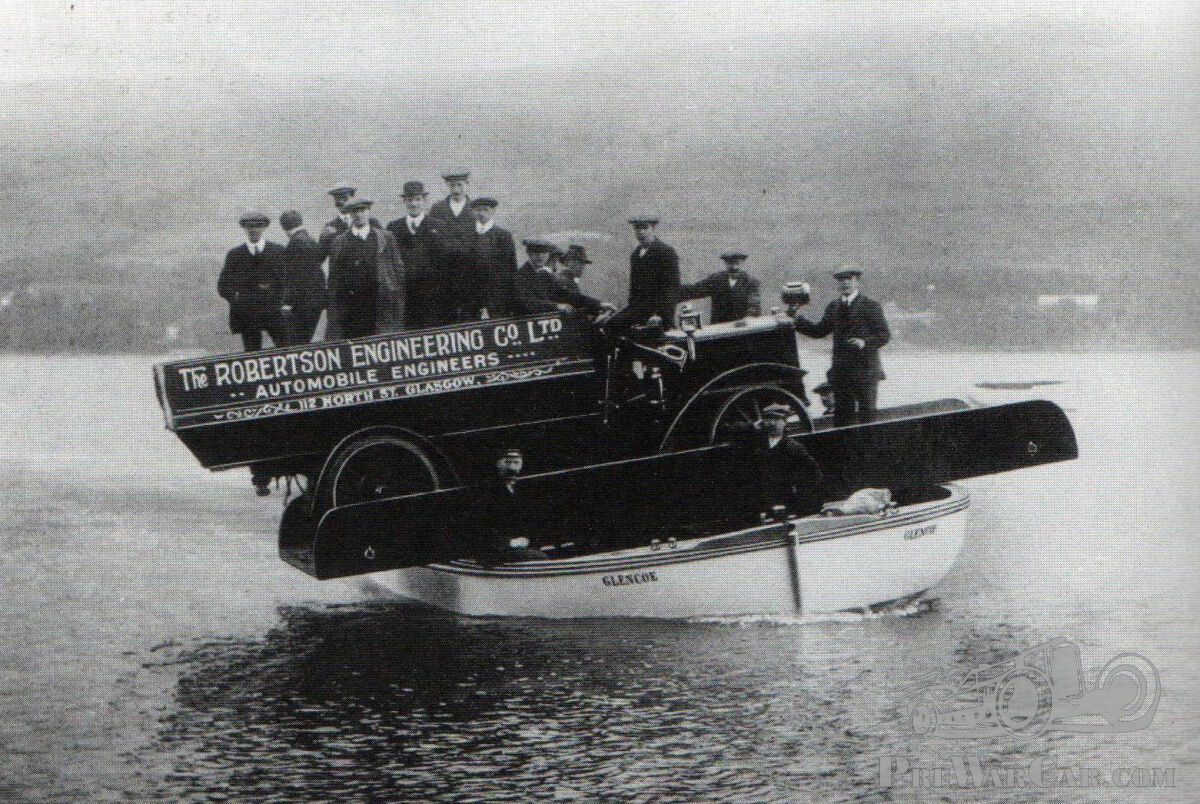
In spring 1912, the Scottish Automobile Club reported that it had already provided the ferry operator with designs for the construction of a motorised ferry. The design was for a wooden boat 30ft. long with a 14ft. beam, with its engine aft. Between the engine bulkhead and bow was a platform, 8ft. wide and 20ft. long, having sides 18ins. high, mounted on a turntable. The operators contracted Robertson Engineering Company of Glasgow as project managers, who asked Messrs McGruer and Company of Clynder to build the boat hull and the Bergius Launch and Engine Company, of Glasgow to install a 15-20-h.p. Kelvin paraffin engine and gearbox coupled to a propeller to suit the shallow draft of the boat. Presumably, Robertson’s were to engineer the turntable mechanism and oversee fitting out. The ferry was scheduled for completion in June 1912.
The Robertson Engineering Company Ltd. formed in 1910 “as ironmasters, engineers, iron and brass founders and boilermakers”, also “as buyers, sellers and builders of motorcars, lorries, and all other vehicles for transport”. They advertised their motor services heavily 1911-12, so were not the obvious engineers for a marine project but subsequently, by 1920, they were Scottish manufacturing licensees for Kitchen’s reversing ship rudders. The company was put up for sale as a going concern at the end of 1922 but was liquidated at a receiver’s auction at its 112-118 North-street, Glasgow premises in May 1924.
If the Glencoe was the new Ballachulish ferry, why was the Robertson lorry loaded so hazardously and left athwart as the boat sailed, if the turntable was fitted and operational? Was this just a Board of Trade loading and stability safety test of the bare hull before fitting-out? If so, likely it was taken on the Gare Loch at Clynder.