The global magazine and marketplace for classic car enthusiasts, by enthusiasts.


Filter
Make a choice:
- Cars
-
Make >>
-
Year >>
-
- Bikes
-
Location >>
- Parts & more
-
Make of car >>
-
Manufacturer >>
-
Category >>
- Bicycles & more
-
Year >>
-
Countries


The mad motorcyclists: the fastest machines from the Pioneer age
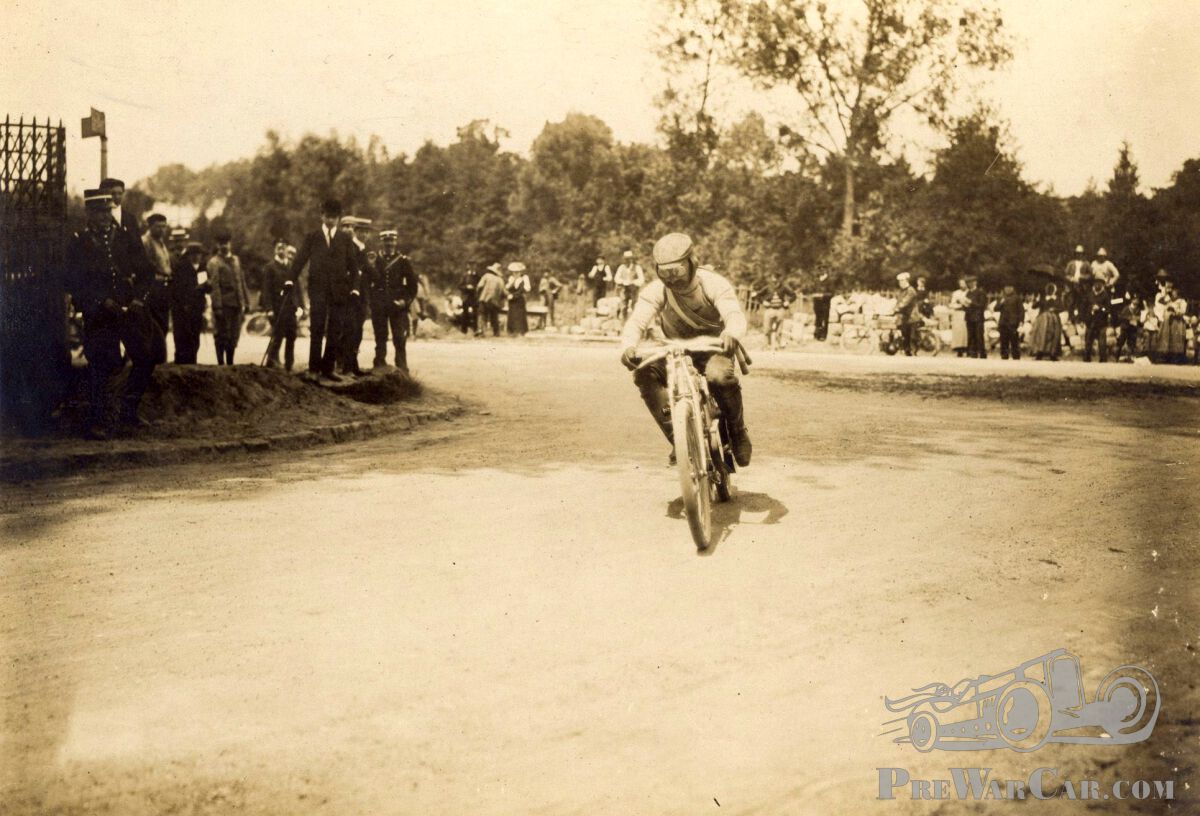


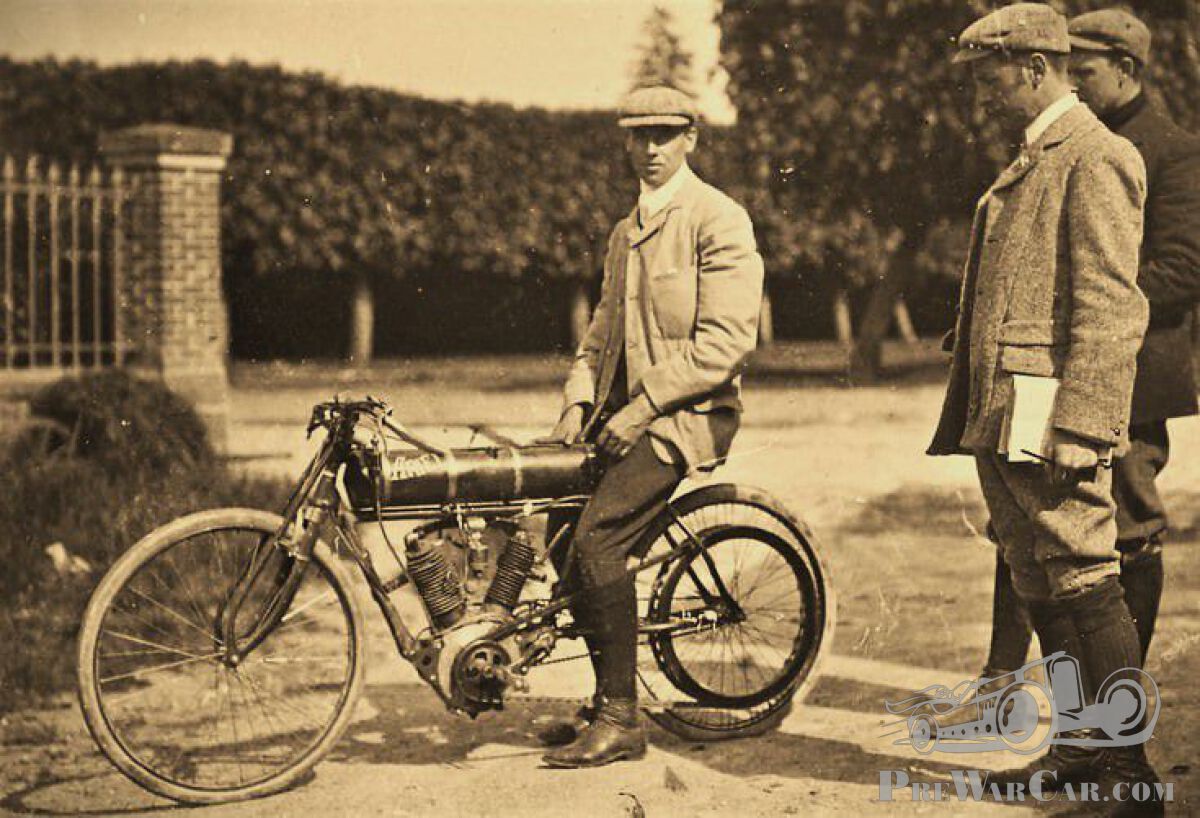
Writing from our English office, we are very much looking forward to the annual Pioneer Run for pre-1915 motorcycles, which will take place as usual, from Tattenham Corner in Surrey to Shoreham Airport in Sussex, on Sunday, October 6th. With that in mind, it is interesting to have a look back to the very early days of motorcycling as a sport and pastime, and see just what wonderful machines they had. We have found a selection of photographs depicting racing motorcycles from the Continent, the likes of which we have never seen in person.
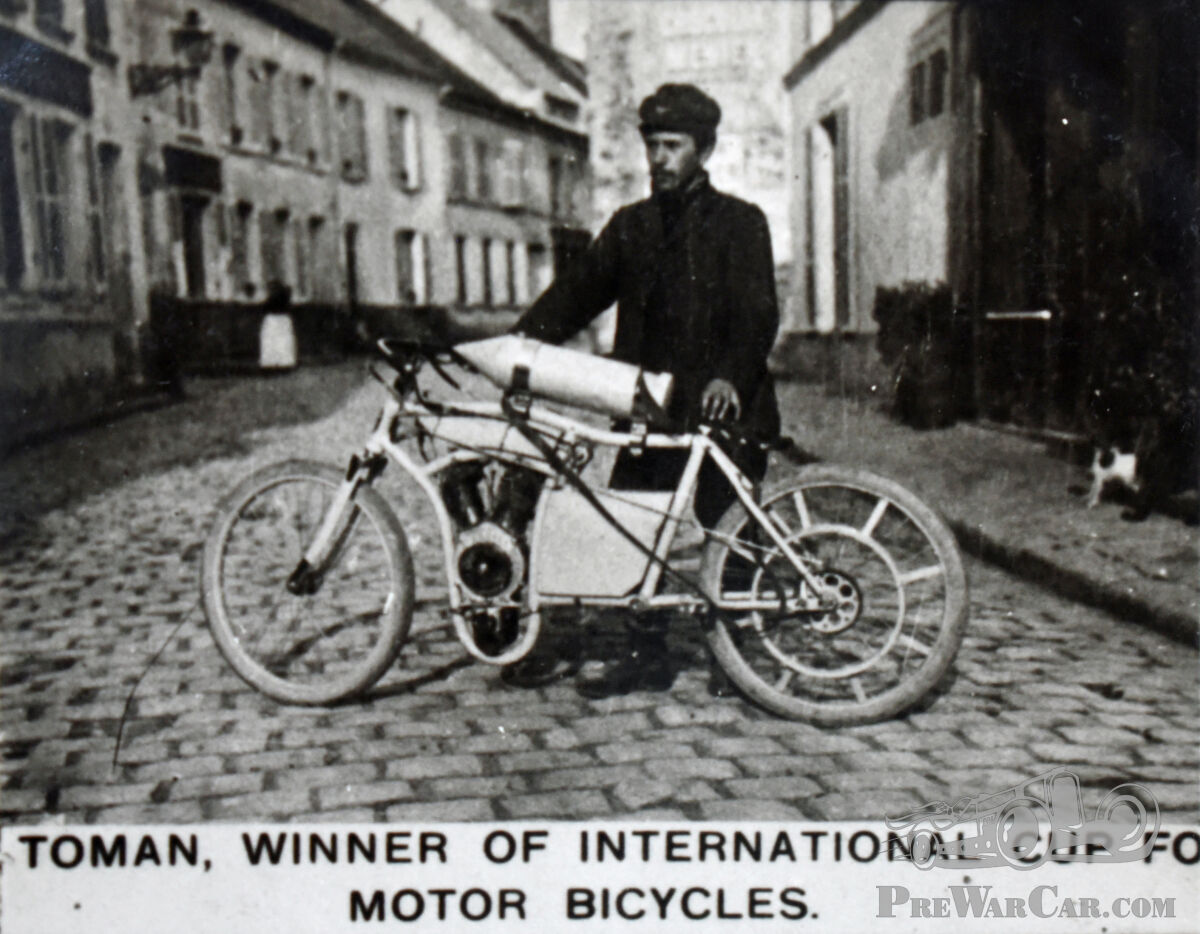
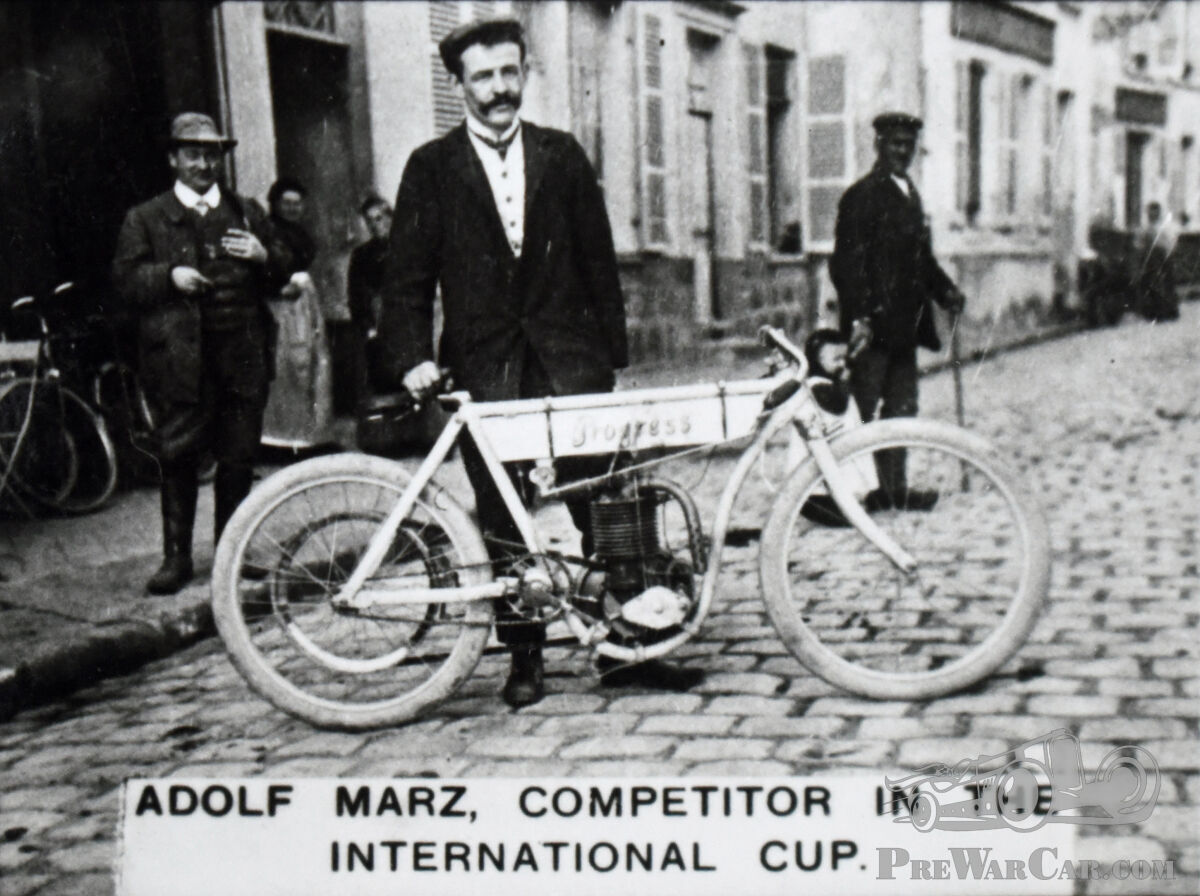
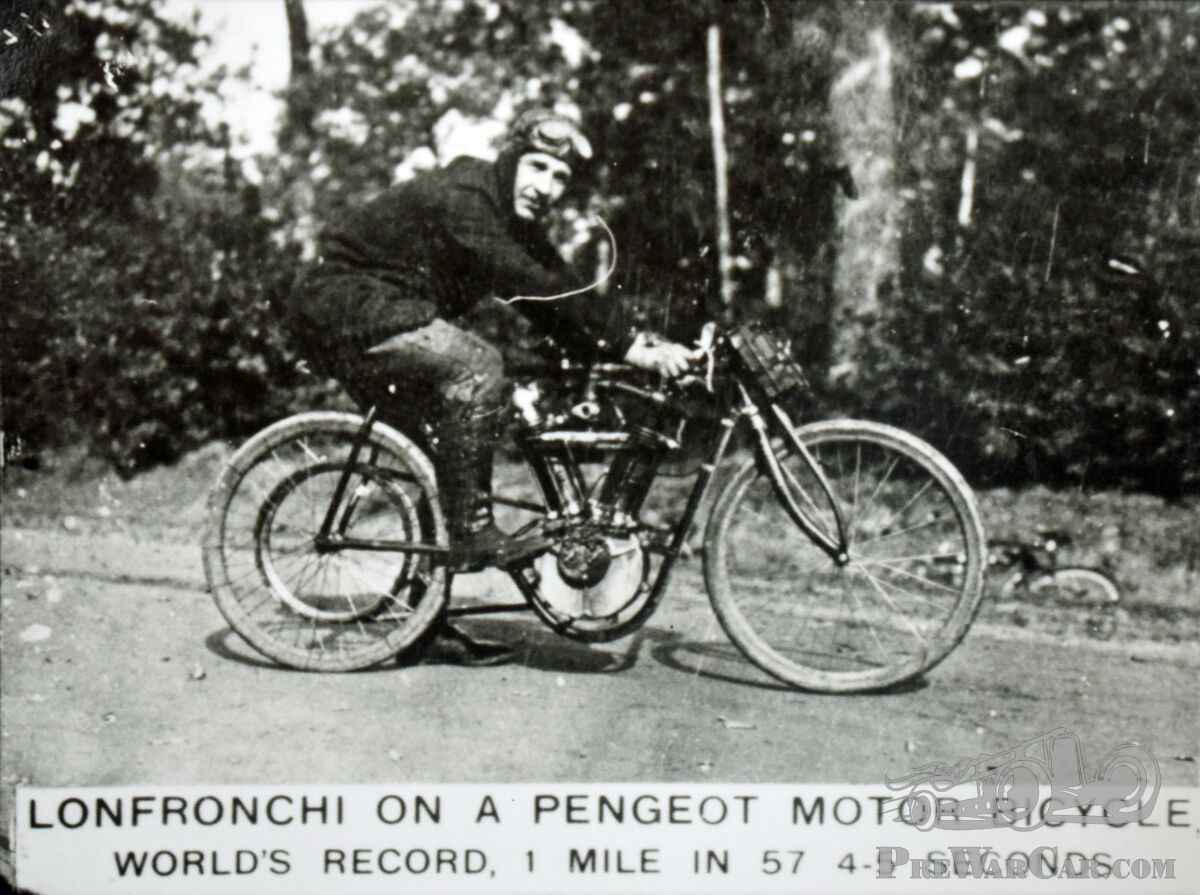
As the captions reveal, at least two of the bikes participated in the International Cup, which was organised by the Motocycle Club de France between 1904 and 1906. Our black-and-white photographs were part of a series of six given away with Ogden's Guinea Gold cigarettes and were, apparently, the first cigarette cards ever to feature motorcycling. The M.C.F.'s competition was run along the same lines as the other Coupe Internationale for cars, better-known as the Gordon Bennett Cup, viz. different countries were allowed to enter teams of up to three machines, and may the best country win.
In 1904 and 1905, the race was held over five laps of a circuit near Paris, starting at Saint-Arnout-en-Yvelines and returning viâ Dourdan, Étampes, Authon and Ablis, covering a total distance of 168 miles. In 1904, it drew entries from France, Great Britain, Germany, Austria-Hungary and Denmark, but only the first three fielded full three-man teams. The race was won by Demeester on a Griffon, representing France, but following a dispute, the five countries formed the Fédération Internationale des Clubs Motocyclistes to regulate the race henceforth.
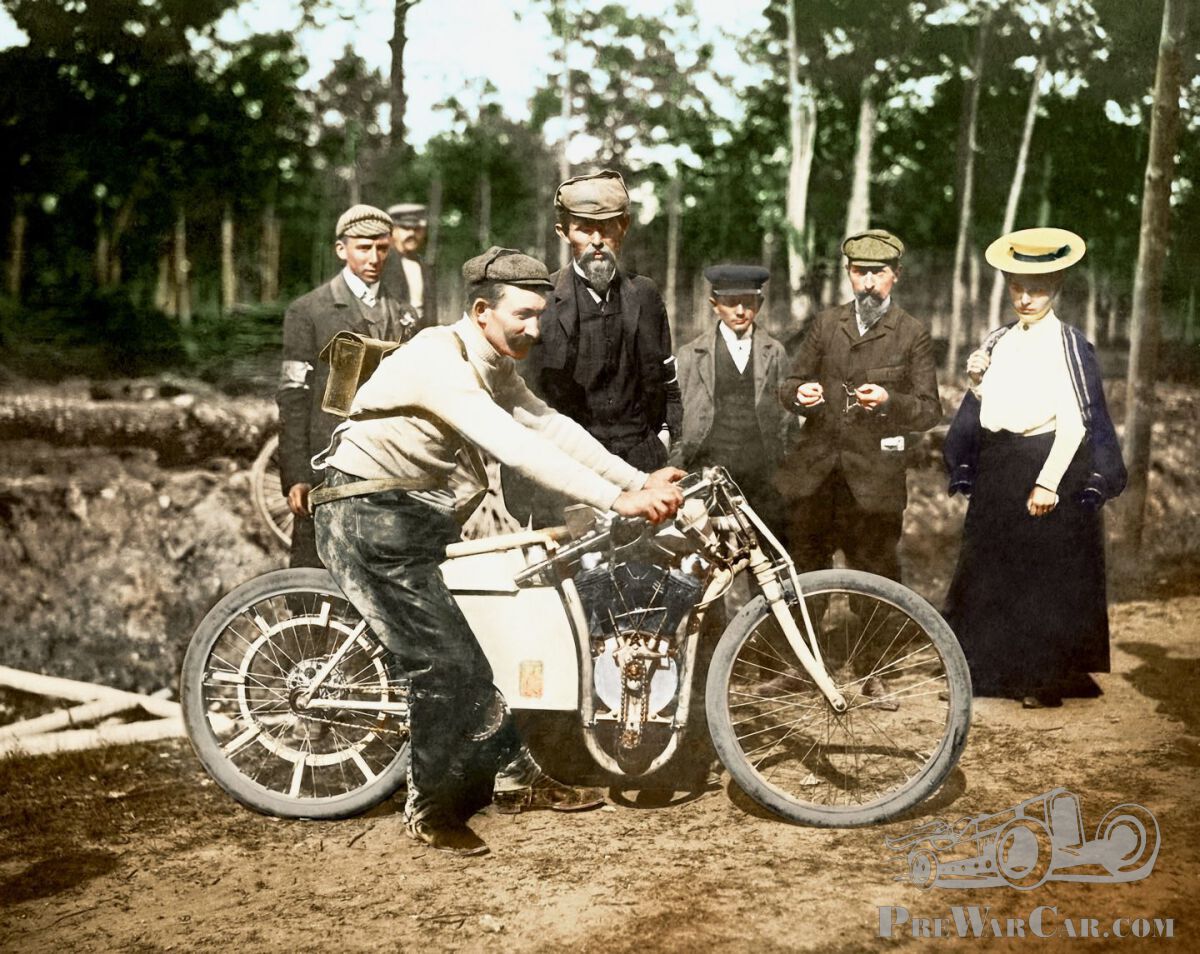
We must be looking at pictures from the 1905 race, when František Toman and Václav Vondřich tasted victory on their Laurin & Klements. They were extraordinary machines, with their rocket-shaped tank mounted atop the frame, the long and sinuous frame, which closely hugged the narrow vee-twin, and nothing that can easily be discerned as being for slowing the machine down.
Laurin & Klement's double victory
Škoda's company history has a lot to say on the matter: "The unofficial world championship of the F.I.C.M. took place on June 25th, 1905, 30 miles south-west of Paris in the small town of Dourdan. For the peak of the motorcycle racing season at the time, the organisers had mapped a 33½-mile circuit which had to be completed five times. It also included three so-called neutralisation sections: In these stretches, the drivers had to push their machines with the engine turned off—and hope that they would start up again afterwards.
"In 1905, the strongest national teams of their time competed in this international competition. In the hopes of representing Austria-Hungary, two riders with motorcycles from Laurin & Klement, František Toman and Václav Vondřich, had entered themselves into a qualifying race in Pacov, Bohemia. Eduard Nikodém on a Puch came third in the group. Ariel, Matchless and JAP competed for Great Britain; the French two-wheelers came from Griffon and Peugeot, while Germany sent three Progress motorcycles to France. The strict regulations stipulated that, in addition to all the essential components, the tyres also had to come from the respective country of origin. The riders themselves were responsible for repairing them.
"The Laurin & Klement team arrived well prepared: in trials the year before, they had covered the challenging track with nails, which made tyre failures even more likely. And so Vondřich started the race with a heavy leather bag strapped to his back. It contained all the necessary tools and spare parts but also earned the Bohemian the nickname “The Travelling Blacksmith” from the spectators. Despite the additional weight and higher centre of gravity, Vondřich with his two-cylinder L&K CCR quickly caught up with the previous year’s winner, Léon Demeester, who was in the lead. On the fourth lap, after 153 miles, the Bohemian, who was born in Libeň, near Prague, took the lead. At the finish line, he was more than eight minutes ahead after 3h. 13m. 17s. before the Frenchman was eliminated from the classification due to an illegal rear wheel change. As a result, František Toman moved up one place to make a perfect double victory for Laurin & Klement. In total, only three of the original twelve participants managed the full distance. This remarkable success even inspired the conductor František Kmoch from Kolín to compose the 2/4-beat round dance “Na motoru” (“On the engine”)."
Sadly, Adolf Marz's ride on the Progress has not been so well documented. As for our third cigarette card, it speaks for itself: Vincenzo Lanfranchi's Peugeot was the fastest thing on two wheels. With a 45-degree, 1,489cc vee-twin (95 by 112mm) of 12 or 14hp, the machine was ridden up to 76mph over one kilometre at Dourdan on October 3rd, 1904. With Henri Cissac and Giosuè Guippone, it continued to race at Blackpool, Ostend and Dourdan until October, 1906, recording a best speed of 89½mph. The engine weighed 60lbs., the entire machine weighed just 110lbs., and it had no brakes...
We hope the riders on the Pioneer Run this Sunday are as well-favoured by fortune as Toman and Vondřich were.
Words: Zack Stiling
Photos from own archive and Škoda Auto a.s.
Published:
Tuesday October 1st, 2024
Facebook
LinkedIn
Twitter
WhatsApp
Email
Copy
Comments
Adrian Goding
01 October 2024, 17:46
There's nothing usual about either the October date or Shoreham which are both very recent changes. A glance at the huge decline in entry numbers over the last years will detail just how popular these changes are irrespective of how hard the S.M.C.C. have tried to add a positive spin.
Read more
The weight limit for the race was 110lbs. and the course was from Douglas to Douglas, viâ Castletown and Ballacraine. It consisted of five laps totalling about 125 miles. With a time of 4h. 9m. 36s., Campbell's average speed was just over 30mph. He finished first with a 16-second (!) lead over Charlie Collier. There's more information on pages 36-38 of 'The Ariel Story' by Peter Hartley.
A few years ago a member from the Dutch Ariel Club started making a replica. But it has not been finished.