The global magazine and marketplace for classic car enthusiasts, by enthusiasts.


Filter
Make a choice:
- Cars
-
Make >>
-
Year >>
-
- Bikes
-
Location >>
- Parts & more
-
Make of car >>
-
Manufacturer >>
-
Category >>
- Bicycles & more
-
Year >>
-
Countries


The mystery of the Talbot-Lago Sedanca de Ville
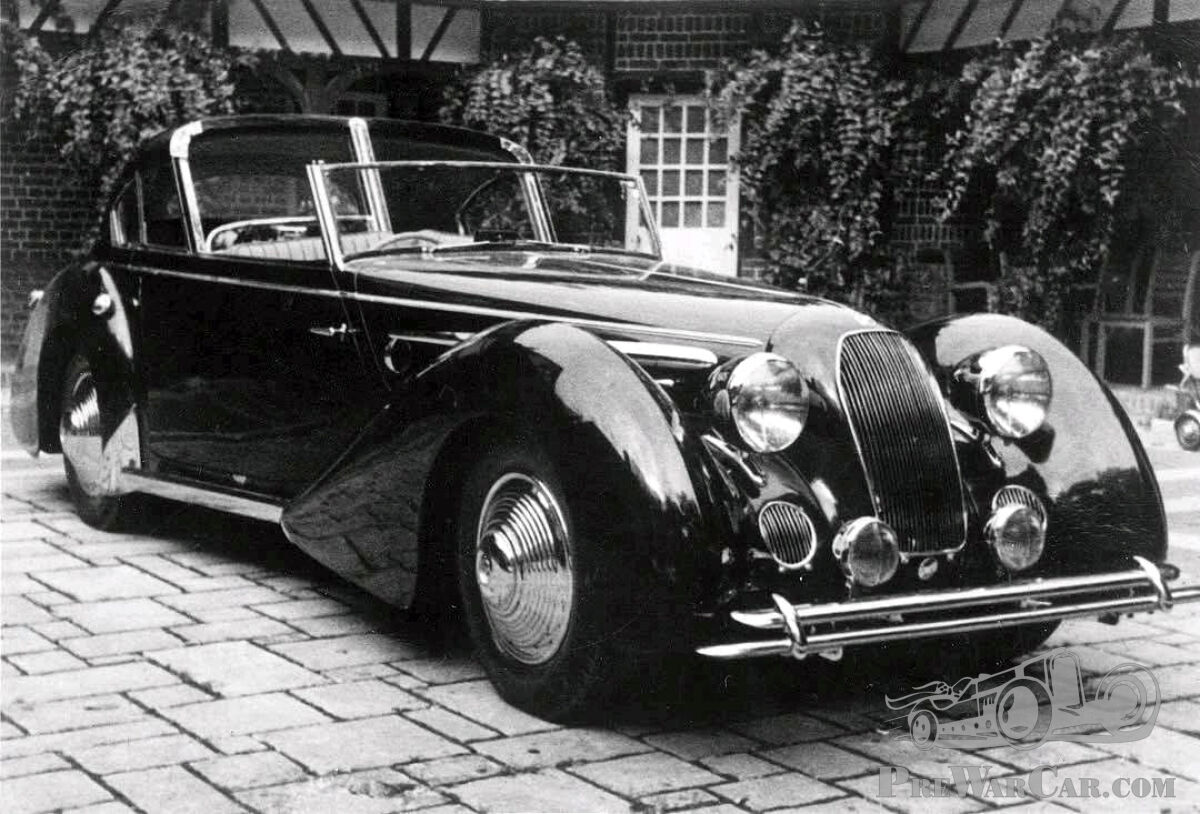

Here’s an intriguing mystery on wheels—a striking classic, shared viâ a single photograph from Owe Persson, but with no further background. The only clue? A note suggesting the original owner may have been one Clarin Mustad de la Ville Duclair from Norway.
Let’s begin with the car itself. It’s clearly a Talbot-Lago—but which model exactly? Is it pre-war, or just post-war? We're not entirely certain, but we trust some of you will recognise the underpinnings immediately. What makes this car especially fascinating, though, is the bodywork. We've seen countless convertibles, coupés, and berlines over the years, but this one appears to feature a sedanca de ville body—something quite unusual. Could this be another creation by Figoni & Falaschi? Or perhaps Pourtout? Whatever the case, it’s a rare and eye-catching design.
Then there's the Norwegian connection. The name Clarin Mustad might ring a bell. According to Wikipedia, there was indeed a Clarin Mustad of Oslo who ran an expansive business empire—including what was referred to as “the Duclair factory in France.” He was the world’s largest manufacturer of fishhooks at one point, but also a genuine motoring enthusiast.
Mustad was reportedly travelling internationally by car as early as 1892 and is credited with several inventions—among them, an electrically-heated toilet seat and a system allowing drivers to start their engine from the driver’s seat (an innovation ahead of its time).
But it was his hands-on work in automotive design that truly earned him a place in Norway’s Road Museum in Lillehammer. In 1916, he developed a 3.4-ton, eleven-seat, three-axle vehicle bearing his name, built in two versions with interchangeable bodies for summer and winter. Later, in 1935, he created a single-seater touring car nicknamed "The Egoist"—another eccentric and visionary creation.
Could this Talbot-Lago sedanca de ville be yet another chapter in Clarin Mustad’s automotive story? He certainly had the passion, the means, and the imagination to commission a one-off coachbuilt vehicle—possibly from one of France’s great ateliers.
Many questions remain. What exactly is this car? Who built it? And what’s its full story?
We’d love to know more.
Words: Jeroen Booij
Photo: via Owe Persson
Published:
Monday May 19th, 2025
Facebook
LinkedIn
Twitter
WhatsApp
Email
Copy
Comments
JAMES BANDY
25 May 2025, 23:50
Henri Lalanne
21 May 2025, 08:52
The Figoni and Falaschi plaque is clearly visible under the door.
--------------------------------------------------------------
La plaque Figoni and Falaschi est bien visible sous la porte.
Read more
--------------------------------------------------------------
La plaque Figoni and Falaschi est bien visible sous la porte.
Whilst in France I owned Delahaye 175 and Franay Talbot 110-121 and my take
is the Talbot is a Figoni...my Delahaye had the exact same from bumper as
the Talbot...and the rest simlar....I suspect the bumpers were the same on
several Figoni's