The global magazine and marketplace for classic car enthusiasts, by enthusiasts.


Filter
Make a choice:
- Cars
-
Make >>
-
Year >>
-
- Bikes
-
Location >>
- Parts & more
-
Make of car >>
-
Manufacturer >>
-
Category >>
- Bicycles & more
-
Year >>
-
Countries


The Razor Blade: phenomenon or death trap?

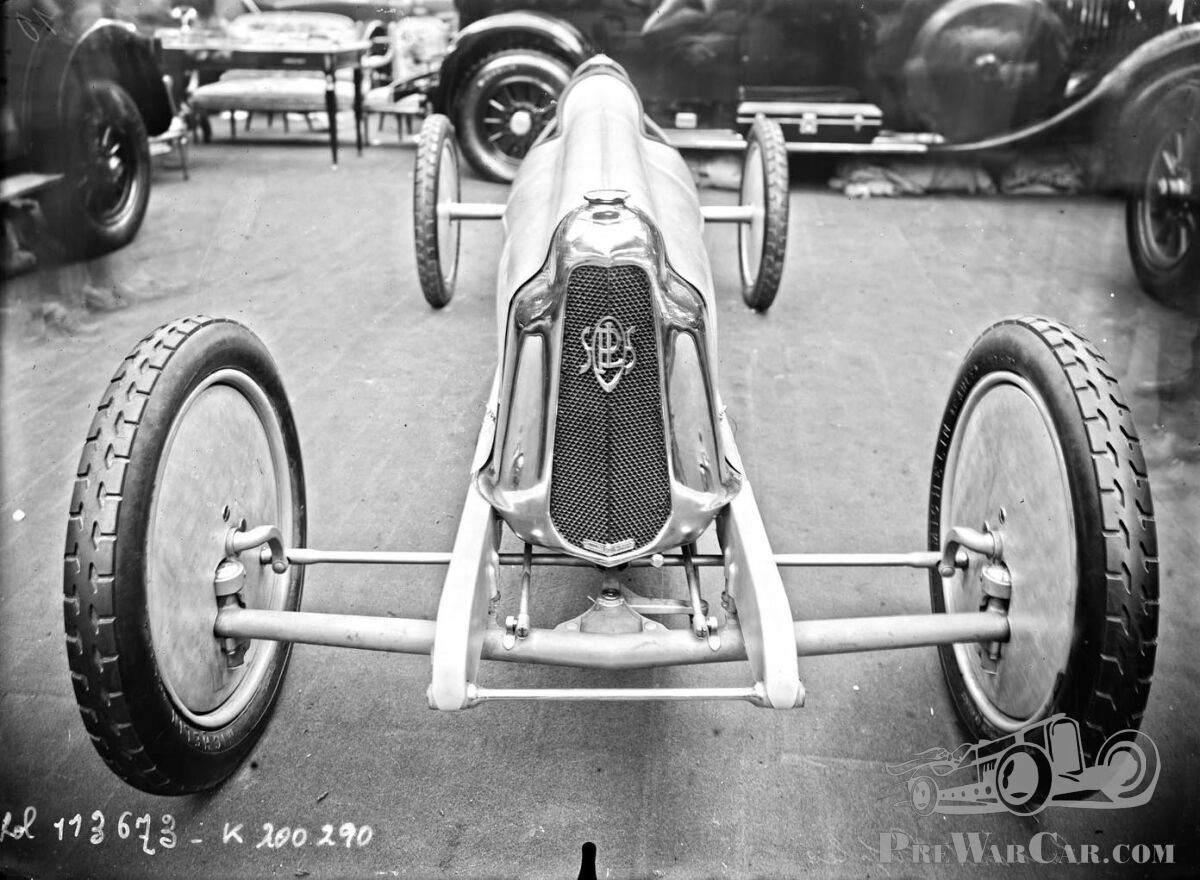


We bumped into this great curiosity on the online treasure trove known as the Bibliothèque Nationale de France and were smitten straight away. As so often, information was scarce, with the only description being a Voiture Panhard Profilée, as seen during the 1926 Paris Motor Show.
It didn’t take much digging to find that this Panhard & Levassor was in fact a record car, known as Lame de Rasoir or Razor Blade—a name that suits it perfectly.
And it was an extraordinarily sharp design in more ways than one. The driving position was highly unusual to begin with: the driver was more lying down than sitting in this single-seater. With his head resting on a small cushion, much of the view ahead was blocked by the bodywork. Looking forward must have required occasionally throwing oneself to the side. The steering wheel was another remarkable feature—a large, spokeless wheel encircling the driver at mid-body height.
The car’s striking body, made of polished aluminium and mahogany wood, was designed by engineers Louis Bionier and Marius Breton, and built to measure for Breton himself, who also served as its works driver. He achieved a fastest lap of 190.324 km/h at Montlhéry, though that was with the slightly less sensational two-litre variant—not yet the 1.5-litre Razor Blade-shaped version. The latter was said to be designed to break the 240 km/h record, but it fell just short. In October 1926, it was officially timed over several runs, covering five miles at an average speed of 223 km/h. Only days later, however, Breton crashed at high speed, killing himself instantly at the age of 34. The road in Issy-les-Moulineaux where the accident happened still bears his name.
Interestingly, historians are still uncertain about the car’s suspension. Also worth noting: it had no brakes on its wheels, for reasons of aerodynamics and weight saving. A single drum brake was fitted only to the transmission—or so it is believed.
Words: Jeroen Booij
Pictures: Bibliothèque Nationale de France
Published:
Monday July 14th, 2025
Facebook
LinkedIn
Twitter
WhatsApp
Email
Copy
Comments


Terry Cockerell
23 July 2025, 01:58
Back in 2022 my brother and I went to the US for the Auburn Cord Duesenberg Festival held in Auburn Indiana. Along the way we visited the Indianapolis Speedway and Museum. It was interesting to see the development of streamlining from the first car to win the race in 1911 which is known as the Marmon Wasp to the 1928 race winning car designed and built by Harry Miller. Miller's car looks more like an Art Deco sculpture. One outstanding example from the 1960s had the driver located to the LHS in what looks like a motorcycle sidecar body. The theory was to help maintain speed on the corners. The Museum is well worth a visit. You can also take a ride around the track. I was very surprised at the overall low banking.
Read more

Terry Cockerell
21 July 2025, 03:24
It sure is a sleek looking machine. I once sat in a Ferret Scout Car that had the steering wheel laying almost horizontal above the driver's knees. Weird driving position. Reducing drag in the Vintage and Veteran Era was noted by the experts.
Harry Miller and Barney Oldfield worked together to produce the Golden Submarine in 1917. One of Oldfields friends had been killed when his car flipped during a race. Oldfield said he could smoke a cigar in the Golden Submarine while driving at 100 mph. During one race the car ended up in a pond with Barney nearly being drowned. I guess the cigar was drowned ?
The end result was the safety roof was cut off for future racing.
A replica of this amazing machine has been built but I'm not sure where it is located.
Read more
Harry Miller and Barney Oldfield worked together to produce the Golden Submarine in 1917. One of Oldfields friends had been killed when his car flipped during a race. Oldfield said he could smoke a cigar in the Golden Submarine while driving at 100 mph. During one race the car ended up in a pond with Barney nearly being drowned. I guess the cigar was drowned ?
The end result was the safety roof was cut off for future racing.
A replica of this amazing machine has been built but I'm not sure where it is located.

Laurent Friry
18 July 2025, 12:18
This is a view of the cockpit from the engine compartment of the 1500 cc Lame de Rasoir. You can see the gear lever, the handbrake and the spokeless steering wheel, which is tilted in the opposite direction to the usual one. A driving position where the driver puts his legs inside the steering wheel, quite revolutionary for the time !
Read more


Brulé Bernard
14 July 2025, 17:14
Bonjour,
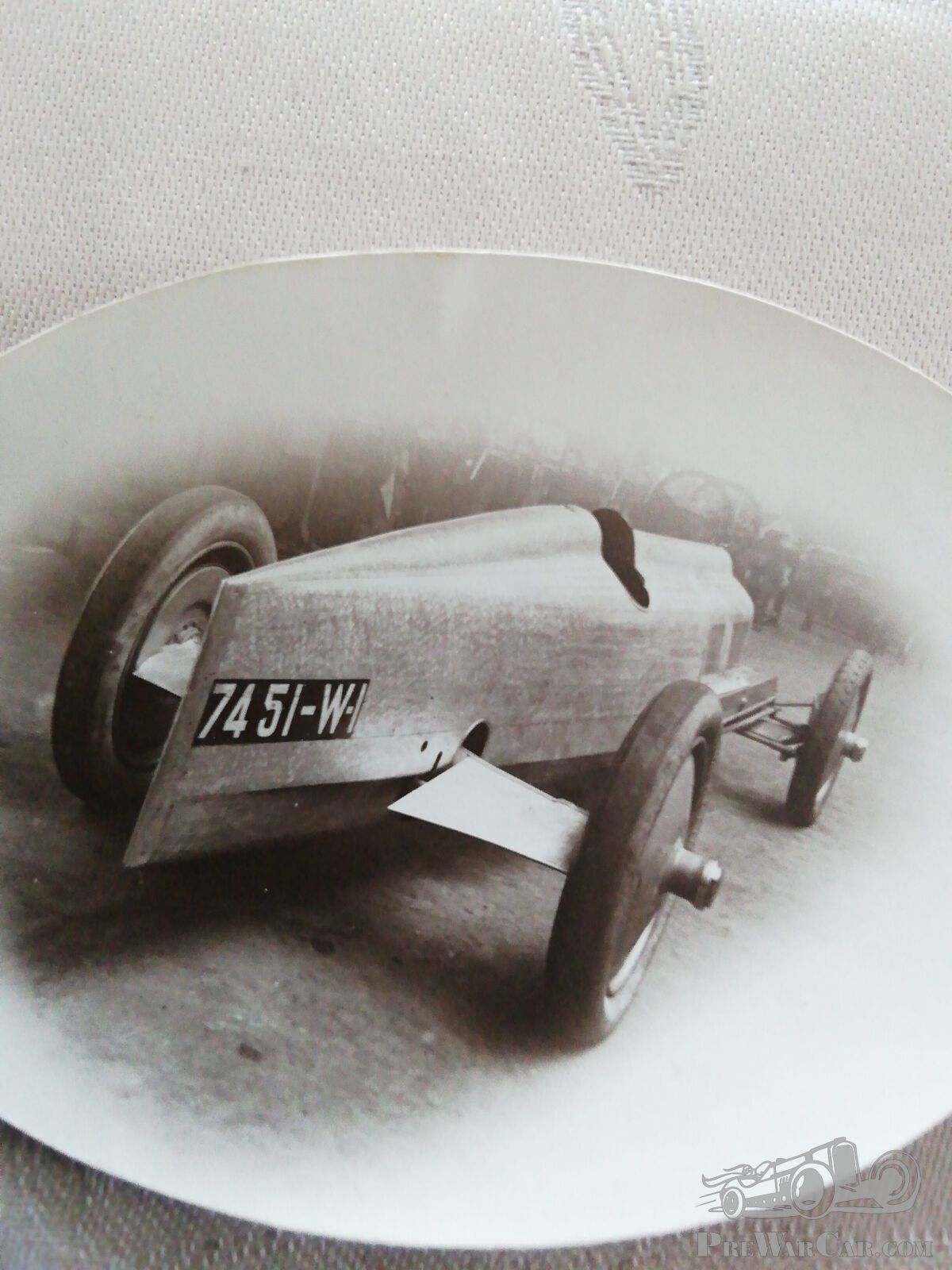
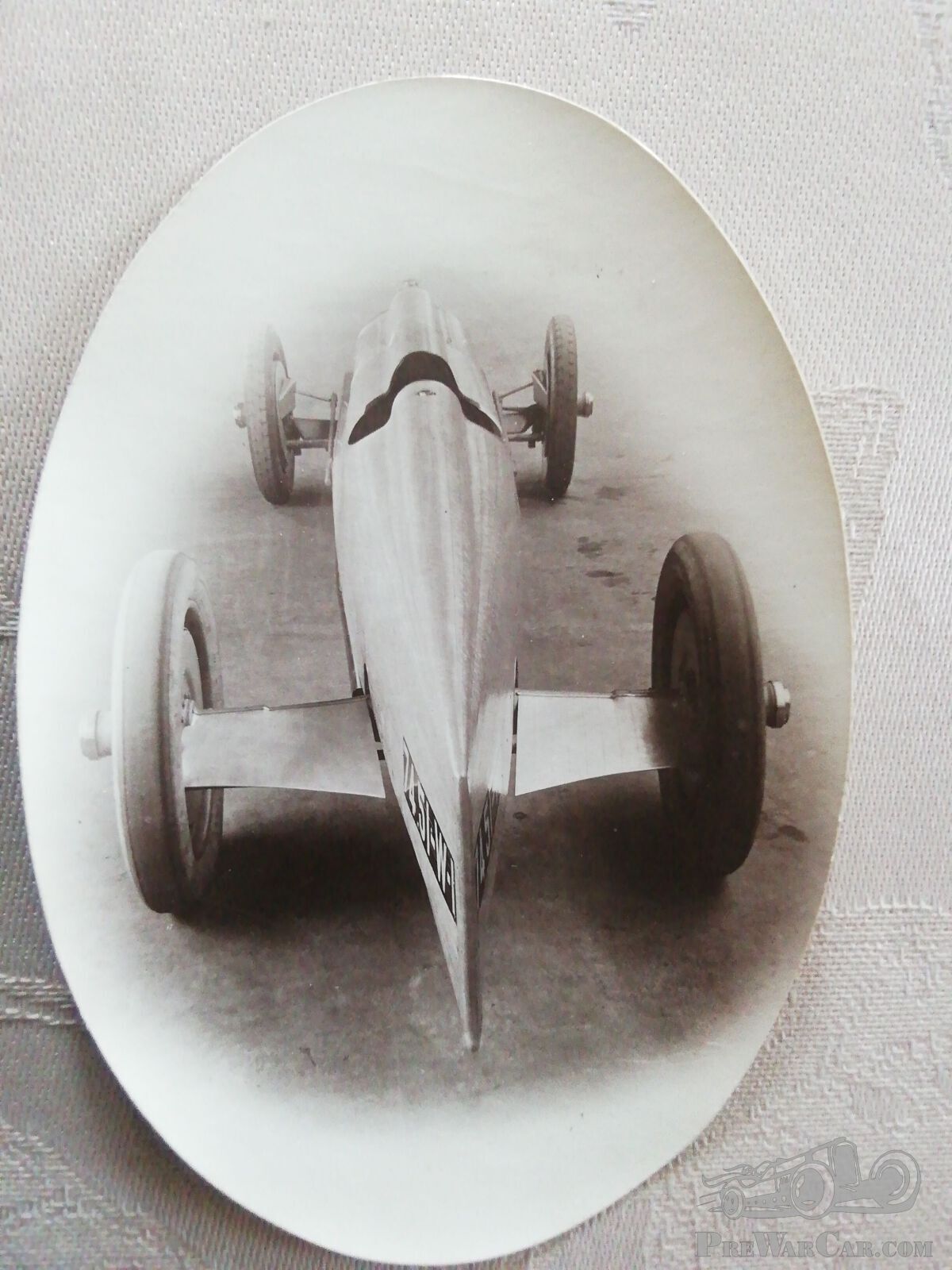
These two small old photos show the first version of the "lame de rasoir" from 1925.
The car was apparently equipped with a 5-litre engine.
Its registration "garage" 7451-WI refers to its road use.
Unlike its little 1500 sister, this one has brakes.
I think that, contrary to what is often said, the bodies of the 5-litre and 1500 were made of light metal and not mahogany. To be confirmed, of course.
A fairly good rebuild was carried out in the USA (with a 4-cylinder Miller).
---
Bonjour,
Ces deux petites photos anciennes montrent la première version de la "lame de rasoir" de 1925.
La voiture était, semble-t-il, équipée d'un moteur de 5 litres.
Son immatriculation "garage" 7451-WI évoque son roulage sur route.
Contrairement à sa petite sœur 1500, celle-ci est équipée de freins.
Je pense que, contrairement à ce qui est souvent dit, les carrosseries des 5 litres et 1500 étaient en métal léger et non en acajou. A confirmer, bien sûr...
Une reconstruction assez bonne à été réalisée aux USA (avec un 4 cylindres Miller).
Read more
These two small old photos show the first version of the "lame de rasoir" from 1925.
The car was apparently equipped with a 5-litre engine.
Its registration "garage" 7451-WI refers to its road use.
Unlike its little 1500 sister, this one has brakes.
I think that, contrary to what is often said, the bodies of the 5-litre and 1500 were made of light metal and not mahogany. To be confirmed, of course.
A fairly good rebuild was carried out in the USA (with a 4-cylinder Miller).
---
Bonjour,
Ces deux petites photos anciennes montrent la première version de la "lame de rasoir" de 1925.
La voiture était, semble-t-il, équipée d'un moteur de 5 litres.
Son immatriculation "garage" 7451-WI évoque son roulage sur route.
Contrairement à sa petite sœur 1500, celle-ci est équipée de freins.
Je pense que, contrairement à ce qui est souvent dit, les carrosseries des 5 litres et 1500 étaient en métal léger et non en acajou. A confirmer, bien sûr...
Une reconstruction assez bonne à été réalisée aux USA (avec un 4 cylindres Miller).

Mark Walker
14 July 2025, 15:41
I was pleased to see a Sima Violet a bit like this one just above the tail of the Panhard in the third photo.
Read more