The global magazine and marketplace for classic car enthusiasts, by enthusiasts.


Filter
Make a choice:
- Cars
-
Make >>
- Bikes
-
Location >>
- Parts & more
-
Make of car >>
-
Manufacturer >>
-
Category >>
- Bicycles & more
-
Year >>
-
Countries


The Tricycle Book, 1895-1902, Part Two


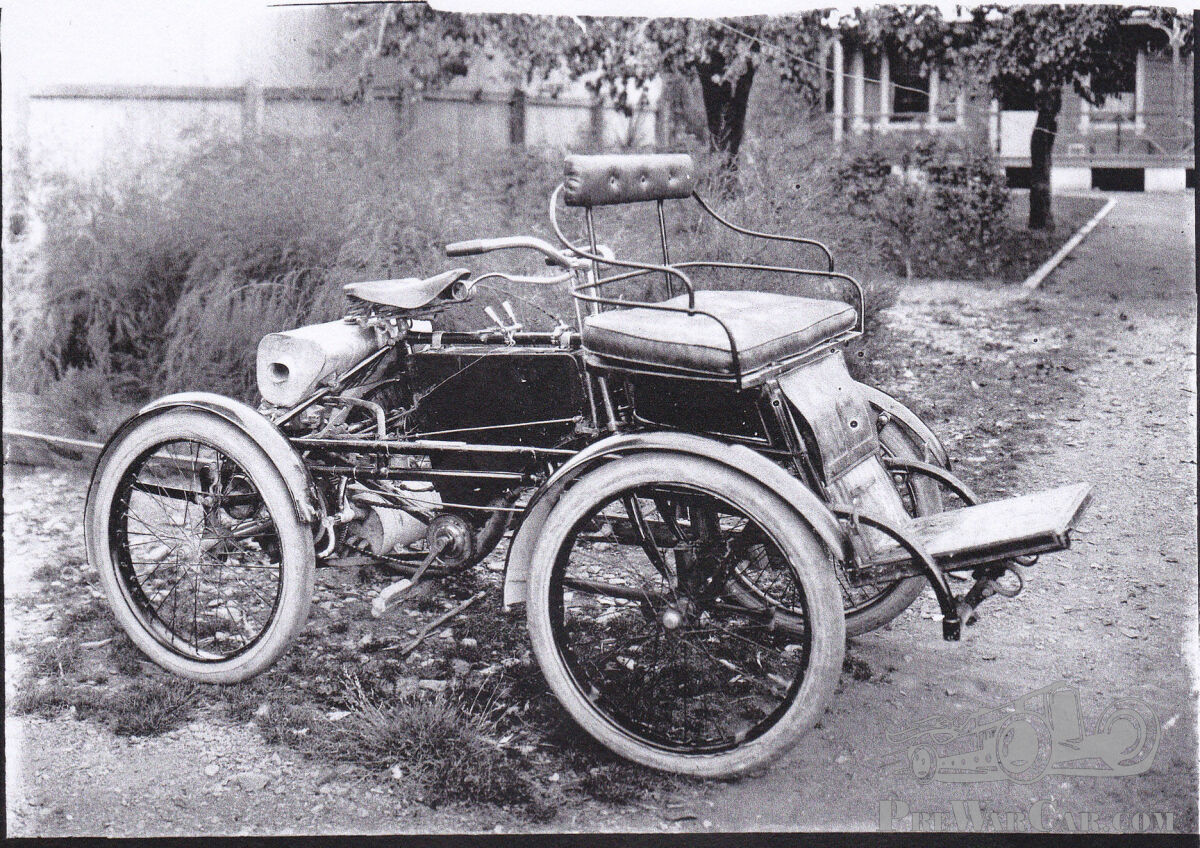
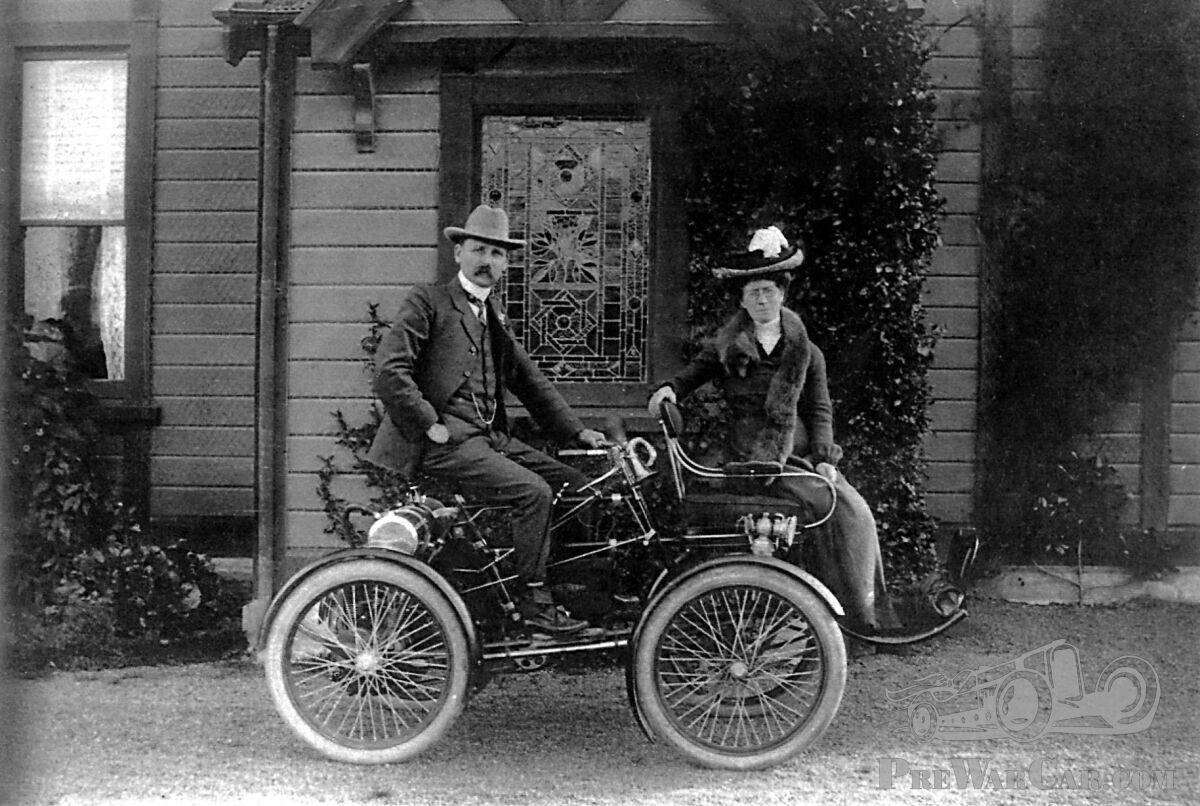


By the mid-19th century, British engineers had embarked upon perhaps Victorian Britain’s greatest achievement, the creation of a national rail network. Within a few decades, British cycle manufacturers offered individuals the possibility of travelling throughout the country under their own steam without needing any consideration of railway timetables or stabling for horses. The leading cycle brands of the day, such as Humber, Swift and the Coventry Machinists, established global reputations. The advent of motorised tricycles and cycles obviously presented the next opportunity for these engineers and entrepreneurs to demonstrate their prowess.
In reality, the exploitation of the internal combustion engine for motor vehicles in Britain was far from straightforward. Conservative estimates suggest that there were 3.5 million horses at the turn of the last century, the support of which was good business for farmers and a great many others. Riding and equestrian sports were popular pastimes for those that could afford it, and a new mode of transport was not universally welcomed.
Added to this, the constraints on-road speeds, wrapped up in legislation introduced in 1865 to tackle concerns around steam vehicles, was an obstacle not only to driving motor vehicles but any kind of testing of prototypes. This particular concern was addressed by the end of 1896 when motor vehicles were enabled to reach speeds of 14mph, providing that the local council did not introduce its own restrictions, which it was empowered to do. In comparison, French tricyclists were reaching speeds of 22mph in competitions on the open roads early in 1897.
The British cycle manufacturers achieved a quite remarkable success: by the mid-1890s Premier and Humber alone were each making 40,000 pedal cycles a year, delivering considerable wealth to shareholders and owners alike, making them distinctly reluctant to invest their funds into a new enterprise that offered no guarantees of success. Over-production of cycles in British factories, rapidly declining margins, and the advent of cycle production in America and throughout Europe, which had a dramatic effect on factory exports, finally persuaded companies to consider the production of motorcycles and tricycles.
By the time they reached this conclusion in the late 1890s, however, there was another obstacle to contend with, namely the ambition of Harry Lawson’s ‘British Motor Syndicate’ to create a monopoly of the whole motor trade in the country; companies set up by him were effectively licensed to use the ‘master patents’ of the Syndicate. This constraint was accompanied by the distinctly dubious activities of the company promotors who launched public companies with extravagant claims of future success, leaving shareholders cheated and factories short of working capital.
One of Lawson’s companies did start production of Beeston tricycles in 1897, after all the core components of the De Dion Bouton tricycle for which it had purchased licences for, had been comprehensively re-designed, including the introduction of hot tube ignition. By the time that Beeston was wound up during 1900 there were other British names that were prominent: Humber, Royal Enfield and Ariel machines were considered to be of the highest quality, and when the Motor Manufacturing Co. launched its 2.25hp engines in late 1899 and made them freely available to other firms, other brands emerged, including Progress, Riley, Dennis and Alldays.
Perhaps the greatest success stories in the industry were The Cycle Components Manufacturing Co. of Birmingham and the Eadie Manufacturing Co. of Redditch, which manufactured a wide range of components for cycles and motor tricycles that were distributed worldwide, and they offered complete machines for others to re-badge. Brown Brothers did not manufacture their own components, but they also supplied a comprehensive range of components for every conceivable taste.
After a difficult start, motor tricycle and quadricycle production in Britain began in earnest in 1899, but by the end of 1901, any demand for cycle-based motor tricycles had evaporated. It was the turn of motorcycles and motor cars. For those people who had enjoyed the speed of larger-engined tricycles and quadricycles, however, the choice of a motor car was not always attractive and there was still an appetite for speed. For them, there was a tri-car, made in large numbers by a wide range of manufacturers. It also had three wheels but it was quite different in character, with a custom-made chassis, large engines, pedal controls, footboards and a range of gears.
The Tricycle Book, Part Two is the story of these machines from a purely British perspective. All of the major brands, including Beeston, Humber, Ariel, MMC, and Royal Enfield are covered in detail, along with, the smaller producers, notably Progress, Riley, Dennis, Alldays & Onions, and Swift. Singer, Slinger and Quadrant are included as the final flowering of these machines that were based essentially on the pedal cycle.
The development of the industry was as much about the entrepreneurs and the engineers as it was about their machines, and the contributions of Edward Butler, John Henry Knight, James Roots, Herbert Austin, Harry Lawson, E.T. Hooley, Harvey du Cros, Thomas Humber, Thomas Rucker, George Iden, E.J. West, the Riley family, and Charles Friswell, are all assessed.
This 400-page full-colour volume will be available from the beginning of December and will arrive on your doorstep in good time for Christmas. The cost of the book is £80 (plus postage), and any subscriber purchasing both Part One and Part Two together will be charged just £150 (plus postage).
Contact Michael Edwards here via the contact seller button or send an e-mail to him directly to place your order.
Published:
Thursday November 21st, 2019
Facebook
LinkedIn
Twitter
WhatsApp
Email
Copy