The global magazine and marketplace for classic car enthusiasts, by enthusiasts.


Filter
Make a choice:
- Cars
-
Make >>
-
Year >>
-
- Bikes
-
Location >>
- Parts & more
-
Make of car >>
-
Manufacturer >>
-
Category >>
- Bicycles & more
-
Year >>
-
Countries


Three mysteries spanning three periods, none an Imperia


When even specialists no longer have the answers, they turn to us. And when we too must acknowledge that our knowledge has its limits, we do what enthusiasts have done for more than a century: we turn to one another. In this way, knowledge continues to circulate, and puzzles are shared and, sometimes, solved.
With that spirit of mutual assistance in mind – and fitting the mood of the approaching festive season – we present today three photographs that were sent to us by Josef de Baets. Josef is a recognised authority on the Imperia marque and possesses an exceptionally extensive body of documentation. The images he shared with us are of high quality, but unfortunately only sparsely documented. That, in itself, makes them all the more intriguing.
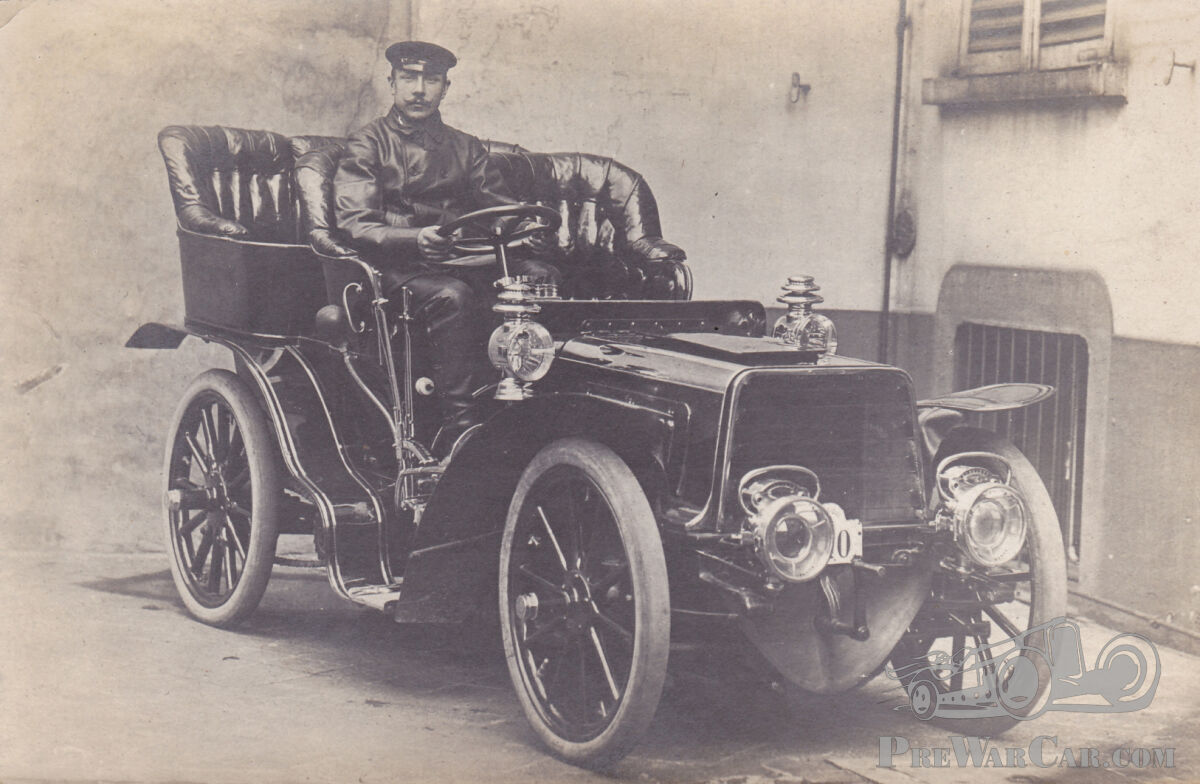
On the reverse of the first photograph is written: Theo Verdonck + 1913. At that time, Theo Verdonck was employed at the Auto-Palace garage owned by Mr De Schaapmeester, located on the Tentoonstellingslaan in Ghent. According to the information available to us, this was not a single-marque dealership, but a sales and repair garage representing several makes, including Minerva, FN and Delaunay-Belleville.
Based on the silhouette and constructional details, however, the car depicted appears to be older than 1913. For the time being, we estimate a build date around 1904, although conclusive evidence to confirm this is lacking.
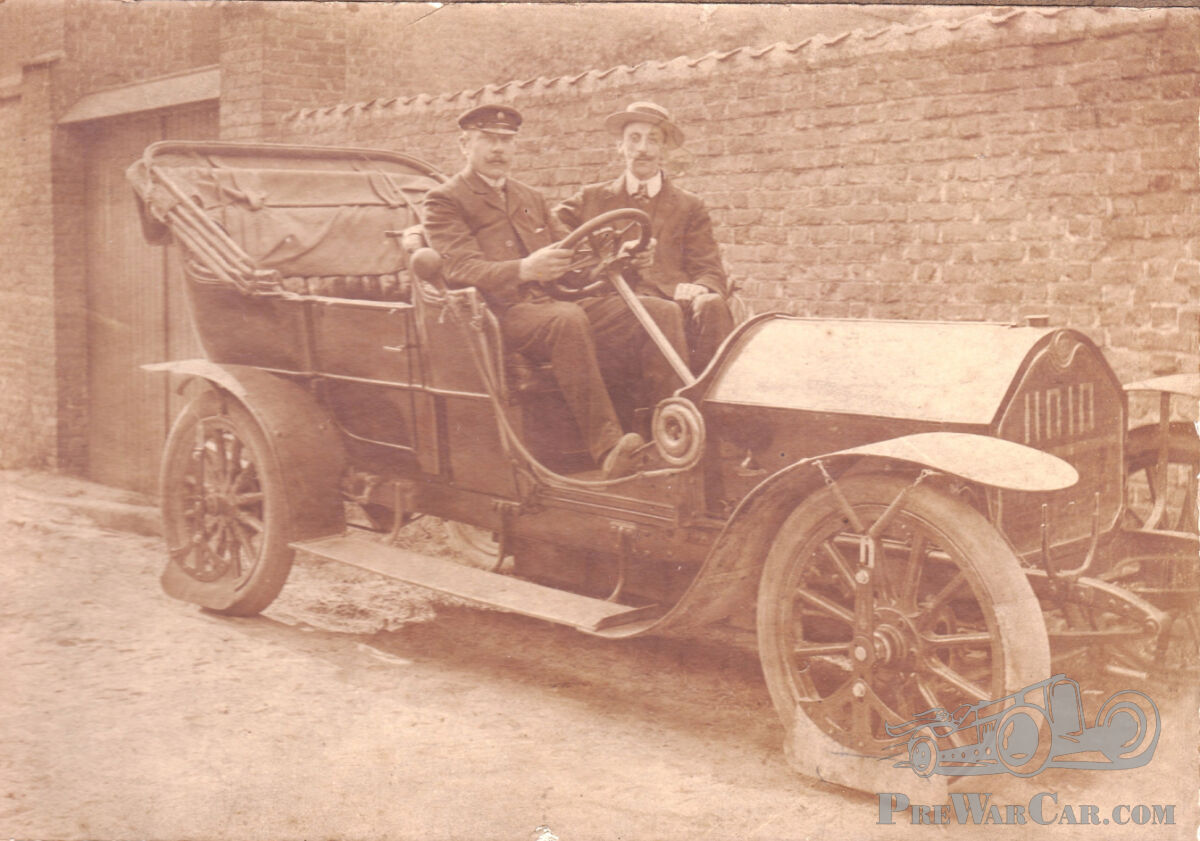
The second photograph immediately raises questions due to a striking accessory mounted on the wheels. Josef asked us what purpose this might have served. Our initial thought was that it was a practical device intended to remove road dirt – and, in those days, not infrequently horse manure – from the wheels. We cannot, however, state this with certainty.
What is clear is that the car was used intensively. The front tyre shows a visible repair, and the headlamps are missing. Registration number 11010 was issued to Le Blanc Gaston, residing at 23 rue Solferino, Lille, France. Based on the general proportions and technical characteristics, we suspect that this may be a 20 hp Crossley, although this too remains a hypothesis for now.
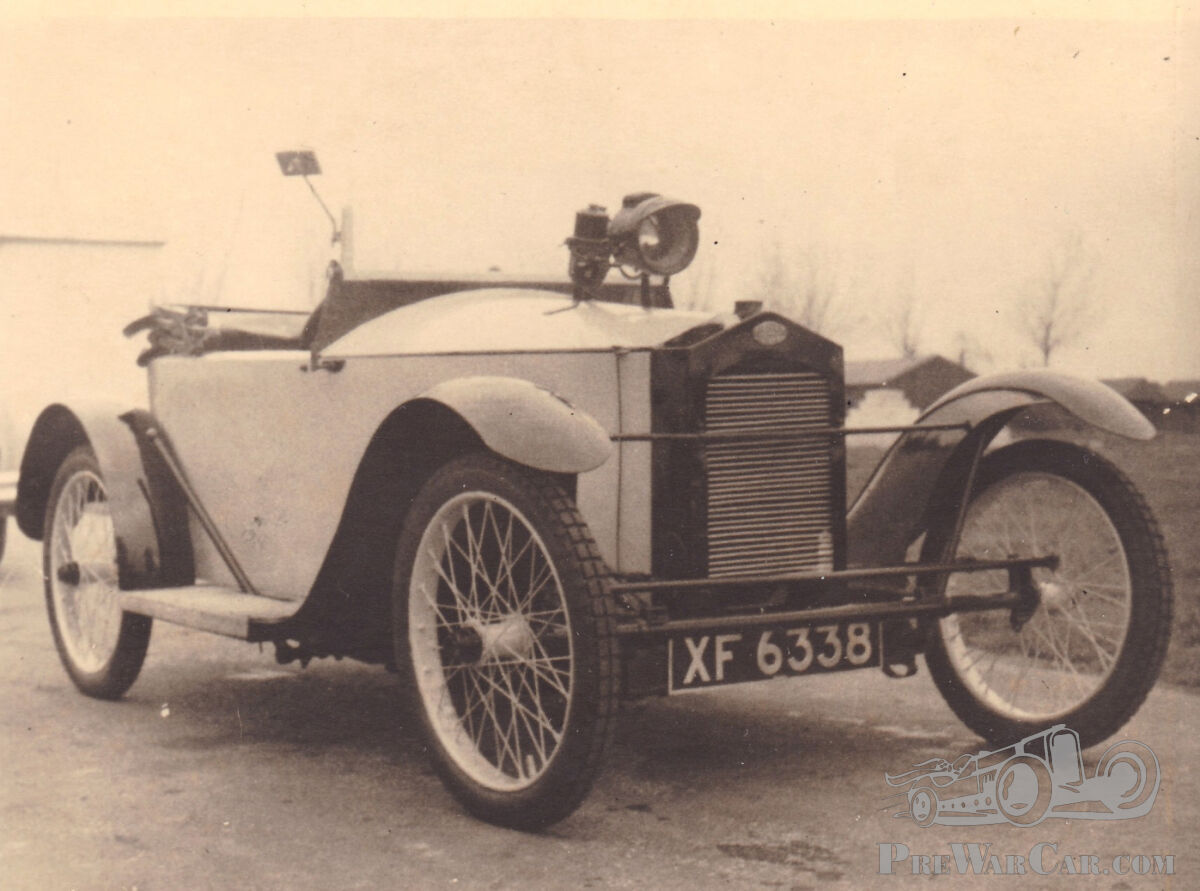
The third photograph dates from a later period and is easier to place. Thanks to the characteristic appearance of the car and the clearly visible British registration plate, we were able to locate a comparable image in our archive. All indications suggest that this is a 1921 Blériot-Whippet, a typical cyclecar built by the British company Air Navigation & Engineering Co. Ltd..
Registration XF6338 is often cited as the only surviving example. Whether this car is still actually on the road today is unknown to us.
We hope that you may be able to assist us further.
Words: Laurens Klein
Photos: Josef de Baets
Published:
Monday December 22nd, 2025
Facebook
LinkedIn
Twitter
WhatsApp
Email
Copy
Comments
Christoph Röhrs
28 December 2025, 13:23
Ariejan Bos
27 December 2025, 21:14
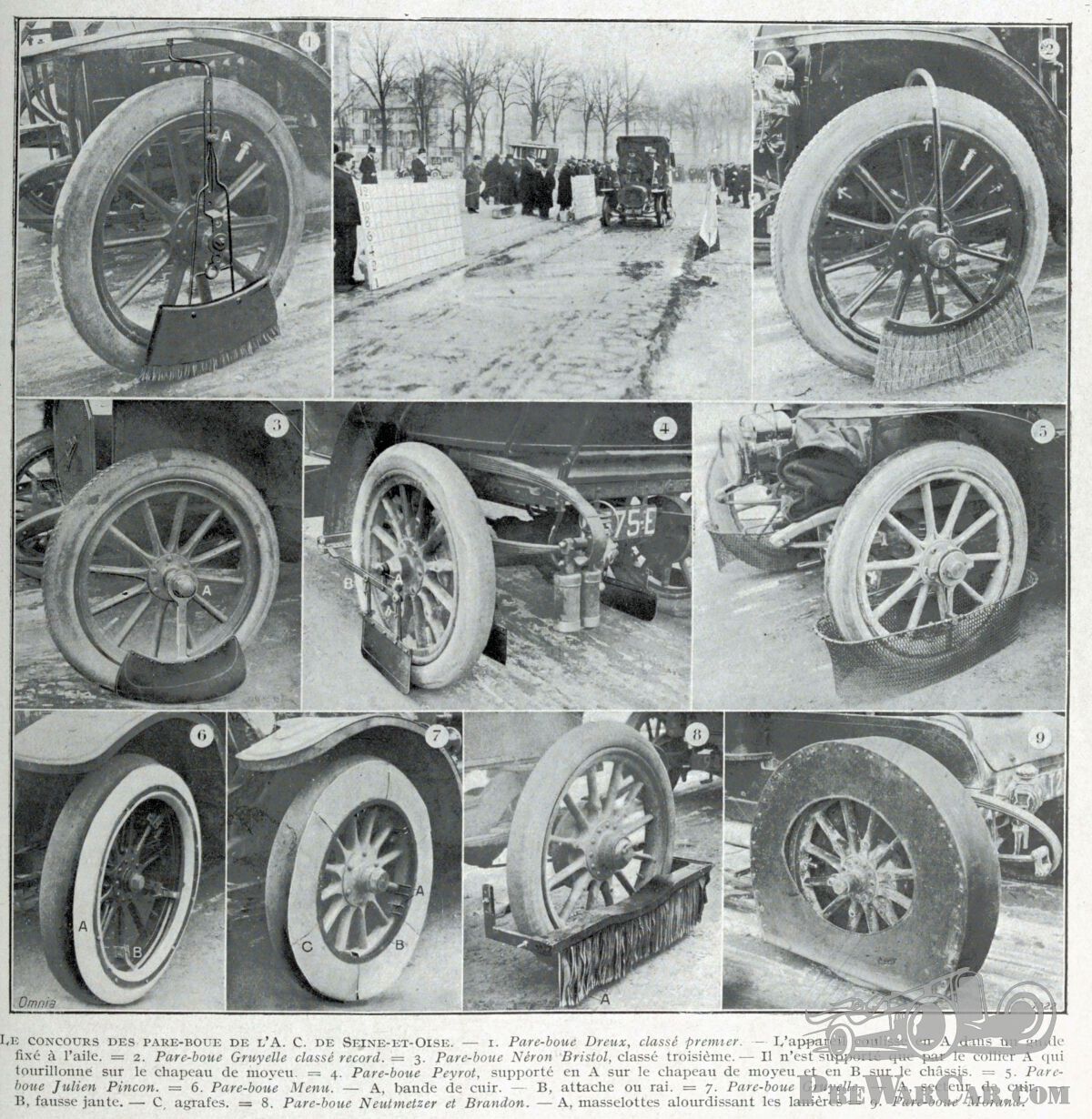
There is little doubt in my opinion that the Darracq carries an anti-mud device. Uploaded a page from the Omnia issue of February 10th, 1912, showing a number of anti-mud devices during the Concours de Pare-Boue (anti-mud trials) in France of that year. In 1913 also a trial was held. The device on the Darracq is very similar to some of the devices shown here.
Read more
Robert Kubart
27 December 2025, 12:51
I believe... it's a trial run for an invention. In the event of a tyre puncture, the vehicle rests on the skid plate and does not damage the tyre or the rim... there is a large repair area on the front wheel.
——
Ich glaube..es ist der Probelauf einer Erfindung, im Falle eines Reifenschadens sitzt das Fahrzeug auf der Kufe auf, und macht nicht den Mantel oder die Felge kaputt..am Vorderrad fällt eine grosse Reparaturstelle auf
Read more
——
Ich glaube..es ist der Probelauf einer Erfindung, im Falle eines Reifenschadens sitzt das Fahrzeug auf der Kufe auf, und macht nicht den Mantel oder die Felge kaputt..am Vorderrad fällt eine grosse Reparaturstelle auf
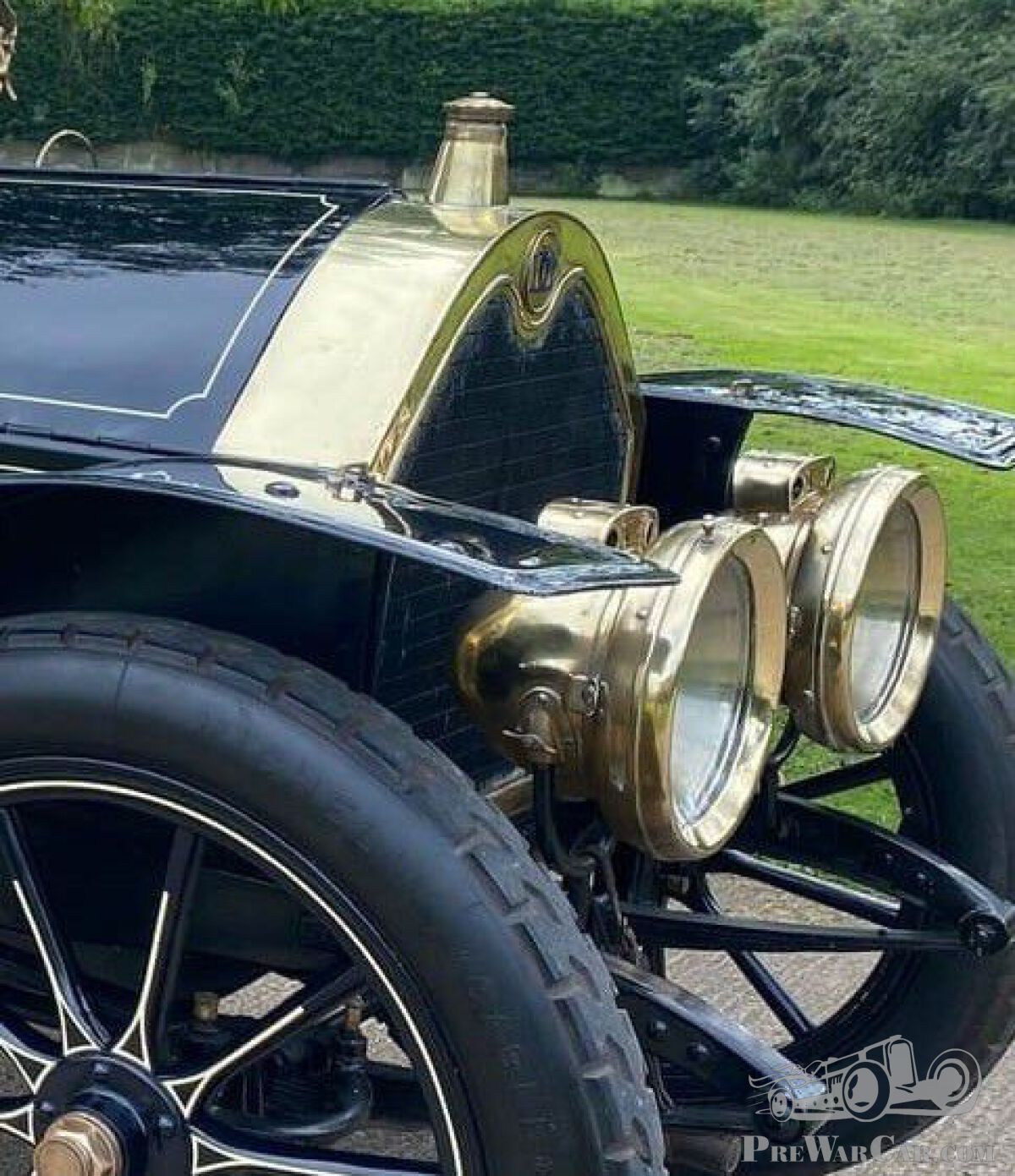
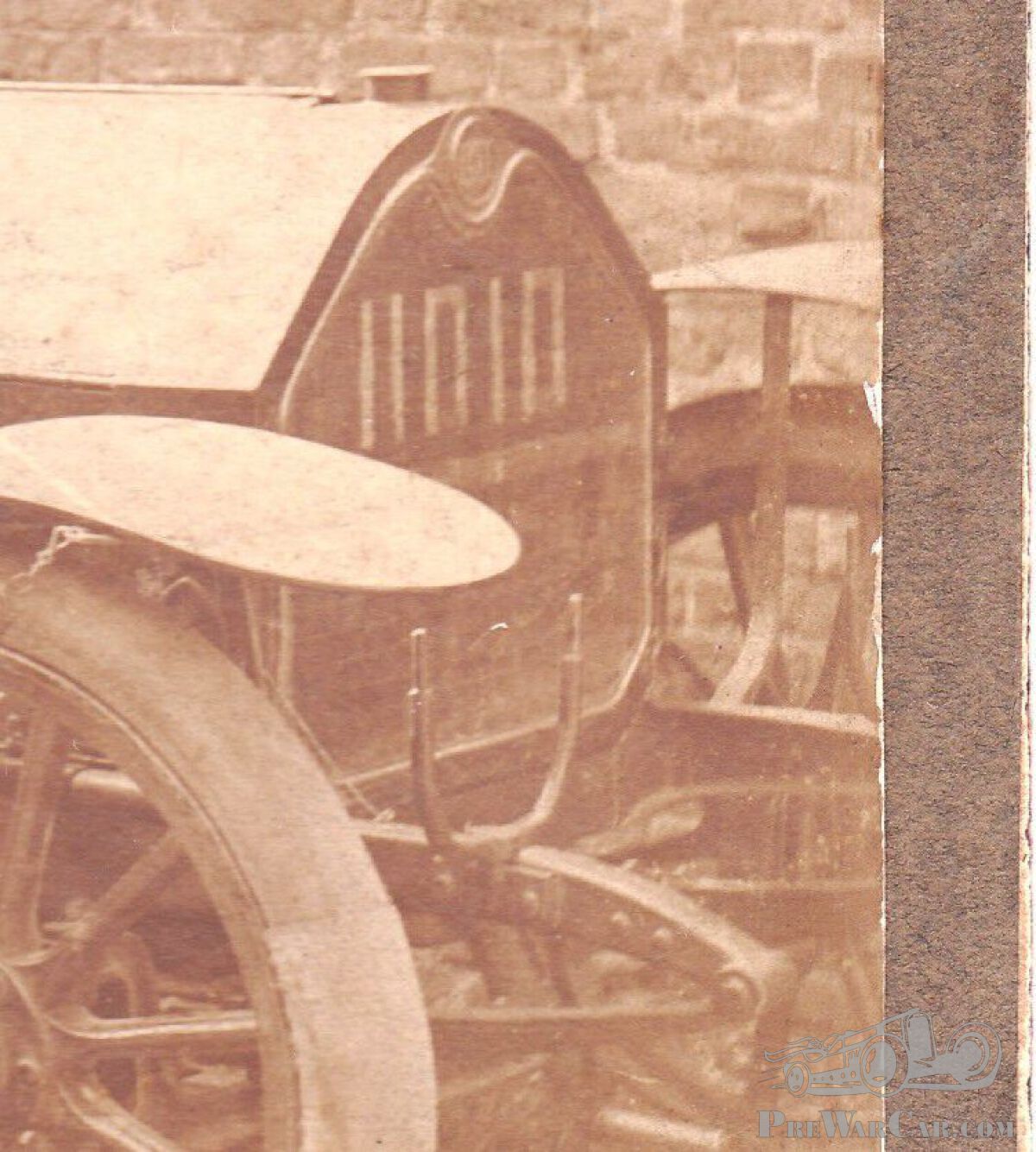


De Baets Josef
27 December 2025, 12:36
I would like to thank everyone for their spontaneous responses.
Photo no. 1 is still a mystery.
After further investigation, photo no. 2 is a Darracq from 1907 or earlier. Registration number 11010 was issued to Le Blanc Gaston, residing at 23 Rue Solferino in Lille, France. Source: Annuaire général l'automobilisme Belge 1907, page 285. The photo of the blue Darracq is from 1907. The purpose of those peculiar devices on the wheels remains a mystery.
Photo no. 3 is indeed a Blériot-Whippet 8/9 hp (1921) with a 1L V-twin engine. For more information, see: https://de.wikipedia.org/wiki/Bl%C3%A9riot-Whippet
Documented with a photo of the same car as the one in my photo, recognisable by the same number plate, XF6338.
Kind regards, Josef
——
Ik bedank iedereen voor de spontane reacties.
Foto n°1 is nog een raadsel.
Foto n° 2 is na nog verder onderzoek een Darracq van 1907 of daar voor. Kenteken 11010 is uitgegeven aan Le Blanc Gaston , woonachtig aan de Rue Solferino 23 in Lille, Frankrijk . Bron; Annuaire général l'automobilisme Belge 1907 op blz 285. Foto blauwe Darracq is van 1907. Wat voor doel die eigenaardige apparaten op de wielen hadden is nog een raadsel.
Foto n° 3 is inderdaad een Blériot-Whippet 8/9 pk (1921) met 1L V-twin-motor. Zie voor meer info; https://de.wikipedia.org/wiki/Bl%C3%A9riot-Whippet
Gedocumenteerd met een foto van dezelfde auto als die van mijn foto te herkennen aan dezelfde n° plaat XF6338.
Vriendelijke groeten, Josef
Read more
Photo no. 1 is still a mystery.
After further investigation, photo no. 2 is a Darracq from 1907 or earlier. Registration number 11010 was issued to Le Blanc Gaston, residing at 23 Rue Solferino in Lille, France. Source: Annuaire général l'automobilisme Belge 1907, page 285. The photo of the blue Darracq is from 1907. The purpose of those peculiar devices on the wheels remains a mystery.
Photo no. 3 is indeed a Blériot-Whippet 8/9 hp (1921) with a 1L V-twin engine. For more information, see: https://de.wikipedia.org/wiki/Bl%C3%A9riot-Whippet
Documented with a photo of the same car as the one in my photo, recognisable by the same number plate, XF6338.
Kind regards, Josef
——
Ik bedank iedereen voor de spontane reacties.
Foto n°1 is nog een raadsel.
Foto n° 2 is na nog verder onderzoek een Darracq van 1907 of daar voor. Kenteken 11010 is uitgegeven aan Le Blanc Gaston , woonachtig aan de Rue Solferino 23 in Lille, Frankrijk . Bron; Annuaire général l'automobilisme Belge 1907 op blz 285. Foto blauwe Darracq is van 1907. Wat voor doel die eigenaardige apparaten op de wielen hadden is nog een raadsel.
Foto n° 3 is inderdaad een Blériot-Whippet 8/9 pk (1921) met 1L V-twin-motor. Zie voor meer info; https://de.wikipedia.org/wiki/Bl%C3%A9riot-Whippet
Gedocumenteerd met een foto van dezelfde auto als die van mijn foto te herkennen aan dezelfde n° plaat XF6338.
Vriendelijke groeten, Josef
Ariejan Bos
24 December 2025, 20:22
My first impression was Minerva indeed too. But careful observation showed too many deviations from the early Minerva models to accept this as true.
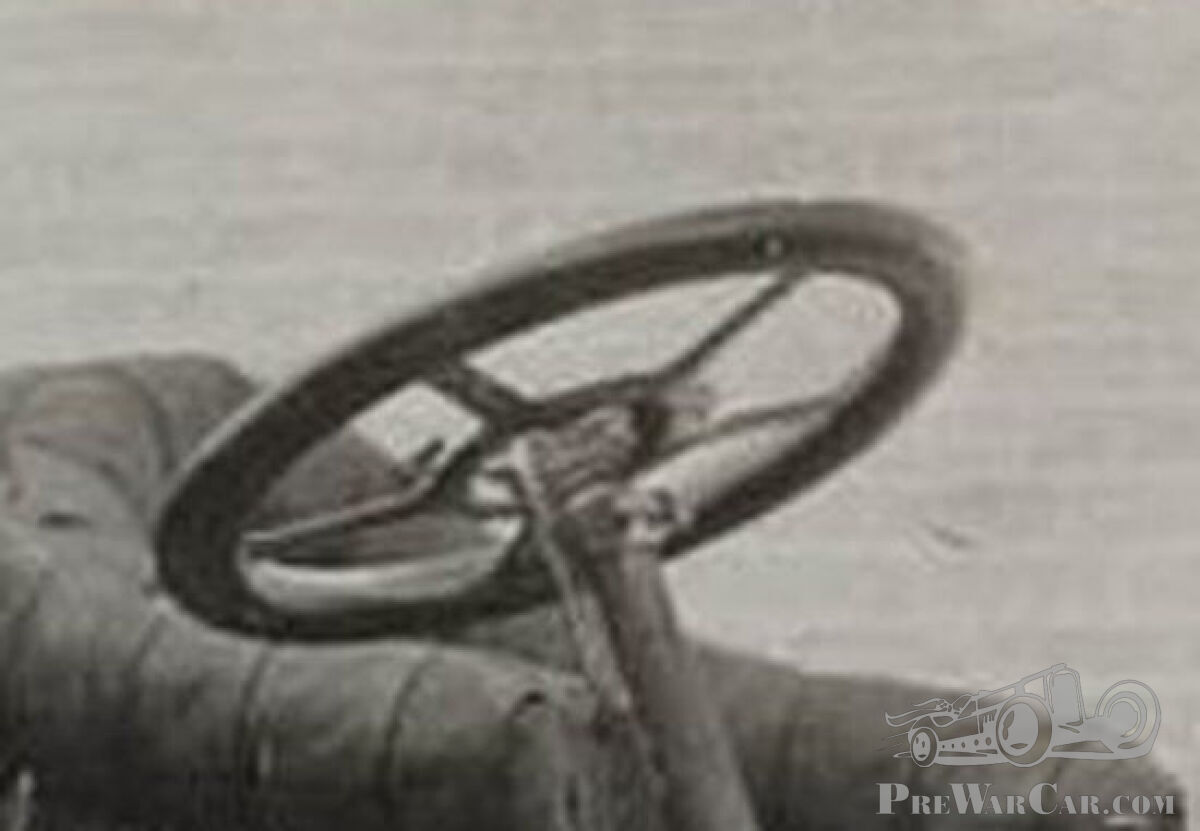
An important deviation is the absence of the centre circle in the steering wheel, a characteristic Minerva feature during the early years (see uploaded image of a 1903 Minerva steering wheel). In some promotional material this centre circle is absent, but in actual models I’ve never seen them without. Other differences a.o. are the presence of a top lid on the bonnet as well as a side lid with louvres; and the curiously curved crank support. Besides the steering column angle is too steep.
At the moment I’m considering the car to be a late La Minerve, just before or just after Minerva took over. We know these firms had an intimate connection and the early Minerva’s had engines identical to La Minerve. However the exact nature of this relation is still not fully clear.
In my archive I have some photos of a car, which is similar to the mystery car here and which I initially called Minerva. Later I changed my view about this. Important is that the car clearly carried a French license plate and was photographed in France, which supports the La Minerve origin.
This would explain the resemblance with the early (1904) Minerva, but the point here is that the number of images of La Minerve models from that year are very scarce and a positive id of the car on the above mentioned photo is still lacking.
Read more
An important deviation is the absence of the centre circle in the steering wheel, a characteristic Minerva feature during the early years (see uploaded image of a 1903 Minerva steering wheel). In some promotional material this centre circle is absent, but in actual models I’ve never seen them without. Other differences a.o. are the presence of a top lid on the bonnet as well as a side lid with louvres; and the curiously curved crank support. Besides the steering column angle is too steep.
At the moment I’m considering the car to be a late La Minerve, just before or just after Minerva took over. We know these firms had an intimate connection and the early Minerva’s had engines identical to La Minerve. However the exact nature of this relation is still not fully clear.
In my archive I have some photos of a car, which is similar to the mystery car here and which I initially called Minerva. Later I changed my view about this. Important is that the car clearly carried a French license plate and was photographed in France, which supports the La Minerve origin.
This would explain the resemblance with the early (1904) Minerva, but the point here is that the number of images of La Minerve models from that year are very scarce and a positive id of the car on the above mentioned photo is still lacking.
Christoph Röhrs
22 December 2025, 18:28
The rather peculiar devices on the wheels of the car in the second picture seem to me to be more of a splash guard, designed to prevent dirt and water from splashing onto people, animals or anything else when driving past.
Read more
Ariejan Bos
22 December 2025, 16:32
The last car is a 1921 Bleriot-Whippet. The first car is still under investigation.
Read more
Tyrone Hopes
22 December 2025, 12:18
In regard to the last car - the DVLA does have the car on record - but it's not currently taxed for the road. So probably in somebody's garage or car collection.
Read more
Tyrone Hopes
22 December 2025, 12:14
Sorry - no information about the cars themselves! The notation '+1913' would most probably indicate year of death of the driver. This was probably the photo they had to remember him by.
Read more
Stanislav Kirilets
22 December 2025, 12:08
The second picture shows Darracq. The device could be used to combat ice and snow if it's made of metal. If not, then it could be used to remove dirt.
Read more
An interesting selection of similar devices to protect against splashing water/dirt to the detriment of other road users. Thank you very much, that confirms my assumption, which was based solely on common sense.