The global magazine and marketplace for classic car enthusiasts, by enthusiasts.


Filter
Make a choice:
- Cars
-
Make >>
- Bikes
-
Location >>
- Parts & more
-
Make of car >>
-
Manufacturer >>
-
Category >>
- Bicycles & more
-
Year >>
-
Countries


Tri-cycling Women: a voyage of liberation

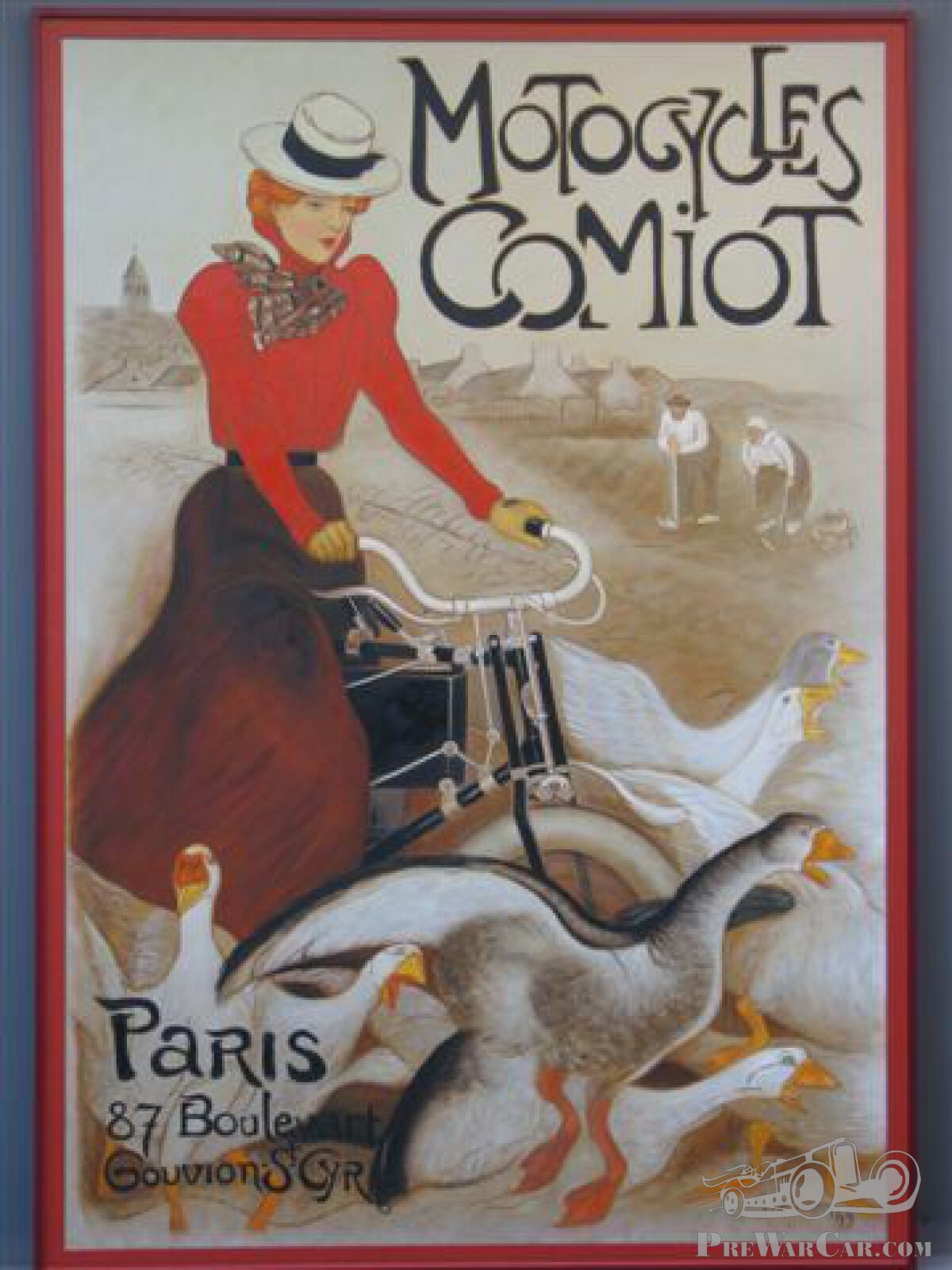
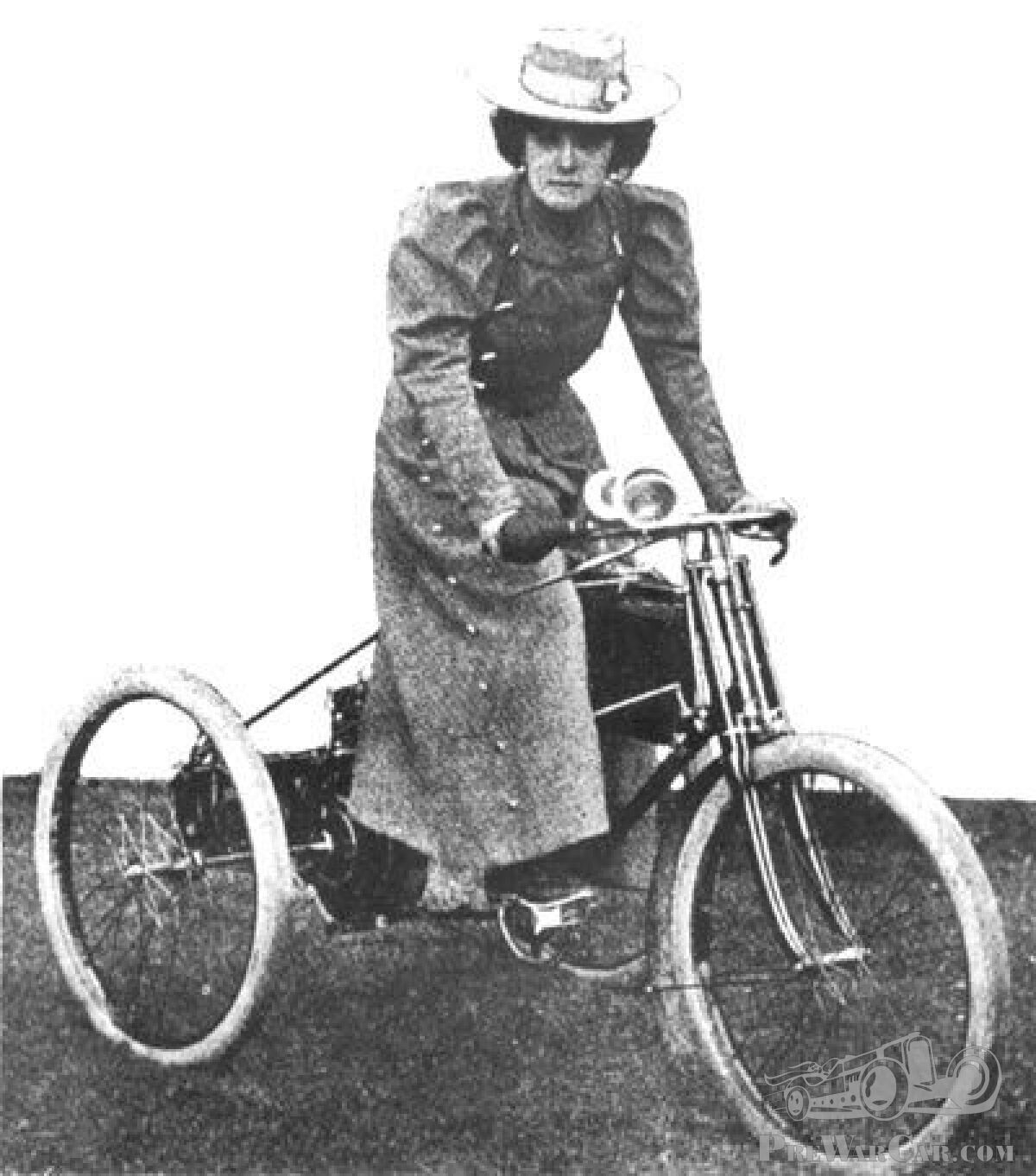



The earliest two-wheeled transport – the velocipedes, boneshakers and ordinaries (or high-wheelers) were the preserve of athletic, well-heeled young men. Starley’s ‘Safety bicycle first appeared in 1885, and by 1890 it had evolved to a machine with the familiar ‘diamond-shaped’ frame and equal sized wheels shod with pneumatic tyres. At the outset, the bicycle was the preserve of the well-off, and it was some years before the working classes could afford to buy machines.
Along with the bicycle came the need to reconsider the dress that was appropriate
The appeal dramatically widened to include women, for whom it was not just a convenient mode of transport, but a voyage of liberation. Along with the bicycle came the need to reconsider the dress that was appropriate, especially for women who had typically worn ankle length dresses. An industry flourished in satisfying the desire for headwear, footwear, cycling bloomers and jackets that maintained dignity whilst offering freedom of movement. For those who overcame concerns about sartorial considerations, there were other battles to be fought.
The days of the chaperone were over, but the explosion of popularity in cycling in the 1880s/90s introducing a degree of independence for women, was not altogether perceived as a positive step forward by some. The Literary Digest in 1895 opined that:
“Over-exertion, the upright position on the wheel, and the unconscious effort to maintain one’s balance tend to produce a wearied and exhausted ‘bicycle face’ on the part of the female rider. The face is usually flushed, but sometimes pale, often with lips more or less drawn, and the beginnings of dark shadows under the eyes, and always an expression of weariness”.
The same magazine expressed the view that ‘bicycle face’ need not be a permanent condition, as long as the individual stayed away from the machine for a good length of time. Other conditions such as exhaustion, insomnia, heart palpitations, headaches and depression awaited women who ignored the advice. Even if these ailments could be overcome, there was the risk of an inability to have children, and worse still, that the female rider might experience sexual arousal from the constant vibration.
Unsurprisingly, many thousands of women ignored these fulminations by traditionalists, and embraced the freedom offered by bicycles, and for those with deeper pockets, tricycles. All the main manufacturers of bicycles in Great Britain and France, also produced tricycles that were considered to be more suitable for men and women of a ‘certain age’.
Marseille to Nice
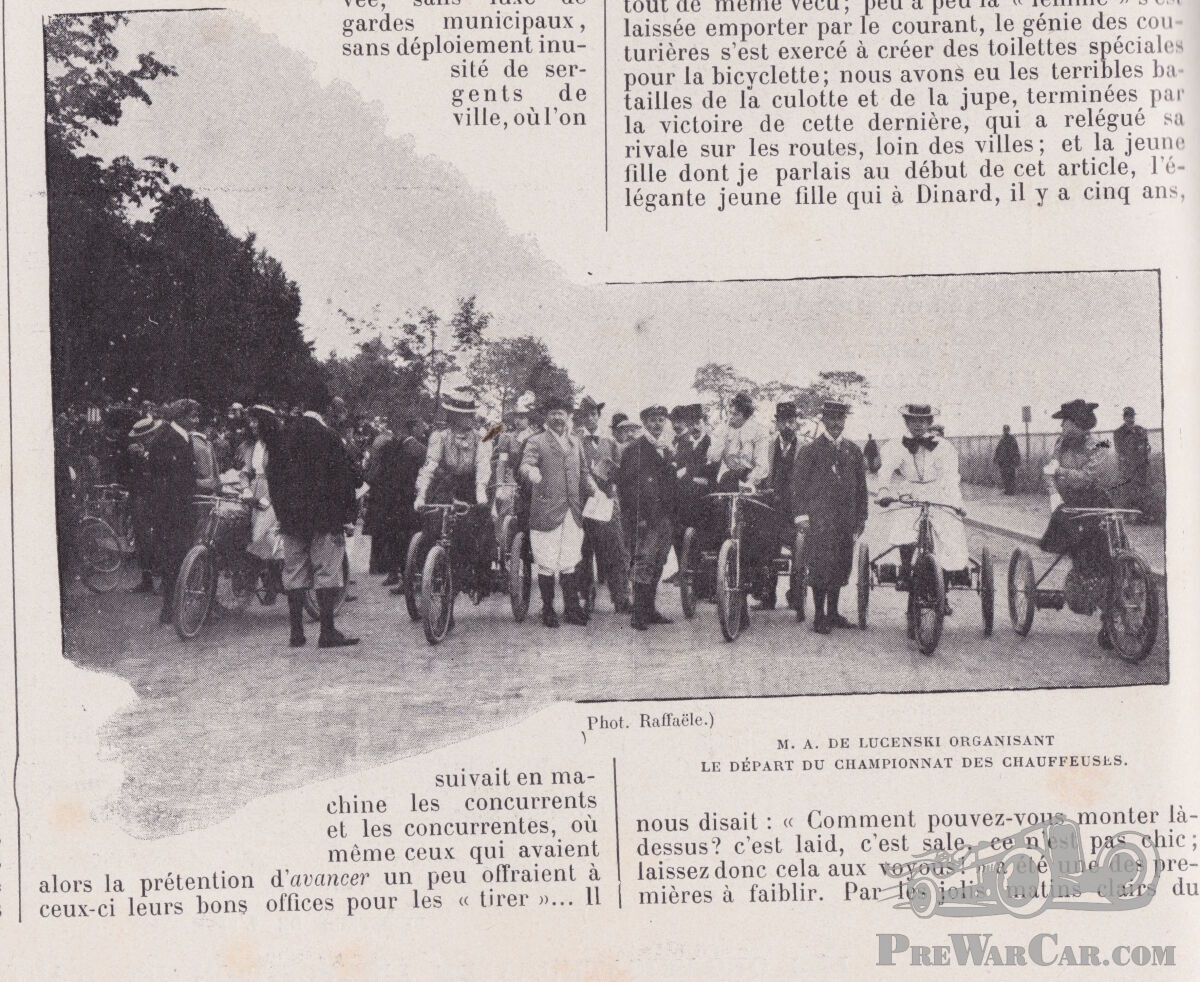
It was inevitable that when motorised tricycles became available from the mid-1890s, that they would be used by both sexes. In France, women on board motorised tricycles were a common sight from 1898, not just on the leafy byways of the Bois de Boulogne but as competitors in road races too. Early in 1898, Madame Laumaille participated in the Marseilles to Nice event in the same category as the great French racer, Osmont, the ultimate victor. She was comfortably leading the field at the end of the first stage as she approached Hyeres, but a troublesome gear chain delayed her final arrival in Nice, placing here in fourth position, still five minutes ahead of her husband. In other races, she was joined by Lea Lemoine, a member of the Lemoine foundry family and Merry Djo. The road racing events quickly developed from exhibition-style activities to ones where high speed machines were raced over sometimes rugged terrain, and female participation declined. In France, however, there was scarcely a summer season event in the late 1890s where ‘Les Chauffeuses’, glamorously turned out as usual, were not present to demonstrate their evident skills.
Women in advertising campaigns
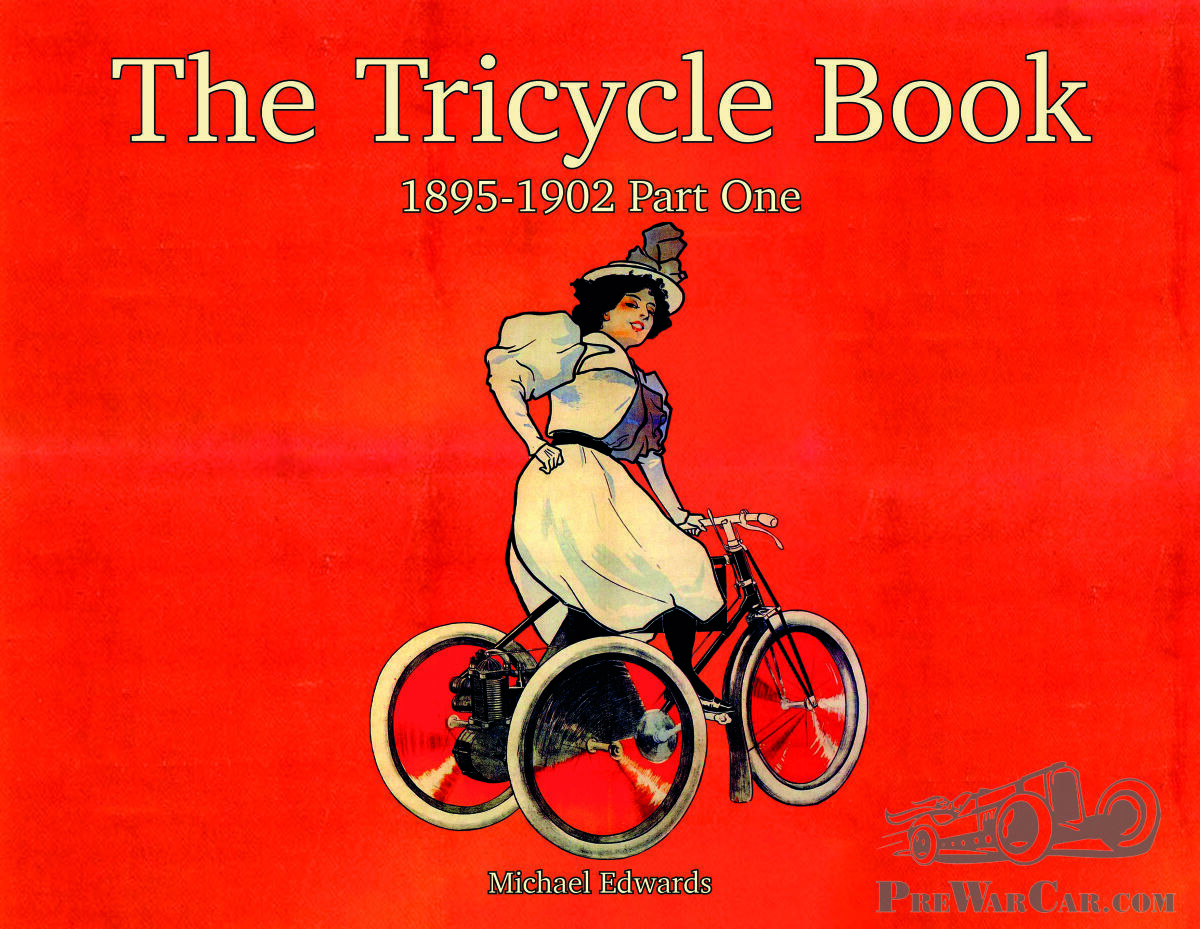
There was scarcely a manufacturer that did not involve women in their advertising campaigns: the photographic studios were kept busy capturing women on tricycles that were kept there for the purpose. De Dion Bouton, Clement, Gladiator, Phebus and Comiot all incorporated attractive women in their turn of the century posters, many of which represent some of the finest examples of the artists’ craft. In May 1898 Mlle Anthelmina Serpolette was part of an Australian-wide tour promoting Gladiator machines; she demonstrated her prowess and that of her machine on both the racetrack and on the truly awful roads of the time.
By the time the short life of the tricycle was nearing its end in 1901-2 (although they were still available for some years beyond this point) the role of women in promoting motor cars continued, but their status and acceptance as competent drivers was firmly established. Cycling was responsible for launching some dramatic changes for women in France, Great Britain and elsewhere, a trend that continued with the motorised tricycle. Within a decade the strides taken towards greater female equality had been remarkable.
Words and photos by Michael Edwards, writer of early motoring books like the Tricycle book. He will be present at the PreWarCar.com – PostWarClassic.com stand during the Retromobile show in Paris (Pavillion 1, close to escalator) from Wednesday February 6th to Sunday February 10th, 2019
Location: Parc des expositions de la Porte de Versailles (1 place de la Porte de Versailles 75015 Paris)
Location: Parc des expositions de la Porte de Versailles (1 place de la Porte de Versailles 75015 Paris)
Published:
Friday February 1st, 2019
Facebook
LinkedIn
Twitter
WhatsApp
Email
Copy
Comments
Denis Basson
27 January 2025, 03:51
I am dead certain the Mlle. Serpolette rode a Comiot tricycle in her Australian tour in 189. If you look at pictures of her machine, it has the four-blade Eadie-patent Shmit forks which as far as I can tell were only used on Comiot trikes. Also, at that time I do not think Gladiator were making trikes with a single front wheel; theirs were of the Morgan car type with two front wheels and a single back wheel. Gladiator did make more conventional trikes but at a later date than 1898.
Read more