The global magazine and marketplace for classic car enthusiasts, by enthusiasts.


Filter
Make a choice:
- Cars
-
Make >>
- Bikes
-
Location >>
- Parts & more
-
Make of car >>
-
Manufacturer >>
-
Category >>
- Bicycles & more
-
Year >>
-
Countries


An Amilcar, a promise, and a very long French affair
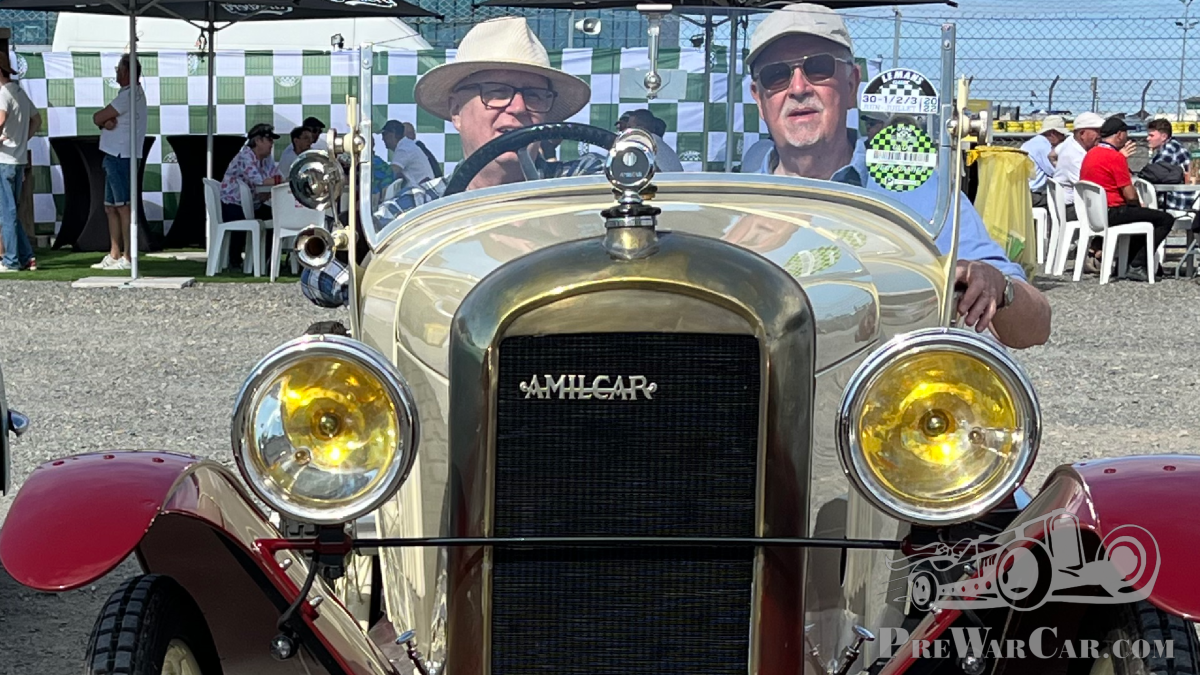
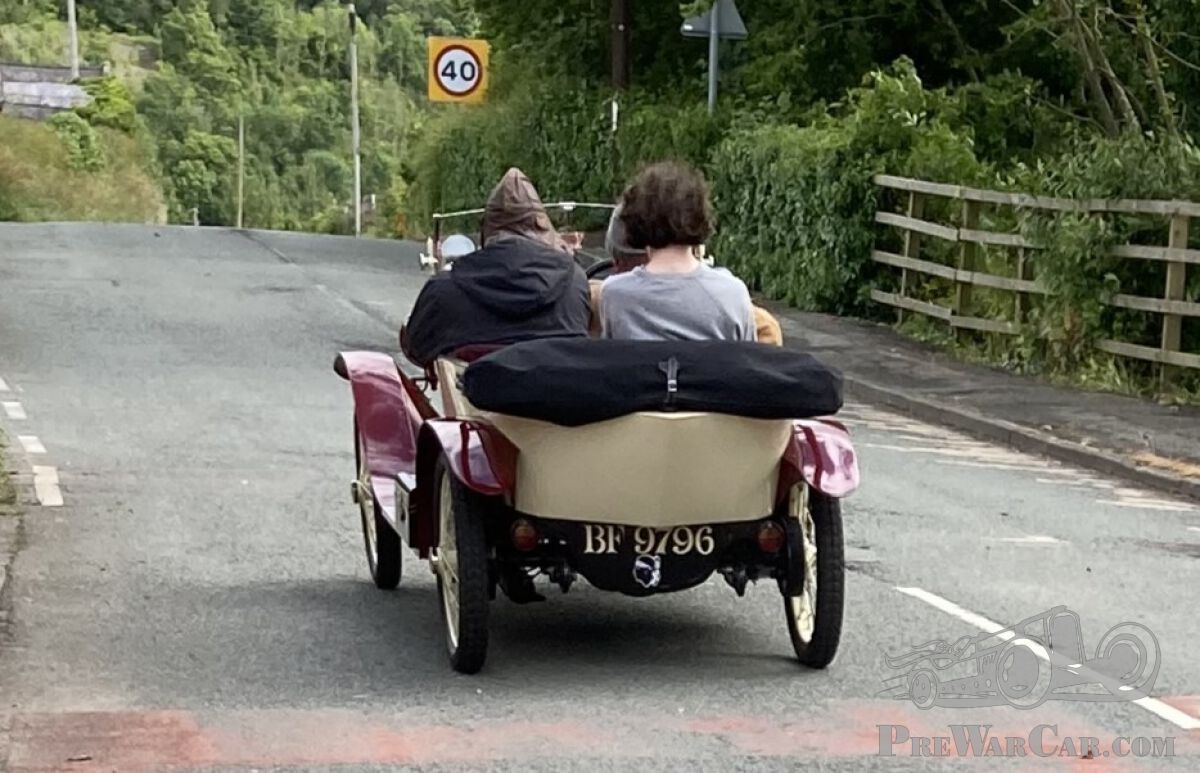
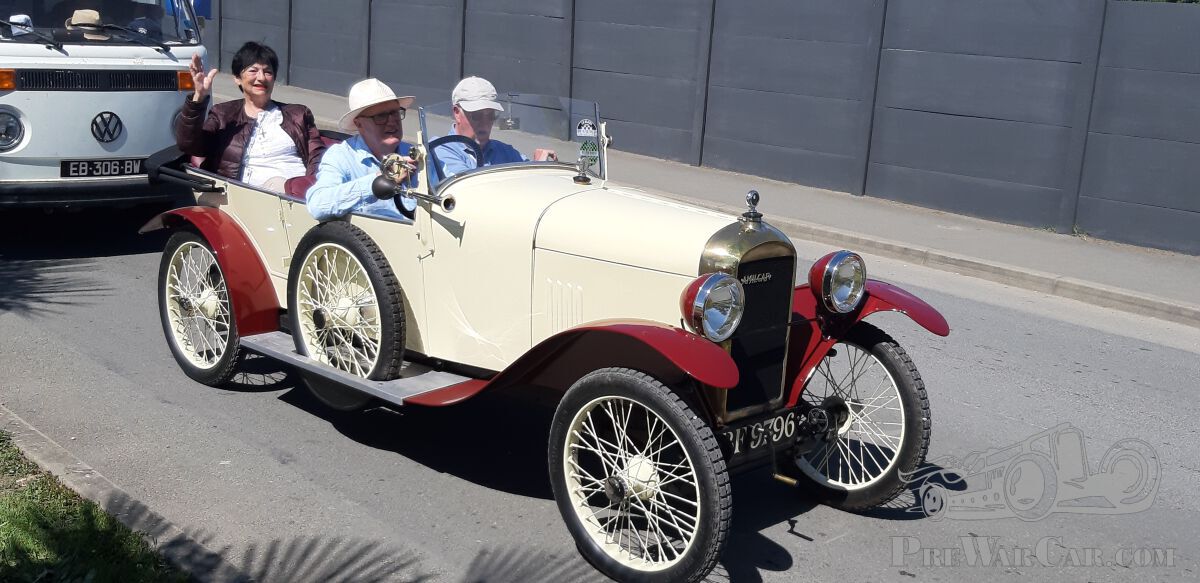
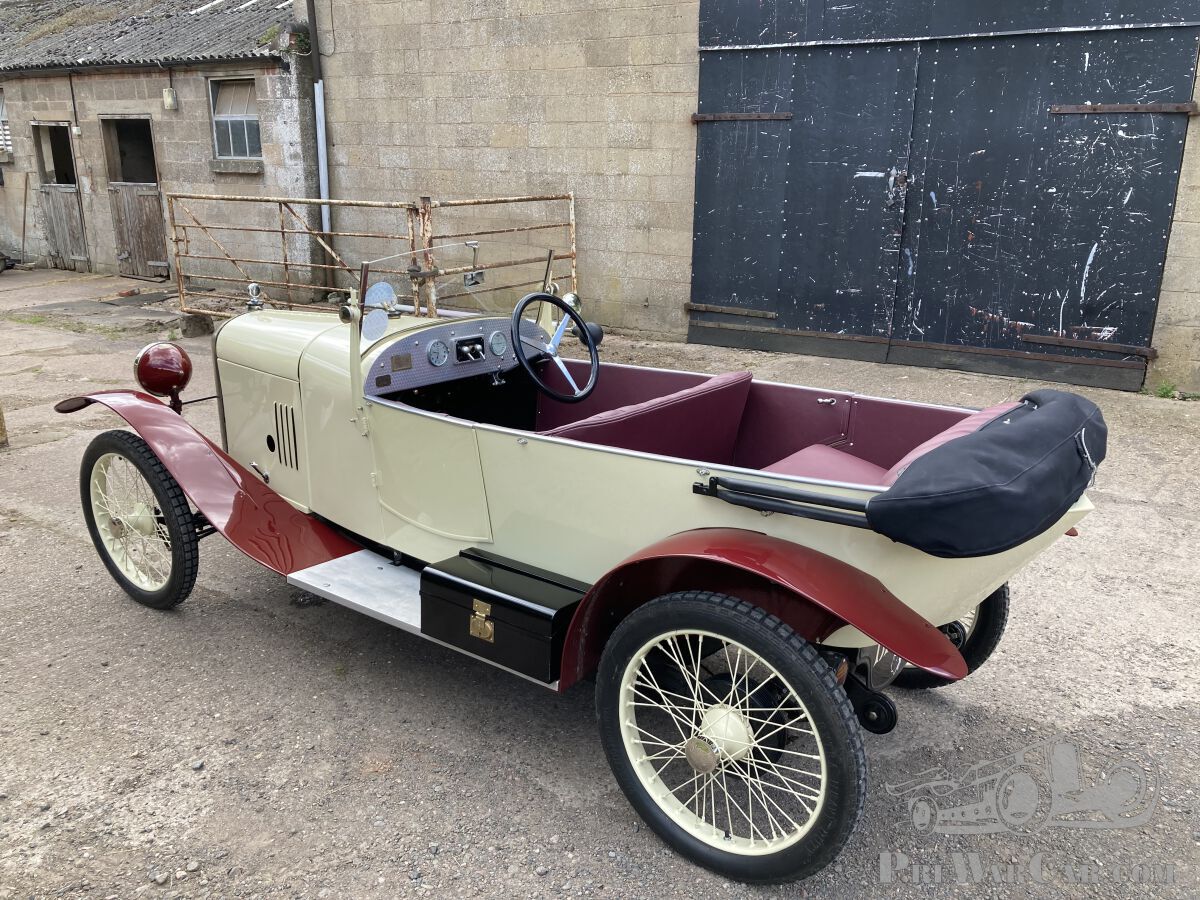
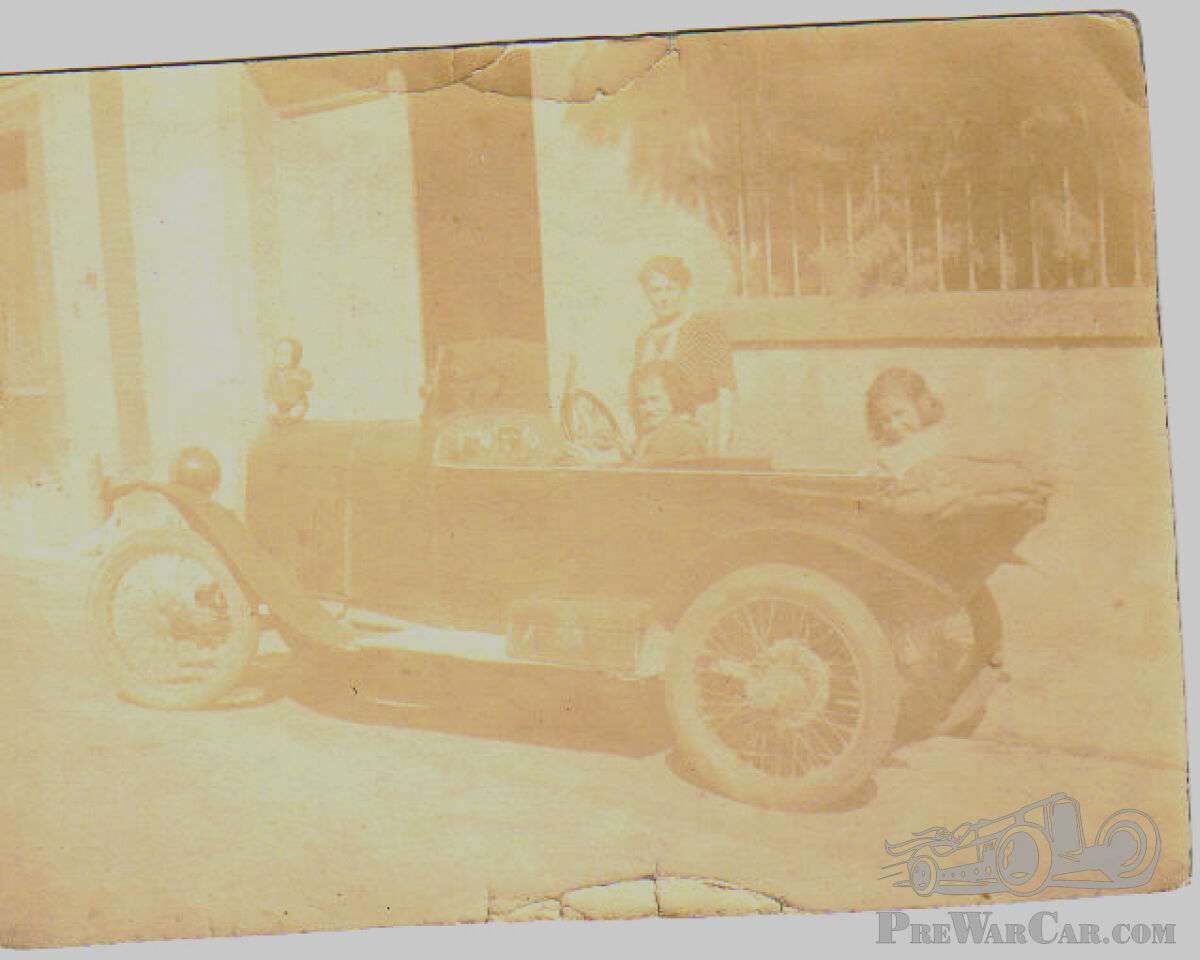
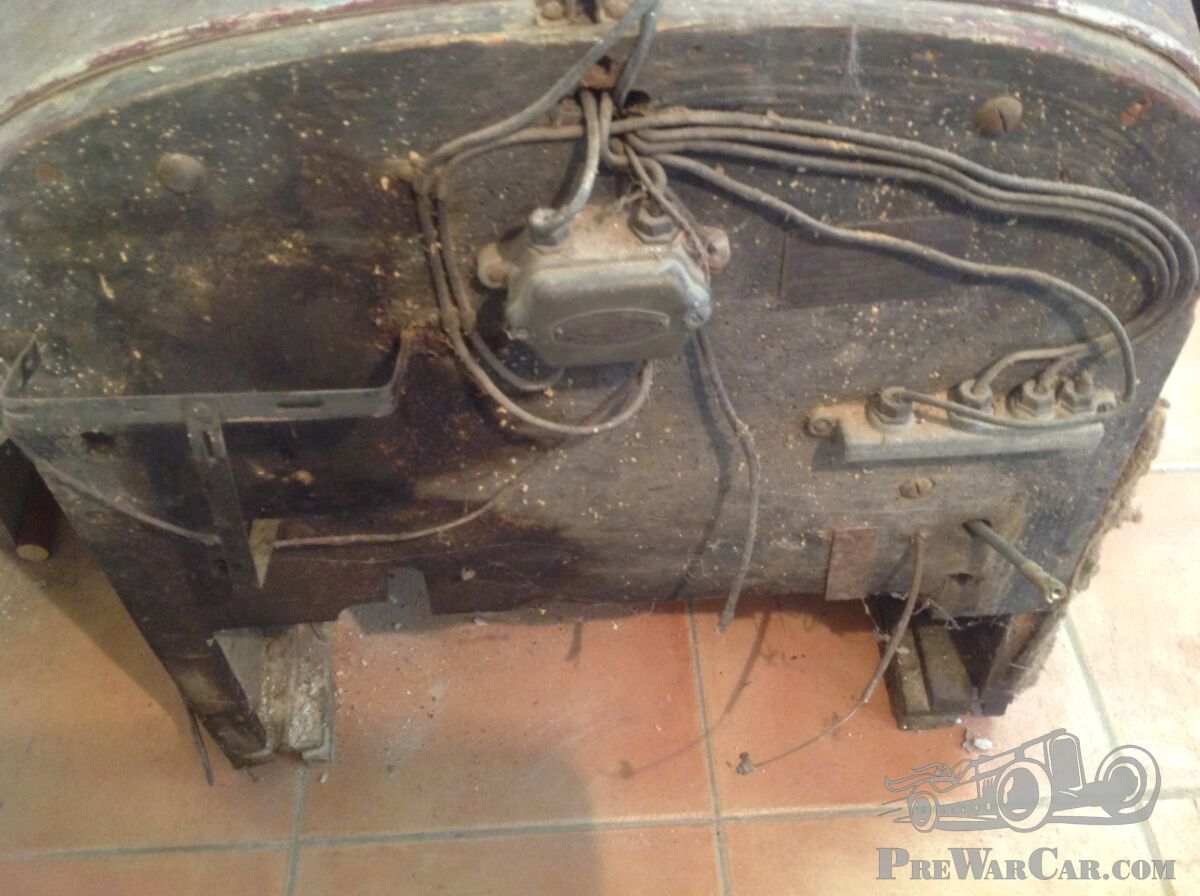


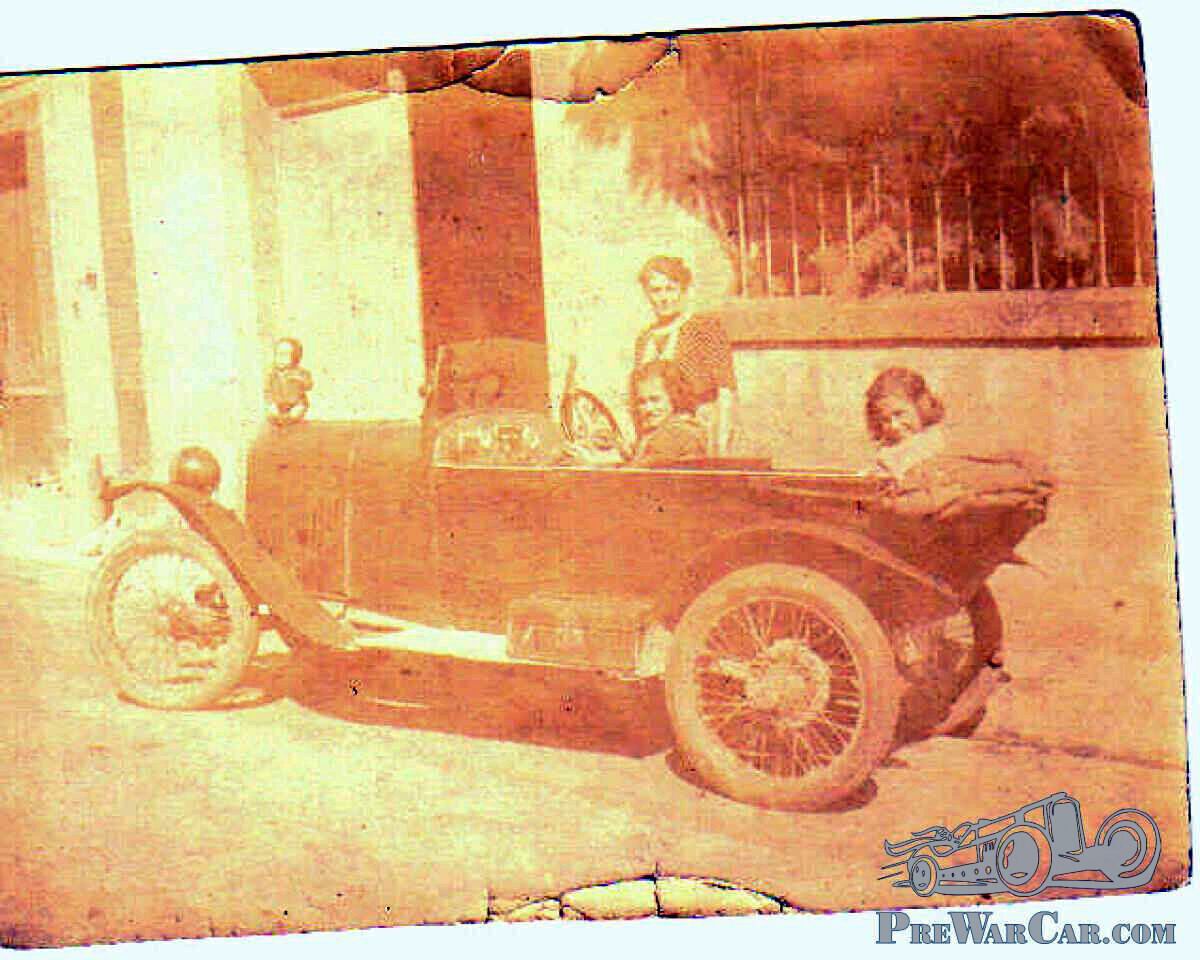
In 1962, as a young British student in London, I met Rosy, a beautiful Corsican girl working as an au pair. What started as a chance meeting soon blossomed into a romance. By the summer of 1964, I found myself on a road trip through France with my flatmate Martin and his Portuguese girlfriend. We decided to stop by the village of Montesquieu-Volvestre to visit Rosy’s close friend, Anne-Marie. That’s where I met her grandfather, Benoit—a retired schoolteacher with a garage full of secrets.
Over dinner one evening, Benoit casually mentioned he had an old car stored away—an Amilcar C4 from the early 1920s. At the time, the name meant nothing to me. But the next morning, he led us into the garage, and there it was: dusty, draped in sheets, and definitely showing its age. Still, something about it captivated me.
Martin and I spent two full days coaxing the car back to life. Looking back, we may not have been the most considerate guests—turning up late for meals didn’t exactly endear us to Rosy—but our enthusiasm was hard to contain. When we finally got the engine running and took it for a cautious spin, it ran surprisingly well for a car that had been sitting idle for years.
That night, I asked Benoit if he’d be willing to sell it. To my surprise, he said he wouldn’t sell it—but he would give it to me, on one condition: that I promise to restore it properly and not just sell it off for quick profit. I accepted without hesitation. We sealed the promise with a toast of eau de vie. Perhaps buoyed by that moment—or maybe it was the joy of receiving the car—I proposed to Rosy that very night. To my delight, she said oui. In just one day, I had gained both a fiancée and a vintage Amilcar.
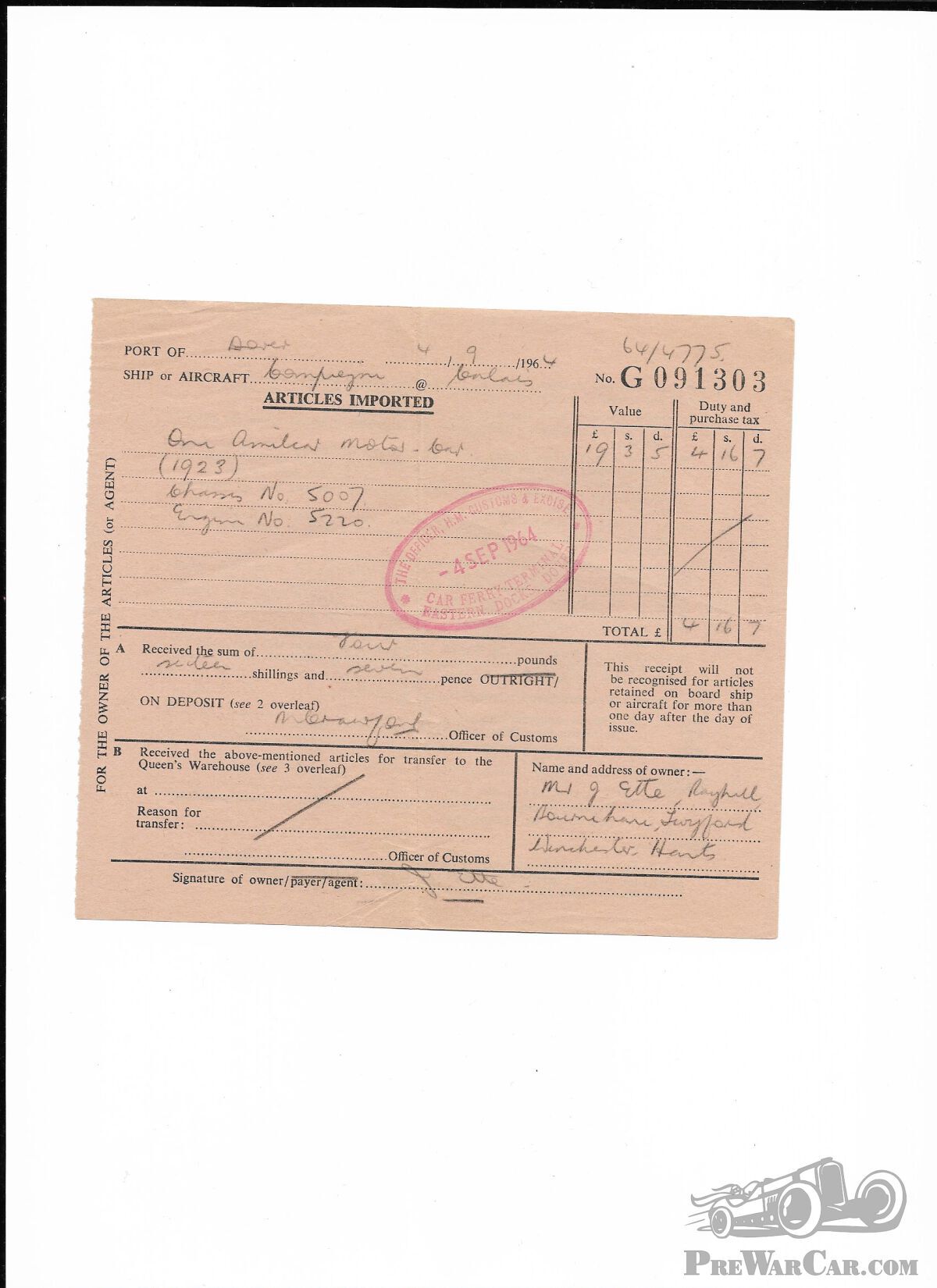
When we returned to Britain, we made arrangements to bring the Amilcar over. With help from Rosy’s family in Toulon—her father was Head of Naval Security and had the right connections—the paperwork was sorted quickly. The car arrived in Dover on September 4th, 1964. It cost me just £4 16s. 7d. in duty and purchase tax. My father generously offered space in his garage in Twyford, and that became the Amilcar’s new home.
Over the following years, Rosy and I got married, and my career with the British Tourist Authority took us to Amsterdam, Paris, and later Copenhagen. While in Denmark, I finally had the space to begin the restoration. With the help of local experts, a Danish engineer, and a classic restoration manual, I got to work.
A memorable moment came during a promotional tour I organised for Lord and Lady Montagu, who brought over the famous 1909 Rolls-Royce Silver Ghost. I became friendly with their chauffeur, who offered to take some of the Amilcar’s parts back to Britain and restore them—free of charge. That gave the project a real boost. But just as things were picking up, I was posted back to London in 1977.
We moved to Henley-on-Thames and gave the Amilcar a new garage, but not long after, another relocation to Edinburgh sent the car back into storage—once again in my father’s garage. Then came the business of starting my own business, raising a family, and taking on other vintage vehicle projects. The Amilcar, I’m ashamed to admit, sat waiting for me for nearly 20 years.
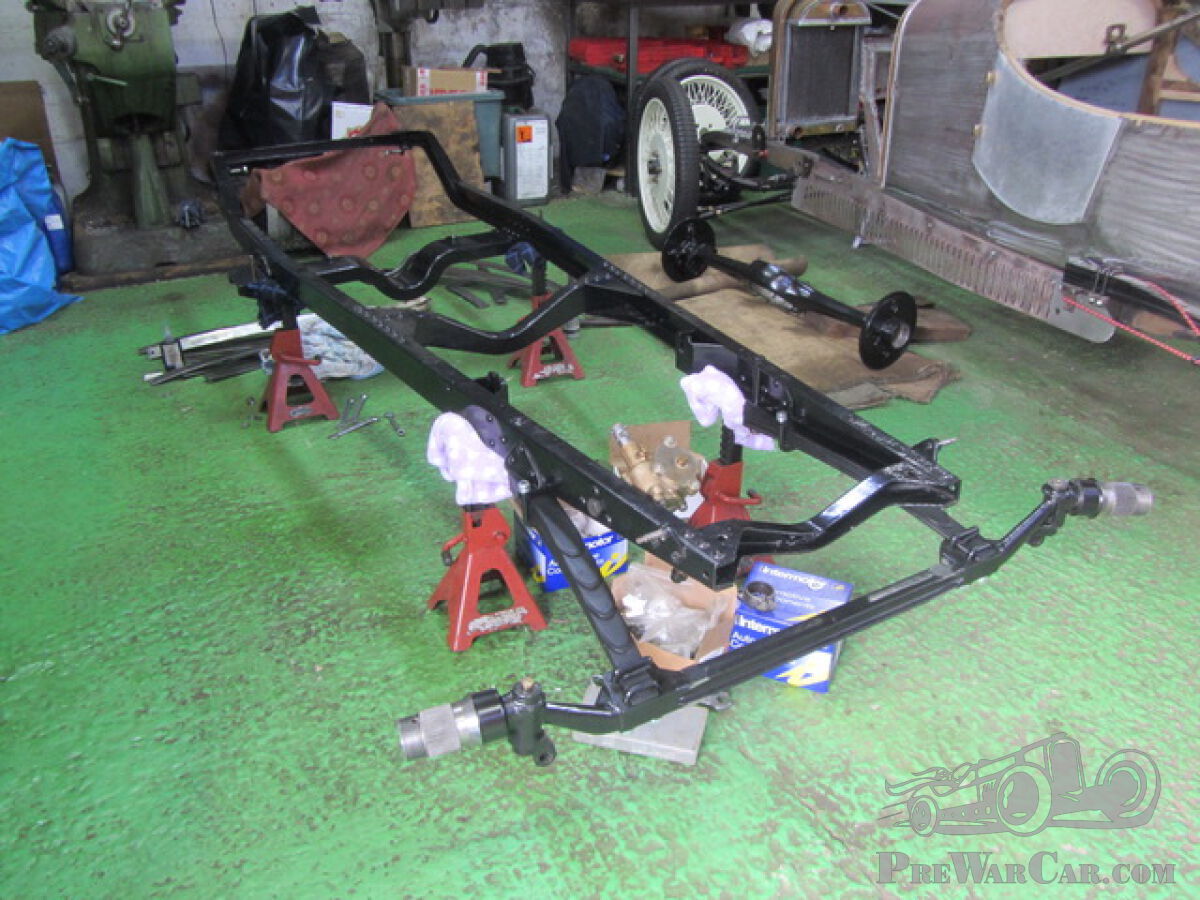
It wasn’t until I retired in 2003 that I could finally return to it. Rosy and I moved to the Toulon area in France to be near her family and the sunshine. We brought the Amilcar’s body with us during the move, while the chassis remained stored in a friend’s barn back in England. With no garage on the new property, we built one specifically to house the Amilcar.
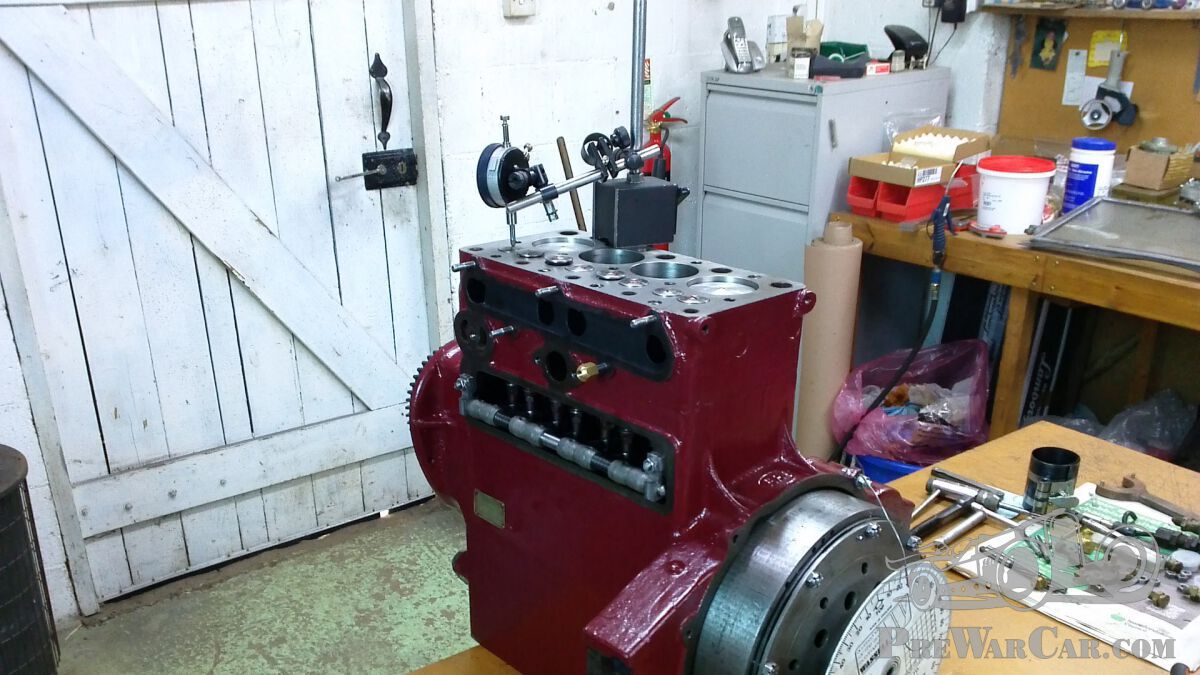
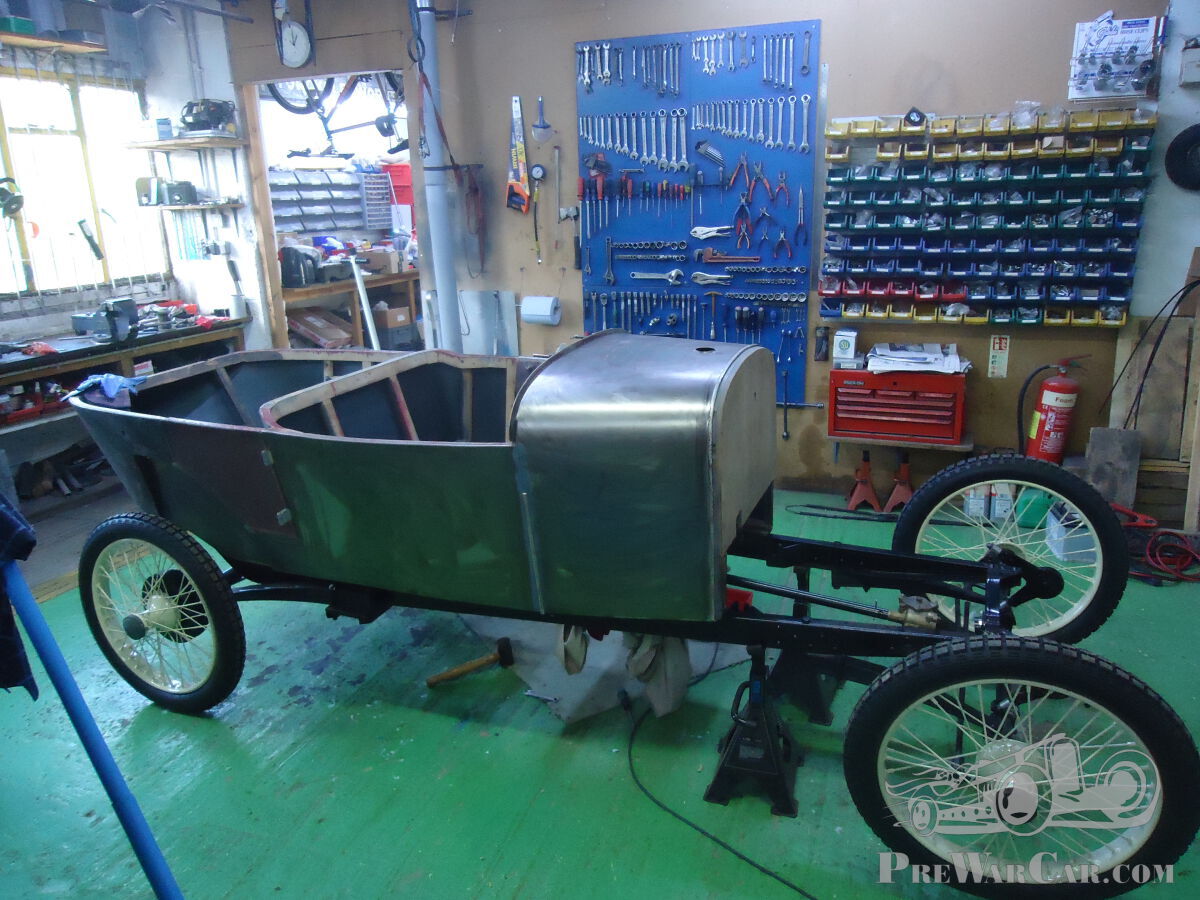
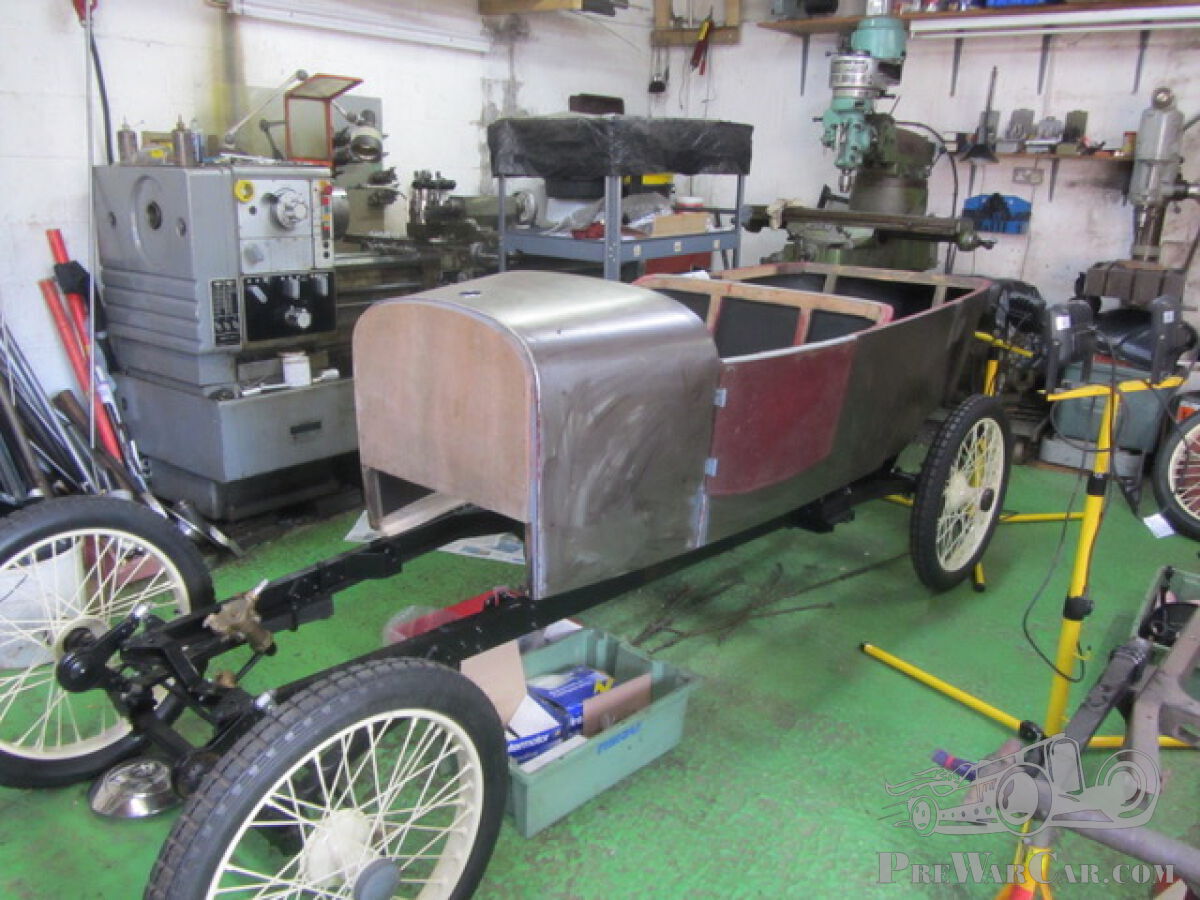
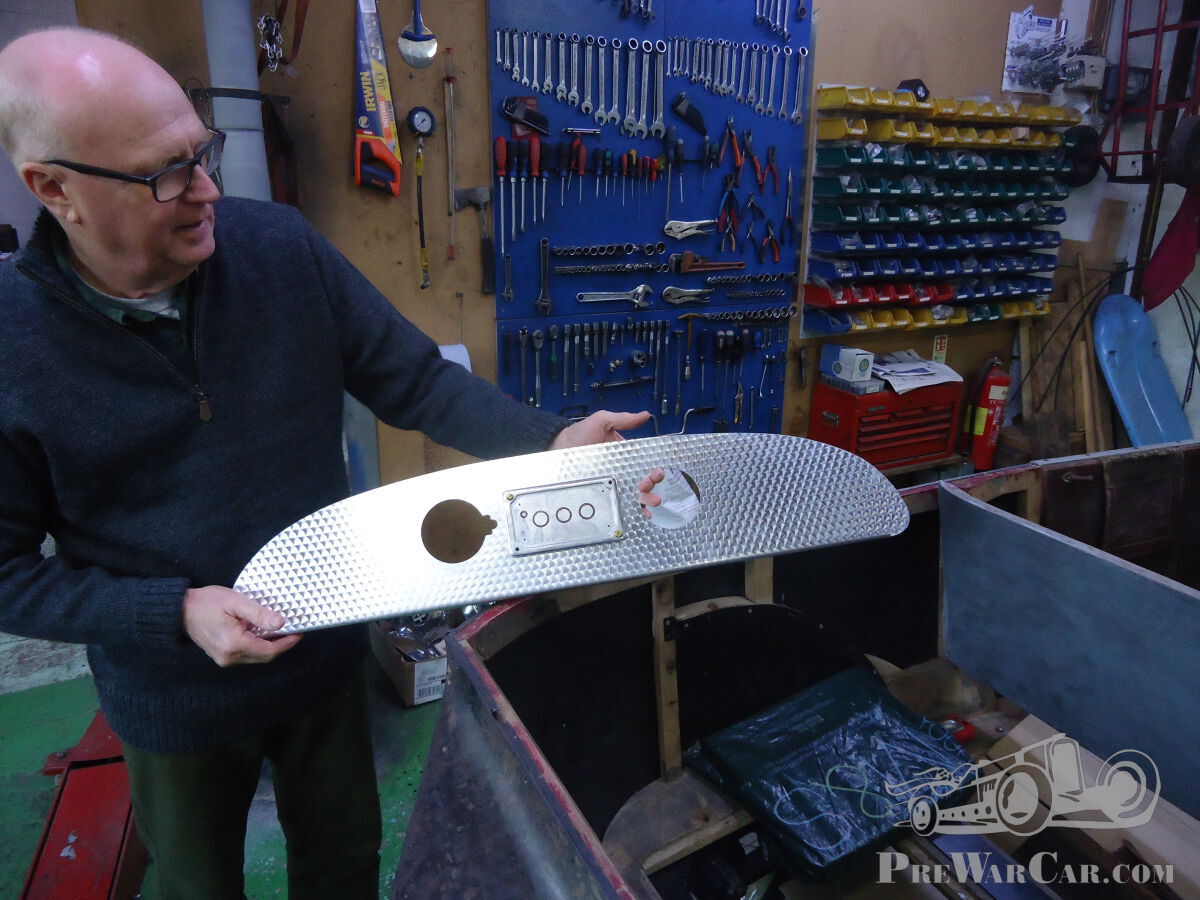
In 2014, a fortuitous meeting with Mike Tebbett led me to Derek Magrath of Vintage Metal near Malvern. Derek, a former Morgan craftsman and a passionate Francophile, took to the project immediately. He brought the chassis over from Britain, and together, we began the final stretch of the restoration.
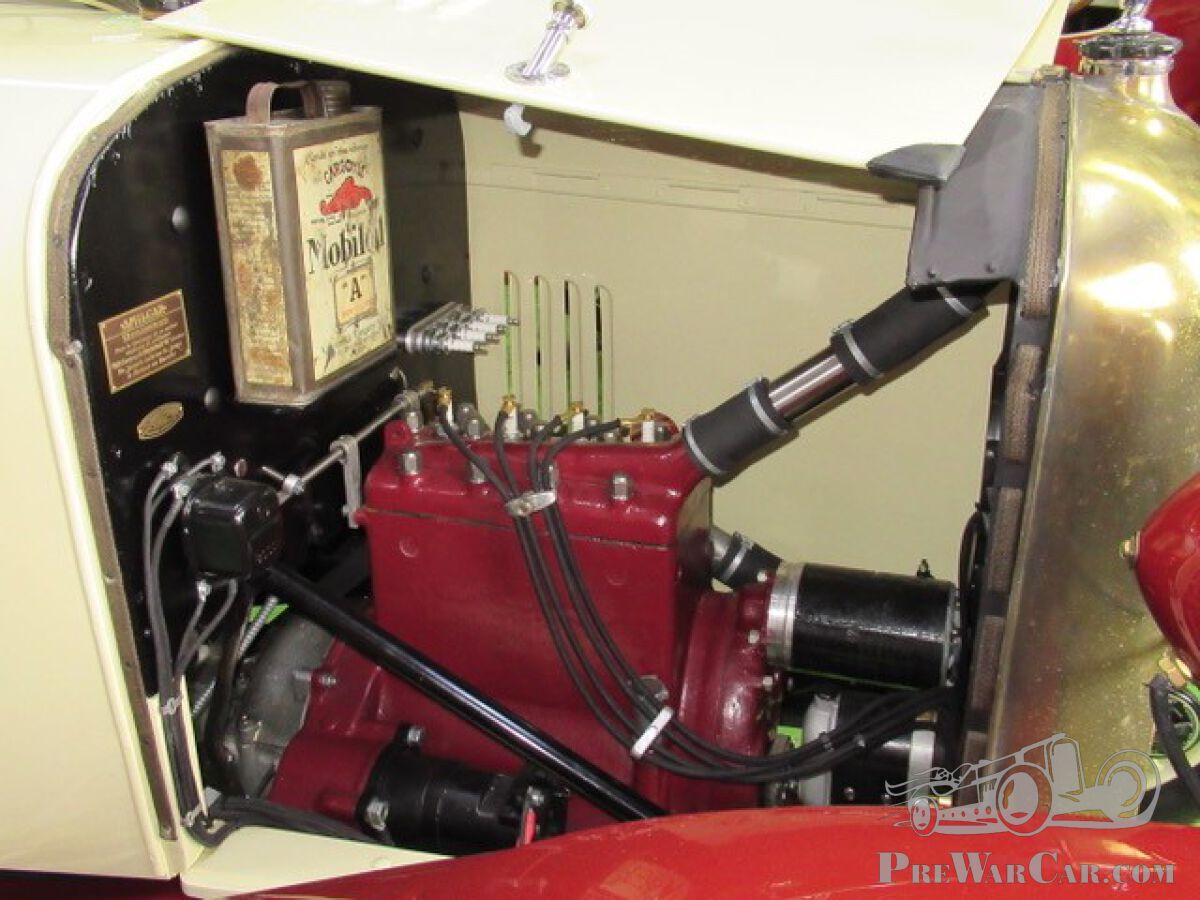
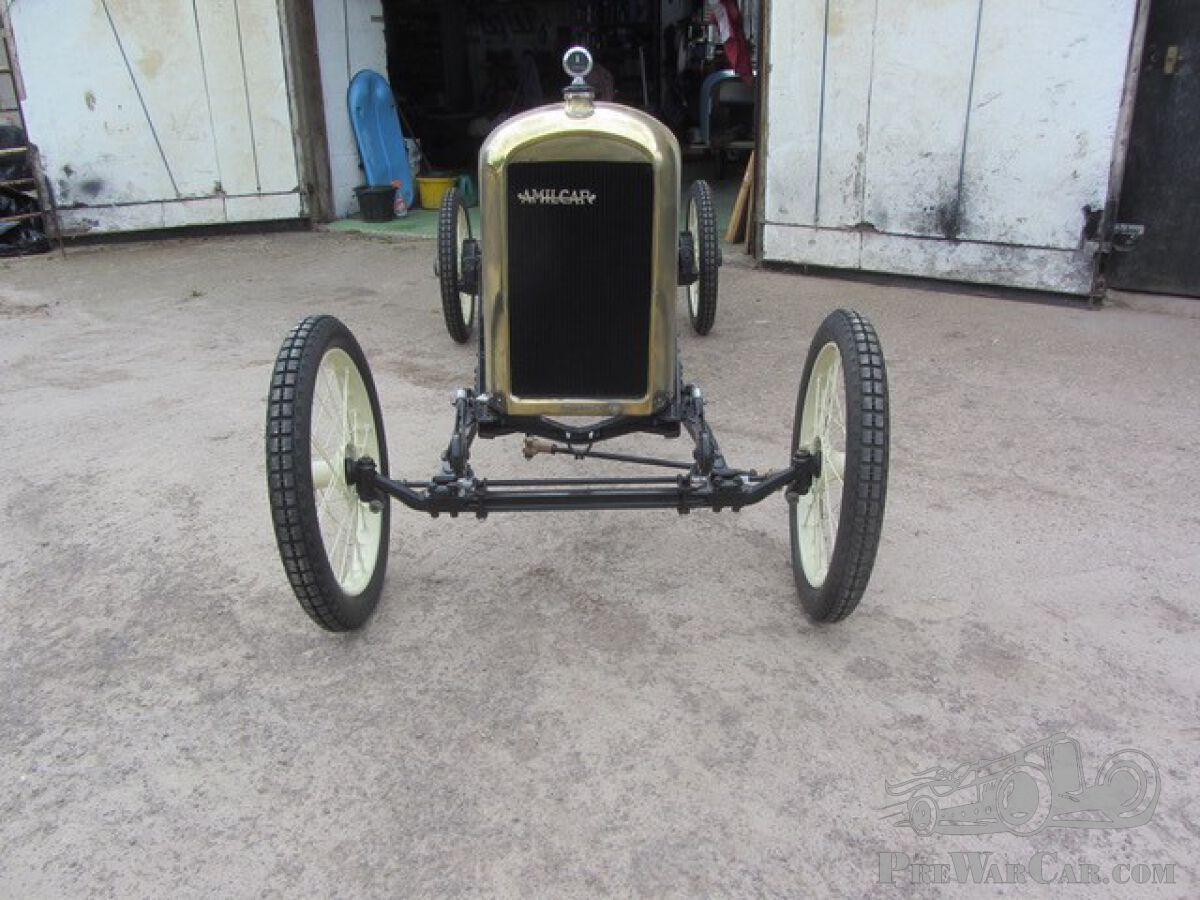
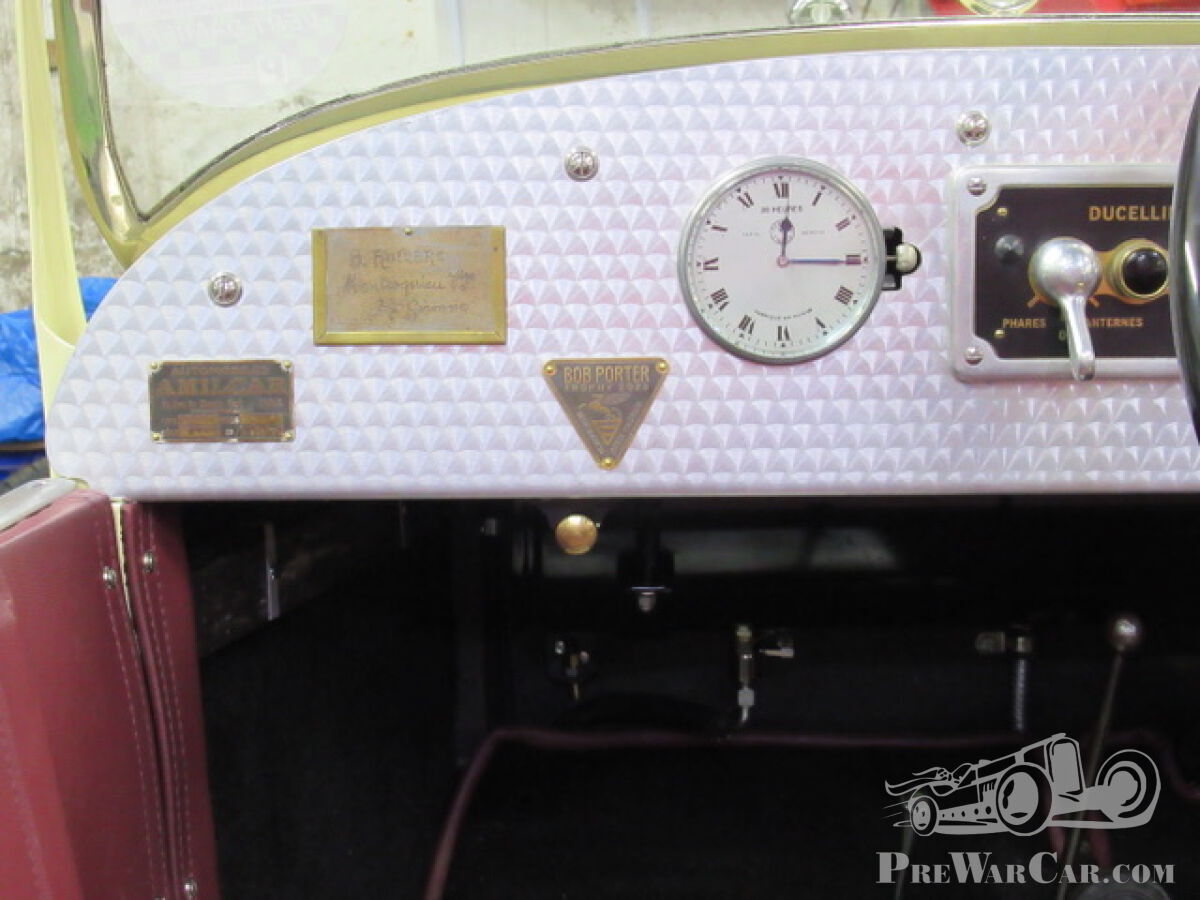
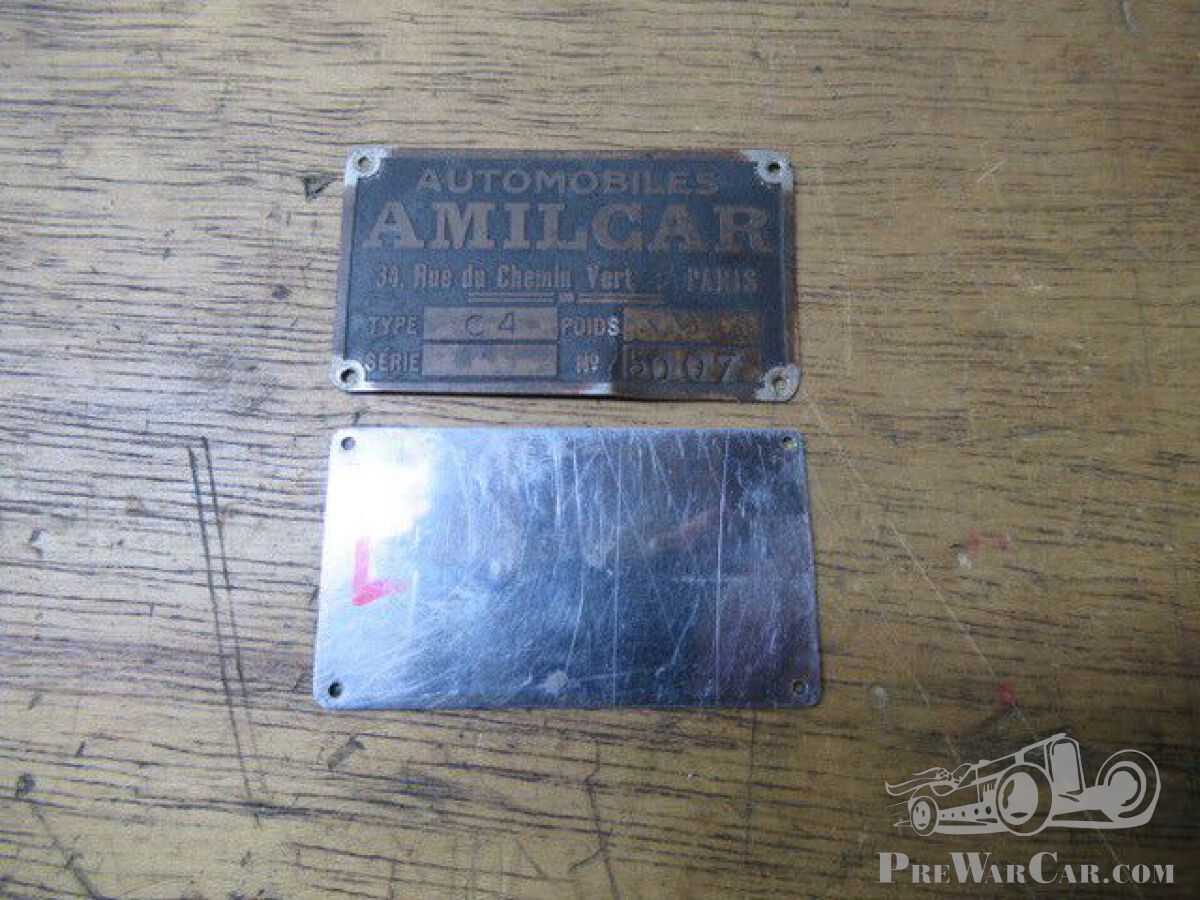
Derek’s meticulous work and love for the car brought it back to life. Remarkably, much of the Amilcar’s original features were intact: the dashboard still bore Benoit’s nameplate and address, and the yellow headlight bulbs were stamped with a 1943 manufacture date—the same year I was born. Some elements were curious, like the absurdly high front seat that made driving nearly impossible (we made a new one), and the shattered brake shoes that somehow hadn’t stopped it from running all those years ago.
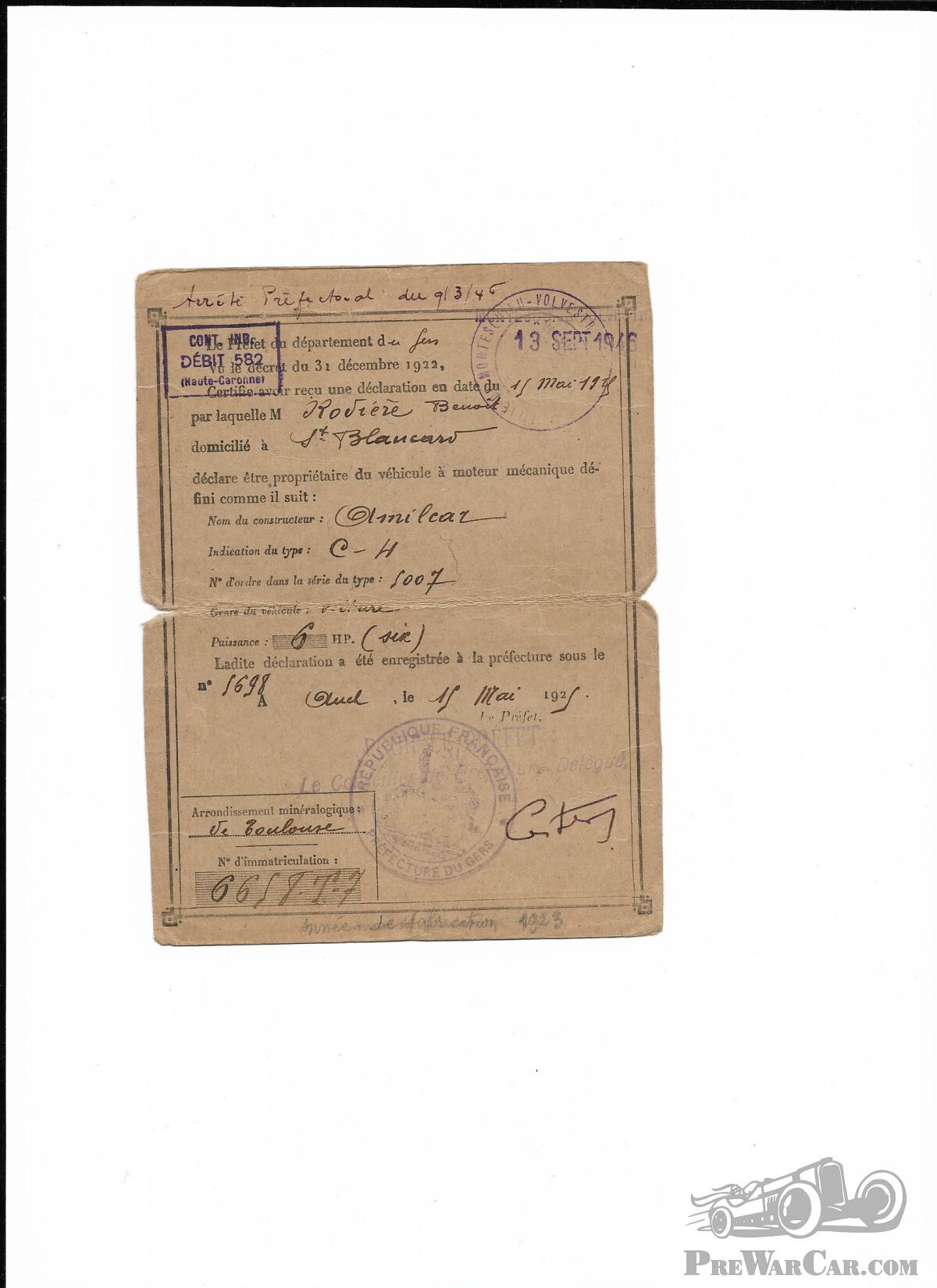
Originally, I believed the car was a 1923 model, based on a pencilled note on the carte grise. But after consulting with experts, we concluded it was more likely built in 1922, based on its model number.
In 2022, the Amilcar was finally finished—just in time to celebrate its centenary at the Le Mans Classic. That same year, we were thrilled to learn it had won the Bob Porter Trophy, thanks to Derek’s superb restoration. The car now remains in Britain with Derek as its custodian—someone we now consider part of the family.
It took nearly 60 years, but I fulfilled my promise to Benoit. This story isn’t just about restoring a vintage car; it’s about love, dedication, a few detours, and a lifelong connection between a man, his wife, and a charming little French Amilcar.
Words and photos by John Ette
Published:
Monday April 14th, 2025
Facebook
LinkedIn
Twitter
WhatsApp
Email
Copy
Comments
Gris Volcan
20 April 2025, 21:24
Wonderful story, beautiful car and restoration! Thank you for sharing!
Read more
Joost
18 April 2025, 22:45
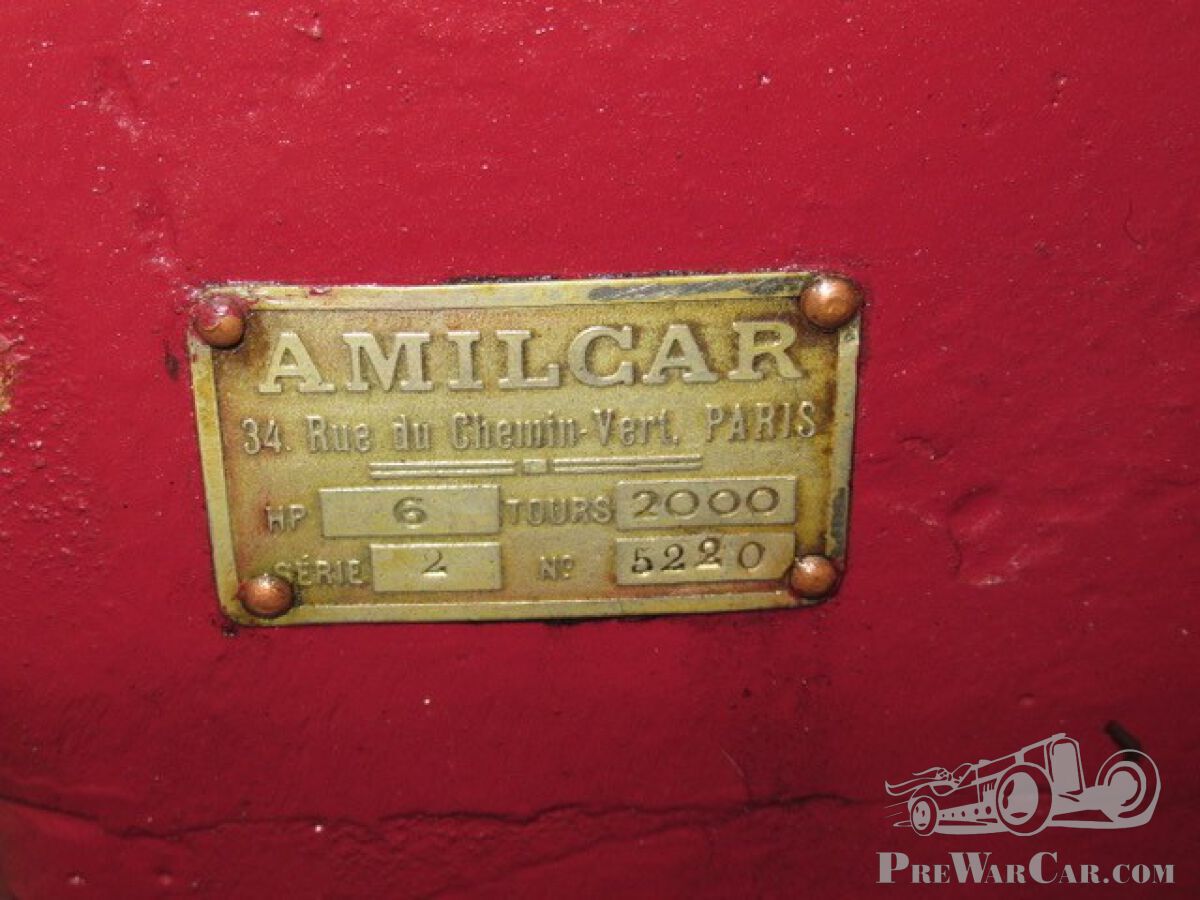
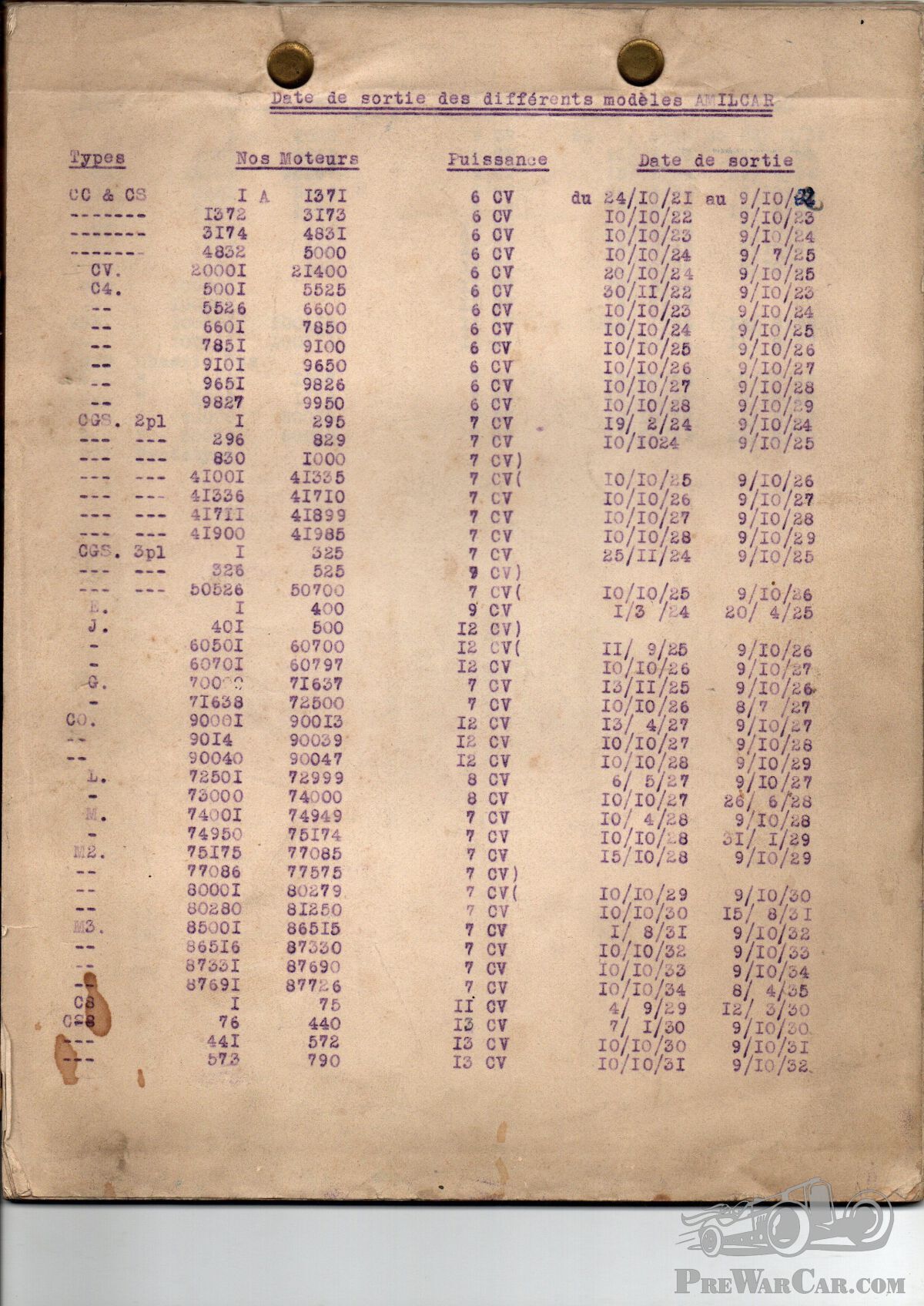
Based on the recently discovered engine number lists it is more likely that your Amilcar is a 1923 model. According to this list (picture enclosed), C4 engine numbers 5001-5525 were produced between November 30th, 1922, and October 9th, 1923. Around 10 C4s were produced per week, meaning that engine number 5220 has probably been produced in April, 1923.
Read more
John Ette
19 April 2025, 19:43
Hi, Joost, and thank you for your contribution. I hear what you say, but the chassis no. is 5007. Members of the British Register say: "According to 'the book' the engine numbers for the C4 run from 5001 to 9950... there is no information on the chassis numbers. The CS engine numbers are in the same sequence...
So John's car has presumably the 220th engine made, but some engines would have gone into the CS chassis. I would agree with Ian and say 1922 for the year of manufacture. Ian Patton would have used the same source—Giles Fournier’s book."
I cannot read the list of numbers you attach. Could you send me a more legible copy or let me know how to obtain a copy? Thanks again for your input.
Read more
So John's car has presumably the 220th engine made, but some engines would have gone into the CS chassis. I would agree with Ian and say 1922 for the year of manufacture. Ian Patton would have used the same source—Giles Fournier’s book."
I cannot read the list of numbers you attach. Could you send me a more legible copy or let me know how to obtain a copy? Thanks again for your input.
Joost
20 April 2025, 23:31
Be careful not to confuse engine numbers and chassis numbers, since the Amilcar chassis and engine number are not equal. The list I posted comes from the company Sofia, that took over Amilcar in the 1930s. You will also find it on Facebook in the Amilcar group. I have no reason to doubt the authenticity of this list, but I cannot prove it also. As far as I know there is indeed no official list with Amilcar chassis numbers.
According to Gilles Fournier's book the C4 was introduced at the Paris Salon of October, 1922. This matches more or less with the Sofia engine number list that states that C4 engines were produced from November 30th, 1922, and onwards. By the way, if you click on the picture it should be legible.
Fournier's book also mentions that the C4 engine numbers range from 5001-9950, which matches exactly with the Sofia list. Nevertheless, a few French departments have published their “Registre des immatriculations” archives online. In those archives I found early C4 chassis numbers in the 2000 range.
According to the Sofia list the CS engine numbers are not in the same range as the C4 engine numbers. The CS engine numbers are in the same range as the CC engines numbers: 1-5000.
Read more
According to Gilles Fournier's book the C4 was introduced at the Paris Salon of October, 1922. This matches more or less with the Sofia engine number list that states that C4 engines were produced from November 30th, 1922, and onwards. By the way, if you click on the picture it should be legible.
Fournier's book also mentions that the C4 engine numbers range from 5001-9950, which matches exactly with the Sofia list. Nevertheless, a few French departments have published their “Registre des immatriculations” archives online. In those archives I found early C4 chassis numbers in the 2000 range.
According to the Sofia list the CS engine numbers are not in the same range as the C4 engine numbers. The CS engine numbers are in the same range as the CC engines numbers: 1-5000.
Van Spaendonck
15 April 2025, 21:24
It's really not too difficult to enhance that picture a bit...
Read more
Detlef Kayser
14 April 2025, 13:09
What a lovely story! A shame I haven't met you and the car yet!
Read more