The global magazine and marketplace for classic car enthusiasts, by enthusiasts.


Filter
Make a choice:
- Cars
-
Make >>
-
Year >>
-
- Bikes
-
Location >>
- Parts & more
-
Make of car >>
-
Manufacturer >>
-
Category >>
- Bicycles & more
-
Year >>
-
Countries


A Ford made for fording



With e-mails and downloadable applications, sending an instant message has never been easier, but delivering real, tangible newspapers and letters to your door can still be a challenge, as this postman found out decades ago, distributing the post in rural Tennessee.
With recipients living in remote areas, he must have found he needed a suitable vehicle to deliver the mail, even if fords, rivers or swamps needed to be crossed. No such car was readily available in the 1920s, so building it was job for either the skilled amateur to do themselves, or for the specialist builder to undertake on behalf of a client. What resulted was a car with a difference: the suspension jacked-up and heavily modified and the body sitting at a lofty height. The steering system required some wild modifications, and it makes you wonder how this thing actually drove.
We came across another picture of a 1920s Model T Ford with an even higher, tilted body. Apparently, it's a ‘Ford Model T with optional high-water kit sold by Trilacoochee Ford in Green Swamp, Florida’, however despite all the ingenious or madcap conversions being advertised in the Ford Owner and Dealer magazines of the time, we're not aware of there being any high-water ones, nor is there any record that we know of naming a dealership in Green Swamp.
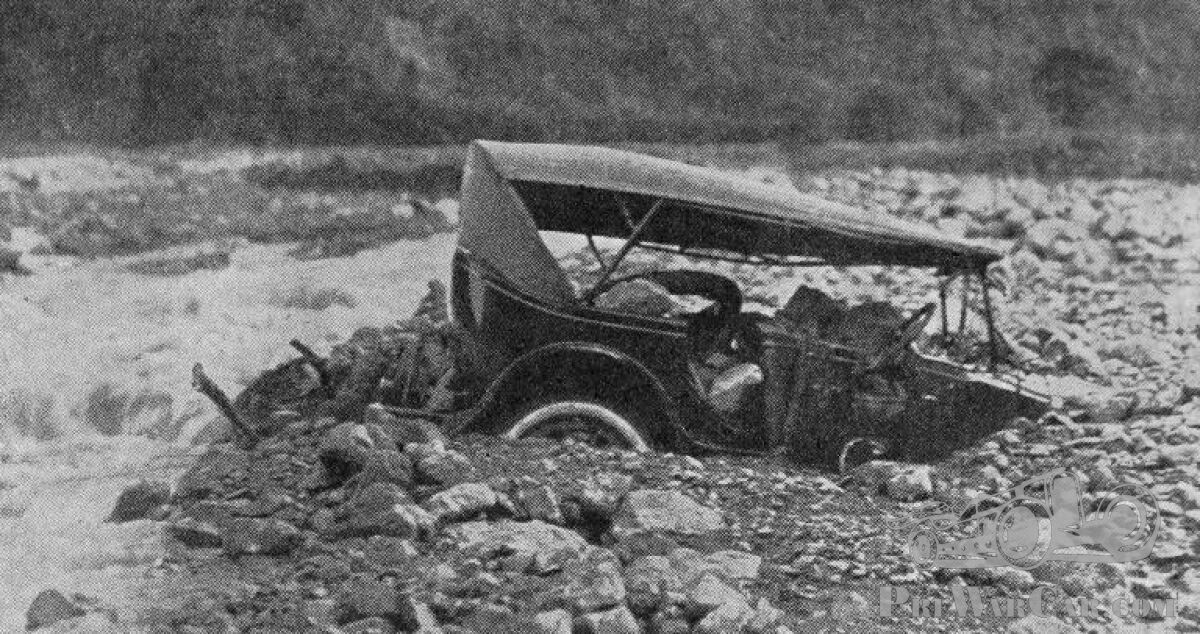
While the high-water Model T must strike some modern eyes as rather preposterous, in the 1920s it was an extremely laudable idea, assuming it actually worked. For the motorist of the era, there were few obstacles quite so hazardous as river crossings. It wasn't just strong currents and the risk of flooding the car which posed a threat. One of the biggest challenges was driving across the silty, gravelly river bed without sinking into it and becoming stranded, as happened to the unfortunate driver of the car in the second photo, taken on New Zealand's Canterbury Plains.
He had a fairly lucky escape. When he returned the next day with some farmer's horses to pull his car out of the mud, he found it more or less intact. Unfortunately, others weren't so fortunate. We understand that drowning was one of biggest causes of accidental death in New Zealand in the 1920s, occurring especially during river crossings. It's worth bearing in mind just in case you get lost one day and find yourself driving through uncharted territory in your Vintage car - a Trilacoochee high-water kit could be a lifesaver.
Words: Jeroen Booij; picture via Allan Wright
Published:
Tuesday May 16th, 2023
Facebook
LinkedIn
Twitter
WhatsApp
Email
Copy
Comments
Peter Thompson
22 May 2023, 11:51
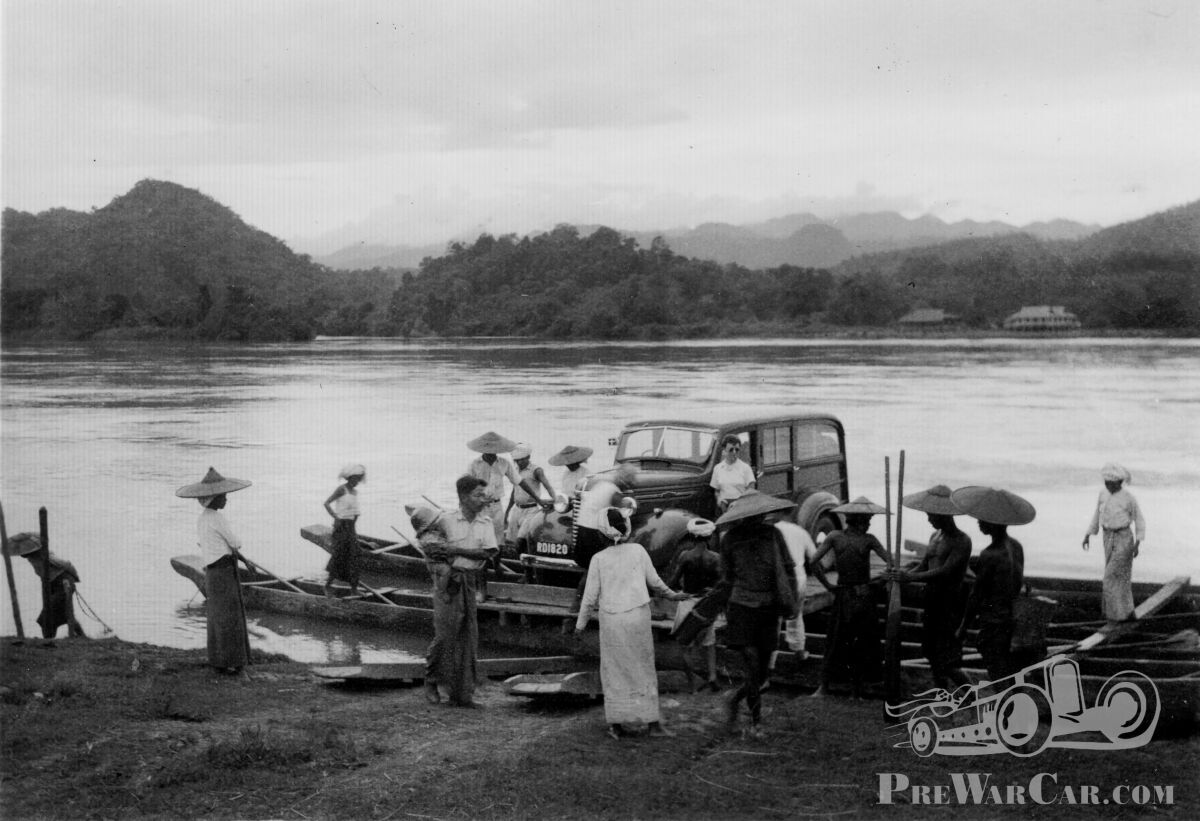
Here's how my father (and mother) crossed rivers in Burma in the early 1940's (Chevy 'woody' station wagon):
Read more
William Scheer
18 May 2023, 00:58
For David, if he is British, it was not uncommon for a U.S. Postal delivery person to be a contract employee and not a U.S.P.S. employee. As such they would provide their own vehicle. In fact, this is still done in rural and sparsely populated areas today. As a rule, these contracts are carefully awarded, highly desirable and are very conscientiously served.
Best wishes, Bill Scheer
Read more
Best wishes, Bill Scheer
Larry Lewis
16 May 2023, 22:11
There were kits available to convert a Model T or A to a half-track. I have seen a Land-Rover at the Goodwood Revival that was a half-track. A few years ago I saw a Smart Car half-track with skis for the front wheels.
Read more
David Scott
16 May 2023, 17:45
I thought the standard operating procedure for fording with an ordinary car was to jack the fan belt off, put a big piece of plywood or cardboard in front of the engine and "bull-doze" the water in front of you, keeping the revs and speed up and making sure you don't stall? And whatever you do, don't lift off or the water will run up the exhaust pipe!
As this car has no lights, I somehow think it isn't really a US Mail truck? A pioneer "off-roader" perhaps? Anyone interested in going off road in a Model T should read "Libyan Sands" by R. A. Bagnold, who pioneered desert travel following on from the Light Car Patrols in Egypt in WWI and went on to form the LRDG in WWII. Quite astonishing journeys.
Read more
As this car has no lights, I somehow think it isn't really a US Mail truck? A pioneer "off-roader" perhaps? Anyone interested in going off road in a Model T should read "Libyan Sands" by R. A. Bagnold, who pioneered desert travel following on from the Light Car Patrols in Egypt in WWI and went on to form the LRDG in WWII. Quite astonishing journeys.
Joop Terpstra
16 May 2023, 16:04
Hi there, I think I will stay on the highway. For that I think a high-wheeled car I don't need yet, but maybe in future when the weather goes bananas and floods are everywhere, because who knows what those times will bring with climate change and all.
I hope like many people, all will stay normal. Cheers!
Read more
I hope like many people, all will stay normal. Cheers!
Warren Henderson
16 May 2023, 15:40
Another real problem would be that most if not all cars in the '20s had up-draught carburetors,that were mounted down low, close to the frame. That was because, like the Model Ts, they did not have fuel pumps and gas was gravity-feed and they need to be lower than the fuel tank.
Read more