The global magazine and marketplace for classic car enthusiasts, by enthusiasts.


Filter
Make a choice:
- Cars
-
Make >>
-
Year >>
-
- Bikes
-
Location >>
- Parts & more
-
Make of car >>
-
Manufacturer >>
-
Category >>
- Bicycles & more
-
Year >>
-
Countries


Twenty-four hours with 23 horsepower: the Simca-Gordinis that tackled Le Mans
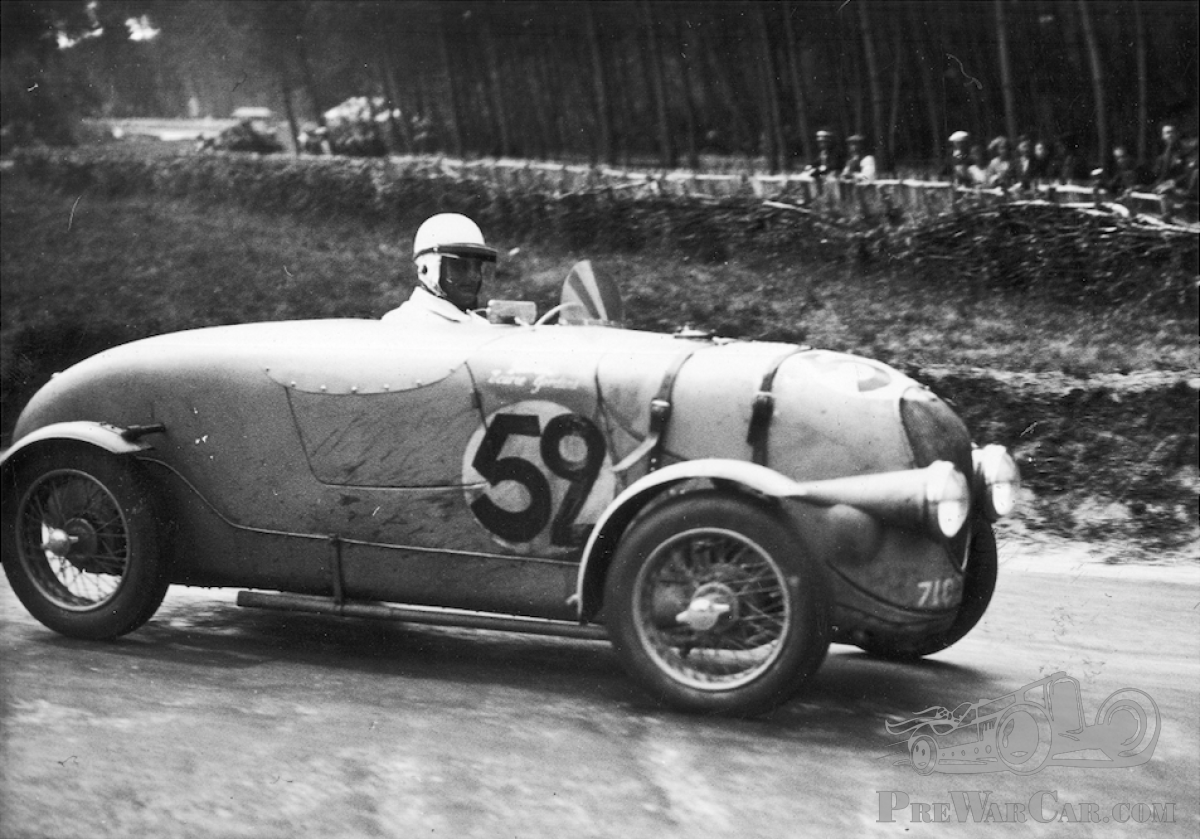

What looks like it might be a miniature version of a Delage or Delahaye Le Mans racer actually is a Simca Cinq, or 5, and what a nifty little thing it is. Its 500 c.c. engine had been bored out to 568 c.c. by none other than tuning wizard Amédée Gordini, who managed to significantly expand the power output from 14 to 23 h.p.—an increase of almost 65 per cent. Perhaps, though, you think 23 h.p. is still too small to be significant? That's not how Gordini and his team felt; they were confident enough to enter the car at the formidable 24-hour race, where it was happy to compete against the much bigger machinery for three consecutive years, 1937, 1938 and 1939.
The tiny roadster was good for a 69 m.p.h. top speed, averaging 53 m.p.h. at the Le Mans circuit. With those speeds, it won its class every year in a row. Local man Albert René Prosper Leduc is seen steering one of the works cars towards the finish in this picture. Teammates Maurice Aimé and Charles Plantivaux secured the index of performance that same year in a sister-car covering well over 1,250 miles in 24 hours, which must have been challenging in a car which weighed only around 990 lbs. Both works racers came home 14th and 15th overall that year.
They even returned to the fray after the Second World War, further modified and more powerful. Although one of the pre-war variants survives and was restored some years ago—it’s on permanent display in the Le Mans 24 Hours Museum today—these cars seem highly underrated.
Words: Jeroen Booij
Picture: Polish State Archives (Archiwa Państwowe)
Published:
Wednesday June 25th, 2025
Facebook
LinkedIn
Twitter
WhatsApp
Email
Copy