The global magazine and marketplace for classic car enthusiasts, by enthusiasts.


Filter
Make a choice:
- Cars
-
Make >>
-
Year >>
-
- Bikes
-
Location >>
- Parts & more
-
Make of car >>
-
Manufacturer >>
-
Category >>
- Bicycles & more
-
Year >>
-
Countries


We've got a nice Bridges to sell you...
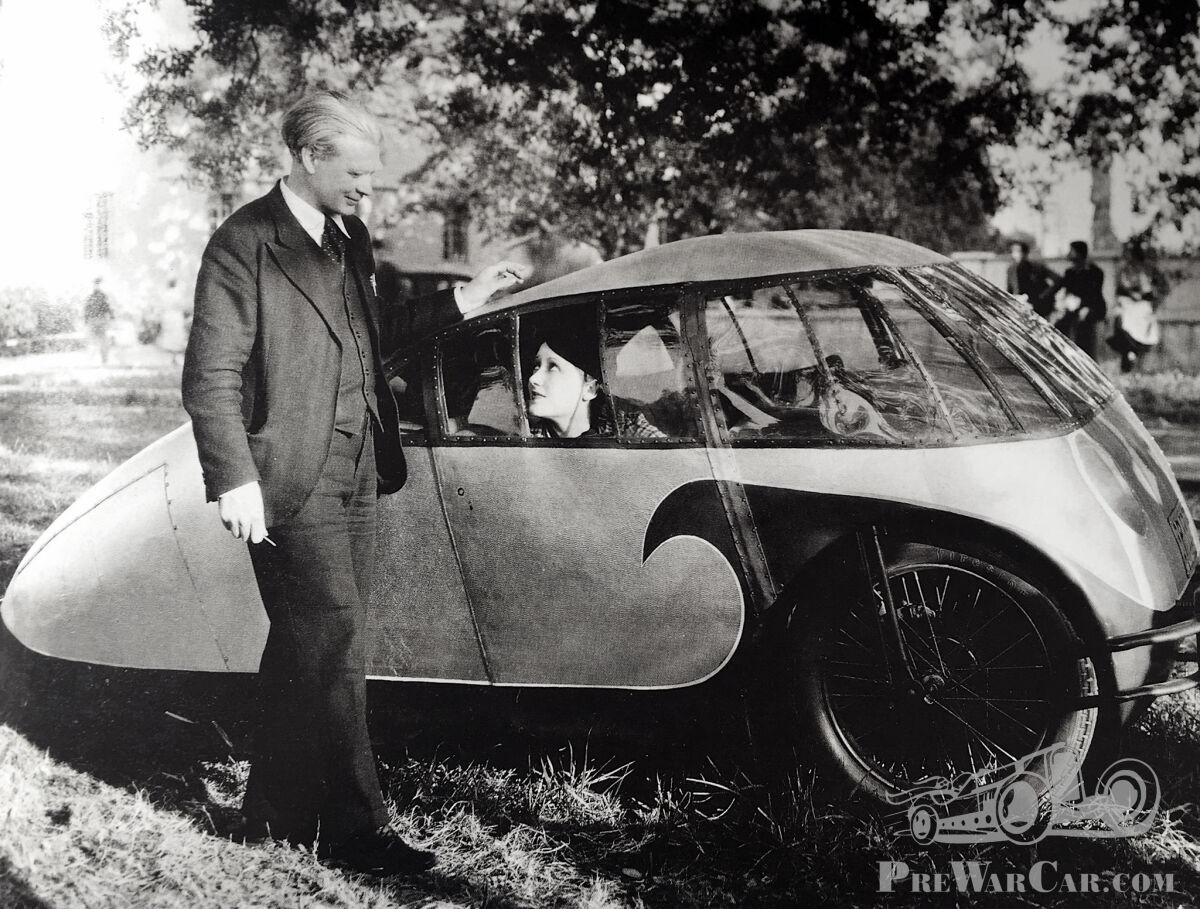

People with no background in automotive engineering or design can give surprising new insights into these disciplines. Doctor Calvin B. Bridges of California was perhaps a good example. The vehicle he came up with may seem unusual today, but it must have been utterly outlandish back in 1936 when it was presented as the Bridges Lightning Bug.
Bridges was a scientist who’d studied chromosomes and genetics before we even knew about these. As a doctor at the Institute of Technology in Pasadena, he’d in fact become the inventor of the binocular dissecting microscope while also at the forefront of the medical journal Genetics. But what does a geneticist do in his spare time? Why not try to teach the established car-makers a thing or two?
With its odd shape, being about as wide as it was long with a full panoramic wraparound windscreen and headlights concealed in the front, it certainly looked anything but conventional. And it wasn’t. To quote a short contemporary article about it: ‘The experimental ‘tear-drop’ model automobile includes among its outstanding safety features a rear engine with steel-asbestos fire-wall between engine compartment and passenger compartment; air ventilation at the nose; all glass windows substituted with Pyralin; very low centre of gravity (20 inches); an inability to be turned over by ordinary collisions; twice as much weight on the rear wheels as the front; the ability to stop in one-third less distance than conventional models, size and weight considered; very strong framework of one-piece welding of chrome molybdenum tubing.’
We understand that it used two motorcycle forks at the front with the engine (from a motorbike also?) just above the rear wheel, or wheels. It’s not quite clear whether the Bridges Lightning Bug was a three- or four-wheeler. Pyralin, by the way, was an early plastic, while the air ventilation system was designed to protect passengers from the dangers of carbon monoxide poisoning. The asbestos was there of course to protect them from fire. Little did Bridges know…
Is the woman behind the wheel his wife Gertrude? We can only guess, just as we can only guess what happened to the Bug. Bridges died unexpectedly in 1938 and his vehicle hasn’t been seen since…
Words: Jeroen Booij; picture: archive
Published:
Friday March 24th, 2023
Facebook
LinkedIn
Twitter
WhatsApp
Email
Copy