The global magazine and marketplace for classic car enthusiasts, by enthusiasts.


Filter
Classic Delaunay-Belleville, White for sale - Delaunay-Belleville, White cars for sale
-

1935 MERCEDES BENZ 500K CABRIO C
1935 Mercedes Benz 500K Cabrio C Chassis Number: 207414Registration Number: AD-41-60 (Portugal.) The 1935 Paris Show car. This is one of a batch of 25 Right Hand Drive cars & was sold new at the Paris show in 1935. History does not realte to whom but very likely it wuld have gone to England due to the RH.. -
1916 Pierce-Arrow Model 48-B-4 Vestibule Suburban
1916 Pierce-Arrow Model 48-B-4 Vestibule SuburbanPebble Beach Concours d’Elegance “Best in Class” 1977 & 2024An exceptionally grand design; one of the ultimate Pierce-Arrows of its timeOne of just two known survivors on the Model 48-B-4 chassisFormerly of the Delbert Pantel, Imperial Palace collection and Blackhaw.. -
1935 JAGUAR SS100 2.5 LITRE
1935 Jaguar SS100 2.5 Litre Chassis number: 18010Registration Number: AD-48-86 (Portugal) In the current ownership since 1998; this Jaguar was purchased new by a Mr Luxton & exported to Australia where it gained an extensive racing history though the 1940's up to 1950. It was purchased to form part of a pr.. -
1903 Clément AC4R 12/16 HP Rear-Entrance Tonneau | RM Sotheby's | The London Auction
To Be OFFERED AT AUCTION at RM Sothebys' The London Auction event, 31 October 2026. £350,000 - £450,000 GBP An exceptional, powerful four-cylinder Veteran automobileWell-known enthusiast history since the 1930s, including A W F Smith and Barry HonRestored from an excellent and well-preserved original exampleA s.. -
Open to Offers! Duesenberg Model J Dual Cowl Phaeton coachwork built in the style of LaGrande with Engine J-241
Open to Offers! Duesenberg Model J Dual Cowl Phaeton coachwork built in the style of LaGrande with Engine J-241Not complete - Great Restoration project -
Highly Awarded 1936 Delahaye 135 Competition Streamlined Disappearing Top Convertible, Figoni-Falaschi Masterpiece
This is the 1936 "Talk of Paris" car, the beginning of the famed Figoni Streamlined Teardrop Period, an objet d'artFigoni et Falaschi Centennial One of one; pièce unique Figoni streamlined Design #581One of the most highly awarded cars in the world....Best of.. -
Austin 7 Swallow Saloon
The company co-founded by William Walmsley and William Lyons in 1922, which traded under the name Swallow Sidecar Company, progressively developed into a coachbuilder following its start making stylish sidecars for motorcycles. In May 1927, Swallow announced that it would make a 2-seater body to fit the Austin 7 chassis and running gear. The result.. -
Austin 7 Swallow Open Two-Seater
The company co-founded by William Walmsley and William Lyons in 1922, which traded under the name Swallow Sidecar Company, progressively developed into a coachbuilder following its start making stylish sidecars for motorcycles. In May 1927, Swallow announced that it would make a 2-seater body to fit the Austin 7 chassis and running gear. The res.. -
1937 Rolls Royce Phantom 3 Barker Landaulette
1937 Rolls Royce Phantom 3 Barker Landaulette. Chassis number: 3BU174 Registration Number: DYK490 A stunning car in concours condition. This car has been the recent recipient of a concurs restoration culminating in a best in class win at the 2025 Schloss Schwetzingen concours D'.. -
1934 Rolls-Royce Phantom II Continental Sports Saloon by Thrupp & Maberly
1934 Rolls-Royce Phantom II Continental Sports Saloon by Thrupp & Maberly Chassis number: 29TA Registration Number: 334XUS Sold by us previously in 2008 to Italy. This car has just arrived back with us & is having a full service done by noted marque specialists Kenworthy..


Delaunay-Belleville
France, 1904 – 1950
SA des Automobiles Delaunay-Belleville, St. Denis, Seine
The first cars made by the celebrated firm of locomotive and marine boiler makers Delaunay-Belleville appeared at the Paris Salon of 1904, when a beautifully-built, expensive machine was shown. It was designed by Marius Barbarou, formerly of Benz, and later of Lorraine-Dietrich. Three 4-cylinder Delaunay-Belleville models were available for 1905, in 16, 24, and 40hp sizes. They had separately-cast cylinders, T-head engines, full-pressure lubrication, 4-speed gearboxes and chain drive. The range of fours was extended to five Delaunay-Belleville models between 10 and 40hp by 1907, when 15 and 40hp sixes were introduced. The larger Delaunay-Belleville models were chain-driven until 1910 when shaft drive was standardized on all models. In 1909 there was a small 10CV six of great refinement. The Delaunay-Belleville sixes were both smoother and more reliable than other early examples, the very rigid crankshaft largely eliminating vibration.
Up to 1914 the Delaunay-Belleville was regarded by many as the best car in the world, and was favoured by buyers who valued quiet, unostentatious dignity. The Delaunay-Belleville cars were never entered in competitions and were usually chauffeur-driven. Among royal customers ws Tsar Nicholas II of Russia who had a number of Delaunay-Belleville, including the 70hp chain-driven six known as the Delaunay-Belleville model SMT (Sa Majesté le Tsar).
One of the features of the Delaunay-Belleville was the round radiator and bonnet, and this was continued on the post-war Delaunay-Belleville cars, although in accordance with fashion the radiator was slightly pointed. The 1922 Delaunay-Belleville range consisted of a 10/12 and 14/16hp four, and three sixes from a 14/16 to a massive 40/50 of 8-litres capacity and using dual ignition. The Delaunay-Belleville P.4B 2.6-litre of 1922 to 1929 had a single ohc engine, while from 1926 a range of push-rod ohv fours and sixes was offered. However, the Delaunay-Belleville marque had lost its pre-war cachet, which had been taken over by Hispano-Suiza and Rolls-Royce, and during the 1930s it lost its individuality as well. In 1931 Continental 4 or 4½-litre straight-8 engines from America were available in the 21CV 6-cylinder Delaunay-Belleville chassis. With greater and more silent power, these Delaunay-Belleville cars were cheaper than the French-engined cars. The eights were still theoretically available in 1936, but by that time the main Delaunay-Belleville model was the 2.3-litre 6-cylinder Delaunay-Belleville R.16. This represented a further loss of individuality, as it closely resembled the Type 230 Mercedes Benz, although it had a longer stroke engine. It reappeared after World War 2 with a Cotal electric gearbox, and modernized ‘waterfall’ grille and was listed up to 1950. In the same early post-war years the Delaunay-Belleville factory which had made 70hp cars for the Tsar was turning out the 425cc Rovin minicar.
Source: Georgano, encyclopedia of motorcar; TRN
The information is written with the greatest of care. However, if you have any suggested amendments please contact us at office@prewarcar.com
White
US, 1900 – 1918
(1) White Sewing Machine Co, Cleveland, Ohio, 1900 – 1906
(2) The White Co, Cleveland, Ohio, 1906 – 1918
Rollin H. White of the Cleveland sewing-machine concern produced their first White steam car in 1900. This White steam car was a light chain-drive Stanhope with tiller steering and a simple 2-cylinder under-floor engine. The White steam car had an underslung frontal condenser, and 193 White steam cars were sold in 1901, the first year of full production. This gave way in 1903 to a White steam car model with a front-mounted compound engine under a bonnet, condenser in the normal ‘radiator’ position, wheel steering, and shaft drive.
These White car and subsequent White steam cars used a semi-flash type of boiler, and could run a hundred miles between fillings of water. Frames of the White steam cars were of armoured wood, and a tonneau White car cost $2.000.
The White steam cars did well in early Glidden Tours, and racing versions, such as Webb Jay’s Whistling Billy with an underslung frame, were also successful; this White steam car covered a mile at 74.07mph. Theordore Roosevelt used a White steam car during his tenure of the White House. 1905 White steam cars had a 2-speed back axle, and also a ‘free engine’ enabling the pumpt to work without manufal assistance when the White car was stationary in traffic. 1906 was the best sales year for the White car company, with 1.534 White cars devlivered, but steam-car production was held at over 1.000 White steam cars a year to the end. By 1908, the White steam car company was offering two models, a 20hp White Model L at $2.500, and the big seven-seater Model K White car with a 10ft 2in wheelbase at $3.700. Joy valve motion replaced the Stephenson link type on 1909 White steam cars, which had both sets of brakes working on the rear wheels of the White car.
White steam cars continued to be listed into 1911, though the 1910 White MM and White OO were the last new White steam cars. For the 1910 season the White car company offered a 3½-litre sv petrol car with a monobloc engine inspired by the Delahaye; the 4-speed gearbox of the White car had a geared-up top. This White car was joined in 1912 by a really big six rated at 60hp, and this White car was selling for $5.000, still with 4 forward speeds. Electric lighting and starting were added on these White cars during the year, and these 4- and 6-cylinder White cars were continued until 1916.
The 1917 models White cars were 16-valve fours of over 6½-litres’ capacity, with magneto ignition, these White cars were selling at $5.000 upwards.
By this time the White car company was firmly established in the truck field, and after 1918 private White cars and White steam cars were made to special order only, and in very small numbers. The last of these ‘special White cars’ was made in 1936.
Rollin White was subsequently responsible for the Rollin car in 1923, while the White car firm also absorbed two truck-makers who had previously built private cars, Autocar and ReO.
US, 1909
George White Buggy Co, Rock Island, Ill.
This White car was a high-wheel buggy, but the mounting of the engine at the front under a bonnet gave the White car more the appearance of an ordinary car than many of its kind. The engine of this White car was a 2-cylinder 12/14hp unit which drove via a 2-speed epicyclic gear and propeller shaft. Two- and four-seater bodies were available on White cars.
US, 1914
White Manufactuing Co, Waterloo, Iowa
The White car was a cyclecar and used a 9hp ohv V-twin engine. This White car had chain final drive.
Source: Georgano, encyclopedia of motorcar; MCS, GNG
The information is written with the greatest of care. However, if you have any suggested amendments please contact us at office@prewarcar.com



Featured
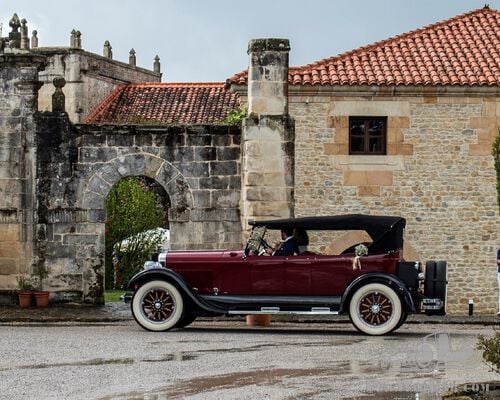
1925 Lincoln Model L Phaeton by Brunn - Excellent provenance
Retaining its original matching-numbers engine and chassis (both numbered 24576), the car benefits from an extensively documented history and..
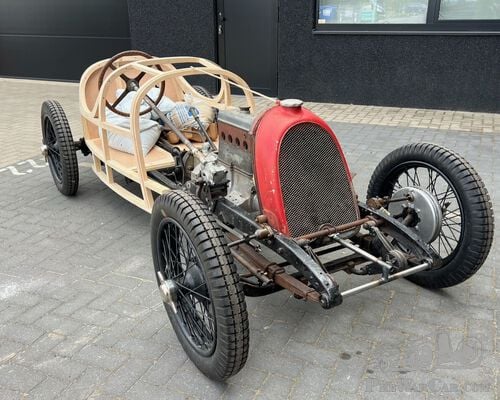
BNC 527 (Scap engine & Cozette blower) —Restoration Project
appealing restoration project based on an original 1927 BNC 527 chassis (No. 270**), retaining its matching-number front and rear axles.Orig..
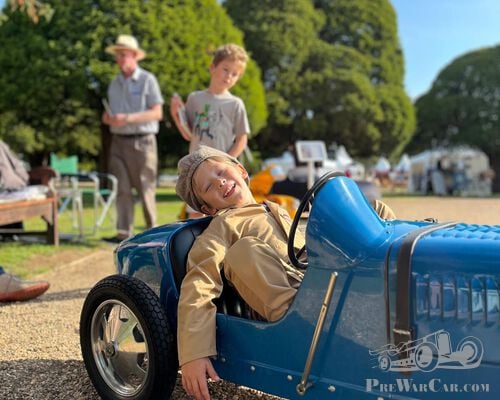
Bugatti type 52 Crosthwaite and Gardener
Bugatti Type 52 tool room copyThis is a Tool Room Copy of the junior electric cars modelled on Type 35s created for Bugattis clients I from..