The global magazine and marketplace for classic car enthusiasts, by enthusiasts.


Filter
Classic Donnet/ Donnet-Zédel, Lion Peugeot for sale - Donnet/ Donnet-Zédel, Lion Peugeot cars for sale

Donnet / Donnet-Zédel
France, 1924 – 1934
SA des Automobiles Donnet, Nanterre, Seine; Neuilly, Seine, Pontarlier, Doubs.
After Zédel and Vinot et Deguingand ceased production, Donnet, a new company constituted from them in 1924, offered two new cars called Donnet-Zédel. A light car was made, the 7CV Donnet-Zedel Type G, which had a side-valve 4-cylinder engine of 1100cc and (unusual for so small a vehicle) a 4-speed gearbox. It was a solidly-built machine, and a Donnet-Zedel sports model was listed. There was, in addition, a medium-sized four of about 2¼-litres. From 1926, the Donnet-Zedel firm came to concentrate upon a 2½-litre six, also with side valves, which proved a popular car. Another, smaller six with 1.3-litres (later 1.8-litre) Sainturat-designed engine was also offered by Donnet-Zedel. In the 1932 range however, was a new small Donnet-Zedel car in the shape of a 750cc 2-stroke. This, a violet design, had been sold as the Dequingand until 1930. A fwd 2-litre 6-cylinder Donnet-Zedel, shown at the 1931 Paris Salon came to nothing. With the demise of Donnet, Simca took over the Donnet-Zedel factory.
Source: Georgano, encyclopedia of motorcar; TRN
The information is written with the greatest of care. However, if you have any suggested amendments please contact us at office@prewarcar.com
Lion-Peugeot
France, 1906 – 1913
(1) Les Fils de Peugeot Frères, Beaulieu-Valentigney, 1906 – 1910
(2) SA des Automobiles et Cycles Peugeot, Audincourt, 1910 – 1913
The Lion-Peugeot car started as an independent venture by Robert Peugeot in the motor cycle factory at Beaulieu-Valentigney, which had been used for Lion-Peugeot car manufacture until the establishment of the SA des Automobiles Peugeot in 1897. These Michaux-designed voiturettes Lion-Peugeot cars were produced in direct competition with the cars from Audincourt, and the original chain-driven single at £125 filled a gap left by the discontinuation of the original Peugeot Baby. Already the Lion-Peugeot car company were trying their hand in the Coupe des Voiturettes, but made no impression in 1906 or 1907 against Sizaire-Naudin and Delage. The first of the classic racing V-twin Lion-Peugeot cars made its appearance in 1908, and from 1909 to 1911 the Lion-Peugeot car marque was renowned for some very odd machines, which took advantage of regulations more concerned with bores than with strokes. The 1909 Lion-Peugeot cars, victorious in both the Catalan Cup and the Coupe itself, were made with 1.9-litre engines, a single of 100x250mm and a twin of 80x192mm, the former having three valves per cylinder, but the peak of Lion-Peugeot cars was reached in 1910 with the fantastic Lion-Peugeot VX5, an 80x280mm V-twin with twin carburetors, developing 95bhp. The driver of the Lion-Peugeot car had to look round, rather than over the engine. There was a companion 65x260mm V4, really two twins in series. In spite (or perhaps because) of this, Lion-Peugeot cars had to be content with 2nd place in that year’s Coupe des Voiturettes. They tried once again in 1911 with a Lion-Peugeot V4, this time using the relatively modest stroke/bore rato of 2:1.
By 1910, the production Lion-Peugeot cars had grown up into 1.7-litre transverse V-twins with 3-speed gearboxes and shaft drive, though chain-driven versions were still available on Lion-Peugeot cars as late as 1911. The reunion of the two rival Peugeot companies, however, signaled the end of these eccentricities: though a touring V4 Lion-Peugeot car was announced in 1911 and was made with a 4-speed gearbox, pressure lubrication, and pedal-operated rear-wheel brakes, the Lion-Peugeot car designation was dropped at the end of 1913. The 1.9-litre VD Peugeot of 1914 marked the end of this line of development and none of the Lion-Peugeot car derivatives survived World War 1.
Source: Georgano, encyclopedia of motorcar; MCS
The information is written with the greatest of care. However, if you have any suggested amendments please contact us at office@prewarcar.com


Featured

1915 Rolls-Royce Silver Ghost Barker Tourer
⁃ An exceptionally rare original bodied pre-war Silver Ghost⁃ Desirable Barker tourer in exciting barn find condition⁃ ..
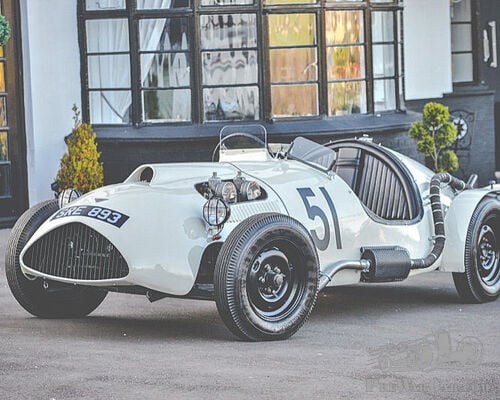
1933 Alvis 3.0 Special - One-Off Alloy Body | Period Competition Car | Featured in “Alvis – A Century of Drivers”
1933 Alvis 3. 0 Special - One-Off Alloy-Body | Period Competition Car | Featured in “Alvis – A Century of Drivers”
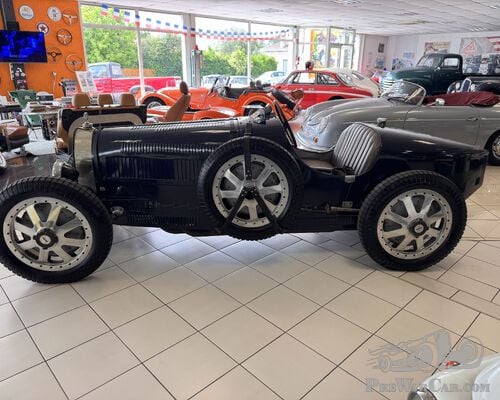
Bugatti 35 B Pur Sang
Bugatti 35 B Pur Sang,importée par un membre délégué de la FFVE il y’a une quinzaine d années.Participation à de nombreux Rallyes Bug..