The global magazine and marketplace for classic car enthusiasts, by enthusiasts.


Filter
Make a choice:
- Cars
-
Make >>
-
Year >>
-
- Bikes
-
Location >>
- Parts & more
-
Make of car >>
-
Manufacturer >>
-
Category >>
- Bicycles & more
-
Year >>
-
Countries


From Turin to Brighton: a Fiat with a British past
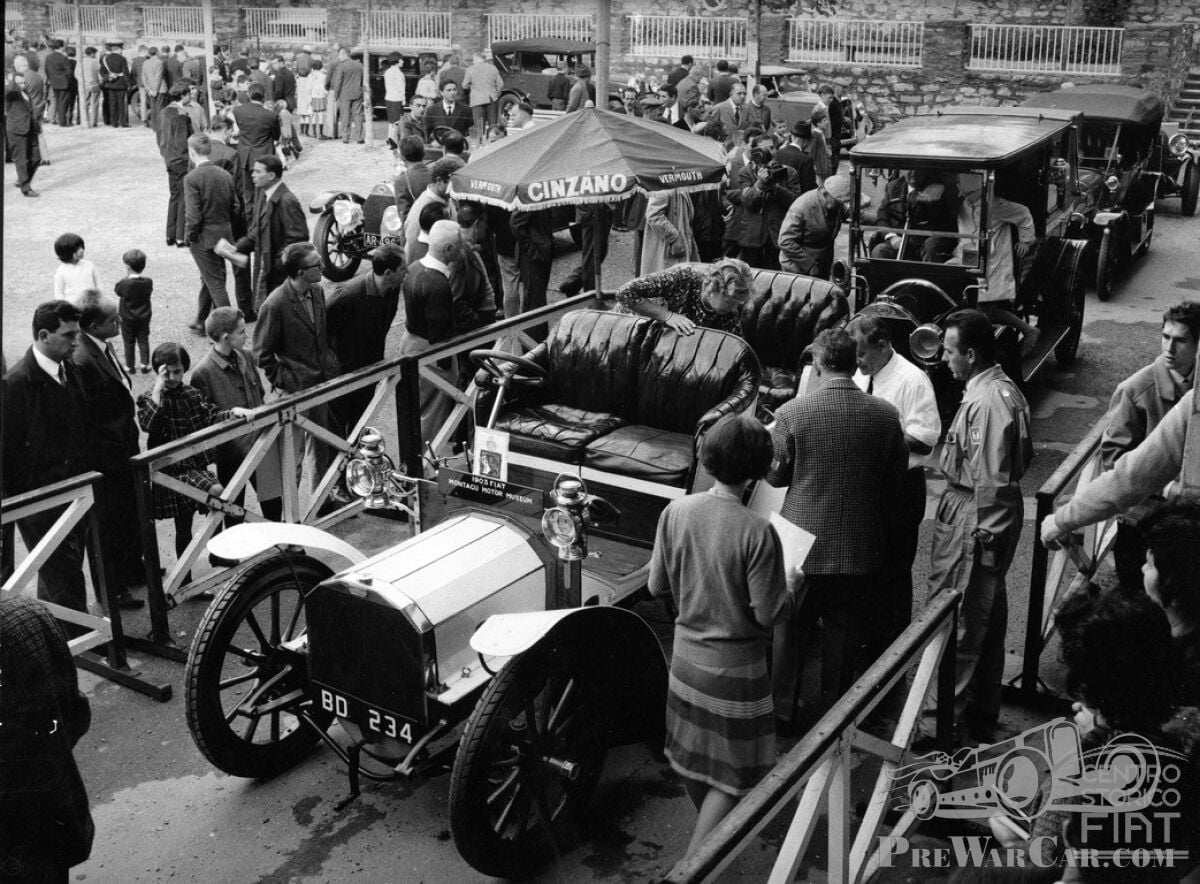
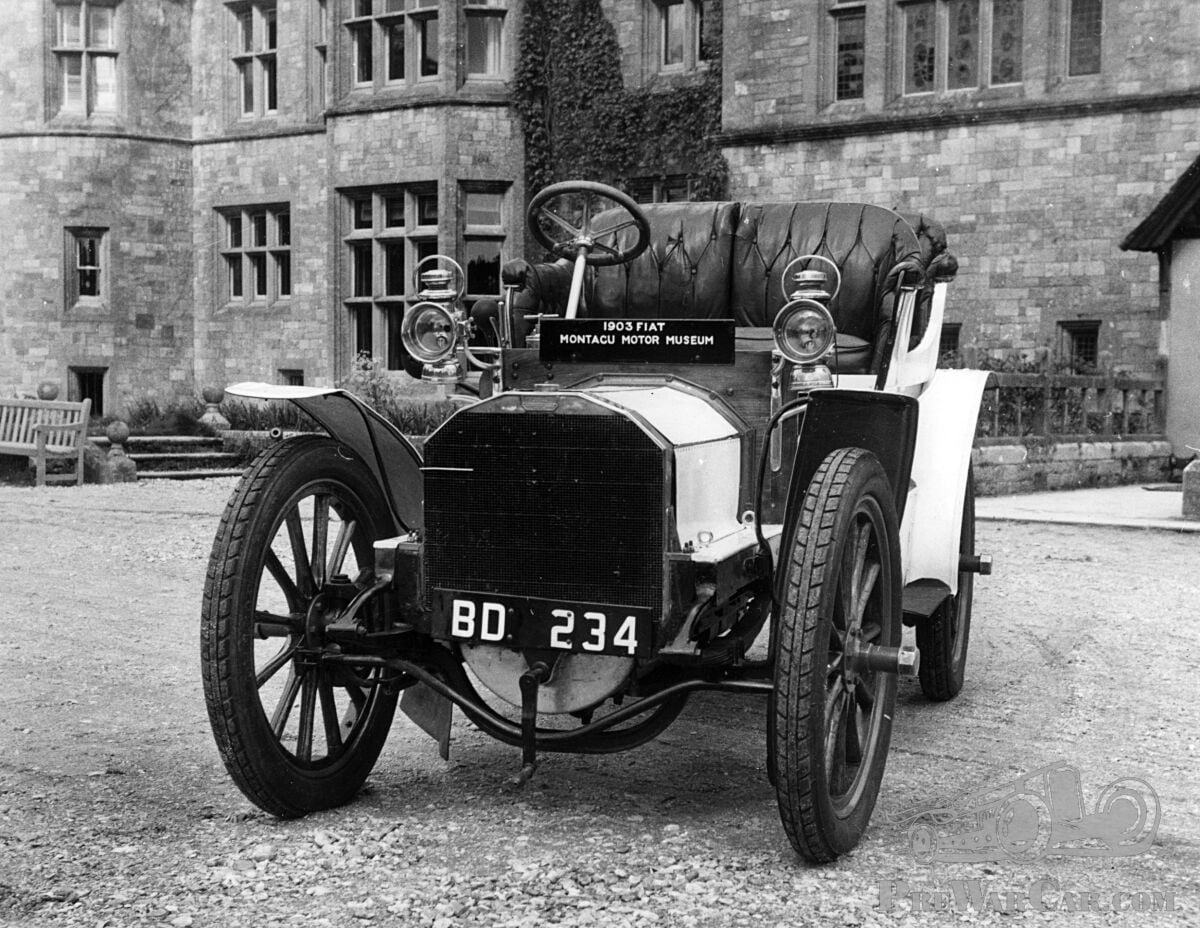
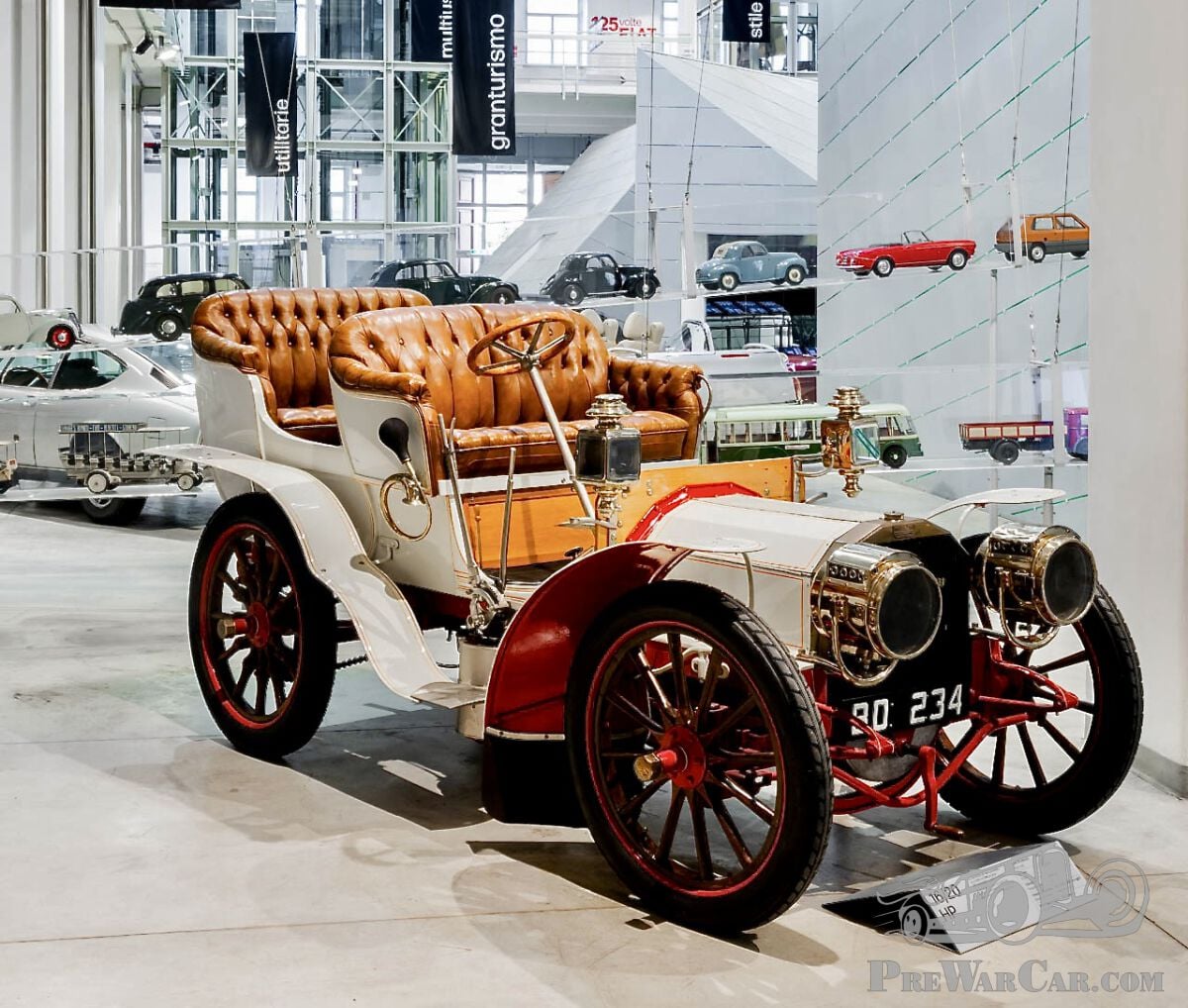
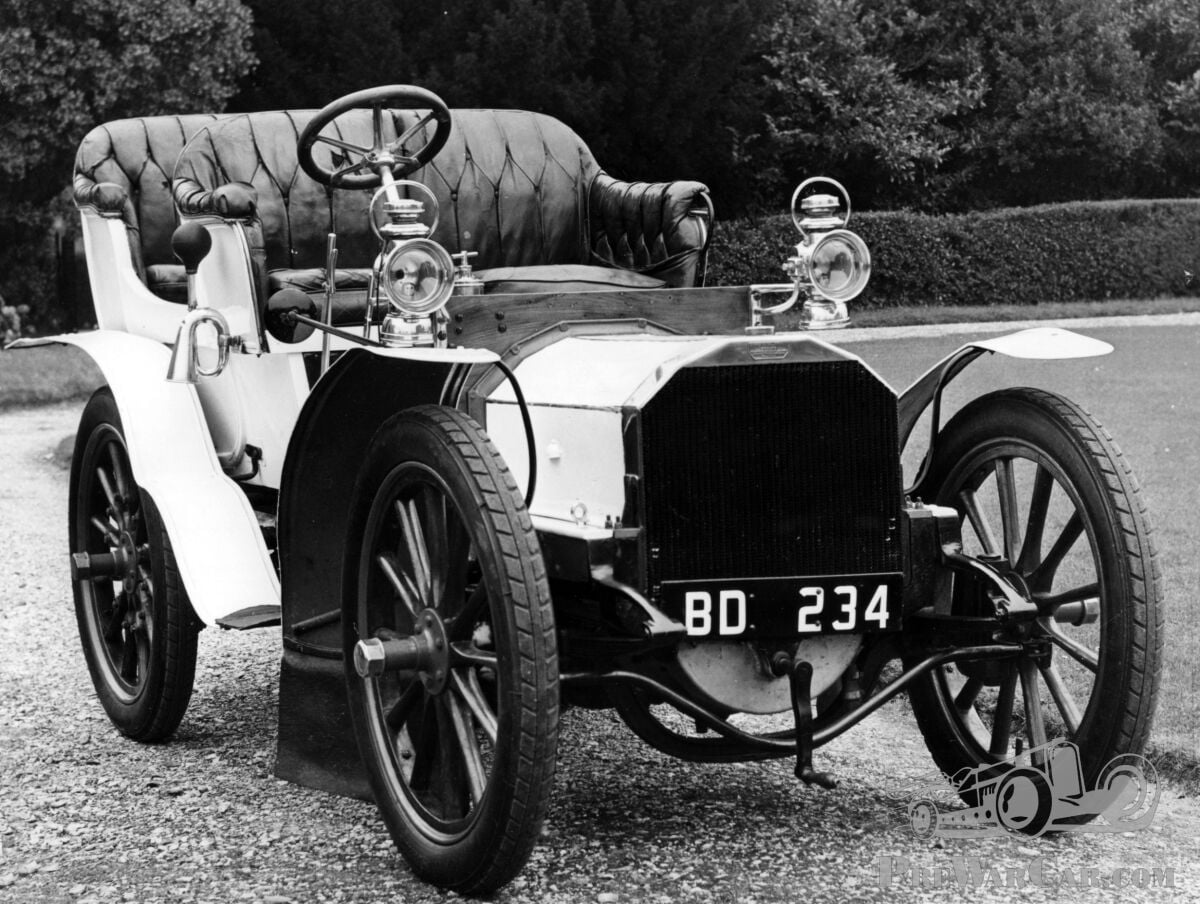
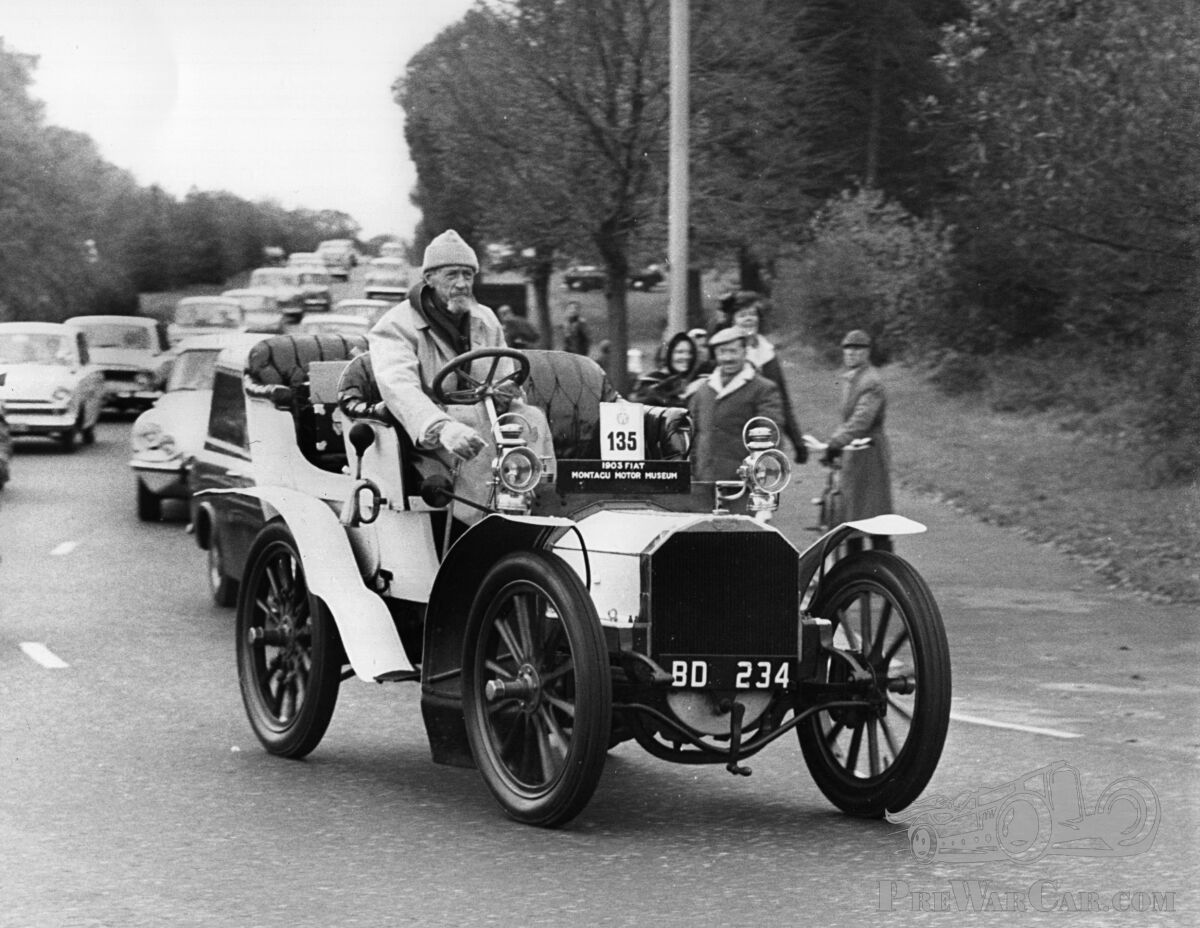


Some cars have known the road to Brighton for longer than most of today’s participants have been alive. This Fiat 16-20HP first completed the Run in 1930 and will return for the London to Brighton Veteran Car Run on Sunday 1 November. MAUTO is bringing it back to England from Turin, returning it to the country where much of its history unfolded. An Italian that may well recognise the feeling of coming home.
The story begins in 1903. In January of that year, Fiat’s management decided to send chassis number 599 to London, where it received coachwork by Rothschild. Italian engineering clothed in a London-built body: this Fiat demonstrates just how international the motor industry already was at the time.
The 16-20HP was a substantial motor car. The early version featured a 4,179 cc four-cylinder engine, with its cylinders cast in two separate blocks. It produced approximately 20 hp at just 1,200 rpm and was coupled to a four-speed gearbox. Those figures require some perspective: twenty horsepower may sound modest, but an engine capacity of more than four litres gave this Fiat capabilities of a very different order from the small voiturettes of the same period.
The car remained in use until 1912. It was then placed in storage, only to be rediscovered years later by Fiat UK in Northamptonshire. Its condition was evidently so good that it appeared on Fiat’s stand at the Olympia Show in 1930. Visitors arriving to see the latest models were able to meet one of their predecessors, by then already a piece of motoring history.
That same year, Sir Maxwell Monson drove it to Brighton at a reported average speed of more than 34 km/h. It took part again in 1931. The Fiat also remained active during the early 1950s, with Brooklands racer Antony Powys-Lybbe among those who took the wheel.
Its survival was not without interruption. In 1956 and 1957, the car was partially dismantled for a thorough overhaul. Difficulties obtaining work permits for Italian mechanics subsequently brought the project to a halt. Thus, an already familiar Brighton participant disappeared from view once again.
In 1959, Michael Sedgwick, curator of the Montagu Motor Museum, discovered it in a shed behind the former Fiat depot in Wembley. A year later, it went on loan to Beaulieu and returned once more to Brighton. Autocar editor Maurice Smith drove it on that occasion and described a lively motor car capable of exceeding 80 km/h. Following further appearances in 1965 and 1966, the Fiat eventually returned to Turin. There it joined the Centro Storico Fiat, although it continued to appear at selected Italian events, including Fiat’s centenary celebrations in 1999.
Now the road from London to the coast awaits once more. For spectators, it is an opportunity to see a remarkable early Fiat in motion. For veteran-car enthusiasts, its appeal lies above all in its long history of active use: this car was driven, stored, rediscovered, repaired and driven again. Soon another chapter will be added, on a road it has known for almost a century.
The RM Sotheby’s London to Brighton Veteran Car Run brings the Royal Automobile Club’s London Motor Week to a close. The programme also includes the Club’s Motoring Book Awards, the ‘Art of Motoring’ exhibition and the St James’s Motoring Spectacle, a free event held on Pall Mall in central London. The weekend concludes with the RM Sotheby’s London Sale at the prestigious Peninsula Hotel on Saturday 31 October, followed, of course, by the RM Sotheby’s London to Brighton Veteran Car Run on Sunday.
Published:
Wednesday October 7th, 2026
Facebook
LinkedIn
Twitter
WhatsApp
Email
Copy
Comments
Ariejan Bos
09 October, 16:42
Jeroen Booij
08 October, 09:27
That's Fyfe Robertson in picture 5. Possibly for a BBC television report that he drove the car? If so that must have been lovely surely!
Read more
Ariejan Bos
07 October, 17:27
When reading the story about this car and when trying to confirm the facts with the information in my archive, I got a bit confused. The bonnet top with the striking edgy profile was indeed used by Fiat during about a year, but as far as I could check the Fiat bonnets end of 1902 and beginning of 1903 where still flat with round or flattened shoulders. This is endorsed by the models, shown at the Fiat stand at the Paris show in December 1902. The first time I see these profiled bonnet tops is in the Paris-Madrid race in May 1903, where two Fiats were entered. In both cases these were 24 hp models. In the Italian Susa-Moncenisio race in June 1903 next to a 24hp model also a 16hp with similar bonnet type participated.
So in my opinon a Fiat with this bonnet type didn’t exist yet in the first months of 1903. This is supported by the fact that Mercedes showed a similar bonnet style for the first time end of december 1902 at the Paris show. It is common knowledge, that Fiat followed Mercedes design in several aspects, and apparently they copied the bonnet style in the course of 1903.
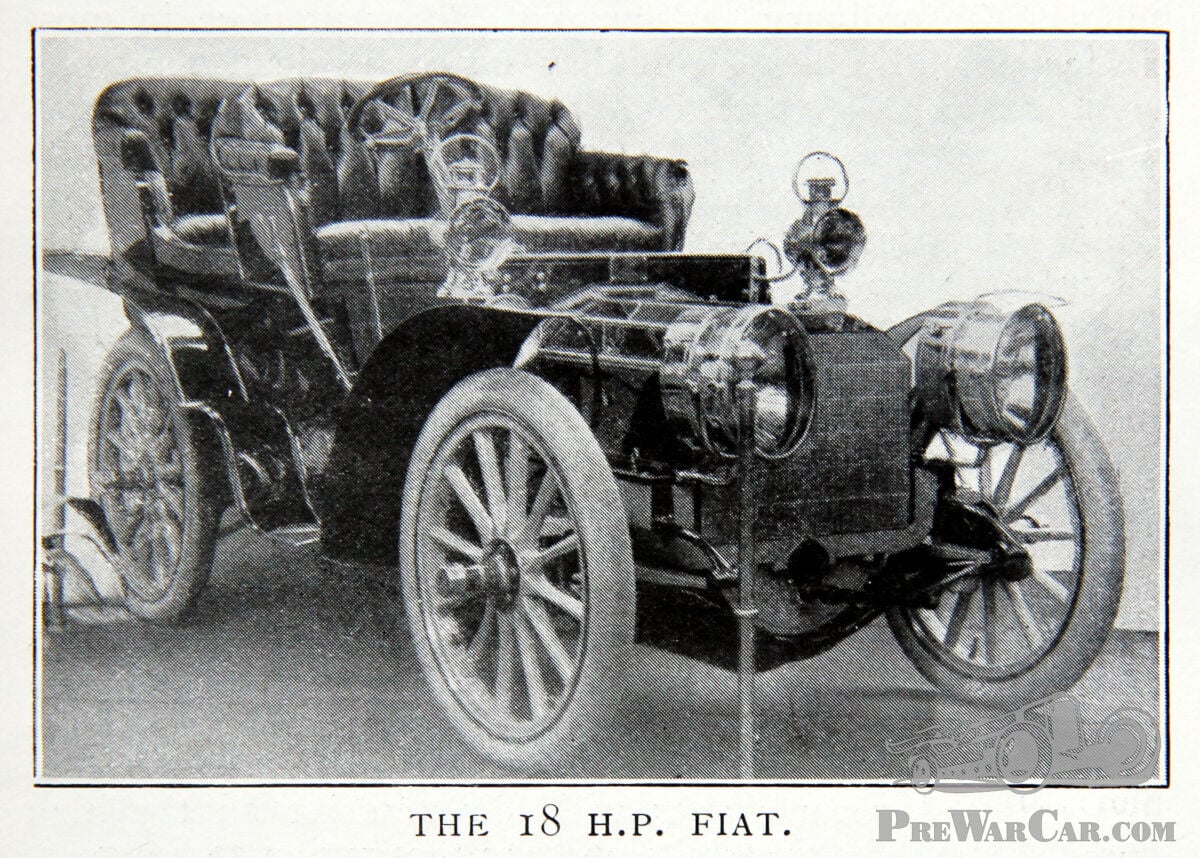
Now it seems that exactly the same Fiat as described in the above post could be seen at the Crystal Palace show in february 1904 (see upload). Although the caption describes it as an 18 hp (typing errors were made also then!), for me there is little doubt that it is the same car given the body style. It seems odd, that an early 1903 model would be presented for the first time a year later on a car show, when developments were fast.
My explanation would be that the chassis was not sent early 1903, but a year later to Rothschild, where undoubtedly in a month a body could be built that was shown at Crystal Palace.
Read more
So in my opinon a Fiat with this bonnet type didn’t exist yet in the first months of 1903. This is supported by the fact that Mercedes showed a similar bonnet style for the first time end of december 1902 at the Paris show. It is common knowledge, that Fiat followed Mercedes design in several aspects, and apparently they copied the bonnet style in the course of 1903.
Now it seems that exactly the same Fiat as described in the above post could be seen at the Crystal Palace show in february 1904 (see upload). Although the caption describes it as an 18 hp (typing errors were made also then!), for me there is little doubt that it is the same car given the body style. It seems odd, that an early 1903 model would be presented for the first time a year later on a car show, when developments were fast.
My explanation would be that the chassis was not sent early 1903, but a year later to Rothschild, where undoubtedly in a month a body could be built that was shown at Crystal Palace.
The car must have been confused with another, older Fiat, which has been for a long time part of the Montague Motor Museum collection. This 3.5hp rear-engined Fiat from 1899 was also rediscovered in the late 1920s in England: it was found in parts at a farm, the engine being used for a sheep-shearing machine. Owned by Powys-Lybbe, he drove the car himself in the 1932 London-Brighton run. The Fiat was then still dated 1900. In the 1946 run he drove the car again, now dated 1901, as well as in 1949, when the car was dated 1900 again. Next the car was for a long time absent from the run, but it participated as an 1899 model in the centenary run in 1996.
The 16hp Fiat is first mentioned as a participant in the 1930 London–Brighton run with Messrs. Fiat Ltd. named as the owners, but dated as a 1900 model with the note: ‘In continuous use until 1912, when stored in a barn and forgotten until this year (i.e. 1930).’ The car reappeared in 1931, still with Fiat Ltd. and now dated 1901, with the note: ‘In continuous use until 1914, when it was abandoned in a barn until discovered in 1929.’ In 1932, the car, now owned by R.S.C. Beresford, was still dated 1901 with the note: ‘Was stored for 16 years in a barn’ Both in 1953 and 1955 the only Fiat participant was a 1904 16hp tonneau entered by A.C. Westwood. This must have been ‘our’ car without doubt. In 1956 and 1957 the car was entered as a 1903 16hp tonneau, in 1956 owned by John Skinner, but in 1957 it had moved back to Fiat (England) Ltd.. The car is then absent for years and reappears in the run of 1964, now with the Montague Motor Museum and Fiat (England) Ltd. as the entrants, and Sir Norman Joseph [?Wisdom] as the driver. He also drove the car in 1965, in 1966 the car was driven by Fyfe Robertson, in 1967 by Lord Montague.
The fact that both cars were at some time dated 1900 must have contributed to the confusion, as well as the continuous changing in the dating of the cars, but it must be clear now that Powys-Libbe never drove the 16hp Fiat.