The global magazine and marketplace for classic car enthusiasts, by enthusiasts.


Filter
Make a choice:
- Cars
-
Make >>
-
Year >>
-
- Bikes
-
Location >>
- Parts & more
-
Make of car >>
-
Manufacturer >>
-
Category >>
- Bicycles & more
-
Year >>
-
Countries


The mysterious origins of Argentina's rakish racing Packard

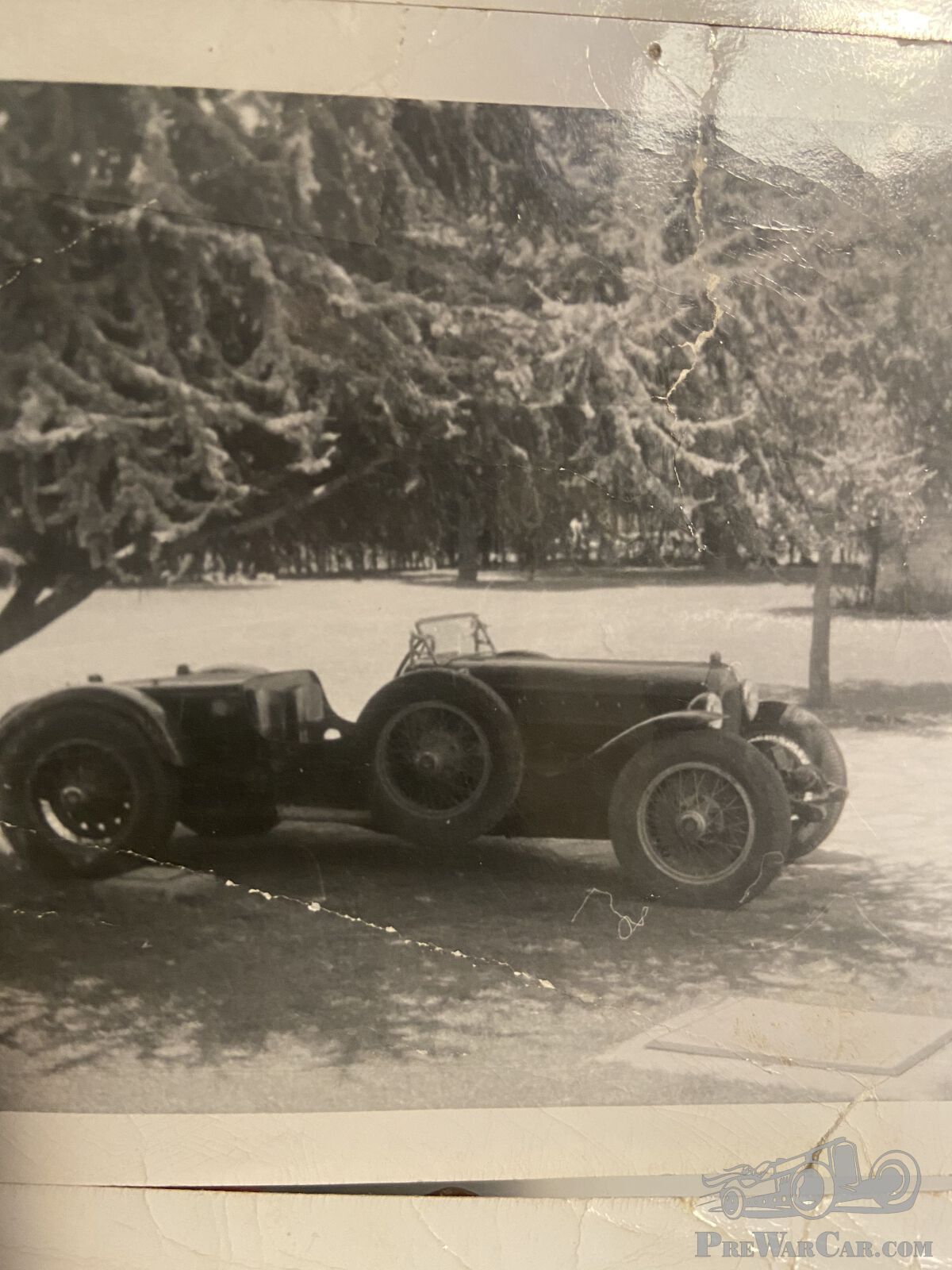
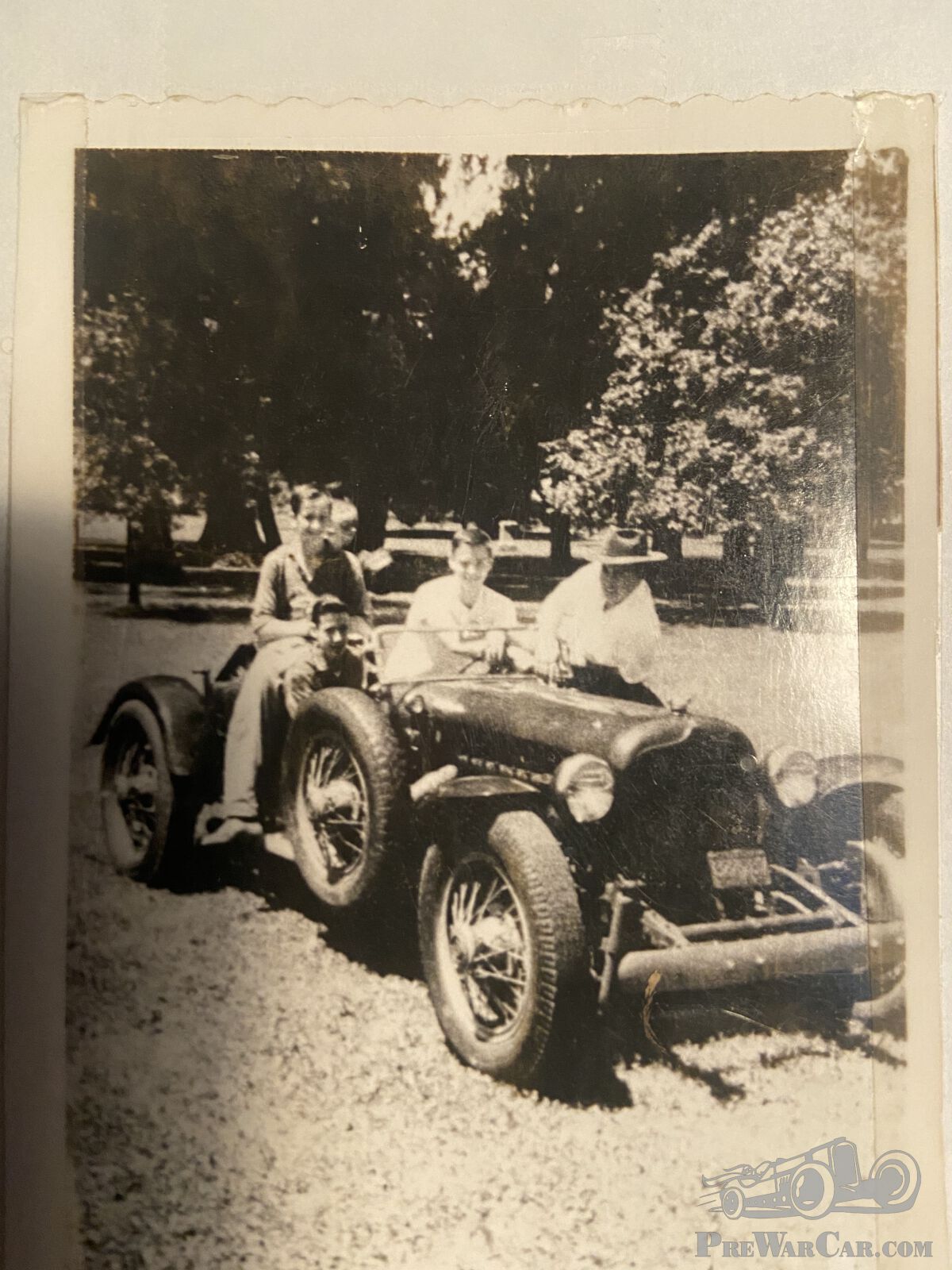
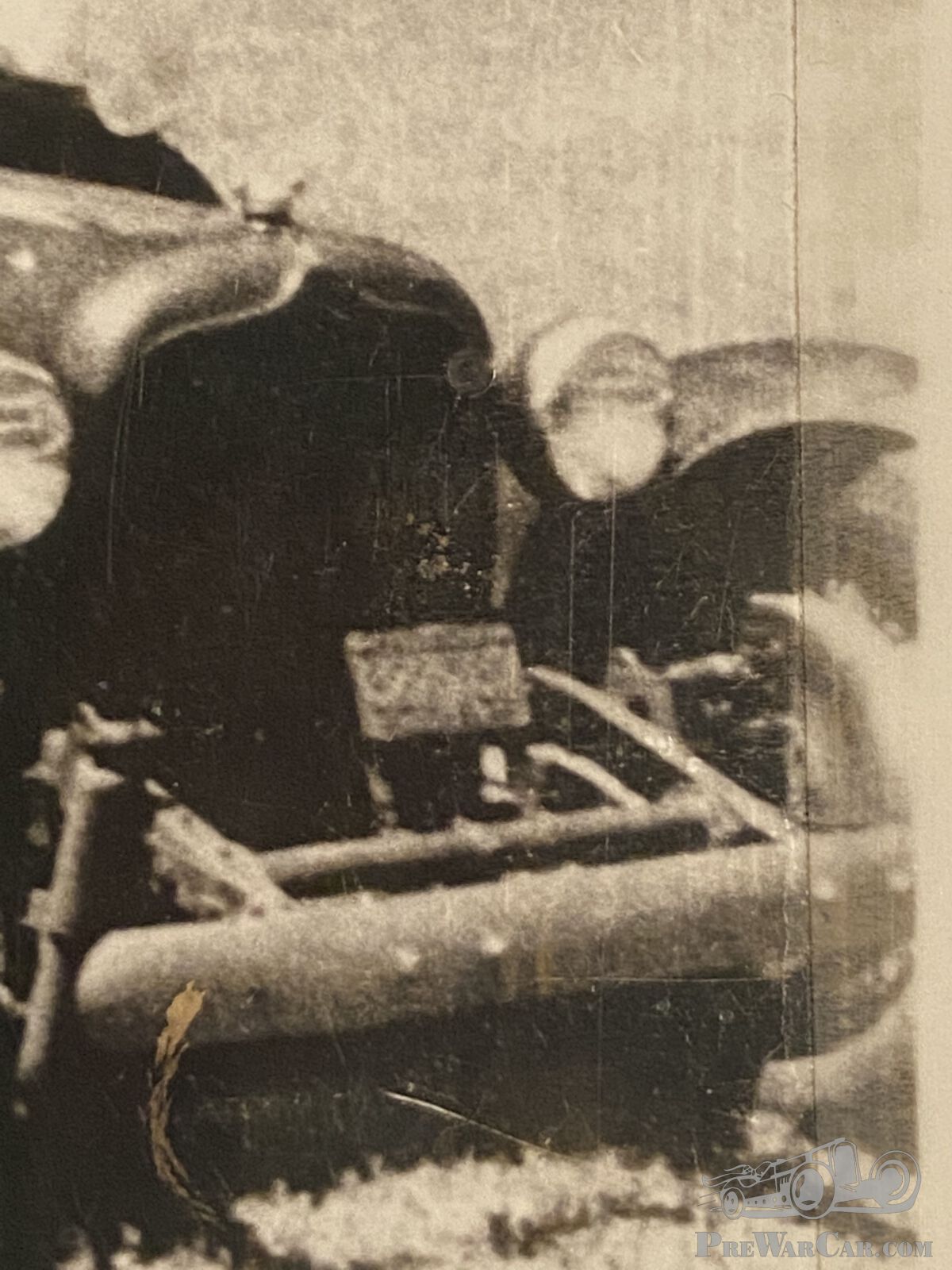
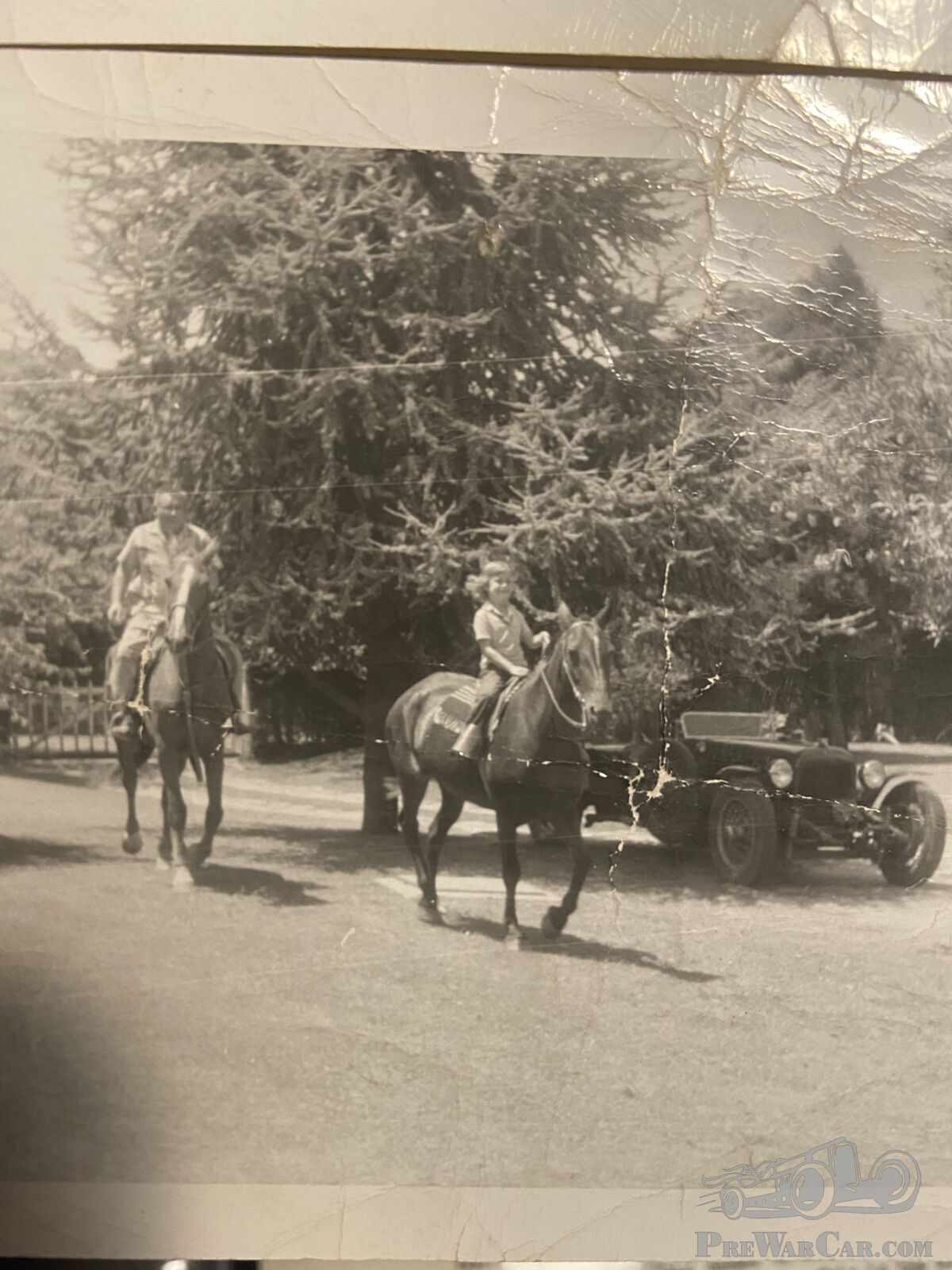
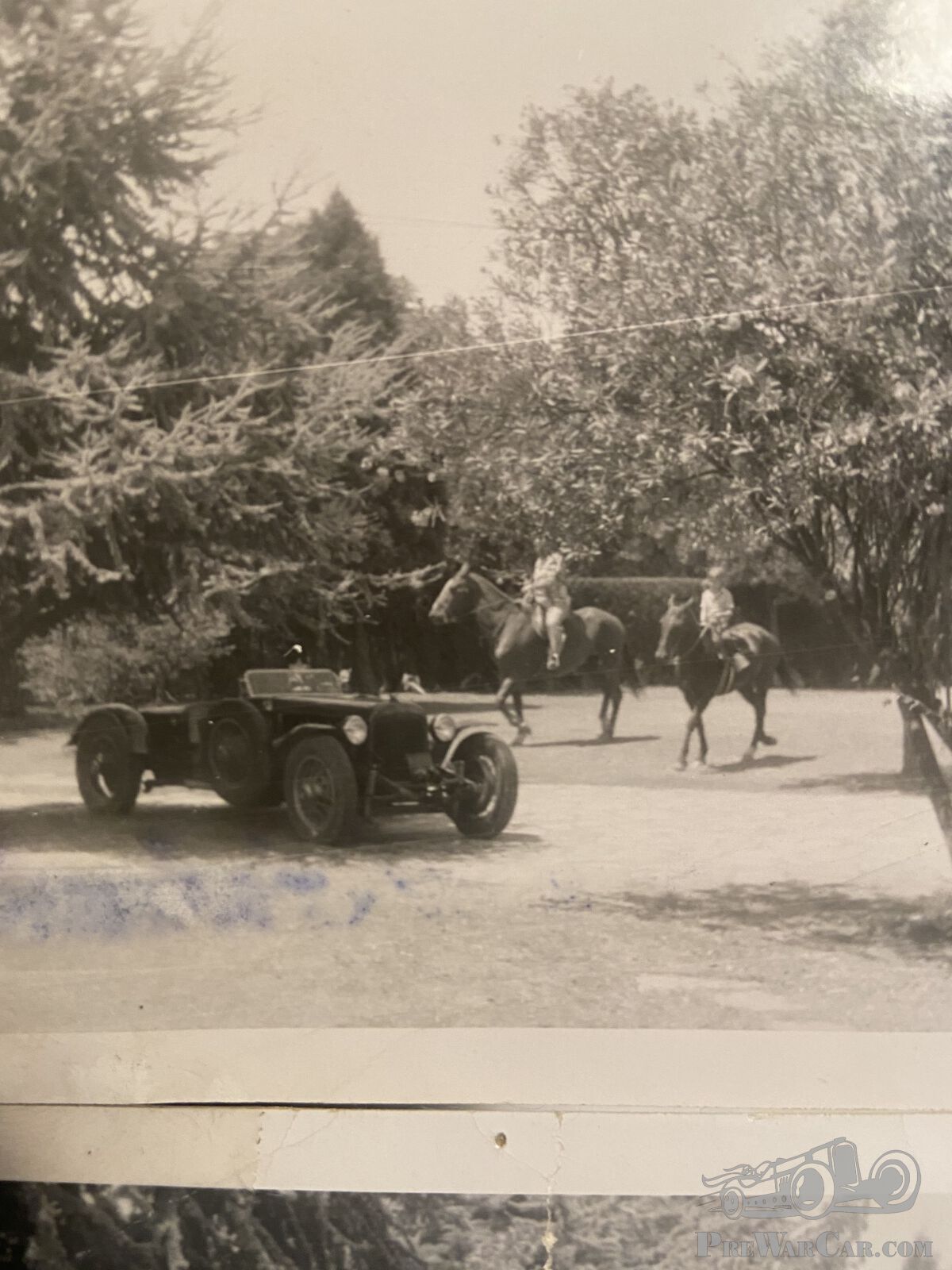


We see in these photographs a very interesting and unique 1917 Packard Twin Six speedster which recently came into the spotlight when it was auctioned by RM Sotheby's in 2021. Wearing a shiny Pebble Beach restoration, it could be mistaken at first for a modern-day special, but closer examination reveals it to be a very special historic car (it just needs a bit of oil splattered over it).
Compared to Stutz and Duesenberg, Packard didn't get heavily involved in competition, but a number of privateer racers had a go at building their own racing cars on Packard chassis, and that seems to be what we have here. Unfortunately, we lack the documentation to be absolutely certain.
We know that it was one of a few Twin Sixes despatched from new to Argentina, and its dashing low-slung bodywork was fitted very shortly after its arrival. Various additional modifications were made which would have helped it in the field of competition: it sports a special radiator, custom-made intake manifold and side-exit exhaust. To give the driver more room, the gear lever has been relocated to the car's right-hand side. With 20-inch Buffalo wire wheels plus twin side-mounted spares, it seems to have been prepared with long-distance events in mind. Most notably, the unbraked Packard front axle has been exchanged for a Hispano-Suiza piece to give four-wheel braking. It wore dark paint and was fitted with simple cycle wings.
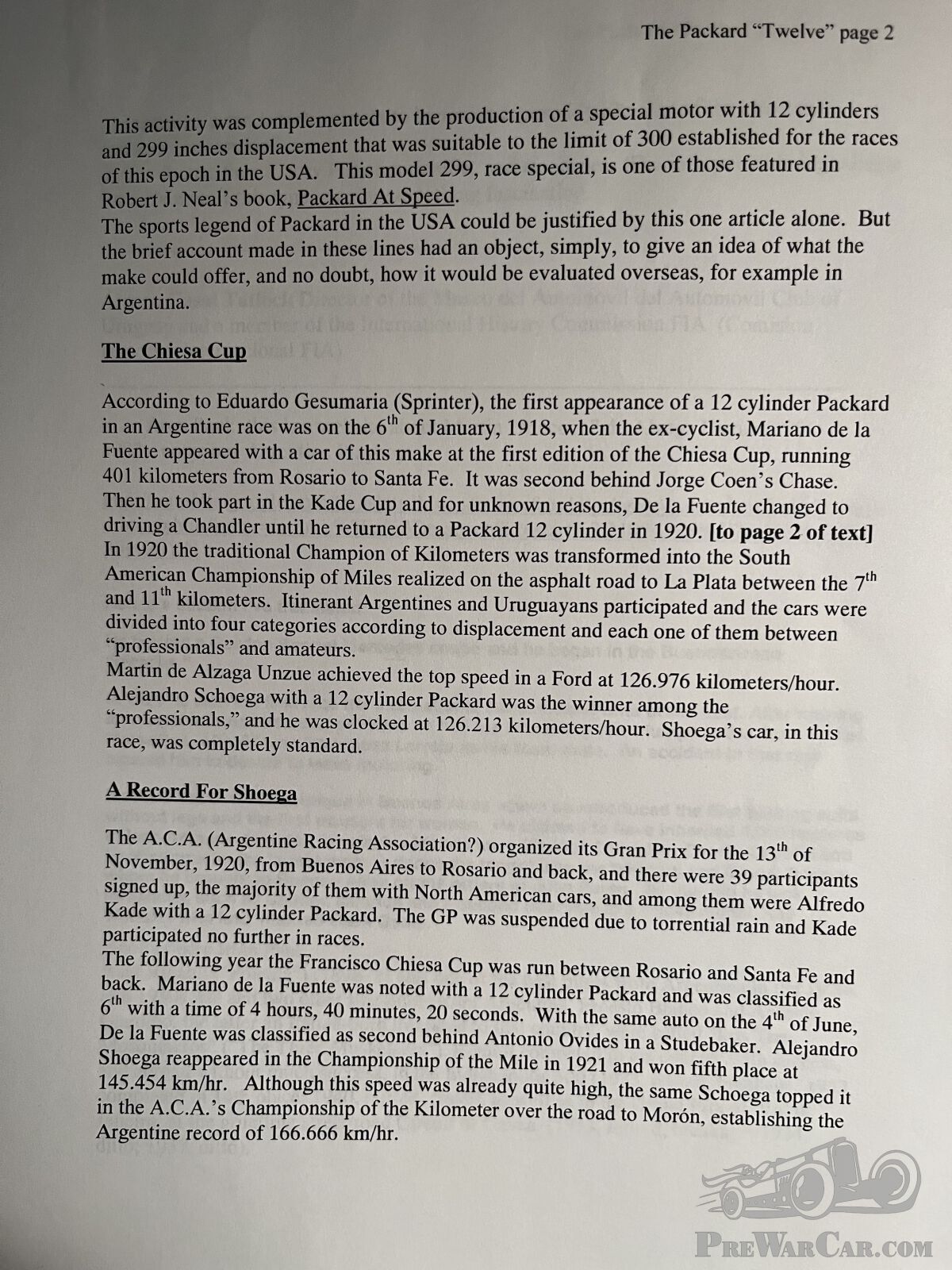
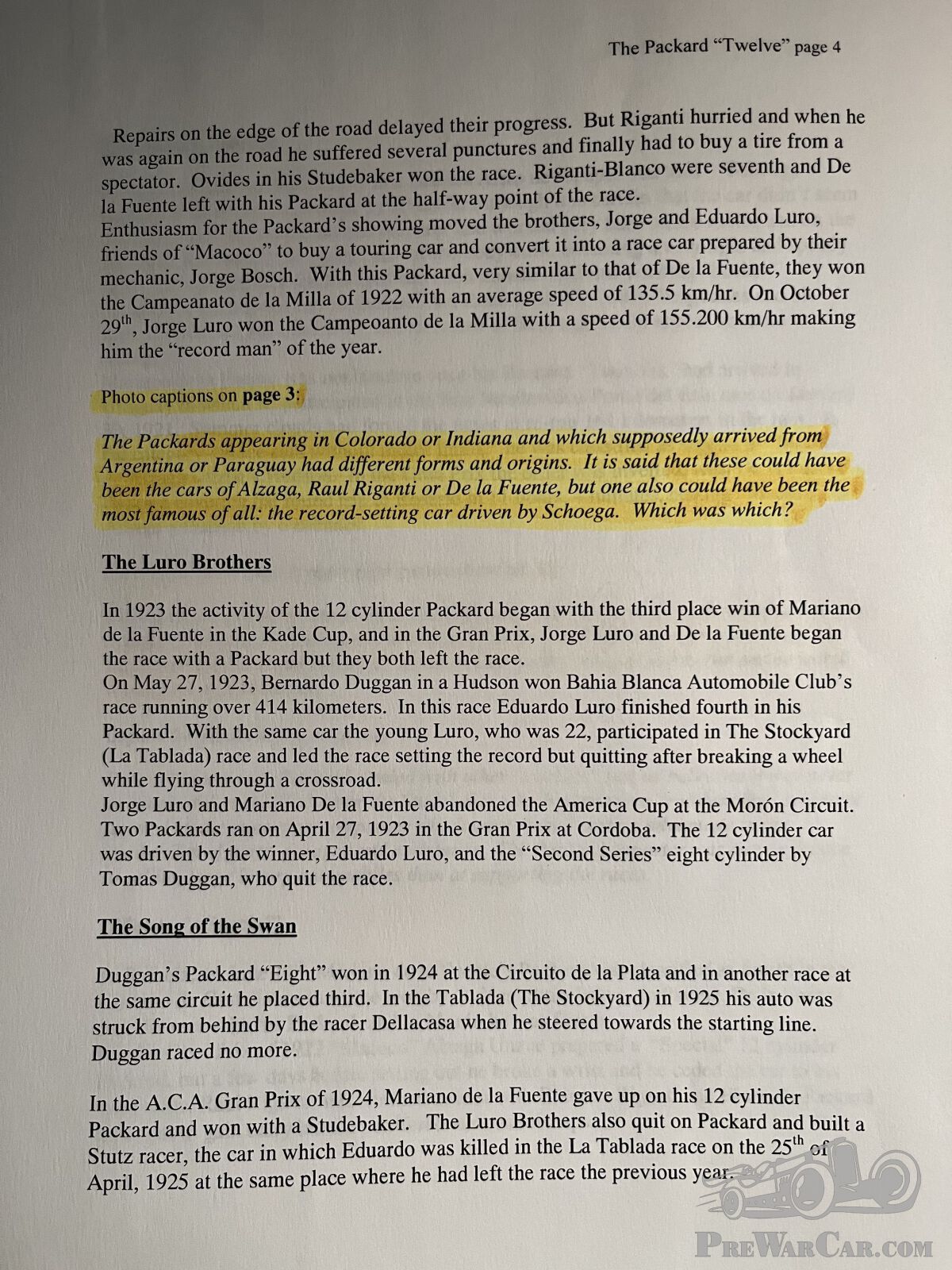
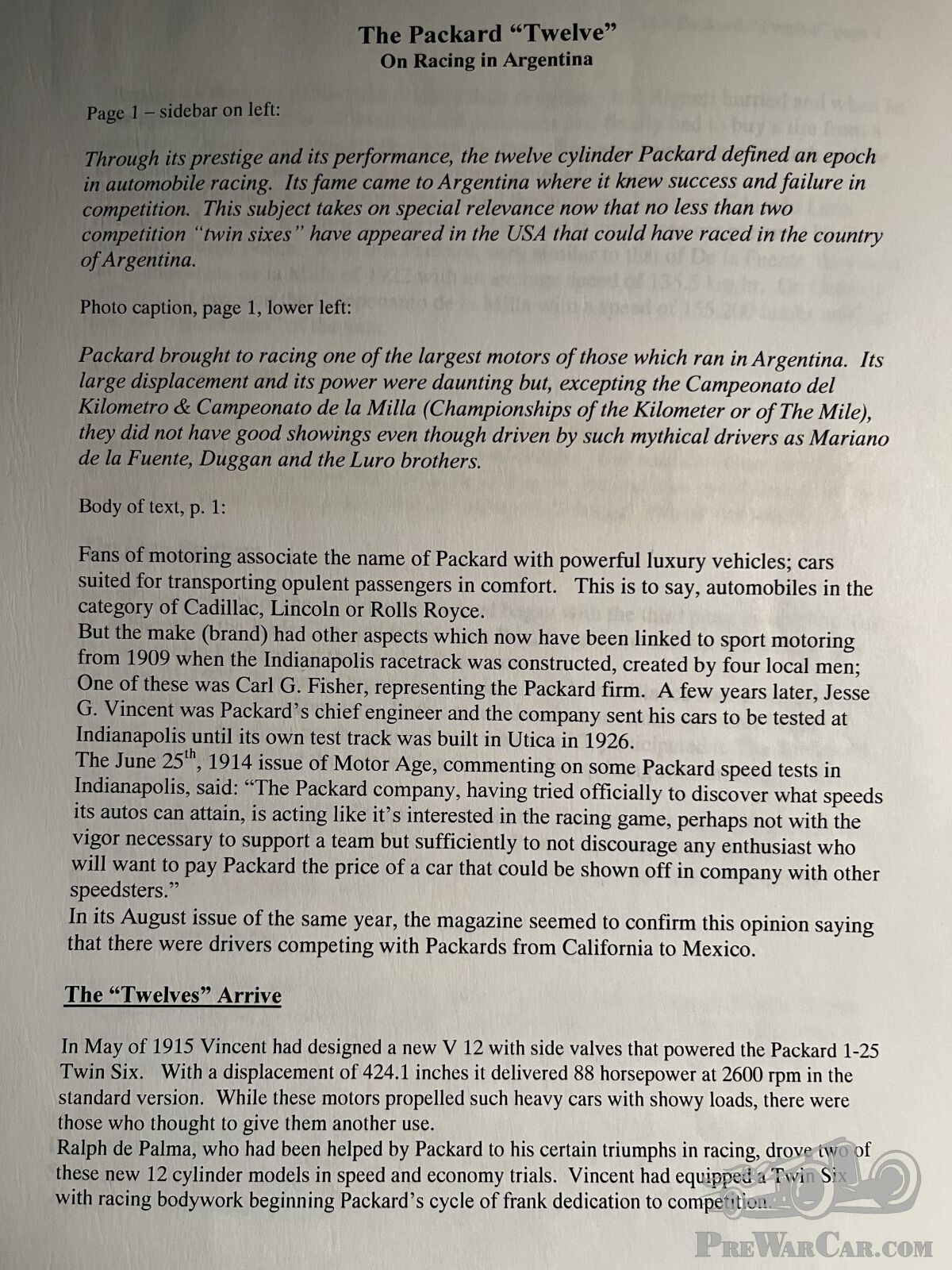
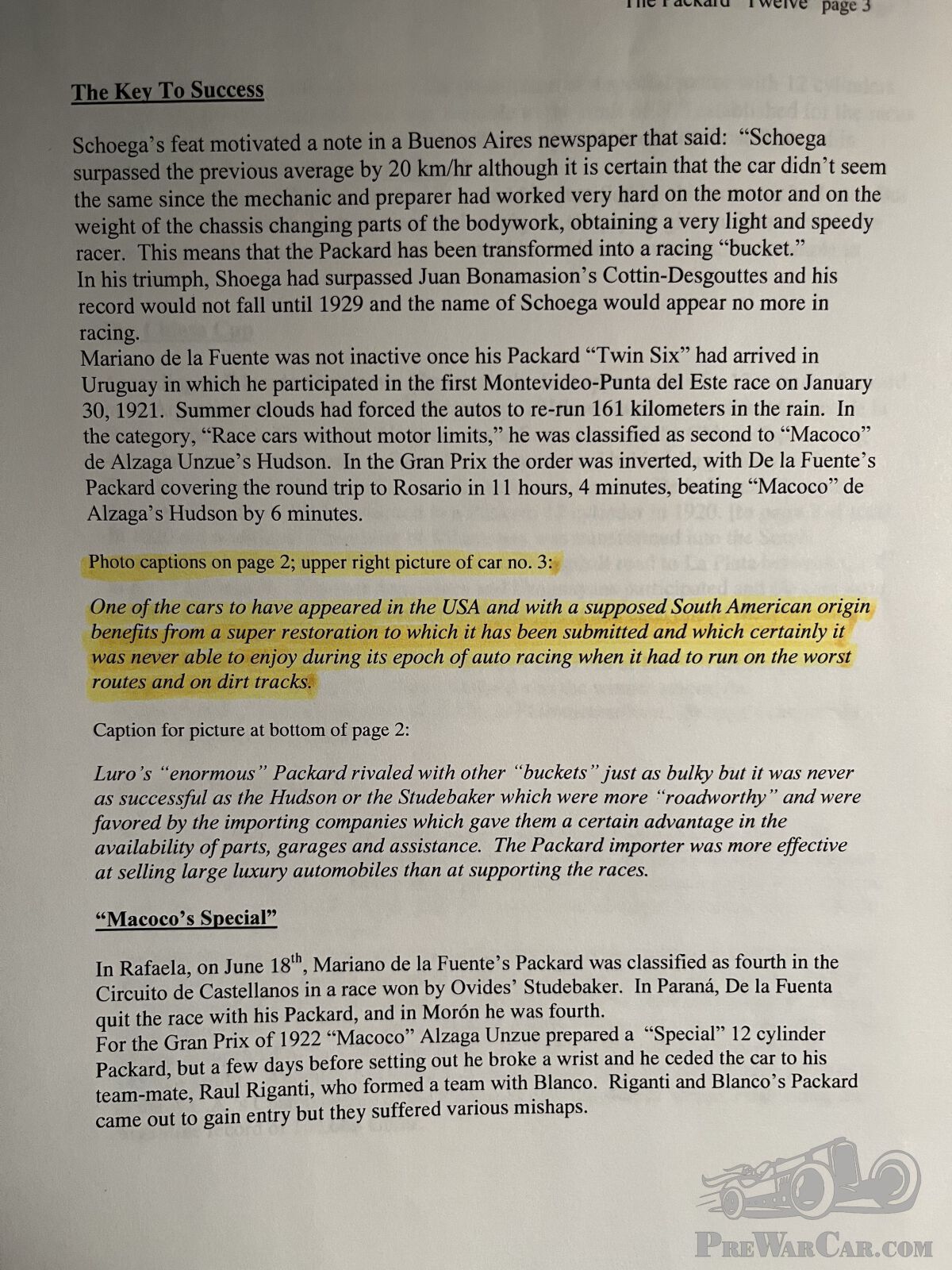
Research into Argentinian Packards has revealed that Twin Sixes were raced between 1918 and 1922 by drivers including Mariano de la Fuente, Alejandro Schoega and Raúl Riganti. We wonder if this Packard might have been connected with any of them, or if it might have raced alongside them?
The history of this car is only known from the late 1950s or early 1960s, when it entered enthusiast circles. It was bought by C. William Humphreys, a Shell Oil executive working in Argentina, and he in turn sold it in 1962 to Frederick D. Douglass. Douglass attempted to take it with him to America, but he had to wrangle a bit with the Argentinian authorities as they maintained that it had a nationally-important racing past. Douglass devised an elaborate ruse, partially dismantling the car and reassembling it with odd spare panels to convince the authorities it was just an old crock. He succeeded and it arrived at the port of Houston in 1964.
When Douglass died, it sold to Elwood Hardman of Colorado in 1969, and he kept it in lovely unrestored condition until 2001. In new ownership, it received its concours restoration which saw it exhibited in the Packards at Speed exhibition at the National Packard Museum in 2002 and at the Pebble Beach Concours d'Élégance in 2005.
There were have it: an early racing special with a fascinating past. If only we knew more. Who, for example, was the original owner? Which person or garage was responsible for turning the bare chassis into a dashing racer? Of the greatest interest to us, which races exactly did it participate in? Is there a Packard specialist or South American racing enthusiast who might be able to point out some clues? Please tell us what you can.
Words: Zack Stiling; main picture: RM Sotheby's
Published:
Monday April 3rd, 2023
Facebook
LinkedIn
Twitter
WhatsApp
Email
Copy
Comments
Nick Howell
09 April 2023, 11:44
Yep, the Hispano was sold at RM's and made $9.24m .
Read more
Jo Burge
05 April 2023, 10:35
It's a great car but the chassis design is about 20 years later than 1917.
Read more
Jon Lee
04 April 2023, 15:06
I was a judge on the team that examined this car at Pebble Beach in 2005. Also on the team was a very knowledgeable Packard guy and another who was a notable racing historian. In our judgement, this car had probably been built in the '50s or '60s. The builders certainly used old parts and did a reasonably good job of assembly. As I recall there was some rather crude detail work on both the chassis and body. At that time, the exhibitor was claiming the car was a factory-built racer, which it was obviously not. As I understand it, the importation of foreign cars into Argentina after the Second World War was very difficult to the point of being almost impossible. Consequently, older American cars were modified and updated. Interest in racing was strong in Argentina, so it would be logical that some of these modified or homebuilt cars would be in racing form. There have been quite a few others imported into the U.S. Buick seems to be a favorite. While this is an interesting car, I question any degree of authenticity that may be claimed and more documentation would be necessary to connect it to notable races.
Read more
David Liepelt
04 April 2023, 05:00
Please explain exactly what is different? I'm looking at all the pictures and don't see of what you speak.
Read more
Erler Thomas
03 April 2023, 08:53
Hello from Austria.
Just looking at the rear springs, it´s not the car in the old pictures. Someone found an old picture and started assembling and built a close enough body to fool someone with money. Good try, not for me. There are a lot of Argentinian racing cars showing up lately. Nothing too much wrong with a good special, but if claiming a history there should be more than a little evidence in old pictures.
Just my two eurocent.
Regards, Thomas
Read more
Just looking at the rear springs, it´s not the car in the old pictures. Someone found an old picture and started assembling and built a close enough body to fool someone with money. Good try, not for me. There are a lot of Argentinian racing cars showing up lately. Nothing too much wrong with a good special, but if claiming a history there should be more than a little evidence in old pictures.
Just my two eurocent.
Regards, Thomas