The global magazine and marketplace for classic car enthusiasts, by enthusiasts.


Filter
Make a choice:
- Cars
-
Make >>
-
Year >>
-
- Bikes
-
Location >>
- Parts & more
-
Make of car >>
-
Manufacturer >>
-
Category >>
- Bicycles & more
-
Year >>
-
Countries


Wanted: new clues about Bugatti Atlantic 57453
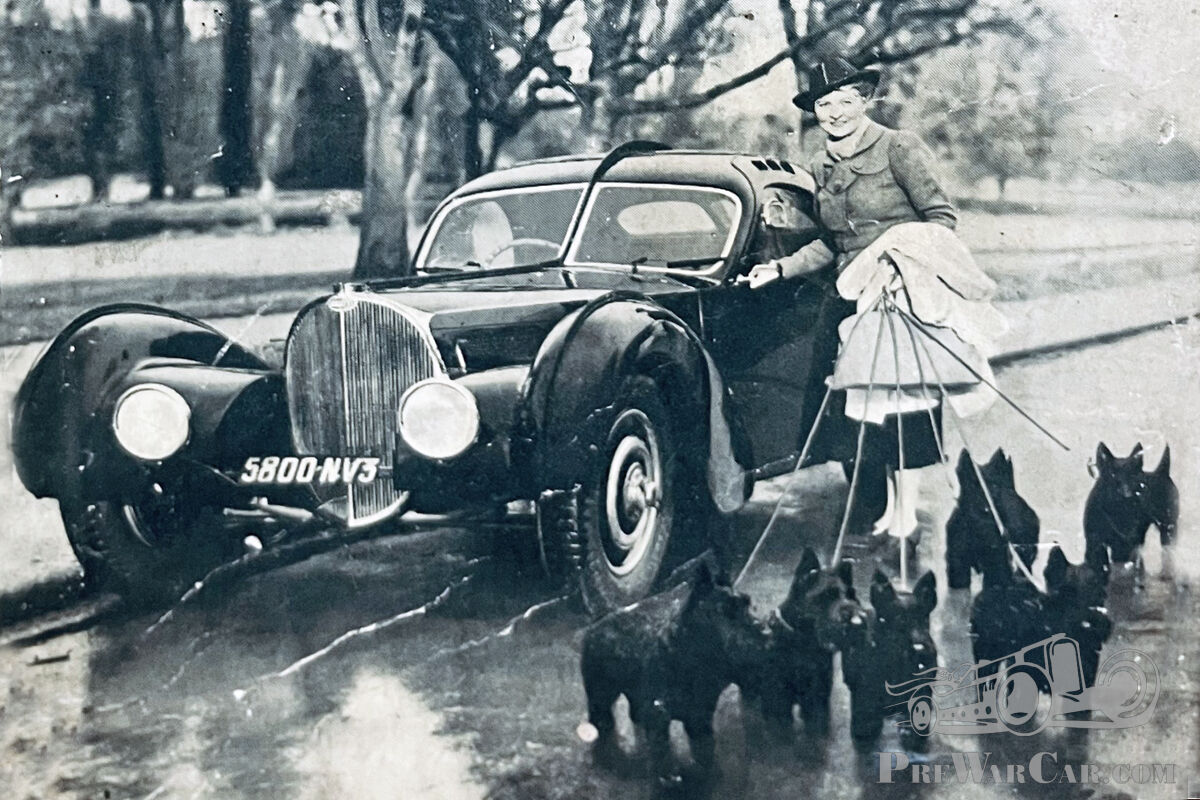


The mystery of the missing Bugatti Type 57 S Atlantic has fascinated automotive historians and enthusiasts for decades. The legendary car has also appeared on PreWarCar.com several times. We even once reported that it had been found, although that really did turn out to be an April Fool’s joke, while on another occasion the car’s chassis plate was offered for sale on our website. Yet despite all the stories, theories and supposed clues, the fate of chassis number 57453 remains one of the great mysteries of motoring history.
Father and son Ard and Arnoud op de Weegh now hope to shed more light on the matter. They previously published books about the celebrated collections of Fritz Schlumpf and Michel Dovaz. For their latest research project, they are focusing entirely on the missing Atlantic. Their aim is to reconstruct the car’s history as fully as possible, document all the available information and ultimately publish their findings in book form.
A car with an extraordinary history
The car in question is Bugatti Type 57 S Atlantic chassis number 57453, built in 1936. The people who sat behind its wheel alone illustrate just how special this car was. It was driven by Jean Bugatti himself, as well as by the celebrated racing drivers Robert Benoist and William Grover-Williams. Grover-Williams’s wife, Yvonne Grover-Williams-Aupicq, was also photographed with the Atlantic.
During the 1936 Salon de l’Automobile de Paris, chassis 57453 was used as a demonstrator alongside Type 57 Ventoux chassis number 57452. In the Bugatti factory records, the Atlantic was still described as a Coupé Aéro, the name closely associated with the origins of this spectacular design.
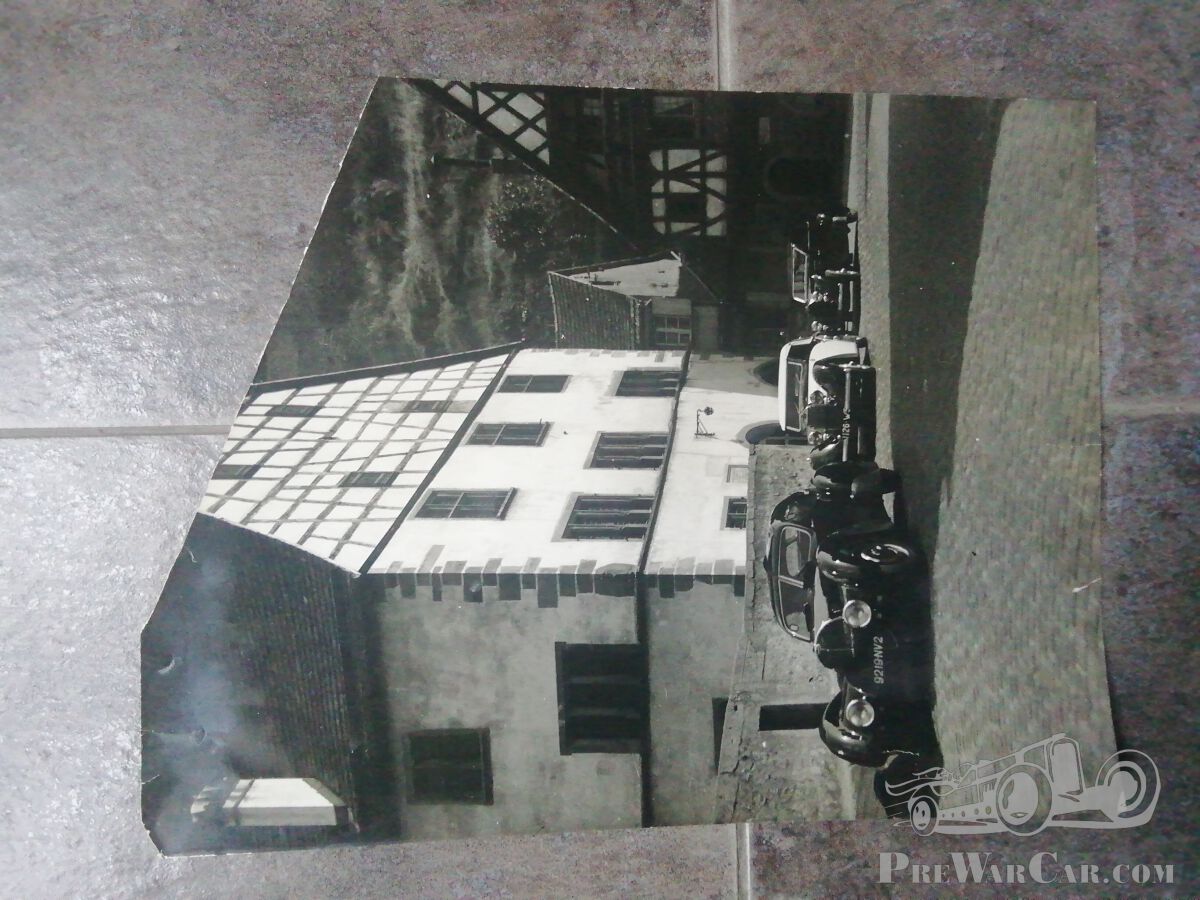
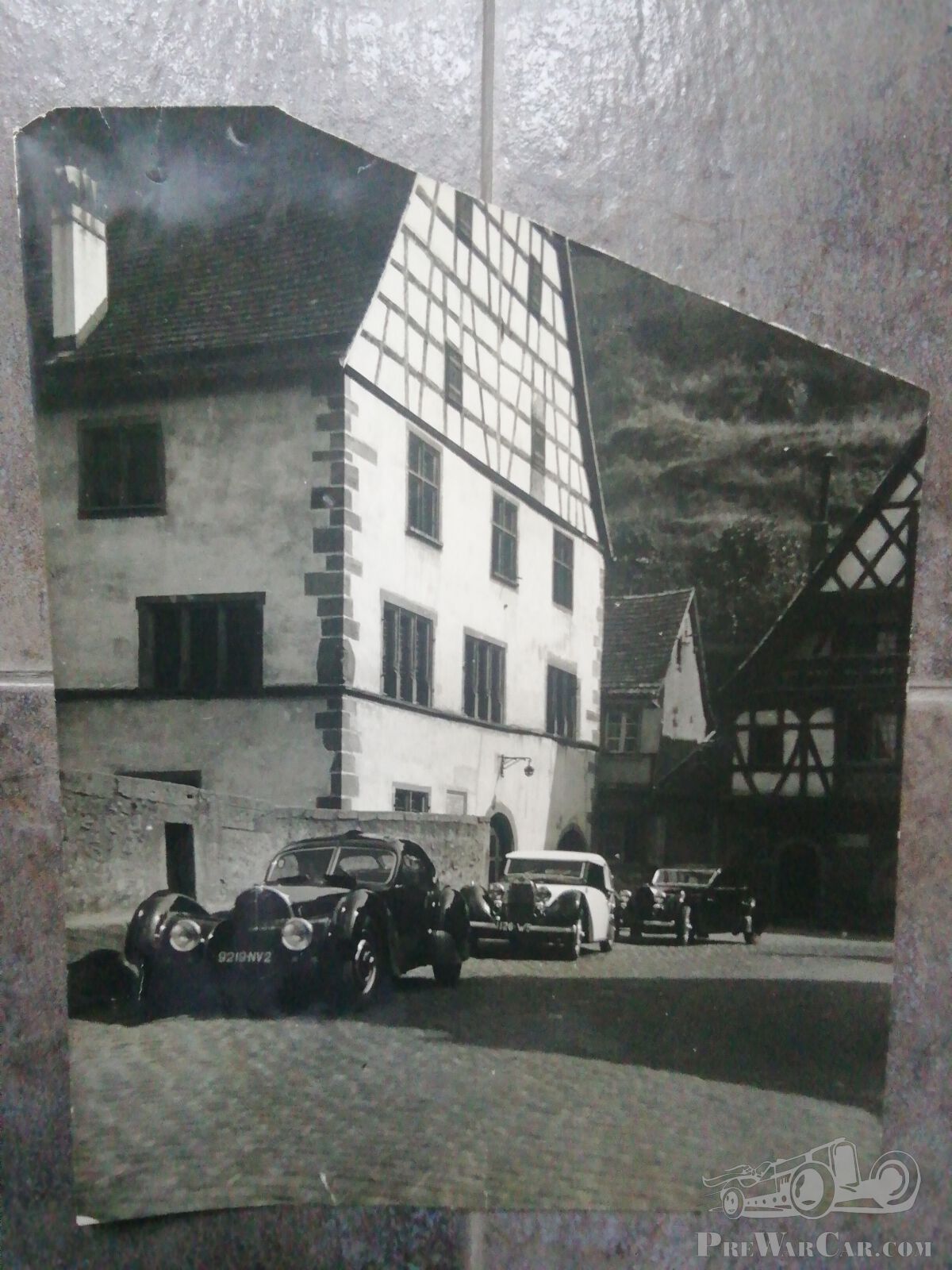
The car was fitted with engine 2 SC/2 SG. During its lifetime, it carried several French registration numbers, including 5800 NV 3, 1521 NV 4 and 9219 NV 2. After 1940 or 1941, however, the trail goes cold. Since then, it has never been established with certainty what became of the Atlantic.
It is precisely this lack of certainty that has inspired countless stories over the years. Was the car hidden during the war? Was it destroyed, dismantled or preserved under another identity? Or is it still somewhere out there, waiting to be discovered? So far, no conclusive evidence has emerged to support any of these theories.
Wanted: previously unknown images
Ard and Arnoud op de Weegh have already gathered and examined a considerable amount of information. Nevertheless, they believe that previously unknown material may still exist which could shed new light on the history of chassis 57453.
They are therefore particularly interested in previously unpublished photographs, documents, film footage and other visual material showing the Atlantic – regardless of the period, location or configuration. Even a small detail in an old family photograph, photo album, magazine, archive or film clip could prove highly significant. The car’s various registration numbers may provide important clues.
Do you have any material or information concerning Bugatti Type 57 S Atlantic chassis 57453? If so, please leave a comment beneath this article or contact the PreWarCar.com team. We will ensure that your message reaches Ard and Arnoud op de Weegh.
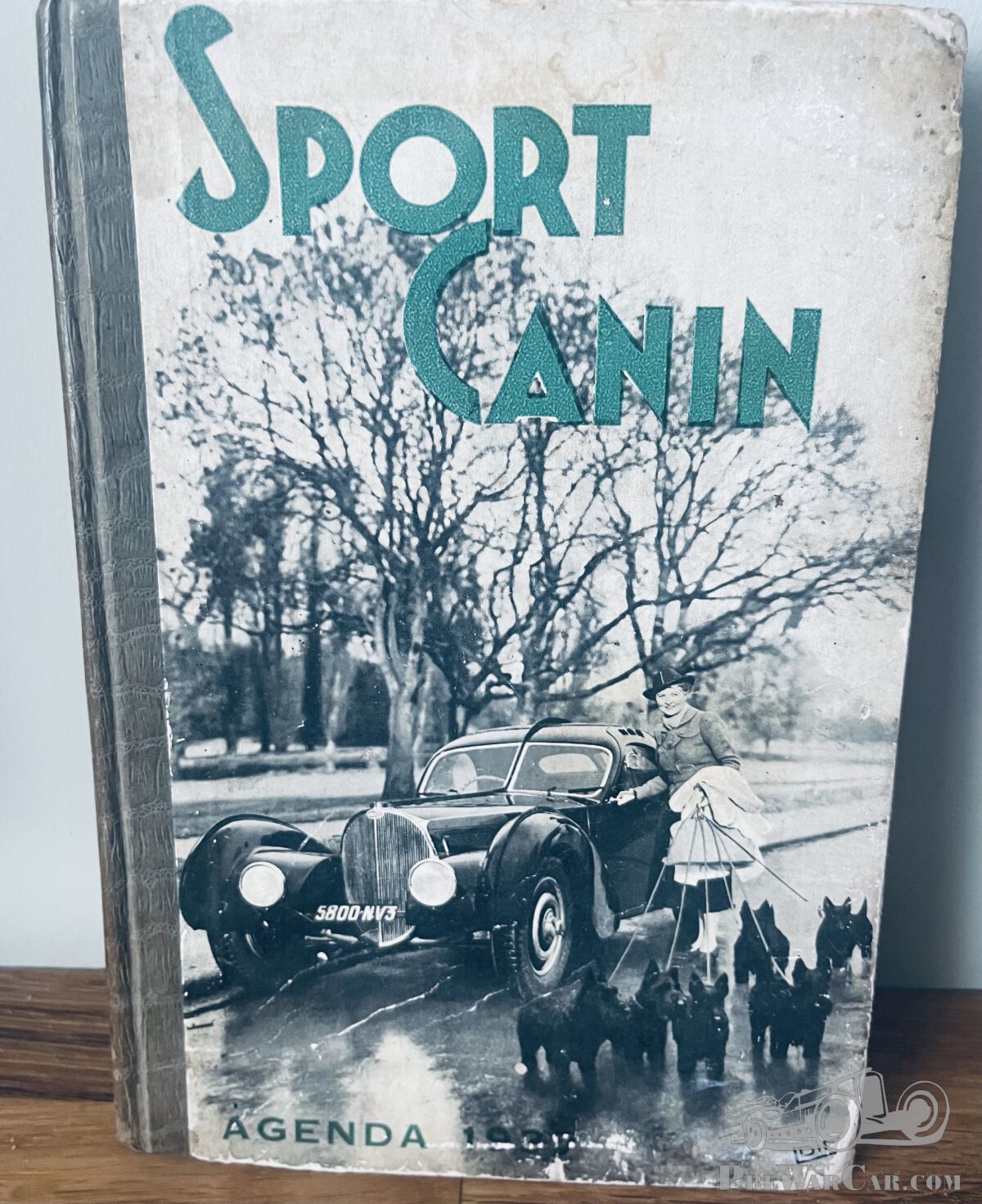
The photograph shown comes from the cover of the “Sport Canin Agenda 1937”, published by Éditions Sport Canin in Le Vésinet, France. It shows Bugatti Type 57 S Atlantic chassis 57453 together with Yvonne Grover-Williams-Aupicq. Cover photograph: Op de Weegh, 2026.
Published:
Friday October 9th, 2026
Facebook
LinkedIn
Twitter
WhatsApp
Email
Copy
Comments
James Raahauge
12 October, 04:34
I’ve been working the Brussels end of this story independently and have turned up a period document, not previously published as far as I can tell, describing a car whose condition and circumstances match the post-accident account closely. It sits alongside several other unpublished post-war leads.
Happy to compare notes privately with the author, or with anyone holding Brussels garage or dealer records from the late 1940s.
I research lost cars, provenance and vehicle histories, using in-house search tools that reach archives others don’t.
Read more
Happy to compare notes privately with the author, or with anyone holding Brussels garage or dealer records from the late 1940s.
I research lost cars, provenance and vehicle histories, using in-house search tools that reach archives others don’t.
Bres Dominique
11 October, 18:38
Finding the car would be a wonderful dream.
It once existed, so it has a history, a life—it's surprising that we don't know more about it !
Read more
It once existed, so it has a history, a life—it's surprising that we don't know more about it !
Martin
11 October, 11:14
As John James rightfully stated: these guys are Dutch, and that makes a lot of difference. I have worked with Ard and Arnoud op de Weegh on a project long ago and I admire the thorough and systematical way they do their research - something which lots of self-proclaimed 'car historians' lack. I can tell you this: if they can't find the Atlantic, no-one will. In that case you can simply consider it gone forever. They're terriers, and that is a compliment. They sink their teeth into something and they won't let go. Sometimes character and determination get you further than money and influence.
Read more


Brulé Bernard
09 October, 21:23
A few questions...
- Was #57453 still in Molsheim when the move to Bordeaux took place from late 1939?
- Who were its final owners in 1939/40 and where (Alsace, Paris, the Côte d’Azur)?
- Some witnesses mentioned that it was moved by road rather than by rail.
Why would such a fast car have ‘taken the train’?
- Did any other Bugattis from the factory also make their way to Bordeaux during this period? By what means?
I am enclosing the only old photograph I have of the Atlantic. Taken in Kaysersberg in 1936. 30 x 40 cm.
——
Quelques questions...
- #57453 était-elle encore à Molsheim lors du déménagement vers Bordeaux à partir de la fin 1939 ?
- quels sont les propriétaires ultimes en 1939/40 et où (Alsace, Paris, Côte d'Azur)?
- certains témoins ont évoqué un déménagement par la route et non par le rail.
Pourquoi une voiture aussi rapide aurait-elle "pris le train"?
- d'autres Bugatti de l'usine auraient-elles aussi migré vers Bordeaux durant cette période ? Par quels moyens ?
Je joins la seule photo ancienne que je possède de l'Atlantic. Prise à Kaysersberg en 1936. 30 x 40 cm.
Read more
- Was #57453 still in Molsheim when the move to Bordeaux took place from late 1939?
- Who were its final owners in 1939/40 and where (Alsace, Paris, the Côte d’Azur)?
- Some witnesses mentioned that it was moved by road rather than by rail.
Why would such a fast car have ‘taken the train’?
- Did any other Bugattis from the factory also make their way to Bordeaux during this period? By what means?
I am enclosing the only old photograph I have of the Atlantic. Taken in Kaysersberg in 1936. 30 x 40 cm.
——
Quelques questions...
- #57453 était-elle encore à Molsheim lors du déménagement vers Bordeaux à partir de la fin 1939 ?
- quels sont les propriétaires ultimes en 1939/40 et où (Alsace, Paris, Côte d'Azur)?
- certains témoins ont évoqué un déménagement par la route et non par le rail.
Pourquoi une voiture aussi rapide aurait-elle "pris le train"?
- d'autres Bugatti de l'usine auraient-elles aussi migré vers Bordeaux durant cette période ? Par quels moyens ?
Je joins la seule photo ancienne que je possède de l'Atlantic. Prise à Kaysersberg en 1936. 30 x 40 cm.
Bruno ESTIBALS
09 October, 20:38
@ Anthony Newell : I think your are wrong : it was not an Atlantic but an Atalante, 57542. Regards, Bruno
Read more
lalanne henri
09 October, 16:16
Cher Anthony ,
votre memoire vous fait defaut ,c'etait une 57 SC Atalante non une Atlantic
Read more
votre memoire vous fait defaut ,c'etait une 57 SC Atalante non une Atlantic
Thane Heal
09 October, 16:16
The story of the 2 Bugattis is similar to the Romanian W154.
There could be no ownership of the 2 Bugs that can be established , that is no title or bill of sale.
Ettore was trying to regain his factory post war and the recovery of these cars was secondary. There
may not have been any effort at all.
How many people knew where the car (s) were sent ?
Read more
There could be no ownership of the 2 Bugs that can be established , that is no title or bill of sale.
Ettore was trying to regain his factory post war and the recovery of these cars was secondary. There
may not have been any effort at all.
How many people knew where the car (s) were sent ?
Hans Veenenbos
09 October, 16:13
Referring to Anthony Newell's response - that must have been Philippe Salvan's place.
I was there sometime in the 1990s.
There were great cars there, but the "Atlantic" was in fact an Atalante.
Cheerio, Hans
Read more
I was there sometime in the 1990s.
There were great cars there, but the "Atlantic" was in fact an Atalante.
Cheerio, Hans
Sebastian Rafiroiu
09 October, 14:46
They will never find it. Many have tried. People of means, very resourceful relations and networks with all the time in the world and ambition. Still lead nowhere. My educated guess is that when it does resurface, whether its preserved / wreck / in pieces / or just a significant part, it will be in the most unexpected and most probably random or crazy way.
Read more
John James
09 October, 12:05
Alain, that’s what we call ‘French arrogance’, but in this case it’s the Dutch who are doing it...
Read more
Alain Mercier
09 October, 11:13
Many people with significant financial possibilities and connections in France and in Bugatti worlds have tried to find this chassis since the war. Why do 2 Dutch people, who apparently do not speak French, think they can do this?
Read more
Anthony Newell
09 October, 10:16
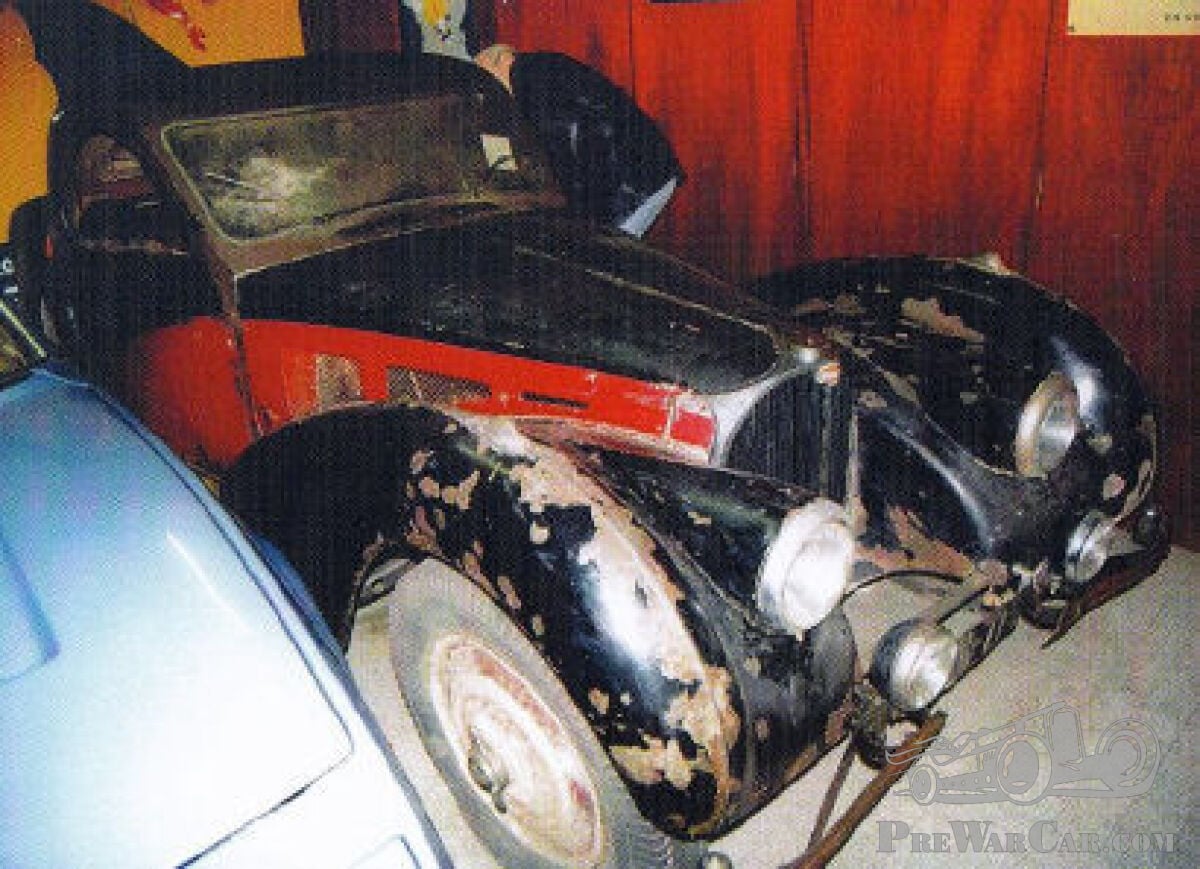
About 15 years ago I visited a house in Toulouse and in the basement garage there were several prewar cars including a type 57 SC Atlantic with
steel bodywork painted black and patches of surface rust. From memory it was complete and in very original state,and a 5 litre Bugatti (type 50?)
alongside in lovely original condition.
Read more
steel bodywork painted black and patches of surface rust. From memory it was complete and in very original state,and a 5 litre Bugatti (type 50?)
alongside in lovely original condition.