The global magazine and marketplace for classic car enthusiasts, by enthusiasts.


Filter
Make a choice:
- Cars
-
Make >>
-
Year >>
-
- Bikes
-
Location >>
- Parts & more
-
Make of car >>
-
Manufacturer >>
-
Category >>
- Bicycles & more
-
Year >>
-
Countries


PreWarWorkshop: Tracking/wheel alignment




Tracking, or wheel alignment, is the process of ensuring your vehicle's wheels are set to the optimum position, as per the car manufacturer's specifications. Incorrect alignment can result in rapid irregular tyre wear and can even affect the handling and safety of the vehicle. David Ralph was checking the tracking on his lovely Riley Kestrel and wanted to share how this works so others are able to do it at home as well.
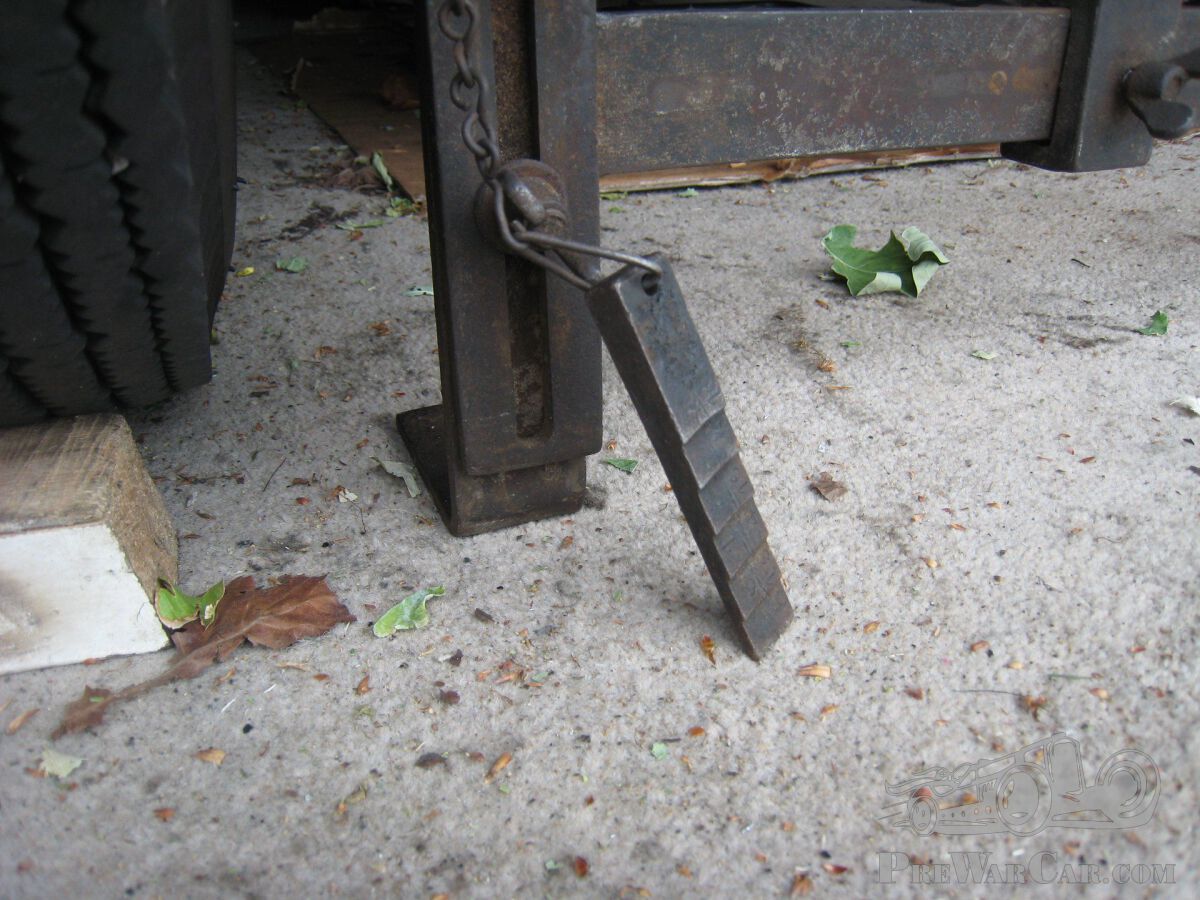
He uses an original tracking gauge by Dunlop from the 1920s or 1930s. However, you can easily make a copy out of steel or plywood yourself.
How does it work?
Before checking the tracking you need the car on a smooth surface and you need at least 3 feet in front of the car so you can roll it forward.
The tracking should have a small amount of toe-in. This means the wheels are very slightly closer together at the front compared to the back. On the road, the force of the car moving forwards will try and push the wheels outwards at the front. By having that slight toe-in it means the wheels will be running parallel in use.
The gauge is adjustable for height and width so will fit almost every car and light commercial. To check the tracking you first need to measure the overall diameter of the tyre. On my Kestrel with Excelsior 475/500 x 18 tyres this is 28.5 inches. You then set the height of the two arrows to half that, so 14.25 inches. You will then be checking the track at the centre line of the wheels. Put the tracking gauge at the front of the wheels as per the picture and adjust the width so that the two arrows are just touching the outer edge of the wheel rims. Mark the rims at this point with some chalk. Take the gauge away and then roll the car forward half a turn of the wheels so the chalk marks are now at the back and at the same 14.25-inch centre line height. Now put the gauge in at the back and line one arrow up with the chalk mark on the wheel. If your tracking is correct there should be a small gap between the other arrow and rim. Use the graduated gauge to check the measurement. It should be 1/8 inch (3mm for all you younger owners!). If the tracking is out, or the toe-in too much or too little, you will need to adjust the track rod length by screwing the ends in or out.
The reason for rolling the car forward and checking the back measurement at the same point on the rims is that this takes into account any buckle in a wheel. If you don't move the car forward and just move the gauge to the back you will get a false reading if your wheels aren't running totally true.
Words and photos by David Ralph.
Published:
Tuesday November 30th, 2021
Facebook
LinkedIn
Twitter
WhatsApp
Email
Copy
Comments
John Bates
30 November 2021, 13:04
It's a question? If there is even the smallest amount of movement between the vertical legs and the horizontal bar, would you get an accurate measurement? Remember, it has to be accurate as you are measuring one eighth of an inch!
Read more
David Ralph
30 November 2021, 21:59
With the two wing nuts done up tightly on each side the gauge is rock solid with absolutely no movement. Dunlop knew what they were doing when they designed the gauge.
Read more
Joop Terpstra
30 November 2021, 10:27
During our trip through Germany in 1986 we stopped at Auto König in München and they used the same tool to correct the alignment of my 1932 MG J2 which was eating slowly the front tyres result was fast disappearing profile on both frontwheels! They invited me in their workshop and did a splendid job and after everything was set correctly they even were finding the right colour black to spray the places where they damaged the paint near the ball joints. After we inspected a restored Lamborghini Miura engine which was laying in pieces on the workbench and to be put together again, and some lovely coffee we could go: without paying a penny. No they didn't want to give us a bill. Marvelous stuff. Unfortunately I never went back to Auto König but after 35 years I really should shake some hands there :-)
Read more