The global magazine and marketplace for classic car enthusiasts, by enthusiasts.


Filter
Make a choice:
- Cars
-
Make >>
-
Year >>
-
- Bikes
-
Location >>
- Parts & more
-
Make of car >>
-
Manufacturer >>
-
Category >>
- Bicycles & more
-
Year >>
-
Countries


On the road to a breakthrough: the discovery of synthetic tyres
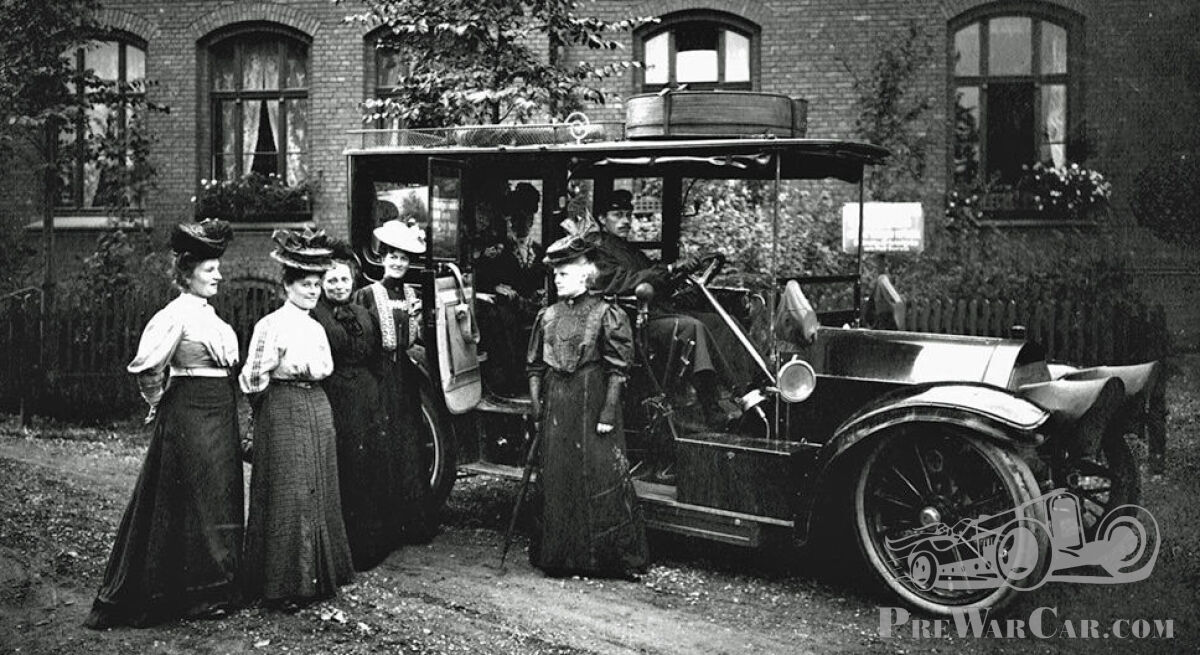

Tyres: we all need them, but we tend to take them for granted. We're just happy that they're there for us to use, and we tend not to give a thought to where they come from or how they were developed. We know that solid rubber tyres were displaced by pneumatic tyres from the very end of the 19th century, and thence we've witnessed all sorts of developments from beaded-edge and balloon tyres up to the ubiquitous cross-plies and radials of the post-war years. We wonder, though, if you ever heard of synthetic tyres. Read on...
In the 19th century, latex was harvested from rubber trees in rainforests around the world, and then supplied to the industrialised West for use in the production of rubber products. Unfortunately, depending on various factors, it was not always of the highest quality, and the costs of importing and processing rubber were getting higher and higher.
In the 19th century, latex was harvested from rubber trees in rainforests around the world, and then supplied to the industrialised West for use in the production of rubber products. Unfortunately, depending on various factors, it was not always of the highest quality, and the costs of importing and processing rubber were getting higher and higher.
In 1906, Fritz Hofmann, head of the pharmaceutical research of the company which is now Bayer AG, proposed that it could produce and commercialise synthetic rubber. The management accepted his proposal and they began to explore the process. Throughout the project, they were in close contact with Continental Gummiwerke, to which samples of the new synthetic rubber were supplied firstly for evaluation and then, eventually, for the production of pneumatic tyres.
The modest commercial production of synthetic rubber tyres began in 1911 from this partnership between Continental and Bayer. To promote it, they exhibited two tyres which had travelled 2500 miles without a single blow-out.
When the prices of natural rubber fell, Bayer took the new synthetic rubber off the market. However, its research proved useful when Europe went to war in 1914. Germany needed rubber for the war effort and in 1915 Bayer restarted production of its synthetic compound.
Since then, synthetic rubber has proven its worth on many occasions, especially in wartime when supply chains for natural rubber have been broken, and today it has numerous automotive applications such as O-rings, hoses, and belts. It may be that you never wondered exactly where it came from but if you did, well, now you know.
Since then, synthetic rubber has proven its worth on many occasions, especially in wartime when supply chains for natural rubber have been broken, and today it has numerous automotive applications such as O-rings, hoses, and belts. It may be that you never wondered exactly where it came from but if you did, well, now you know.
Source: Book International Polymer Processing, Volume 14 Issue 2, by José A Covas and Bayer
Published:
Monday March 27th, 2023
Facebook
LinkedIn
Twitter
WhatsApp
Email
Copy
Comments
Terry B
03 April 2023, 23:07
Henry Ford did not like depending on outside suppliers , including tire manufacturers . In the early 20th century he asked Thomas Edison to find an alternative for natural latex rubber . Edison had railway engineers collecting plant specimens from beside the train tracks all over America , in the hope that a domestic plant might supply latex or something similar , to act as a rubber substitute. He eventually settled on Golden Rod and did make a few tires , but they were of inferior quality . So Henry bought many thousands of acres in South America , founded his own country (!)- Fordlandia , and tried to establish rubber plantations there . However, the local soil and climatic conditions did not favour the growth of the rubber trees and this venture ended . Eventually he developed a friendly and mutually beneficial relationship with Harvey Firestone whose company supplied tires for Ford.
Read more